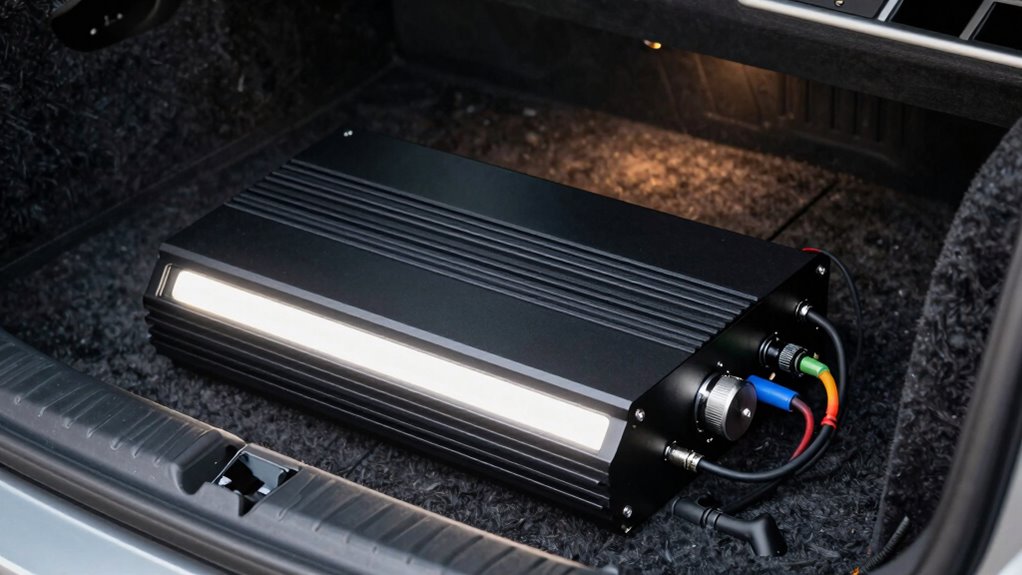

To plan your car audio system, start by choosing an amplifier that matches your speakers’ impedance and power needs. Make certain it provides enough RMS wattage for clear sound without distortion, and wire everything correctly in series or parallel to maintain proper impedance. Proper channel setup is key, especially if you’re powering subwoofers or multiple speakers. Mastering these basics helps you improve sound quality and prevent damage—keep going to discover how to optimize your setup even further.

Get everyday essentials delivered free — and shop member deals
- Fast, free delivery on millions of items
- Access to Prime Big Deal Days deals on October 6–7
- Prime Video, Amazon Music and more included
Key Takeaways
- Match amplifier power ratings with speaker RMS wattage for balanced sound and to prevent damage.
- Understand speaker impedance and wire speakers in configurations that achieve optimal impedance levels.
- Choose the right amplifier channel configuration (mono or multi-channel) based on your speaker setup.
- Properly wire speakers to avoid impedance mismatches that could overload or damage the amplifier.
- Use amplifiers with sufficient power output to drive speakers clearly without distortion or clipping.
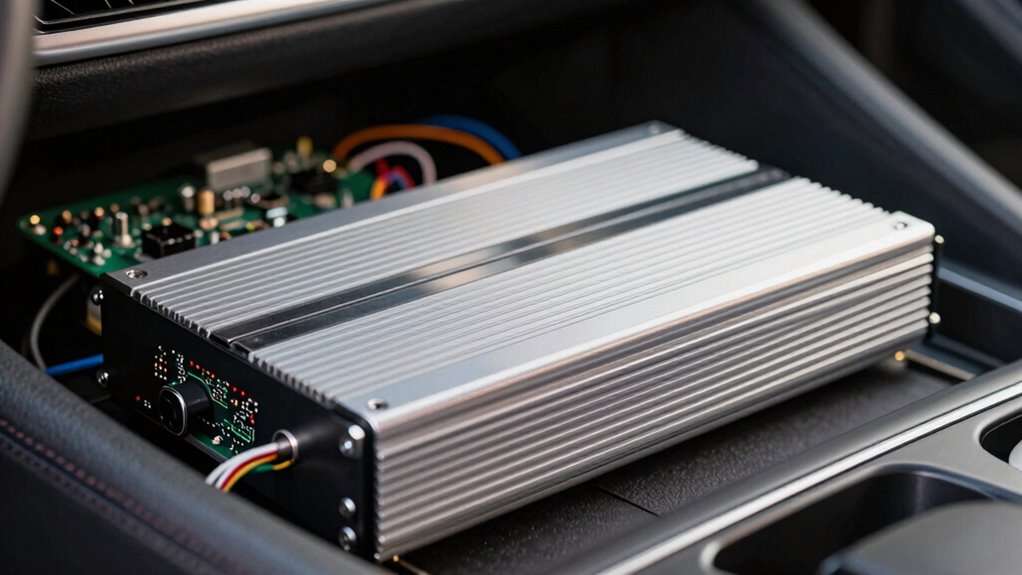
Have you ever wondered how car audio systems produce that powerful, clear sound? It all starts with understanding the basics of a car amplifier. An amplifier boosts the audio signal, providing the power needed to drive your speakers and deliver high-quality sound. To maximize your setup, you need to grasp how key factors like speaker impedance and power distribution interact. Speaker impedance, measured in ohms, determines how much load your amplifier will see. Lower impedance speakers (say, 2 ohms) draw more current from the amplifier, requiring it to be capable of handling higher power levels. Conversely, higher impedance speakers (like 4 or 8 ohms) draw less current, making it easier for the amplifier to operate without overheating or distortion. When planning your audio system, matching your amplifier’s power output with your speaker impedance guarantees the best performance without risking damage. Additionally, understanding the importance of proper crossover settings can help optimize sound quality and prevent speaker damage.
Understanding speaker impedance helps optimize your car audio system for clear, powerful sound without risking damage.
Power distribution is another critical element. Your amplifier must supply enough power uniformly to all speakers, but overloading can cause distortion or even damage. This is why understanding the amplifier’s power ratings—like RMS wattage—is essential. RMS ratings give a realistic idea of how much continuous power an amplifier can deliver. You want to match this with your speakers’ power handling capacity, so you get balanced sound without distortion or clipping. Proper power distribution also involves wiring the system correctly. For example, if you’re running multiple speakers, wiring them in parallel or series affects the total impedance and power flow. An incorrect configuration might reduce the impedance too much, forcing your amplifier to work harder than intended, potentially causing overheating or failure. Understanding battery capacity and how it influences your system’s power needs can also help you select appropriate wiring and components.
Another aspect to contemplate is the amplifier’s channel configuration. A mono amplifier can power a subwoofer efficiently, while a multi-channel amp is suitable for full-range speakers. Ensuring each channel supplies the right amount of power at the correct impedance is essential for a balanced soundstage. When planning your system, think about how the power will be distributed across all speakers, and choose an amplifier that matches the total load. Proper wiring, impedance matching, and power ratings help prevent issues like distortion, noise, or component damage.
Ultimately, understanding speaker impedance and power distribution allows you to select the right amplifier and wiring setup for your car. This not only improves sound clarity and volume but also prolongs the life of your equipment. By paying attention to these key factors, you can create a sound system that’s powerful, clear, and reliable—making every drive a true audio experience.
As an affiliate, we earn on qualifying purchases.
Frequently Asked Questions
How Do I Choose the Right Amplifier for My Car?
To choose the right amplifier, consider your speaker placement and power needs. Match the amplifier’s power output with your speakers’ wattage to avoid distortion or damage. Make certain your power source can handle the amplifier’s requirements for consistent performance. Think about the space available for installation and select a size that fits. Properly matching these factors guarantees better sound quality and reliable performance in your car audio system.
What Is the Difference Between Mono and Multi-Channel Amps?
Mono amps are like a solo artist, powering just one speaker with immense power, perfect for subwoofers, ensuring deep, thunderous bass. Multi-channel amps are like an orchestra conductor, managing multiple speakers simultaneously, ideal for full-range sound. When planning your setup, consider speaker placement and power handling; a mono amp excels with subwoofers in tight spaces, while multi-channel amps distribute sound evenly across your car’s interior for a balanced audio experience.
How Do I Connect Multiple Amplifiers Safely?
To connect multiple amplifiers safely, start by using proper power wiring, ensuring each amp has its own fused power line from the battery to prevent overloads. Use grounding techniques like grounding each amplifier to a clean, bare metal surface to avoid noise. Keep wiring organized and avoid crossing signals with power cables. Finally, connect remote turn-on wires correctly so all amps turn on simultaneously, ensuring a safe and efficient setup.
What Maintenance Does a Car Amplifier Require?
You need to regularly check your car amplifier’s wiring for corrosion, loose connections, or damage, ensuring peak performance. Keep the cooling system clean and unobstructed to prevent overheating. Also, inspect the ventilation and heatsinks, especially after long drives or heavy use. Maintaining these components helps your amplifier run efficiently, lasts longer, and maintains sound quality. Regular maintenance keeps your audio system performing at its best and avoids costly repairs.
How Can I Improve Sound Quality With an Amplifier?
To improve sound quality with your amplifier, focus on adjusting sound frequency settings to enhance clarity and bass response. Guarantee your amplifier’s power handling matches your speakers to prevent distortion or damage. Use high-quality cables and proper installation techniques to reduce noise. Fine-tune the gain and equalizer settings for a balanced, crisp sound. Regularly check connections, and consider upgrading your speakers or adding a subwoofer for richer audio performance.
As an affiliate, we earn on qualifying purchases.
Conclusion
Now that you’ve grasped the basics of car amplifiers, you’re ready to turn your vehicle into a concert hall on wheels. Think of your amplifier as the engine behind great sound, powering every beat and note with precision. With this knowledge, you can craft a sound system that hits all the right notes, making your drive feel like a front-row concert. So, gear up and let your audio journey hit high notes!
As an affiliate, we earn on qualifying purchases.
As an affiliate, we earn on qualifying purchases.
Fall Picks
fall essentials
As an affiliate, we earn on qualifying purchases.