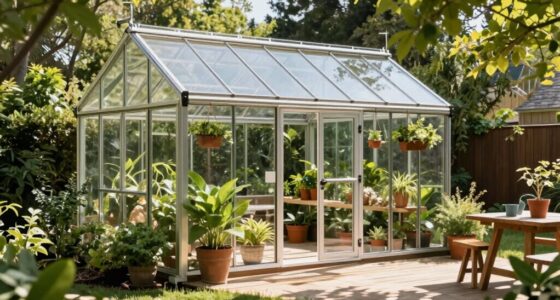
When planning your backyard shed, start by evaluating your storage needs and choose a size that fits your equipment, like tools or outdoor furniture. Decide on a style and material that matches your home’s look, considering durability and weather resistance. Place your shed on a level foundation near your work area without blocking garden beds, and make sure it’s easily accessible. If you keep these basics in mind, you’ll build a functional, long-lasting shed—more tips follow to help you get it just right.

Get everyday essentials delivered free — and shop member deals
- Fast, free delivery on millions of items
- Access to Prime Big Deal Days deals on October 6–7
- Prime Video, Amazon Music and more included
Key Takeaways
- Assess your storage needs to determine the appropriate size and organization for your shed.
- Choose a style and material that match your aesthetic preferences and local weather conditions.
- Position the shed for easy access, avoiding garden beds and ensuring a level foundation.
- Select a durable foundation like gravel or concrete to enhance stability and prevent shifting.
- Consider weather-resistant materials to prolong shed lifespan and reduce maintenance requirements.

Are you wondering how to choose the right storage shed for your needs? Starting with this question is a smart move, as it helps you focus on what matters most for your backyard. Your goal is to find a shed that enhances your garden organization while fitting seamlessly into your outdoor space. To do that, you need to consider size, style, and material. Think about how much storage you require—are you storing garden tools, lawnmowers, or outdoor furniture? A larger shed might be necessary if you have a lot of equipment, but if your space is limited, a smaller, well-organized unit could do the trick.
Choosing the right shed depends on your storage needs, space, and style preferences for a seamless backyard fit.
Next, consider the style that complements your existing landscape and home. Sheds come in many designs, from traditional wooden structures to modern metal or plastic options. Your choice impacts both aesthetics and durability. If you’re inclined toward a more budget-friendly or customizable option, DIY shed construction can be a rewarding project. Building your own shed allows you to tailor it precisely to your needs, ensuring it’s perfect for garden organization. Plus, DIY shed construction can save money and give you a sense of accomplishment.
When planning your shed, think about accessibility and placement. Position it where you can easily reach your tools and supplies without trampling your garden beds. Make sure it’s on a level surface to prevent shifting or tilting over time. Proper foundation work, such as gravel or concrete slabs, will keep your shed stable and extend its lifespan. Also, consider the proximity to your house and other structures—placing it too far away can make retrieving tools inconvenient, while too close might limit your yard’s openness. Foundation options can influence the longevity and stability of your shed. Additionally, understanding soil conditions can help you make informed decisions during your planning process. Furthermore, researching best materials can ensure your shed withstands weather conditions in your area.
outdoor storage shed with weather-resistant material
As an affiliate, we earn on qualifying purchases.
As an affiliate, we earn on qualifying purchases.
Frequently Asked Questions
What Is the Average Cost of Building a Storage Shed?
You’ll typically spend between $1,500 and $5,000 to build a storage shed, depending on size, materials, and customization. When planning, consider how garage organization can be improved with a well-placed shed, and think about landscaping integration to enhance your backyard’s look. Keep in mind that DIY projects save money, but professional installation might cost more upfront. Overall, budget wisely to balance function and aesthetics.
How Do I Choose the Best Location for My Shed?
You should choose a location for your shed that offers a solid foundation, like gravel or concrete, to guarantee stability. Pick a spot that’s easily accessible yet doesn’t block your yard’s beauty. Consider ventilation options to prevent moisture buildup and improve airflow. Avoid low-lying areas prone to flooding and stay away from large trees that could damage the shed. A well-placed shed balances convenience, safety, and proper foundation and ventilation considerations.
Are There Local Regulations or Permits Needed?
Yes, you’ll need to check local regulations and permits before building. Think of zoning restrictions and permit requirements as guardrails guiding your project safely forward. Contact your city or county office to find out if you need a building permit or if there are height, size, or setback limits. Ignoring these rules can lead to fines or having to dismantle your shed, so always verify before starting construction.
What Materials Are Most Durable for Sheds?
You should opt for material types like cedar, metal, or heavy-duty vinyl, as they’re among the most durable for sheds. Durability factors include resistance to rot, pests, and weather conditions, which are essential for longevity. Cedar offers natural resistance, metal provides strength, and vinyl is low-maintenance. Consider your climate and budget to choose the best option, ensuring your shed withstands the elements and lasts for years.
How Can I Secure My Shed From Theft?
Imagine your neighbor installed security cameras and sturdy locking mechanisms on their shed, effectively deterring thieves. To secure your shed, you should install security cameras to monitor activity and use high-quality locks—like deadbolts or padlocks—on doors and windows. Reinforce entry points and consider an alarm system for added protection. These measures make it considerably harder for intruders to target your shed, giving you peace of mind.
As an affiliate, we earn on qualifying purchases.
Conclusion
Now that you know the basics of planning your storage shed, you’re ready to create a functional and attractive addition to your backyard. Think of it as planting a sturdy tree—careful planning now will guarantee it grows strong and serves you well for years. With your newfound knowledge, you can confidently design a shed that fits your needs and complements your outdoor space. Happy building!
As an affiliate, we earn on qualifying purchases.
As an affiliate, we earn on qualifying purchases.
Halloween Picks
halloween
As an affiliate, we earn on qualifying purchases.