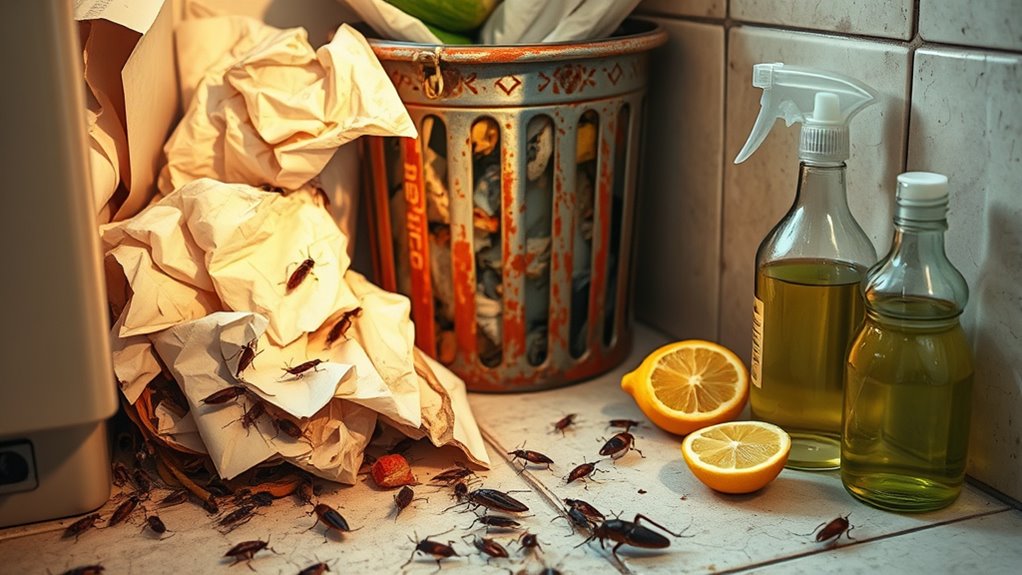

If you have a cockroach problem, try mixing borax and sugar as a bait or use baking soda and boric acid to attract and kill them. Diatomaceous earth is a natural dehydrator, and vinegar with dish soap can provide quick results. For long-term control, apply boric acid pellets, set traps, vacuum regularly, and seal entry points. Natural repellents like essential oils can help keep roaches away. Keep watching to discover more effective home remedies.
Key Takeaways
- Use homemade bait mixtures like borax and sugar or baking soda with boric acid to attract and poison cockroaches effectively.
- Apply diatomaceous earth in cracks and hiding spots to physically dehydrate and kill cockroaches naturally.
- Spray vinegar and dish soap directly on visible roaches for immediate elimination and scent trail disruption.
- Incorporate natural repellents such as peppermint or eucalyptus oils near entry points and dark corners.
- Maintain sanitation, eliminate moisture, and seal entry points to prevent future infestations naturally.
Using Borax and Sugar to Attract and Kill Cockroaches

Using borax and sugar is an effective home remedy to attract and eliminate cockroaches. You mix equal parts of borax and sugar, creating a bait that appeals to roaches’ sweet tooth while poisoning them. Place small amounts of this mixture near cracks, behind appliances, or in dark corners where roaches hide. The sugar draws the pests in, and the borax disrupts their digestive system, killing them within a few days. This method is inexpensive, easy to prepare, and safe to use around children and pets if kept out of reach. Regularly replenishing the bait guarantees continuous protection. Over time, this natural approach can considerably reduce cockroach populations and help keep your home pest-free without resorting to chemical sprays.
Baking Soda and Boric Acid Mixtures for Effective Control
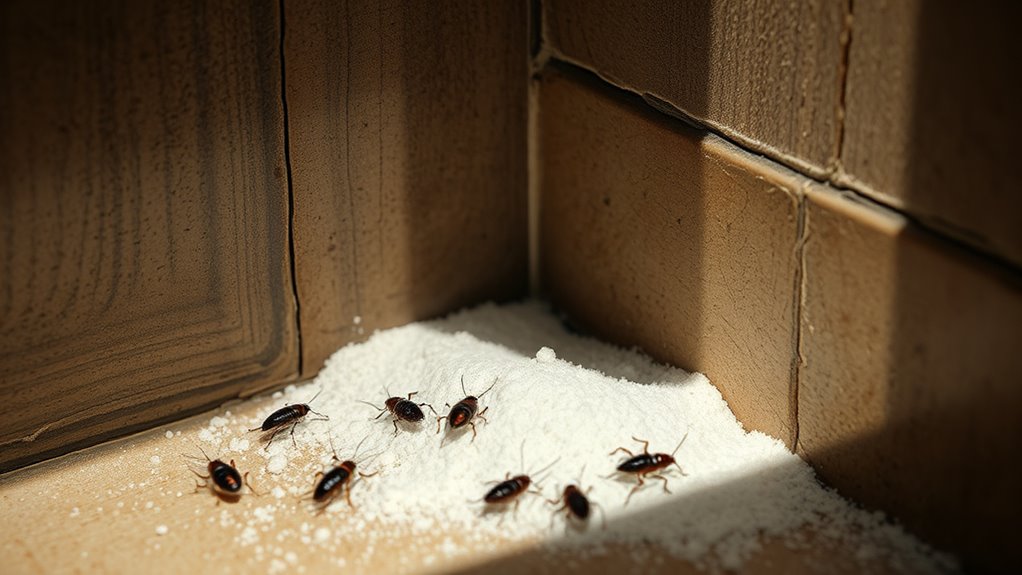
Combining baking soda with boric acid creates a highly effective homemade cockroach bait that enhances your pest control efforts. When you mix 30 parts baking soda with 10 parts boric acid, you produce a potent formula that attracts and kills cockroaches quickly. The baking soda reacts with the acid in their digestive system, causing internal damage, while boric acid acts as a poison upon ingestion. Place small amounts of this mixture near cracks, crevices, and dark corners where roaches hide. The mixture’s strong smell and taste lure cockroaches, prompting them to consume it. As they feed, the combination disrupts their digestion and kills them within hours. Regular placement and monitoring improve control, helping to reduce infestations effectively over time. Additionally, understanding pest control safety measures ensures your efforts are both effective and safe for household members. Incorporating safe handling practices can further minimize risks associated with boric acid and other household remedies. Using proper application techniques ensures the bait is most effective and reduces unintended exposure to pets or children. Employing integrated pest management strategies alongside baiting can provide a more comprehensive approach to eliminating roach problems.
Diatomaceous Earth: A Natural Dehydrating Solution
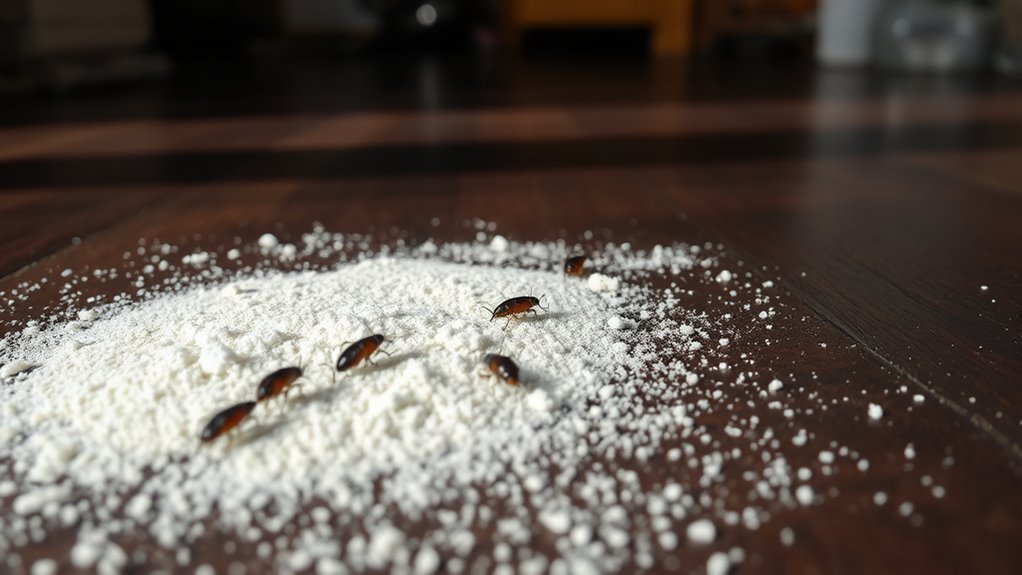
Diatomaceous earth kills cockroaches by dehydrating them on contact, making it a natural option for pest control. To get the best results, you need to apply it carefully in areas where roaches hide, like cracks and crevices. Proper application guarantees it stays effective and minimizes mess.
How Diatomaceous Earth Works
Ever wondered how diatomaceous earth effectively kills cockroaches? It works through physical dehydration. Diatomaceous earth is made of tiny fossilized algae called diatoms, which have sharp, abrasive edges. When cockroaches crawl through it, these particles cling to their exoskeletons and absorb the oils and fats that keep their shells waterproof. Without this protective coating, moisture escapes rapidly, causing the cockroach to dry out and die within hours. Unlike chemical pesticides, diatomaceous earth doesn’t rely on toxins, making it a safer option. It’s most effective when applied in areas where cockroaches frequently travel, like cracks, crevices, and behind appliances. Regular reapplication ensures continuous contact, increasing your chances of eliminating these pests naturally and efficiently. Additionally, understanding pest control techniques can help you target infestations more effectively. Proper application methods also enhance the effectiveness of diatomaceous earth, ensuring better results in your pest management efforts. Using natural remedies like diatomaceous earth offers a non-chemical approach that can be safely used around children and pets. To maximize its effectiveness, consider combining it with other integrated pest management strategies, which can provide a comprehensive solution.
Proper Application Techniques
To guarantee diatomaceous earth works effectively as a natural dehydrating solution, proper application is essential. First, wear a mask to avoid inhaling the fine particles. Lightly dust areas where cockroaches hide, such as cracks, crevices, behind appliances, and under sinks. Use a duster or a small brush to apply a thin, even layer—more isn’t better, as excessive application can be wasteful. Focus on dark, moist spots where roaches are active. Avoid applying diatomaceous earth in areas with high humidity or where it could become wet, as moisture reduces its effectiveness. Reapply weekly or after cleaning to maintain a barrier. Keep food and dishes covered during application, and vacuum or sweep the powder regularly for best results. Proper application techniques ensure maximum efficacy of the product.
Homemade Sprays: Vinegar and Dish Soap for Instant Kill
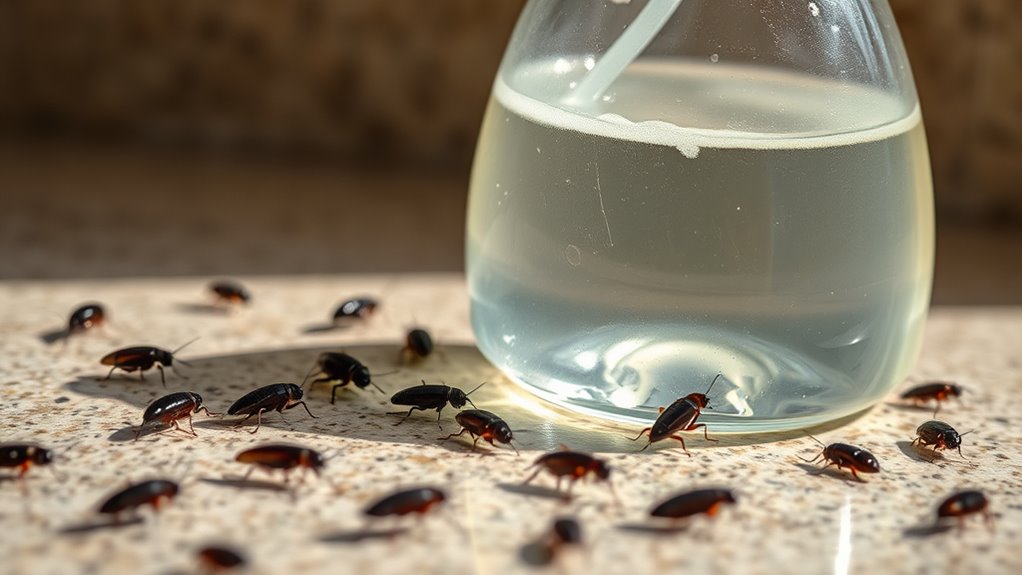
Homemade sprays made from vinegar and dish soap offer a quick, accessible solution for killing cockroaches on contact. To make this spray, mix equal parts white vinegar and water in a spray bottle, then add a few drops of dish soap. Shake gently to combine. When you spot a roach, spray directly on it. The vinegar disrupts their scent trails and repels them, while the dish soap breaks down their exoskeleton, causing dehydration and death. This spray provides immediate results but doesn’t prevent ongoing infestations. Use it as a quick fix in areas where cockroaches are active. Keep in mind, repeated application is necessary for effectiveness, and it’s best combined with other long-term control methods for complete eradication. Additionally, understanding the behavior of cockroaches can help you target their hiding spots more effectively and improve your pest control efforts.
Applying Boric Acid Pellets for Long-Term Reinfestation Prevention
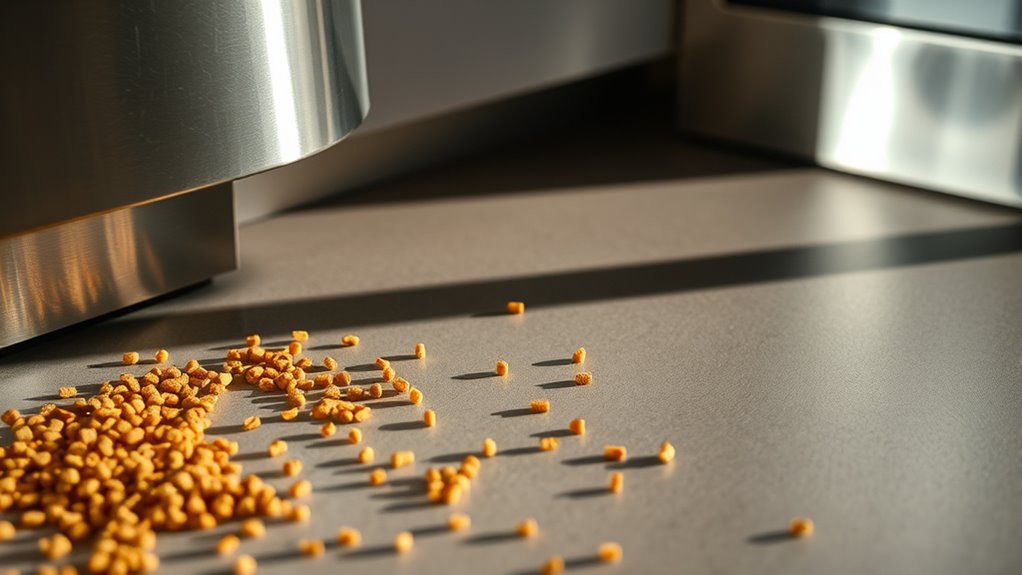
Applying boric acid pellets offers a practical, long-lasting solution to prevent cockroach reinfestation. You should place these pellets near common hiding spots like dark corners, sewage outlets, and wet areas, where cockroaches frequent. The pellets, weighing around 4 grams, attract cockroaches and poison them after ingestion, providing over six months of protection. To help visualize, here’s a quick overview:
| Location | Pellet Placement | Expected Results |
|---|---|---|
| Kitchen corners | Near pipes and drains | Long-term control |
| Bathroom edges | Under sinks and behind toilets | Reduced reinfestation |
| Sewage outlets | Close to sewer access points | Continuous barrier |
This method minimizes the need for frequent reapplication, creating an effective barrier against future cockroach problems. Using baits and traps in conjunction with boric acid can further enhance your pest control strategy. Additionally, understanding pest behavior can help you optimize placement and timing for even better results. Proper sanitation and eliminating food sources also contribute to pest management success.
Employing Traps and Vacuuming as Physical Control Methods
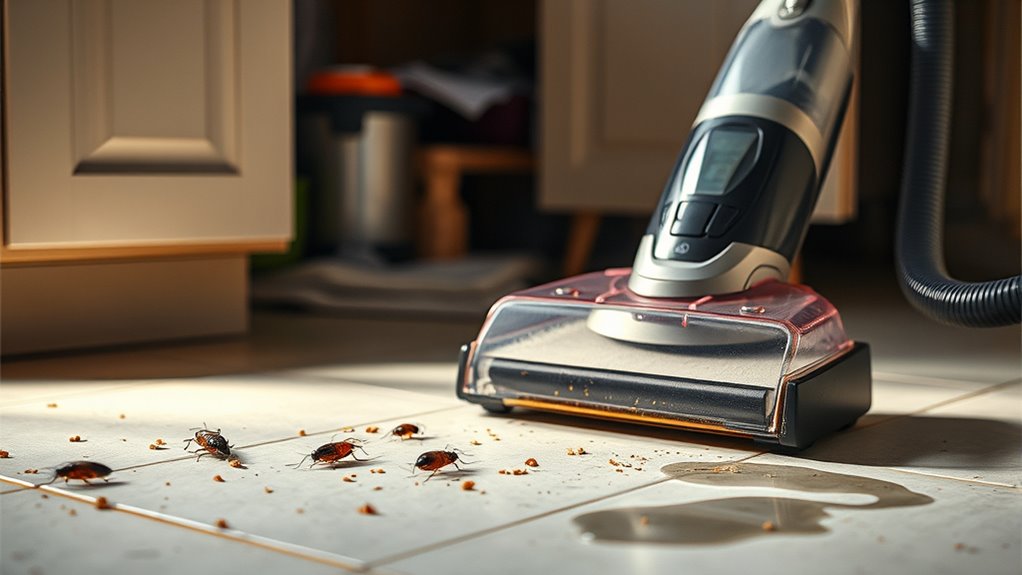
Employing traps and vacuuming provides an effective, chemical-free way to control cockroach populations. Sticky traps attract and capture cockroaches, reducing their numbers, especially in low-infestation areas. Place traps near entry points, behind appliances, and in dark corners. Regularly check and replace them to monitor activity. Vacuuming is another powerful tool; it quickly removes hundreds of cockroaches and their eggs from kitchens, bathrooms, and other infested spots. Use a vacuum with a crevice tool to reach cracks and crevices where cockroaches hide. Consistent vacuuming and trap placement help break the breeding cycle and decrease populations without chemicals. Additionally, employing proper sanitation and moisture control can significantly decrease attractants that draw cockroaches into your home. Maintaining a clean environment reduces food sources that lure cockroaches indoors, making physical control methods more effective. Regularly inspecting entry points and sealing cracks can prevent new infestations. Incorporating monitoring techniques can help you identify problem areas early and address them promptly, helping to understand cockroach activity better and plan your control strategies effectively.
Combining Natural Remedies With Integrated Pest Management Strategies
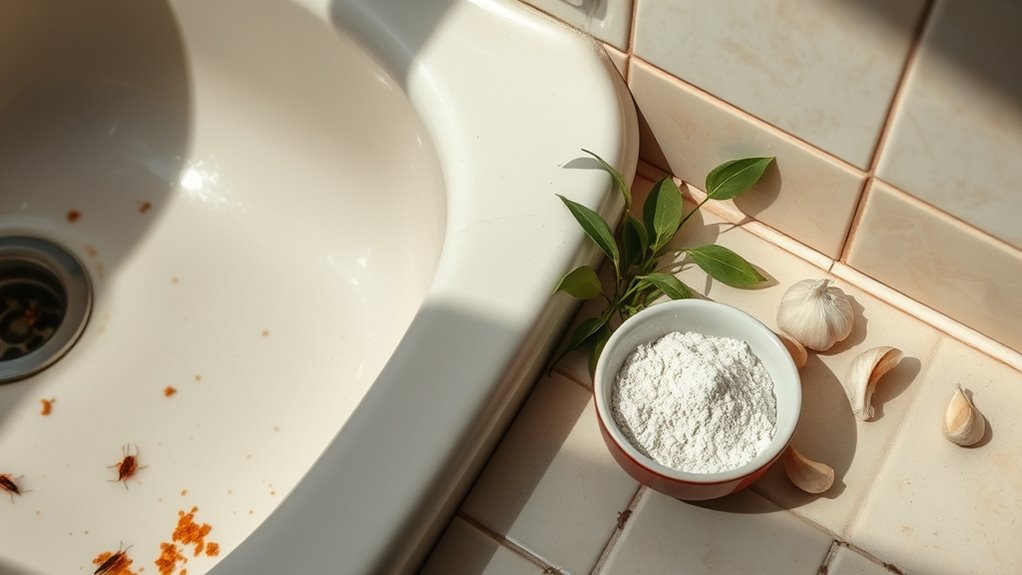
You can boost roach control by combining natural remedies with IPM strategies, making your efforts more effective. Using bait stations along with natural repellents or attractants enhances bait consumption and reduces the need for chemicals. This integrated approach helps lower chemical dependence while improving overall pest management results. Incorporating resale value considerations for alternative methods can also support long-term success in pest management.
Synergizing Natural and IPM
Combining natural remedies with Integrated Pest Management (IPM) strategies creates a powerful approach to controlling cockroach infestations more sustainably and effectively. By integrating homemade solutions like borax and diatomaceous earth with IPM practices such as trapping and sanitation, you reduce reliance on chemicals and enhance control. This synergy targets cockroaches at multiple stages, decreasing populations faster. To optimize results, consider the following:
| Natural Remedies | IPM Strategies |
|---|---|
| Borax with sugar attracts and kills | Trapping and vacuuming remove adults |
| Diatomaceous earth dehydrates cockroaches | Regular cleaning minimizes hiding spots |
| Essential oils disrupt lifespan | Use targeted bait stations |
This combined approach minimizes resistance, reduces chemical use, and promotes long-term suppression. Additionally, understanding the role of pest behavior can help tailor more effective control methods. Recognizing cockroach hiding spots is essential for implementing successful sanitation and trapping strategies.
Enhancing Bait Effectiveness
Integrating natural remedies with bait strategies can considerably boost cockroach control by addressing multiple vulnerabilities simultaneously. For example, placing boric acid pellets near bait stations enhances their effectiveness by offering a lethal contact point. You can also use diatomaceous earth around bait areas to dehydrate cockroaches that feed on bait or crawl nearby. Incorporate natural attractants like sugar or food scraps with bait to lure cockroaches more effectively. Combining homemade remedies, such as borax and baking soda, with commercial bait stations encourages cockroaches to consume lethal doses faster. Regularly monitoring bait stations and supplementing with natural deterrents creates a multi-layered approach that targets cockroaches at different stages and reduces their chances of resistance. This synergy maximizes control while minimizing chemical reliance.
Reducing Chemical Dependence
To effectively reduce reliance on chemical pesticides, incorporating natural remedies into your pest management routine offers a sustainable and safer alternative. You can enhance control by:
- Regularly vacuuming and trapping to physically remove cockroaches, reducing populations without chemicals.
- Using boric acid pellets near entry points and dark corners, which can prevent reinfestation for months.
- Applying diatomaceous earth in high-traffic areas, dehydrating cockroaches on contact.
- Combining homemade bait mixtures like borax and sugar, which attract and kill pests naturally.
Integrating these methods with IPM strategies—such as improved sanitation and targeted trapping—minimizes chemical use while maintaining effective control. This approach not only reduces resistance issues but also promotes a healthier living environment.
Leveraging Plant Extracts and Essential Oils to Deter Cockroaches

Plant extracts and essential oils offer a natural way to deter cockroaches without relying on chemical pesticides. You can use oils like peppermint, eucalyptus, or tea tree around your home’s entry points, cracks, and dark corners. Their strong scents disrupt cockroach senses, making your space less inviting. To maximize effectiveness, mix a few drops of essential oil with water and spray it in problem areas regularly. You can also place cotton balls soaked in essential oils near hiding spots or entryways. These natural repellents are safe for your family and pets and can reduce cockroach activity over time. Keep in mind, while essential oils help deter cockroaches, combining them with good sanitation and trapping offers stronger, more sustainable control.
Frequently Asked Questions
Are Home Remedies Safe for Children and Pets?
Home remedies can be safe for children and pets if you use caution and proper placement. Avoid spreading boric acid, baking soda, or diatomaceous earth where little hands or paws can reach. Use natural alternatives like vinegar sprays outdoors or in well-ventilated areas, and keep traps away from children and pets. Always read product labels and consult a professional if you’re unsure about safety. Proper handling minimizes risks and keeps your home safe.
How Quickly Can I See Results Using These Remedies?
Results from home remedies are like seeds planted in hope—they may sprout quickly or take time to flourish. You might see dead roaches within hours of using sprays or contact treatments, but eradication often takes days or weeks. Traps and vacuuming steadily reduce numbers, while natural remedies like boric acid or diatomaceous earth gradually weaken the infestation. Patience and persistence turn small efforts into a victory over pests.
Can These Methods Completely Eliminate a Severe Infestation?
You can’t rely solely on home remedies to completely eliminate a severe infestation, but they can substantially reduce the population. Combining methods like bait stations, boric acid pellets, vacuuming, and traps improves your chances. However, for total eradication, especially in severe cases, you’ll likely need professional pest control, which uses targeted treatments and integrated strategies to address hidden nests and resistant roaches effectively.
How Often Should I Reapply or Replace Homemade Treatments?
You should reapply homemade treatments every 1 to 2 weeks for best results. Studies show that boric acid pellets can prevent reinfestation for over 6 months when used correctly, but regular reapplication guarantees continuous control. Homemade remedies like borax-sugar mixes or diatomaceous earth lose effectiveness over time, so consistent reapplication helps maintain their pest-killing power. Monitor your infestation level and reapply as needed to keep cockroaches at bay.
Do Natural Remedies Work Better Indoors or Outdoors?
Natural remedies generally work better indoors because they target the environment where cockroaches hide and breed. Inside, substances like boric acid, diatomaceous earth, or homemade bait can effectively dehydrate or poison cockroaches near their hiding spots. Outdoors, these remedies may be less effective due to weather, wider spaces, and other natural pest controls. Focus on indoor treatments for quicker, more visible results in controlling cockroach populations.
Conclusion
Now that you know these home remedies, the fight against cockroaches might seem manageable. But be warned—these pests are cunning and persistent. Will your natural solutions hold up when they return? Stay vigilant, combine methods wisely, and keep an eye out for signs of reinfestation. The battle isn’t over yet, and the next surprise could be just around the corner. Are you ready to outsmart them once and for all?