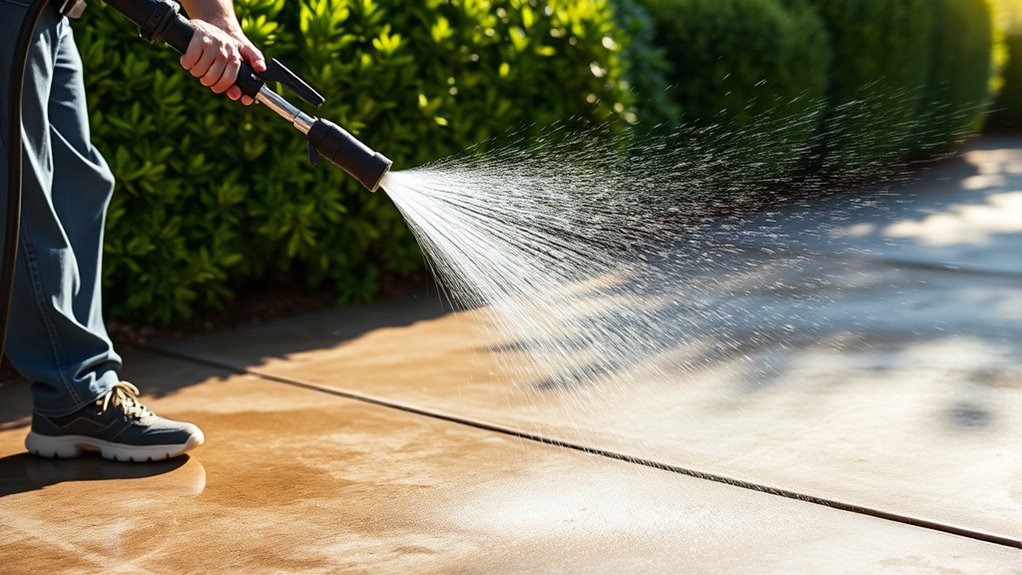

To power wash your driveway or deck effectively, select the right equipment—gas or electric based on size—and use the proper nozzles like a 25-degree for decks or a rotating tip for tough grime. Clear your area, pre-soak surfaces, and work in small sections, maintaining 3-4 inches from the surface. Always follow safety tips and proper techniques. Keep improving your skills with these essential guidelines as you develop your cleaning routine.

Get everyday essentials delivered free with Prime
- Fast, free delivery on millions of items
- Prime Video, Amazon Music and more included
- Member-only deals all year
Key Takeaways
- Choose the right pressure washer and nozzle for your surface to prevent damage and ensure effective cleaning.
- Clear debris and pre-soak surfaces with suitable detergent before pressure washing.
- Maintain a 3-4 inch distance from the surface, using smooth, even strokes for thorough cleaning.
- Use appropriate spray patterns—25-degree for decks, rotating nozzles for stubborn grime.
- Turn off equipment, disconnect hoses, and store properly after cleaning to prolong equipment lifespan.
gas pressure washer for driveway
As an affiliate, we earn on qualifying purchases.
As an affiliate, we earn on qualifying purchases.
Choosing the Right Equipment for Your Cleaning Project
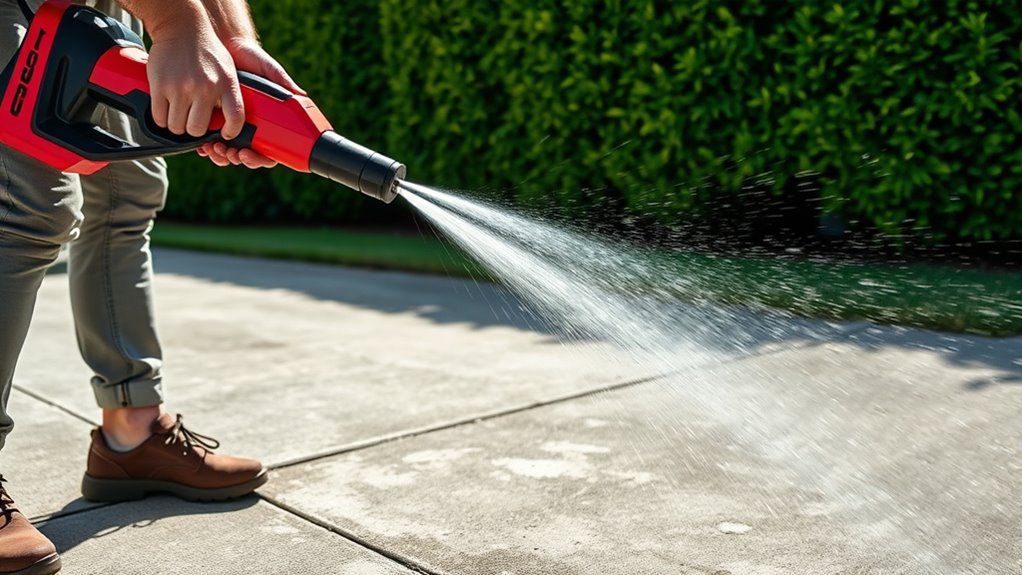
Choosing the right equipment is essential to guarantee your cleaning project is effective and efficient. First, consider the size and scope of your task. For heavy-duty cleaning, like removing stubborn grime from a large driveway, a gas-powered pressure washer with high PSI will deliver the power you need. If you’re working on smaller areas or want a budget-friendly option, an electric pressure washer with up to 3,100 PSI can handle decks and patios effectively. Additionally, surface cleaners with rotating nozzles help maintain consistent distance and avoid streaks, resulting in a smoother finish. Quick-connect nozzles make switching spray patterns simple, allowing you to adapt quickly to different surfaces. Selecting the right pressure washer and accessories guarantees you complete your project efficiently without risking surface damage. Energy-efficient technology in pressure washers can also reduce energy consumption, making your cleaning more sustainable. Incorporating appropriate accessories can further enhance cleaning efficiency and protect your surfaces during pressure washing. Utilizing proper tip sizes ensures you apply the right amount of pressure for different surfaces, preventing damage and achieving optimal results. Being aware of pressure washer safety guidelines helps prevent accidents and ensures a safe cleaning process. Additionally, choosing equipment with smart technology integration can allow for better control and monitoring during your cleaning tasks, ensuring optimal performance.
electric pressure washer for decks
As an affiliate, we earn on qualifying purchases.
As an affiliate, we earn on qualifying purchases.
Preparing Your Space and Planning Your Approach

Proper preparation and planning are essential to achieving the best results with your pressure washing project. First, clear your space of furniture, planters, and debris to ensure unobstructed access. Pre-soak the surface with an appropriate deck wash detergent to loosen stubborn dirt and algae. Start at the highest corner of your deck or driveway to use gravity for water runoff. Identify the water flow direction to prevent dirty water from drying on surfaces. Also, consider the surface’s grain or texture to guide your spray technique, avoiding damage. Measure and map out your approach, deciding where to begin and how to move across the area. Proper planning minimizes missed spots, reduces rework, and protects your surfaces during cleaning. Surface preparation is a critical step that helps prevent damage and ensures thorough cleaning. Additionally, understanding the best equipment and techniques can significantly improve your cleaning efficiency and results. Consulting pressure washer settings and manufacturer guidelines can further help you adjust your approach for different surfaces and conditions. Using the correct pressure levels is also vital to avoid surface damage while achieving effective cleaning. Taking time to plan your approach beforehand can lead to more consistent and satisfactory results, saving you time and effort in the long run.
As an affiliate, we earn on qualifying purchases.
Selecting Nozzles and Applying Proper Spray Techniques
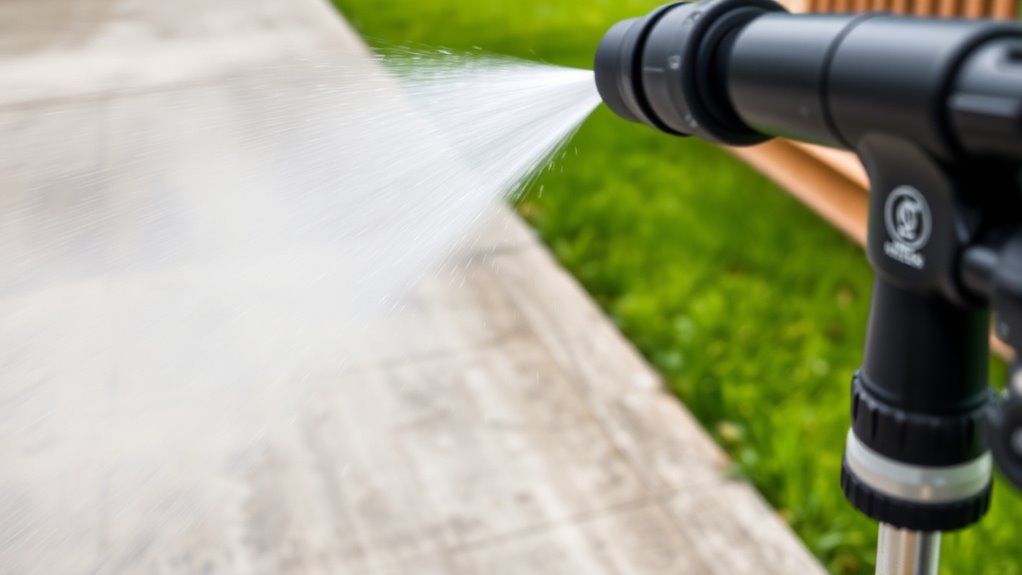
Selecting the right nozzles and mastering spray techniques are essential for effective pressure washing without damaging surfaces. Choose nozzles based on the surface and dirt level; a 25-degree nozzle works well for wood decks, kept under 1,200 PSI. For stubborn grime, rotating nozzles at slight angles provide thorough cleaning without harm. Keep the spray tip three to four inches from the surface to avoid damage. Always angle the spray perpendicular to your movement, moving in smooth, even strokes. Lift the spray gun slightly at the end of each pass to prevent marks. Use adjustable nozzles to control spray width and soap application, ensuring even coverage. Proper nozzle selection and technique maximize cleaning while protecting your deck or driveway from unnecessary wear.
surface cleaner for pressure washer
As an affiliate, we earn on qualifying purchases.
As an affiliate, we earn on qualifying purchases.
Cleaning Specific Surfaces: Driveways and Decks
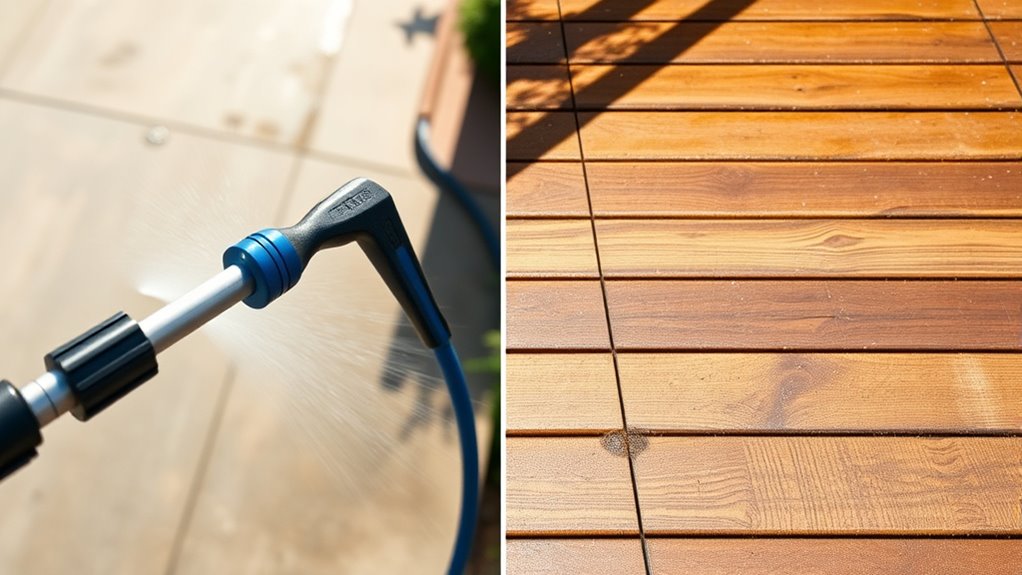
Cleaning driveways and decks requires a targeted approach to guarantee thorough removal of dirt, grime, and algae without causing damage. Start by clearing the surface of furniture, debris, and loose dirt. Pre-soak with a suitable detergent to loosen stubborn stains and organic matter. Use a pressure washer with the appropriate nozzle—typically a 25-degree for decks and a wider or rotating nozzle for driveways—to avoid surface damage. Keep the nozzle three to four inches from the surface, moving in steady, even strokes along the grain of wood or the pattern of concrete. Work in small sections to ensure even cleaning and prevent missed spots. Rinse thoroughly, directing water flow away from clean areas to avoid recontamination. Proper technique results in a clean, refreshed surface without harm. Understanding pressure washer nozzle types can help you select the right equipment for each cleaning task. Additionally, being aware of surface cleaning techniques can improve your results and protect delicate surfaces during pressure washing. Using the correct pressure settings ensures effective cleaning without risking surface damage.
A thorough understanding of pressure washer components can also help you troubleshoot common issues and optimize your cleaning process.
Post-Cleaning Steps and Safety Tips
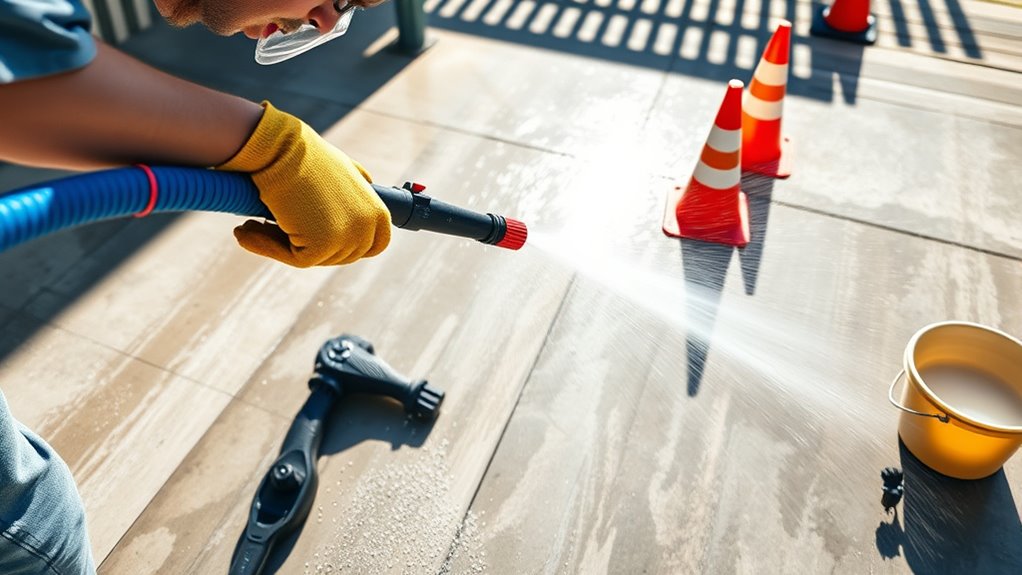
After finishing pressure washing, it’s important to thoroughly inspect your work to guarantee all dirt and residue are removed. Check for missed spots or stubborn stains and re-clean if necessary. Once satisfied, turn off your equipment and release any remaining pressure before disconnecting hoses. Store your pressure washer in a dry, sheltered area to prevent damage. Wear gloves and eye protection during cleanup, especially when handling chemicals or residual dirt. Keep the area clear of bystanders and pets until surfaces are completely dry to avoid slips. Avoid direct contact with cleaning chemicals and rinse thoroughly to remove soap residues. Properly de-scale and store your equipment to prevent buildup and corrosion. Regular maintenance, including inspecting nozzles and hoses, helps ensure safe operation and extends your equipment’s lifespan. Applying pump saver to your pressure washer is a crucial step for preventing damage and corrosion, ultimately prolonging its usability. Additionally, paying attention to safety precautions can help avoid accidents and injuries during and after cleaning. Proper post-cleaning care ensures safety and prolongs your tools’ effectiveness. Remember, maintaining your equipment according to manufacturer guidelines can also help avoid unexpected breakdowns and costly repairs. Being aware of equipment maintenance best practices can save you time and money in the long run.
Frequently Asked Questions
How Often Should I Power Wash My Driveway or Deck?
You should power wash your driveway and deck annually or biannually, depending on their condition and exposure to dirt, algae, or mold. Regular cleaning helps maintain their appearance and prevents buildup that can cause damage over time. If you notice heavy staining or algae growth sooner, don’t hesitate to clean it promptly. Consistent maintenance will extend the life of your surfaces and keep them looking fresh and well-maintained.
Can I Use a Pressure Washer on Painted or Stained Surfaces?
Yes, you can use a pressure washer on painted or stained surfaces, but you must proceed with caution. Modern electric models can reach up to 3,100 PSI, so choose a lower pressure setting and a wide-angle nozzle, like a 25-degree, to prevent damage. Always test on a small, hidden area first, keep the nozzle at least three inches away, and avoid direct, high-pressure sprays to preserve your finish.
What Environmental Precautions Should I Take During Power Washing?
You should guarantee runoff water doesn’t contaminate plants, lawns, or storm drains. Use eco-friendly detergents and avoid harsh chemicals that can harm the environment. Protect nearby vegetation with plastic sheeting if needed. Work during dry, calm weather to prevent overspray from spreading. Also, aim your spray downward and away from sensitive areas. Properly dispose of dirty water and chemicals to minimize environmental impact during your power washing project.
How Do I Prevent Streaks or Uneven Cleaning Results?
Did you know that using the right nozzle and technique can improve cleaning efficiency by up to 50%? To prevent streaks or uneven results, always select a nozzle suited for the surface, like a 25-degree for wood decks under 1,200 PSI. Keep the spray perpendicular, maintain consistent distance, and move in smooth, even passes. Feathers the spray at the end of each pass, and work in small sections for uniform, streak-free cleaning.
What Are the Signs My Pressure Washer Needs Professional Repair?
If your pressure washer is making strange noises, leaking water, or not generating enough pressure, it’s time to get professional repair. You might also notice inconsistent spray patterns, difficulty starting, or excessive vibration during operation. These signs indicate internal issues or worn parts that need expert attention. Ignoring these problems can lead to further damage, so don’t hesitate to consult a professional to keep your equipment running smoothly.
Conclusion
Think of your driveway or deck as a canvas waiting for renewal. With the right pressure and technique, you’re not just cleaning surface dirt—you’re restoring its life and beauty. Each spray is a brushstroke, revealing freshness beneath grime. When you finish, you’ll see your space transformed, symbolizing your effort and care. Embrace the power washing process as a chance to refresh not just your home, but your outlook, turning dirt into clarity and neglect into pride.
Halloween Picks
halloween
As an affiliate, we earn on qualifying purchases.