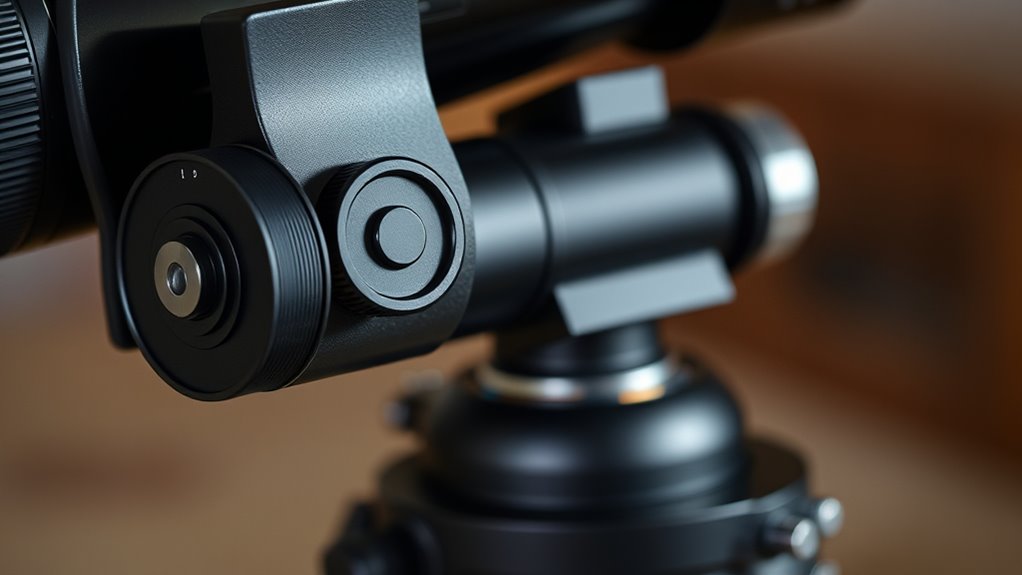

If you’re looking for the best equatorial mount with a belt drive system for precision astrophotography, I recommend the iEXOS-100-2 PMC-Eight. Its eight independent CPUs improve responsiveness, while the belt drive guarantees smooth, accurate tracking. With high motor precision, ample load capacity, and seamless WiFi and Bluetooth connectivity, it offers outstanding performance and ease of setup. Keep going to discover how this system can elevate your astrophotography to new heights.
Key Takeaways
- Look for mounts with high-precision, quiet belt drive systems and multiple independent CPUs for enhanced responsiveness and stability.
- Ensure the mount has a proven track record in astrophotography, offering smooth tracking and minimal backlash for long exposures.
- Check compatibility with your optical equipment and control interfaces like WiFi, Bluetooth, or dedicated apps.
- Prioritize models with robust load capacities and high motor speeds for reliable handling of heavier payloads.
- Consider user reviews and expert recommendations highlighting durability, ease of setup, and advanced alignment features.

iEXOS-100-2 PMC-Eight Equatorial Tracker System Tripod and Mount for Astrophotography with WiFi and Bluetooth Compatible
Integrated Explore Scientific PMC-Eight system that transcends the industry standard single processor by utilizing eight CPUs that operate...
As an affiliate, we earn on qualifying purchases.
iEXOS-100-2 PMC-Eight Astrophotography Tracker System (WiFi & Bluetooth)
https://m.media-amazon.com/images/I/61iEQesc8fL._AC_SX679_.jpg
If you’re serious about astrophotography and need a reliable, precise tracking solution, the iEXOS-100-2 PMC-Eight system is an excellent choice. It features an integrated system with eight independent CPUs, boosting responsiveness and reliability. The belt drive system uses quiet stepper motors and clutched dual-axis worm gears for smooth, precise movement, making alignment quick and effortless. Connectivity is seamless via WiFi and Bluetooth, and the intuitive ExploreStars app simplifies control on any device. Its advanced mechanics and software ensure accurate tracking, helping you capture stunning images without frustration. This system truly elevates your astrophotography experience with speed, precision, and user-friendly operation.
Best For: serious astrophotographers seeking a reliable, precise tracking system with advanced connectivity and user-friendly operation.
Pros:
- Integrated with eight independent CPUs for superior responsiveness and reliability
- Smooth, precise movement thanks to belt drive and clutched dual-axis worm gears
- Seamless connectivity via WiFi and Bluetooth with an intuitive app for easy control
Cons:
- May require initial setup and calibration for optimal performance
- Higher cost compared to simpler tracking solutions
- Compatibility depends on device and app updates, which may occasionally introduce limitations
Factors to Consider When Choosing Equatorial Mounts With Belt Drive Systems
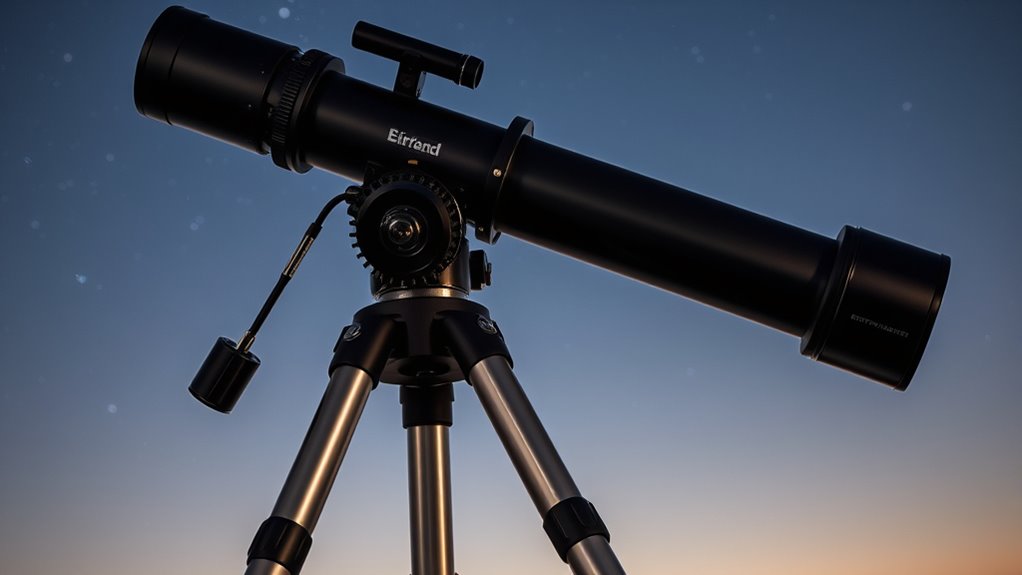
When choosing an equatorial mount with a belt drive system, I consider factors like motor precision and speed to guarantee accurate tracking. Load capacity limits are also key, so I match the mount to my gear without overloading it. Additionally, I look at mechanical smoothness, system compatibility, and how easy it is to set up for a seamless astrophotography experience.
Motor Precision and Speed
Motor precision and speed are critical factors in selecting an equatorial mount with a belt drive system because they directly impact tracking accuracy and overall performance. High motor precision, such as stepper motors with fine step resolution, ensures smoother and more consistent movements, which are essential for precise star tracking during long exposures. Faster motor speeds allow for quick repositioning and alignment, minimizing setup time and maximizing observing efficiency. Additionally, motor torque plays a role in handling heavier loads without sacrificing accuracy or stability. Consistent motor performance is crucial for maintaining long-term reliability and reducing drift during extended imaging sessions. Fundamentally, choosing a mount with precise, fast, and reliable motors leads to sharper images and a better astrophotography experience.
Load Capacity Limits
Load capacity limits are a crucial consideration when choosing an equatorial mount with a belt drive system because they directly impact stability and tracking accuracy. If you exceed the recommended weight, the mount can experience mechanical strain, leading to increased wear and potential damage. Manufacturers determine load limits based on the mount’s structural design, motor strength, and belt drive capacity. Properly matching your telescope and accessories to the mount’s load capacity guarantees maximum performance and extends its lifespan. Overloading the system can cause belt slippage, gear damage, and decreased tracking precision, which hampers your astrophotography efforts. Always adhere to the specified load limits to maintain accurate tracking and prevent costly repairs, ensuring your mount performs reliably over time.
Mechanical Smoothness
Achieving mechanical smoothness in belt drive systems hinges on the quality of components like gears, belts, and pulleys. High-quality materials and precise manufacturing reduce vibrations and jitter, resulting in steadier tracking. Using robust stepper motors and proper belt tensioning is essential to minimize backlash and ensure consistent motion. Dual-axis worm gears paired with belt drives offer smoother operation and less backlash compared to simpler systems. Proper alignment and calibration are critical; even minor misalignments can cause uneven movement and compromise tracking accuracy. Mechanical smoothness directly affects your astrophotography results, especially during long exposures. When choosing a mount, prioritize those with well-engineered belt systems and reputable components, as these factors are fundamental to achieving the smooth, precise tracking necessary for high-quality imaging.
System Compatibility
When selecting an equatorial mount with a belt drive system, it’s vital to evaluate how well it integrates with your existing equipment and accessories. First, verify the belt drive is compatible with your telescope’s optical tube and mounting accessories to prevent fit issues. Check if the mount supports standard tripod or pier interfaces for seamless setup. It’s also important to confirm that the system can handle your astrophotography equipment’s payload capacity, preventing overloading. Additionally, review available control interfaces like WiFi, Bluetooth, or dedicated hand controllers to match your preferred operation method. Finally, verify the software used for imaging and mount control is compatible with the belt drive system, enabling smooth, reliable operation without compatibility issues.
Ease of Setup
Choosing an equatorial mount with a belt drive system can considerably simplify the setup process, especially for beginners or those seeking efficiency. Many models feature quick-release mechanisms that make initial setup and balancing quicker and easier. The belt drive design reduces the need for frequent gear adjustments, saving time and frustration. Integrated polar alignment aids help streamline the process of achieving accurate celestial alignment, which is essential for good astrophotography. Some mounts even include motorized or automated calibration routines, making setup less intimidating for newcomers. Additionally, the smooth operation of belt drives minimizes vibrations during setup, helping you achieve stable and precise positioning more effortlessly. Overall, these features make setting up a belt drive mount more intuitive and less time-consuming.
Price and Value
Belt drive systems in equatorial mounts often come at a higher price than traditional gear drives, reflecting their advanced design and precision components. While the cost is higher, this often translates into better tracking accuracy, quieter operation, and reduced backlash—key benefits for astrophotographers seeking sharp images. When weighing price and value, consider the mount’s durability and maintenance needs; quality belts can extend the lifespan and reduce long-term costs. Some models also feature smoother motion, which justifies the investment through enhanced performance. Additionally, compatibility with your existing equipment, ease of use, and included features influence overall value. Ultimately, choosing a belt drive mount is about balancing upfront costs with the long-term benefits of improved precision and reliability.
Frequently Asked Questions
How Does Belt Drive Improve Astrophotography Accuracy?
Belt drives improve astrophotography accuracy by providing smoother, quieter, and more precise tracking compared to traditional gears. I’ve noticed that with a belt drive, there’s less backlash and vibration, which means my images are sharper and more detailed. The system also reduces periodic error, helping me maintain perfect alignment during long exposures. Overall, belt drives give me the stability I need to capture stunning astrophotography shots with minimal disturbances.
Can Belt Drive Mounts Handle Heavy Astrophotography Equipment?
Think of belt drive mounts as the marathon runners of astrophotography—they’re built for endurance. Yes, they can handle heavy equipment, especially when designed with robust materials and high-torque motors. I’ve used them for my own setups, and they provide stable, precise tracking even with substantial gear. Just make certain you choose a model specifically rated for your weight needs, and you’ll enjoy smooth, reliable performance in your deep-sky adventures.
What Maintenance Is Required for Belt Drive Systems?
I keep my belt drive system in top shape by regularly inspecting the belts for signs of wear or slack. I clean the gears and pulleys with a soft brush to remove dust and debris, and I check the tension to guarantee smooth operation. Lubricating moving parts occasionally helps prevent stiffness. Doing these simple maintenance steps ensures my mount stays precise and reliable during those critical astrophotography sessions.
Are Belt Drive Mounts Suitable for Beginner Astronomers?
Absolutely, belt drive mounts are great for beginners! I initially thought they’d be complicated, but I found they’re quite user-friendly and smooth to operate. They help reduce vibrations and improve tracking accuracy, which is perfect when you’re just starting out. Plus, many models come with straightforward setup instructions, making your first astrophotography experience enjoyable and less frustrating. So, yes, belt drive mounts are a solid choice for novices.
How Does Wifi and Bluetooth Integration Benefit Astrophotography?
Wi-Fi and Bluetooth integration make astrophotography more convenient by letting me control my mount wirelessly from my smartphone or tablet. I don’t have to fuss with tangled cables or be close to my equipment, which gives me more flexibility in my setup. Plus, I can easily adjust settings, track objects, and capture images remotely, making the entire process smoother and more enjoyable.
Conclusion
Choosing the right equatorial mount with a belt drive system can truly elevate your astrophotography. Did you know that professional astrophotographers often see up to a 50% improvement in tracking accuracy with the iEXOS-100-2? Investing in the right system not only enhances image sharpness but also makes setup smoother and more enjoyable. Trust me—getting the perfect mount is a game-changer that brings the cosmos closer than ever before.