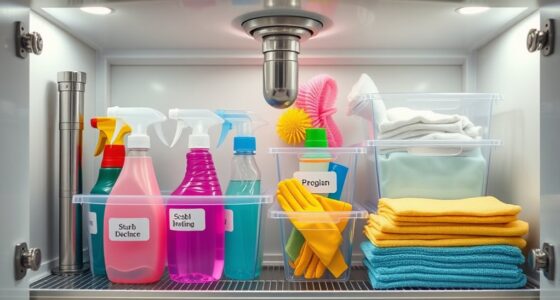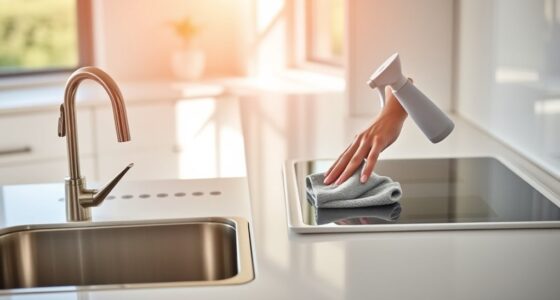
If your tub or shower is stained, start by identifying the stain type—whether it’s soap scum, mineral deposits, rust, or hard water stains. Use natural solutions like vinegar and baking soda for easy cleaning, or try lemon juice and baking soda for rust spots. Regularly wipe surfaces dry and consider applying a protective sealant to keep them bright. For more effective tricks and tips, explore ways to restore your bath’s pristine shine.

Get everyday essentials delivered free with Prime
- Fast, free delivery on millions of items
- Prime Video, Amazon Music and more included
- Member-only deals all year
Key Takeaways
- Identify the stain type (lime, soap scum, rust) to choose the most effective cleaning method.
- Use a vinegar and baking soda mixture to remove soap scum and mineral deposits safely.
- Apply lemon juice and baking soda paste to treat rust stains; let sit before gentle scrubbing.
- Regularly wipe and dry surfaces after use to prevent future stains and maintain brightness.
- For stubborn stains, consider commercial cleaners or sealants designed for bathroom surfaces.
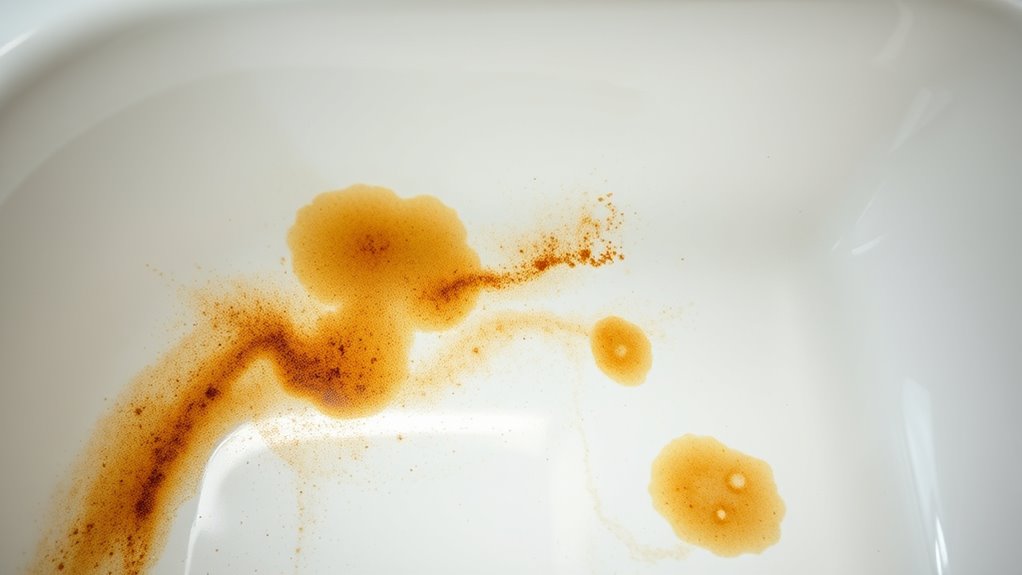
Have you ever noticed stubborn stains ruining the look of your tub or shower? Those unsightly marks can make your bathroom feel dingy, but don’t worry—cleaning techniques and stain removal methods can help restore its brightness. The key is understanding what causes the stains and choosing the right approach for effective removal.
Start by identifying the type of stain you’re dealing with. Lime and hard water deposits often appear as white or chalky patches, while soap scum looks like a greasy film. Rust stains tend to have a reddish-brown hue. Once you know what you’re up against, you can select the best stain removal methods. For soap scum or mineral deposits, a mixture of white vinegar and baking soda works wonders. Spray the vinegar directly onto the stain, let it sit for a few minutes to loosen the grime, then sprinkle baking soda over it. Use a soft scrub brush or sponge to gently scrub away the residue. Rinse thoroughly with warm water to reveal a cleaner surface. For tougher mineral buildup, a commercial descaling cleaner designed for bathrooms can be effective. Follow the instructions carefully to avoid damaging your surfaces.
Identify stain types first; use vinegar and baking soda for soap scum and mineral deposits.
Rust stains require a different approach. You can try applying a paste made from lemon juice and baking soda directly onto the stain. Let it sit for 15-20 minutes before scrubbing gently with a soft cloth or sponge. For persistent rust, commercial rust removers are available, but make sure to test a small area first to prevent damage. If your tub or shower has soap scum that’s particularly stubborn, a mixture of dish soap and warm water combined with a non-abrasive scrub pad can lift away greasy residues. For more delicate surfaces, avoid harsh abrasives that might scratch or dull the finish. Regular maintenance can prevent these stains from becoming a problem in the first place. Wipe down your tub or shower after each use to remove soap residue and water spots. Using a squeegee or microfiber cloth helps keep surfaces dry and pristine. Additionally, choosing appropriate cleaning products designed for bathroom surfaces can help prevent future stains. Consider applying a protective sealant or coating designed for bathroom surfaces to guard against future stains. Consistent cleaning with appropriate techniques will prolong the look of your bathtub and shower, keeping them bright and inviting.
As an affiliate, we earn on qualifying purchases.
Frequently Asked Questions
Can I Use Household Cleaning Products to Remove Stains?
Yes, you can use household cleaning products for stain removal, but be careful with DIY hacks. For stubborn stains, try a mixture of baking soda and vinegar or a gentle bleach solution, ensuring proper ventilation. Always test a small area first to avoid damage. Using common products smartly helps whiten and brighten bath surfaces effectively, but avoid harsh chemicals that might harm your tub or shower.
How Often Should I Clean to Prevent Staining Buildup?
You should clean your tub or shower at least once a week to prevent staining buildup. Regular cleaning maintains surface brightness and reduces grime, soap scum, and mineral deposits. By sticking to a consistent cleaning frequency, you’ll effectively prevent stains from forming and keep your bath surfaces looking bright and fresh. Don’t forget to use gentle, non-abrasive products to preserve the finish while promoting stain prevention.
Are There Eco-Friendly Solutions for Whitening Bath Surfaces?
Yes, you can use eco-friendly alternatives like natural stain removers to whiten your bath surfaces. Ingredients such as baking soda, hydrogen peroxide, and lemon juice work effectively without harming the environment. You simply mix and apply these solutions to stains, then scrub gently. These natural remedies are safe for you and your family, and they help maintain a bright, clean bath surface sustainably.
Will Bleaching Harm the Finish of My Tub or Shower?
You might wonder if bleaching will harm your shower surface or bathtub paint. The truth is, aggressive bleach can damage finishes, causing discoloration or deterioration over time. If you want a bright, clean look without risking harm, opt for gentle, eco-friendly cleaners designed specifically for bath surfaces. Always test a small area first. Protect your investment and keep your shower surface looking new by choosing the right cleaning approach.
How Long Does It Take for Whitening Treatments to Show Results?
Whitening treatments typically show results within a few minutes to a few hours, depending on the product and stain severity. The stain removal timeline varies, but most treatments begin whitening your bath surfaces quickly. For deeper stains, you might need to leave the treatment on longer or repeat applications. Always follow the product instructions for the best whitening treatment duration and to guarantee safe, effective stain removal.
As an affiliate, we earn on qualifying purchases.
Conclusion
Now that you know how to tackle stains and brighten your bath surfaces, your tub or shower can shine like a star in a clear night sky. Think of your cleaning routine as a gentle dance, restoring beauty and brightness with each step. With a little effort and the right tools, you’ll turn your stained surfaces into a sparkling oasis. So go ahead—bring back that fresh, inviting glow and enjoy your bath time sanctuary once again.
As an affiliate, we earn on qualifying purchases.
As an affiliate, we earn on qualifying purchases.
Halloween Picks
halloween
As an affiliate, we earn on qualifying purchases.