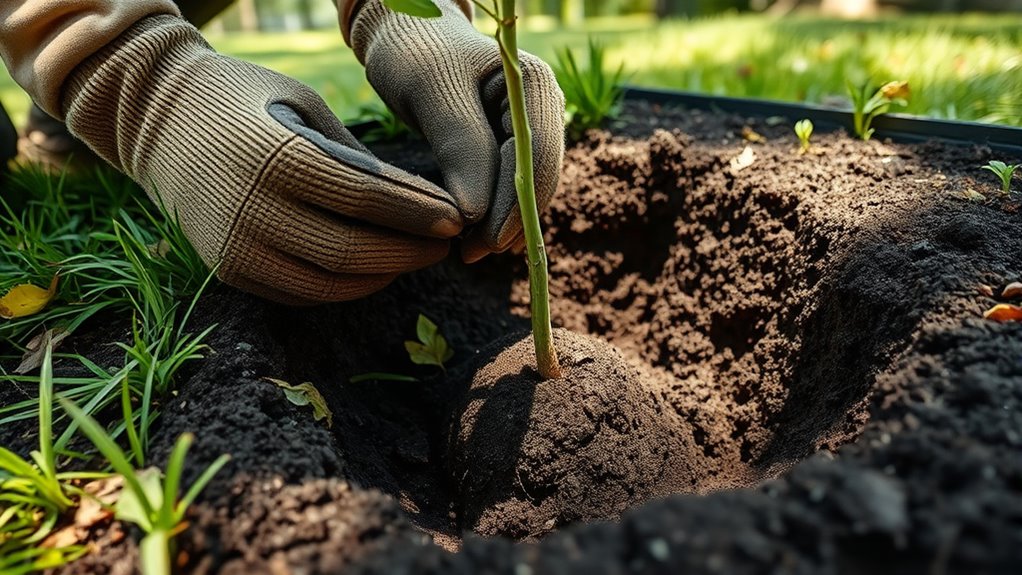

To plant a tree correctly, start by examining the root ball and carefully removing any wire or burlap without damaging the roots. Dig a wide, shallow hole, and loosen circling roots to promote outward growth. Mix organic amendments into native soil, then place the tree so the top of the root ball is level with or above ground. Water thoroughly, mulch to retain moisture, and apply fertilizer as needed. Follow these steps to help your tree establish healthy roots—there’s more to learn for success.
Key Takeaways
- Examine and prepare the root ball, removing wire or burlap carefully to prevent damage.
- Dig a hole twice as wide as the root ball, keeping it no deeper than the top of the root ball.
- Mix native soil with organic amendments and fill the hole, positioning the root ball level with the ground.
- Water thoroughly after planting and mulch with organic material to retain moisture and regulate temperature.
- Use appropriate fertilizers and avoid over-fertilizing to promote healthy root development and plant establishment.
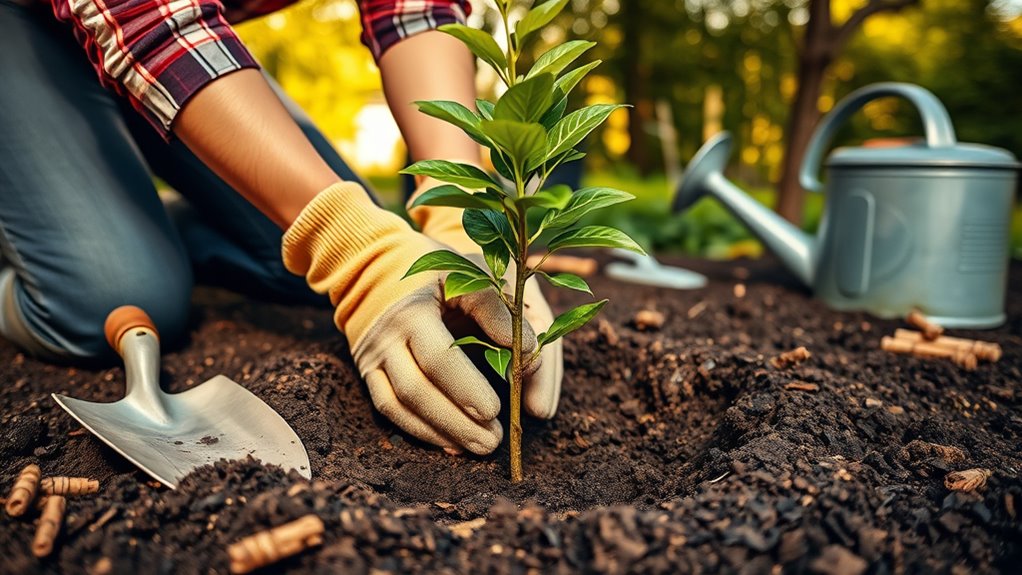
Planting a tree is a rewarding process that begins with choosing the right location and preparing the soil. To give your tree the best start, you need to focus on root preparation and soil amendments. Before digging, examine the root ball of your tree. If it’s a balled-and-burlapped tree, gently remove any wire or burlap that could restrict root growth, but be careful not to damage the roots. If roots are circling tightly, loosen them with your hands or a tool to encourage outward growth once planted. This step ensures the roots can spread properly and establish a strong foundation.
Next, consider soil amendments to improve the planting site. Most native soils may lack the nutrients or drainage needed for ideal tree growth. Mix organic matter like compost, aged manure, or peat moss into the soil you plan to place around the roots. This not only boosts nutrient content but also enhances soil aeration and drainage, preventing waterlogging that could harm the roots. Avoid over-fertilizing at this stage; focus on creating a loose, nutrient-rich environment that supports root expansion.
Enhance soil with compost, manure, or peat moss for healthier, well-drained roots.
When digging the planting hole, aim for it to be about twice as wide as the root ball but no deeper. A wider hole allows the roots to spread easily into the surrounding soil. Fill the bottom of the hole with a layer of soil mixed with your soil amendments, then set the root ball in place, making sure the top of the root ball is level with or slightly above ground level. This prevents water from pooling around the trunk, which can lead to rot. As you backfill, gently firm the soil around the roots to eliminate air pockets, which can cause roots to dry out or settle unevenly over time.
Water the newly planted tree thoroughly after filling the hole. This helps settle the soil and ensures good contact between roots and the surrounding earth. Keep the soil moist but not waterlogged during the initial weeks, as this encourages root establishment. Mulching around the base with organic material like wood chips or straw helps retain moisture, regulate soil temperature, and suppress weeds, all of which support healthy root growth. Additionally, choosing the right fertilizer type can further promote healthy development as the tree grows.

voominhtec Tree Puller & Sapling Puller Tool, Root & Stump Remover
- Uproots Small to Medium Woody Stems: Removes stems 1/4" to 1-3/8" diameter
- Durable Steel Construction: Made with high-strength 65Mn manganese steel
- Reinforced Welded Joints: Ensures durability during tough jobs
As an affiliate, we earn on qualifying purchases.
As an affiliate, we earn on qualifying purchases.
Frequently Asked Questions
How Deep Should the Planting Hole Be?
You should dig the planting hole so it’s about twice as wide as the root ball but only as deep as the root ball’s height. This guarantees the tree is planted at the correct planting depth, with the top of the root ball level with the soil. Measure the root ball size carefully to avoid planting too deep or shallow, promoting healthy root growth and stability.
What Types of Soil Are Best for Planting?
Imagine you’re back in the days of the Renaissance—your planting site selection is vital. The best soils for planting are loamy, well-draining, and rich in organic matter. You should enhance your soil with amendments like compost or aged manure to boost nutrients. Avoid heavy clay or sandy soils, which can hinder root growth. Choosing the right soil type guarantees your tree will thrive and grow strong, just like the great artists of old.
When Is the Optimal Time of Year to Plant?
You should plant trees during early spring or fall, when seasonal considerations favor root establishment and growth. Check your climate suitability—if you experience mild winters and warm summers, fall planting works well, giving the tree time to settle before extreme weather. Avoid planting in extreme heat or cold, as these conditions hinder survival. Timing your planting carefully with seasonal considerations guarantees your tree adapts comfortably and thrives long-term.
How Often Should I Water the Newly Planted Tree?
Did you know that new trees need about 1-2 inches of water weekly? You should follow a consistent watering schedule, especially during the first year. Water deeply and gradually, ensuring the soil stays moist but not waterlogged. During drought conditions, increase watering frequency to help the tree establish. Regular watering encourages healthy roots and growth, so stay attentive to your tree’s needs and adjust based on weather and soil moisture.
Do I Need to Fertilize After Planting?
You don’t need to fertilize immediately after planting, but it’s beneficial to do so later, based on your tree’s nutrient requirements. When you apply fertilizer, use a balanced fertilizer with essential nutrients like nitrogen, phosphorus, and potassium. A proper fertilizer application supports healthy growth and strong roots. Remember, over-fertilizing can harm your tree, so follow recommended guidelines and adjust based on your tree’s response and soil conditions.

Brut Cow Compost – Nutrient-Rich Composted Cow Manure Organic Soil Amendment – 100% Pure Compost, Additive-Free Fertilizer for Vegetable Gardens, Flowers, Lawns & Indoor Plants – 10 Quart
- Nutrient-Rich Composition: Contains nitrogen, calcium, and iron
- Pure Compost Material: Made from thoroughly composted cow manure
- Odor-Free and Safe: No odor, gentle on plant roots
As an affiliate, we earn on qualifying purchases.
As an affiliate, we earn on qualifying purchases.
Conclusion
By following these simple steps, you guarantee your tree has the best start in life. Imagine planting a young sapling in your backyard, watching it thrive and grow into a shade-providing tree over the years. For example, a community in Oregon planted hundreds of trees, transforming their neighborhood into a greener, cooler space. With proper planting, your efforts will create lasting beauty and environmental benefits for years to come.

Back to the Roots 100% Organic Mulch, 58 Quart (2 Cubic ft), Expanding Coconut Husk Block for Gardening
- Includes 10lb Coconut Husk Block: Expands to over 2 cubic feet
- Organic and Peat-Free: OMRI Listed for organic use
- Versatile Gardening Use: Suitable for gardens, beds, pet bedding
As an affiliate, we earn on qualifying purchases.
As an affiliate, we earn on qualifying purchases.

Japanese Maple Tree Fertilizer, Liquid Plant Food for Vibrant Color, 8 oz
- Enhances Foliage & Root Strength: Promotes vibrant leaves and healthy roots
- Balanced Tree Nutrition: Supports long-term health and structure
- Suitable for Landscape & Garden: Ideal for yard trees, containers, and landscapes
As an affiliate, we earn on qualifying purchases.
As an affiliate, we earn on qualifying purchases.