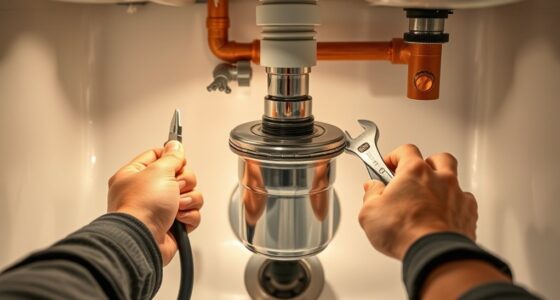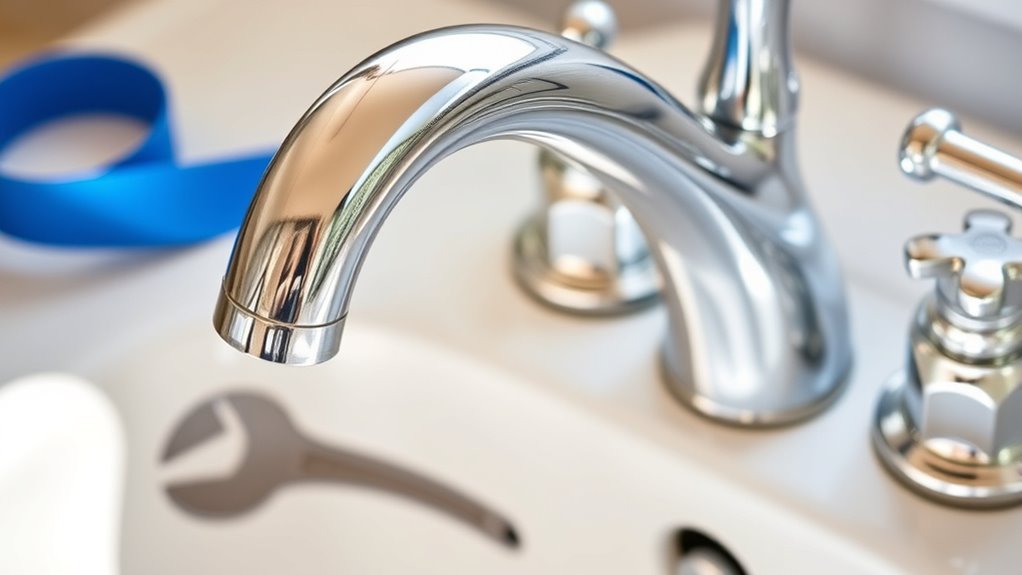

To install a new faucet, start by turning off the water supply and disconnecting the old faucet’s supply lines with an adjustable wrench. Remove mounting hardware and lift out the old unit, then clean the surface thoroughly. Place the new faucet, secure it with mounting nuts, and connect the supply lines, using plumber’s tape for a watertight seal. Turn the water back on and check for leaks, ensuring everything operates smoothly—if you continue, you’ll learn the detailed steps involved.
Play games included with Prime
Start a Prime free trial and play with Amazon Luna on your devices.
As an affiliate, we earn on qualifying purchases.
Key Takeaways
- Turn off the water supply and drain residual water before removing the old faucet.
- Disconnect water supply lines and remove mounting hardware to lift out the old faucet.
- Install the new faucet using provided hardware, ensuring secure attachment without overtightening.
- Connect supply lines with plumber’s tape, then turn on water to check for leaks and proper flow.
- Inspect all connections, test the faucet, and clean the workspace for a leak-free, smooth operation.
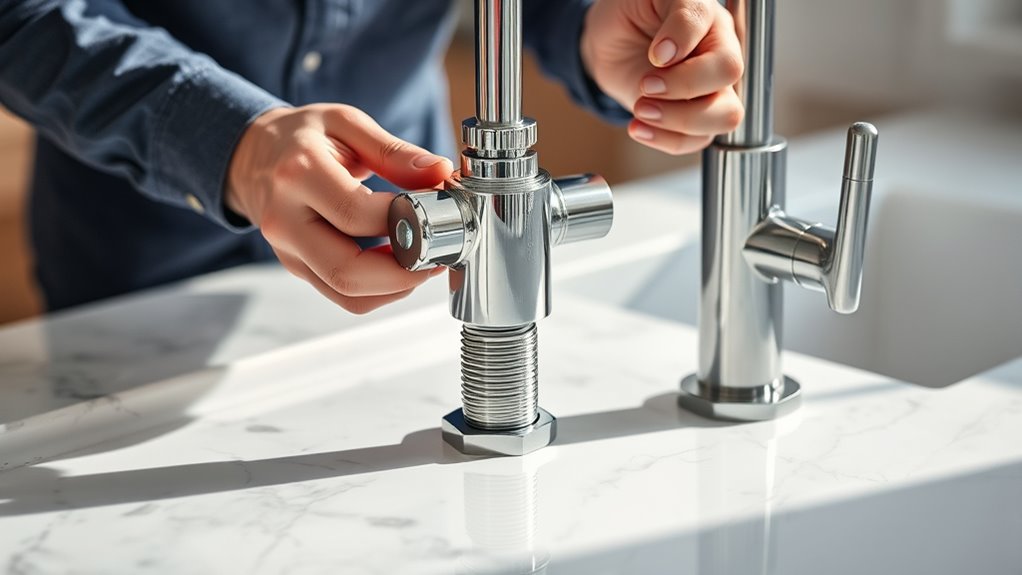
Installing a new faucet can seem intimidating, but with the right tools and instructions, you can do it yourself in just a few simple steps. Before you start, gather your plumbing tools, including an adjustable wrench, basin wrench, plumber’s tape, and a bucket. Having these on hand makes the process smoother and helps prevent leaks or water damage. It’s also wise to turn off the water supply before beginning to avoid any unexpected water flow. Once the water is shut off, open the faucet to drain any remaining water and relieve pressure in the lines.
Begin by disconnecting the water supply lines from the old faucet. Use your adjustable wrench to loosen the nuts holding the supply lines in place. Keep a bucket underneath to catch any residual water. Once disconnected, remove the mounting hardware holding the old faucet in place. Depending on your sink type, you might need to loosen mounting nuts underneath or lift the faucet out if it’s a top-mount style. Carefully take out the old faucet, inspecting the area for any debris or mineral buildup.
Next, clean the mounting surface thoroughly to ensure a proper seal for your new faucet. Before installing the new faucet, check its components and instructions. Attach the new faucet to the sink or countertop, securing it with the provided mounting hardware. Tighten the mounting nuts firmly but avoid overtightening, which could damage the sink or strip threads. When connecting the water supply lines, apply plumber’s tape to the threaded ends to guarantee a watertight connection and prevent leaks.
Once everything is connected, turn on the water supply valves slowly. Check for any leaks around the connections and tighten fittings as needed. Turn on the faucet to test the water flow. If the water flow is weak or irregular, double-check the aerator and supply lines for blockages or kinks. Ensure all connections are secure, and re-tighten if necessary. Keep an eye on the water flow to confirm it’s steady and strong. If you notice leaks or water isn’t flowing properly, turn off the water and re-examine your connections.
Finally, wipe down the area and remove any tools or debris. Turn on the faucet fully to verify everything is working correctly and that no leaks are present. It’s also helpful to understand the proper use and installation of different types of fittings and materials to ensure long-lasting connections. With these steps, you’ve successfully installed your new faucet, improving both the functionality and appearance of your sink. Remember, patience and attention to detail are key to a successful installation, and you’ll gain confidence with each project you complete.
As an affiliate, we earn on qualifying purchases.
Frequently Asked Questions
Can I Install a New Faucet Without Turning off the Water Supply?
You shouldn’t install a new faucet without turning off the water supply because it can cause a mess and damage, especially with delicate faucet finishes. Water pressure might cause splashes or leaks, making the job harder. Turning off the water guarantees a cleaner, safer installation. Plus, you avoid risking damage to the fixtures or plumbing, which helps keep your faucet finishes looking pristine and helps you work more efficiently.
What Tools Are Essential for Installing a New Faucet?
Ever imagine tackling a faucet installation with just a few essential tools? You’ll need a plumber’s wrench to loosen or tighten fittings and a basin wrench to reach tight spots under the sink. These tools make the job easier and guarantee a secure fit. Do you have these at hand? Gathering a basin wrench, plumber’s wrench, adjustable pliers, and a bucket will prepare you for a smooth, confident installation.
How Do I Choose the Right Faucet Size for My Sink?
To choose the right faucet size, start by checking the faucet dimensions and verifying they match your sink’s pre-drilled holes. Measure the distance between the holes and compare it to the faucet’s specifications. Also, consider sink compatibility, especially if your sink has unique features or limited space. Picking a faucet that fits seamlessly ensures proper installation and prevents leaks, making your upgrade both practical and visually appealing.
What Should I Do if the Faucet Leaks After Installation?
If your faucet leaks after installation, start by checking for loose connections and tighten them gently. Perform leak repair by inspecting the seals and replacing any worn-out washers or cartridges. Applying sealant around the base or threaded connections can also help prevent leaks. Make sure to turn off the water supply before reassembling, and test your fix thoroughly to ensure no drips stay.
Is It Necessary to Use Plumber’s Tape During Installation?
Imagine you’re installing a new kitchen faucet and want to prevent leaks. Using plumber’s tape during installation is necessary because it helps seal connections effectively. Applying plumber’s tape around threads ensures a tight fit, reducing the risk of leaks. It’s a simple step that improves sealing connections and keeps your faucet functioning smoothly. So, always use plumber’s tape for a secure, leak-free installation.
bathroom faucet installation kit
As an affiliate, we earn on qualifying purchases.
As an affiliate, we earn on qualifying purchases.
Conclusion
Now that you’ve conquered the faucet installation, picture yourself as a plumbing superhero, cape fluttering behind you, victorious over stubborn pipes and pesky leaks. Future mishaps? Easily vanquished with a wrench in hand and a confident grin. Remember, every drip you fix is a tiny battle won in your kingdom of cleanliness. So go ahead, turn on that tap with pride—your bathroom or kitchen’s new faucet is just the beginning of your plumbing empire!
As an affiliate, we earn on qualifying purchases.
As an affiliate, we earn on qualifying purchases.
NFL season / tailgating Picks
team gear
As an affiliate, we earn on qualifying purchases.