Rooftop tents let you sleep comfortably off the ground, making setup quick and hassle-free, perfect for your road trips. They elevate you above uneven terrain and offer easy access with ladder extensions. When properly secured and set on flat spots, they keep you safe and protected from the elements. With the right accessories and safety checks, they make exploring remote areas more enjoyable. Keep going to discover how to get the most out of your rooftop tent adventures.
Key Takeaways
- Rooftop tents elevate sleeping areas for comfort and quick setup, ideal for road trip convenience.
- They are suitable for various environments, including remote trails and national parks.
- Proper installation and safety checks are essential to ensure stability during travel.
- Be mindful of vehicle roof weight limits and height restrictions for safe driving.
- Essential accessories like ladders, weatherproof covers, and bug screens enhance safety and comfort.
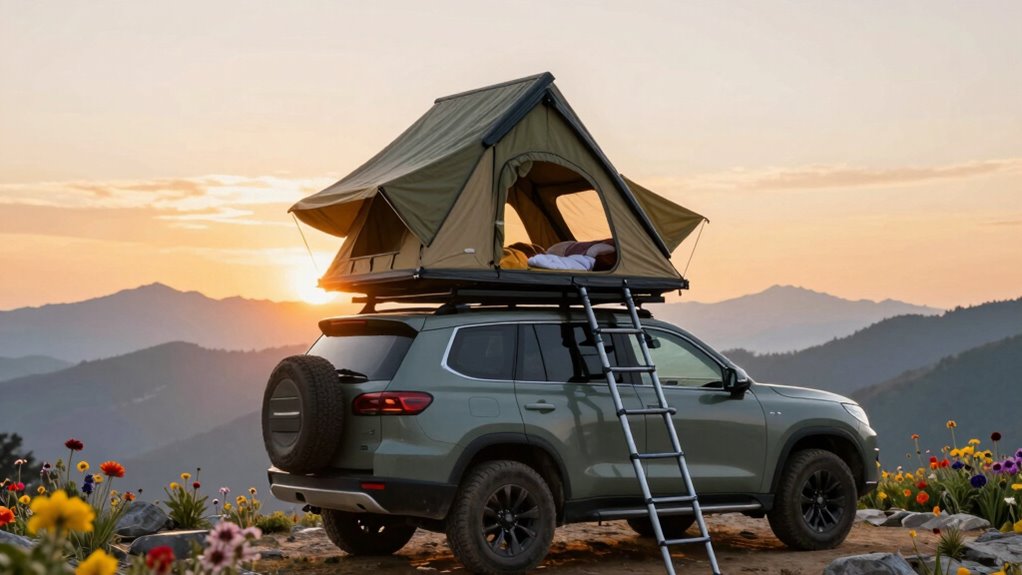
If you’re passionate about road trips and camping, rooftop tents are a game-changer that can elevate your adventure. They offer a convenient, comfortable way to sleep off the ground, giving you more time to enjoy your surroundings and less hassle setting up camp. When considering a rooftop tent, it’s essential to think about the right camping accessories to complement your setup. From ladder extensions to mattress pads, these accessories can make your experience more comfortable and safer. Proper accessories guarantee you’re well-equipped for different environments, whether you’re camping in a national park or on a remote trail.
Safety should always be a top priority when using a rooftop tent. Before heading out, familiarize yourself with safety precautions, such as checking the tent’s mounting system to ensure it’s secure and stable. Always inspect the ladder for any signs of wear or damage, and use it carefully, especially in windy conditions or on uneven terrain. When setting up your tent, choose a flat, stable spot away from potential hazards like falling branches or unstable ground. Keep a flashlight handy for nighttime setup and takedown, and make sure you understand how to operate the tent’s locking mechanisms properly.
Prioritize safety by checking mounting stability, inspecting the ladder, and selecting secure, hazard-free setup locations.
You also want to be mindful of your vehicle’s roof weight limits and the tent’s weight when fully packed. Overloading can compromise your vehicle’s handling and safety. When driving, be cautious of height restrictions, especially on bridges or tunnels, and avoid sudden turns or sharp braking to prevent the tent from shifting or detaching. Regularly check the tent and mounting hardware during your trip, especially after long drives or adverse weather. This proactive approach helps prevent accidents and prolongs the lifespan of your rooftop setup. Additionally, being aware of roof weight limits is crucial for safe and responsible travel. Understanding the vehicle’s weight capacity ensures that you do not exceed safe limits and helps you plan your packing accordingly.
Another safety tip is to educate yourself on emergency procedures specific to rooftop tents. Know how to quickly and safely exit the tent if necessary, and have a plan in place for adverse weather conditions like high winds or storms. Additionally, understanding the weight limits of your vehicle’s roof is crucial to avoid overloading, which can lead to dangerous situations. To better prepare for various environmental challenges, investing in quality camping accessories designed for rooftop tents can greatly enhance your trip. Items like weatherproof covers, bug screens, and portable lighting can improve comfort and safety in various environments. Incorporating proper safety equipment ensures you’re fully prepared for unexpected situations and helps maintain a safe and enjoyable outdoor experience.
rooftop tent with ladder extension
As an affiliate, we earn on qualifying purchases.
As an affiliate, we earn on qualifying purchases.
Frequently Asked Questions
How Secure Are Rooftop Tents Against Theft?
Rooftop tents offer decent security, but theft concerns are valid. To prevent theft, you can use lockable mounting brackets, heavy-duty locks, and security cables. Always choose a visible, well-lit spot for parking, and consider installing alarm systems or motion sensors. While no method is foolproof, these theft prevention strategies markedly reduce the risk, giving you peace of mind during your trip.
Can Rooftop Tents Be Used on All Vehicle Types?
You can’t use rooftop tents on all vehicle types. Vehicle compatibility plays a big role because tent installation requires a sturdy roof rack and enough roof space. SUVs, trucks, and some crossovers usually work well, but smaller cars or vehicles without strong roof support might not be suitable. Always check your vehicle’s roof weight limit and installation guidelines before choosing a rooftop tent to guarantee safe and secure setup.
What Is the Typical Lifespan of a Rooftop Tent?
Like a trusty vintage bicycle, your rooftop tent can last around 5 to 10 years with proper care. Durability factors like material longevity, exposure to weather, and regular maintenance influence its lifespan. If you keep it clean, store it properly during off-seasons, and avoid harsh conditions, you’ll prolong its usefulness. Investing in quality materials guarantees your tent remains durable, providing reliable shelter for many adventures ahead.
Are Rooftop Tents Suitable for Winter Camping?
Yes, rooftop tents can be suitable for winter camping if they have proper winter insulation and are designed for snow conditions. You should look for tents with insulated fabric and a sturdy, waterproof base to keep you warm and dry. Snow suitability depends on the tent’s build quality and your preparation, like adding additional insulation or a snow skirt. With the right gear, you can enjoy winter adventures comfortably in a rooftop tent.
How Do You Maintain and Clean a Rooftop Tent?
To maintain and clean your rooftop tent, regularly inspect the fabric for tears and perform fabric repair if needed. Clean the tent with gentle soap and water, avoiding harsh chemicals that can damage the tent waterproofing. After cleaning, verify the fabric is completely dry to prevent mold. Store it in a cool, dry place when not in use. Proper maintenance keeps your tent waterproofing effective and extends its lifespan.
As an affiliate, we earn on qualifying purchases.
Conclusion
Now that you understand the ins and outs of rooftop tents, imagine the adventures waiting just beyond the horizon. Picture yourself waking up to breathtaking views, the open sky your ceiling, and endless possibilities at your fingertips. With a rooftop tent, every trip becomes a story waiting to unfold—full of surprises and unforgettable moments. Are you ready to turn those dreams into your next adventure? The road is calling, and your perfect escape is just a tent away.
portable bug screen for rooftop tent
As an affiliate, we earn on qualifying purchases.
As an affiliate, we earn on qualifying purchases.
high-density foam mattress pad for rooftop tent
As an affiliate, we earn on qualifying purchases.
As an affiliate, we earn on qualifying purchases.