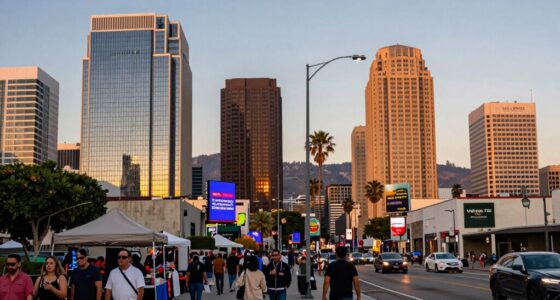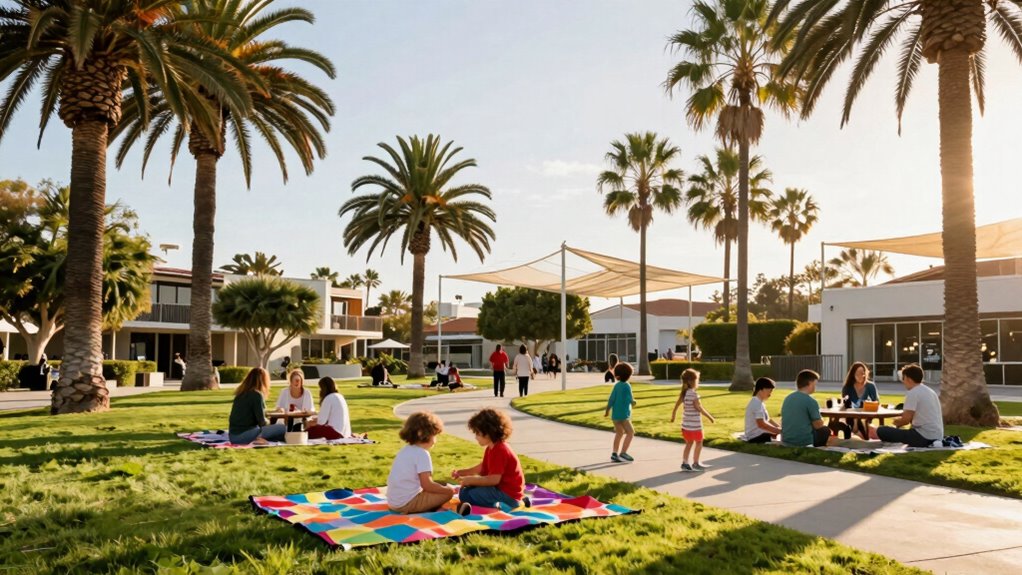

California’s public spaces feel so livable because they’re thoughtfully designed to encourage walkability, social connection, and environmental sustainability. Streets, parks, and waterfronts are created to promote easy access and vibrant community interactions. They blend cultural diversity with eco-friendly features, like native plantings and water-wise landscaping. This thoughtful planning makes spaces inviting, lively, and resilient. If you keep exploring, you’ll discover how these design principles shape the city’s unique, welcoming atmosphere.
Key Takeaways
- Thoughtful urban design emphasizes walkability, accessibility, and social spaces that foster community interaction.
- Community engagement ensures public spaces reflect local needs and cultural diversity.
- Coastal and natural environments highlight waterfronts and green areas, enhancing scenic beauty and relaxation.
- Sustainable landscaping and climate-responsive planning promote environmental health and resilience.
- Well-designed public spaces support community well-being, economic activity, and overall livability.

Have you ever wondered why public spaces play such an essential role in California’s vibrant communities? The answer lies in thoughtful urban design and active community engagement. These elements work together to create environments that aren’t just functional but inviting and lively. When urban design considers how people move, gather, and enjoy their surroundings, it transforms public spaces into natural extensions of daily life. Streets, parks, plazas, and waterfronts are crafted to promote walkability, accessibility, and social interaction. This intentional planning makes it easy for you to connect with neighbors, attend local events, or simply unwind in a welcoming setting.
Community engagement is equally indispensable. When residents have a voice in shaping their public spaces, they feel a sense of ownership and pride. Local governments, designers, and residents often collaborate on projects, ensuring that the spaces meet actual needs and reflect cultural diversity. This inclusive approach fosters a sense of belonging, encouraging more frequent use and care for these areas. When people see their input valued, they’re more likely to participate in maintaining and protecting public spaces, which keeps them vibrant and well-used over time. Incorporating community participation into urban development helps ensure that spaces remain relevant and responsive to evolving needs.
California’s diverse geography and cultural richness influence how public spaces are designed and utilized. Coastal cities might emphasize waterfront parks that celebrate ocean views, while urban centers focus on plazas that facilitate community gatherings. This variety makes each space feel tailored to its surroundings, enhancing the overall livability. You’ll notice that these spaces aren’t just aesthetic; they’re functional hubs for recreation, socialization, and even economic activity. Farmers’ markets, outdoor concerts, art installations, and fitness classes become integral parts of everyday life, making communities more dynamic and resilient.
Furthermore, California’s commitment to sustainable urban design ensures that public spaces support environmental health. Green infrastructure, native plantings, and water-efficient landscaping contribute to cleaner air and water, benefiting everyone. Incorporating sustainable urban design principles creates spaces that are both beautiful and resilient to climate challenges. By integrating climate-responsive planning, cities can better adapt to changing environmental conditions and reduce their ecological footprint. This approach also involves understanding the importance of color accuracy and contrast ratios in creating inviting environments that are visually appealing and accessible to all users. When public spaces are thoughtfully integrated into the city fabric, they foster a sense of calm amid urban hustle while offering practical benefits like shade, cooling, and habitat for local wildlife.
All these factors—urban design, community engagement, cultural influences, and sustainability—combine to make California’s public spaces feel so livable. They’re not just places to pass through; they’re essential parts of your community’s identity and daily experience. When you step into these spaces, you’re stepping into environments crafted with care, purpose, and a shared desire for community well-being. That’s why California’s public spaces continue to thrive and feel like natural, welcoming extensions of your everyday life.
walkable city street furniture
As an affiliate, we earn on qualifying purchases.
As an affiliate, we earn on qualifying purchases.
Frequently Asked Questions
How Do California’s Public Spaces Compare to Other States?
California’s public spaces stand out because of thoughtful urban design and strong community engagement. You’ll notice more parks, walkable neighborhoods, and accessible outdoor areas compared to other states. These spaces encourage social interaction and active lifestyles, making them more inviting. California’s focus on inclusive planning guarantees diverse communities feel welcome, creating vibrant environments that foster connection and well-being. This combination makes California’s public spaces feel more livable and appealing.
What Role Does Climate Play in Livability?
Climate influences livability by shaping your daily experiences—offering climate resilience and outdoor comfort that encourage outdoor activities year-round. When the weather stays mild and predictable, you enjoy more vibrant community spaces, healthier lifestyles, and greater connection to nature. This consistent outdoor comfort fosters resilience against climate challenges, making public spaces more inviting and sustainable. Ultimately, a favorable climate directly enhances your quality of life and sense of belonging in California’s public spaces.
Are Public Spaces Accessible to All Residents?
Yes, public spaces in California are generally accessible to all residents, thanks to inclusive design that considers diverse needs. Community engagement plays a essential role, ensuring spaces meet local residents’ preferences and barriers are minimized. You can often find features like wheelchair ramps, accessible pathways, and multilingual signage. By actively involving the community in planning, California creates public spaces that foster inclusivity, making everyone feel welcome and comfortable.
How Does Safety Influence Public Space Design?
You’ll notice that safety greatly influences public space design—studies show well-lit areas reduce crime by up to 20%. You can enjoy spaces more when surveillance measures are discreet yet effective, helping residents feel secure. Lighting aesthetics also matter; they create inviting atmospheres that encourage community use. When designers prioritize safety, they balance visibility with beauty, making public spaces both secure and enjoyable for everyone.
What Funding Sources Support Public Spaces in California?
You can find funding for California’s public spaces through government grants and private donations. State and local governments allocate grants for parks, recreation centers, and public infrastructure projects. Additionally, private donors and organizations contribute funds to enhance community spaces, support environmental initiatives, and maintain urban parks. These combined sources help guarantee public spaces remain accessible, safe, and vibrant, fostering a sense of community and livability across California.

Bringing Nature Home: How You Can Sustain Wildlife with Native Plants, Updated and Expanded
As an affiliate, we earn on qualifying purchases.
As an affiliate, we earn on qualifying purchases.
Conclusion
You might be surprised to learn that California has over 15,000 parks and nearly 300 miles of coastline, making outdoor spaces easily accessible. These vibrant public areas foster community, promote health, and contribute to the state’s high quality of life. Knowing that Californians spend an average of 4.5 hours weekly in parks, it’s clear these spaces aren’t just nice-to-haves—they’re essential to feeling truly at home in the Golden State.

The Rocky Mountain Native Plant Primer: 225 Plants for an Earth-Friendly Garden
As an affiliate, we earn on qualifying purchases.
As an affiliate, we earn on qualifying purchases.

OUTTANS Commercial Metal Picnic Table, Black, 6' Rectangular
The Market's Only Convertible Seater / ADA Table: Our innovative table is the first to function as both…
As an affiliate, we earn on qualifying purchases.
As an affiliate, we earn on qualifying purchases.