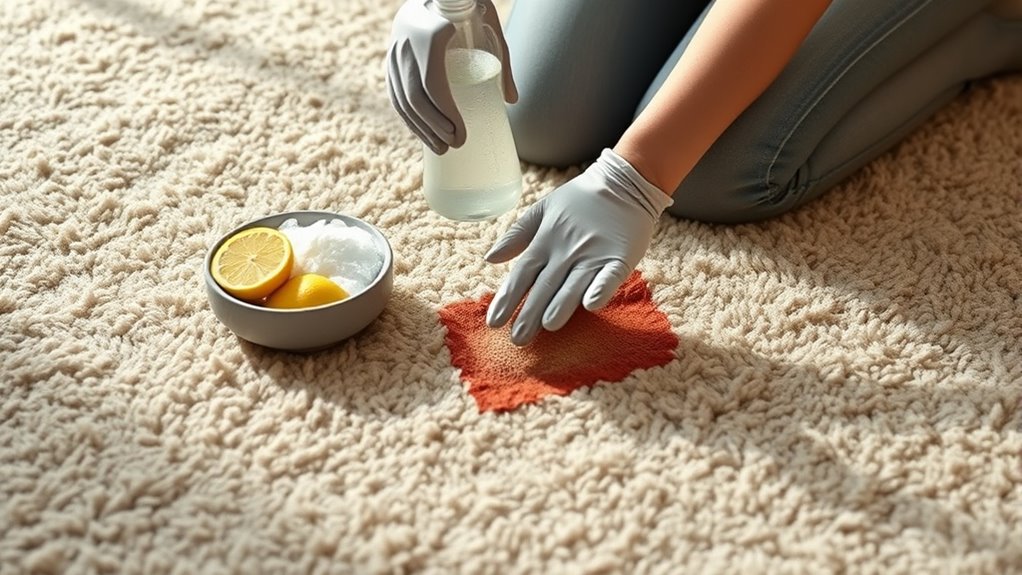

To remove stains and odors without a machine, start by vacuuming thoroughly to clear debris. Apply a mixture of equal parts white vinegar and water on stains, then blot gently. Sprinkle baking soda over the entire carpet to absorb odors, leaving it for at least 15 minutes before vacuuming away. For stubborn spots, use diluted dish soap or other natural cleaners. Properly drying with fans or open windows helps maintain freshness; continue and you’ll discover more effective tips.
Key Takeaways
- Use natural solutions like a vinegar-water spray and baking soda to target stains and odors safely.
- Blot spills immediately with a clean cloth to prevent stain setting and fiber damage.
- Sprinkle baking soda over the entire carpet, let it sit to absorb odors, then vacuum thoroughly.
- Apply gentle cleaning agents, such as dish soap or diluted laundry detergent, to treat specific stains.
- Enhance drying with fans, open windows, or dehumidifiers to prevent mold and maintain freshness.
vacuum cleaner with strong suction
As an affiliate, we earn on qualifying purchases.
As an affiliate, we earn on qualifying purchases.
Preparing Your Carpet for Cleaning
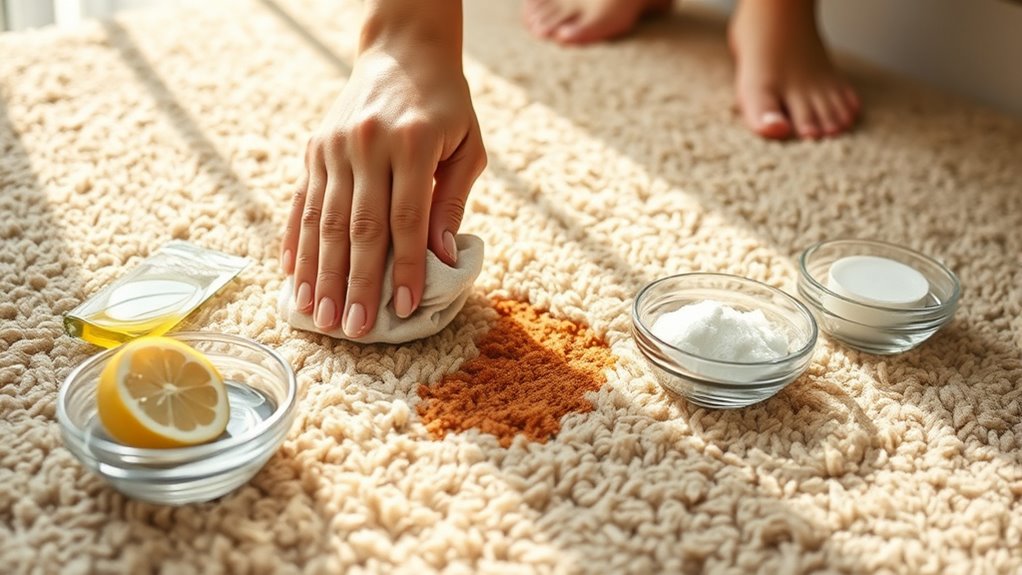
Before you start cleaning, it’s essential to prepare your carpet to guarantee the best results. Begin by thoroughly vacuuming the entire area to remove loose dirt, dust, and debris. This step guarantees that dirt won’t get pushed deeper into the fibers during cleaning. Use a high-quality vacuum with strong suction and go over each section multiple times in different directions. Next, inspect your carpet for any visible stains or spots that need special attention. Clearing furniture or objects from the area allows you to access every inch easily. If your carpet has loose threads or frayed edges, gently secure or trim them to prevent further damage. Proper preparation sets the foundation for effective cleaning and helps maintain your carpet’s appearance and longevity. Additionally, understanding the fiber type of your carpet can help you choose the most suitable cleaning method and solutions. Recognizing your carpet’s material composition can also guide you in selecting eco-friendly and safe cleaning agents that won’t damage delicate fibers. Taking into account the cleaning compatibility of your carpet’s fibers ensures you avoid using harsh chemicals that might cause discoloration or deterioration. To further enhance your cleaning process, consider air quality implications, which can influence your carpet’s overall cleanliness and health. Being aware of airborne pollutants can also help you decide on additional cleaning or air purification methods to improve indoor air quality.
natural carpet stain remover spray
As an affiliate, we earn on qualifying purchases.
As an affiliate, we earn on qualifying purchases.
Using Vinegar and Water for Basic Cleaning
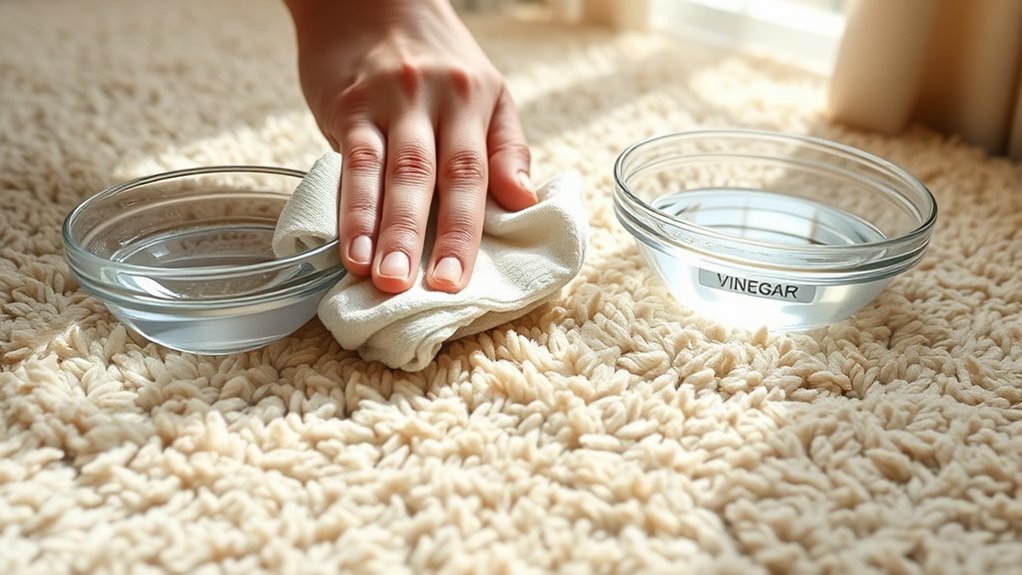
Have you considered using a simple vinegar and water solution for a natural, effective way to clean your carpet? Mix equal parts white vinegar and water in a spray bottle. Lightly spray the mixture onto the carpet, focusing on stained or soiled areas. Let it sit for a few minutes to break down dirt and grime. Use a soft cloth or sponge to blot the area, absorbing loosened dirt and odors. Vinegar helps dissolve soap residues and prevents mold growth, making it a great all-purpose cleaner. Additionally, effective cleaning techniques can enhance your results and ensure a fresher carpet. Always test the solution on a hidden spot first to ensure it doesn’t cause discoloration. This natural cleaning method can be both budget-friendly and environmentally conscious. Proper airflow around the area can also help speed up drying and prevent musty odors, especially when combined with seasonal ventilation practices. Ensuring proper electrical safety when using electrical appliances like fans or vacuums during drying is important to prevent hazards.
baking soda odor absorber for carpets
As an affiliate, we earn on qualifying purchases.
As an affiliate, we earn on qualifying purchases.
Baking Soda for Odor Removal and Freshness
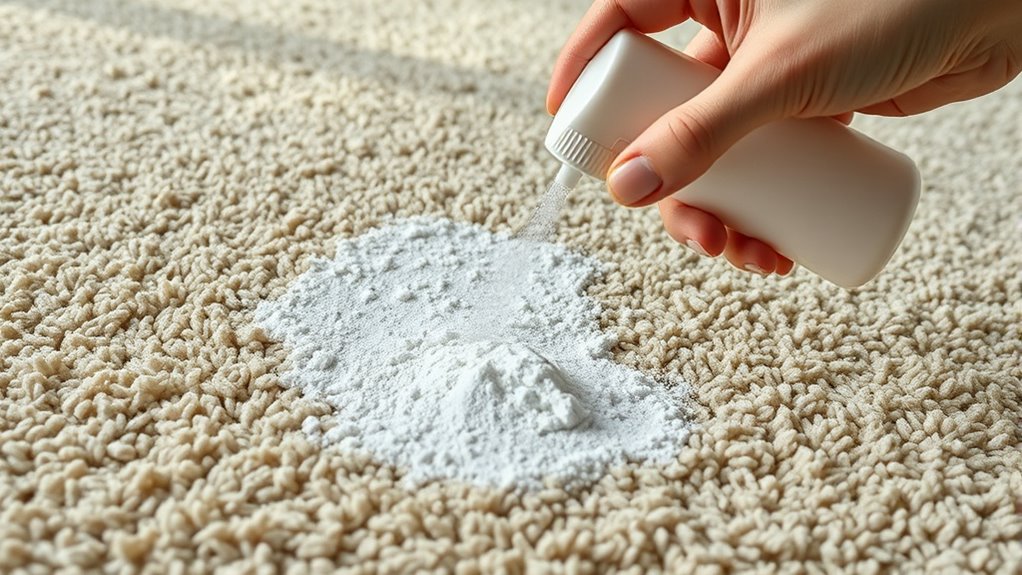
Baking soda is a simple yet effective way to eliminate odors and keep your carpet smelling fresh. To use it, generously sprinkle baking soda across the entire surface of your carpet, especially in areas with persistent smells. Let it sit for at least 15 minutes, or overnight for stronger odors, so it can absorb the odors deeply. Afterward, vacuum thoroughly to remove the baking soda and trapped odors. For an extra boost of freshness, you can combine baking soda with a few drops of essential oil before sprinkling. Baking soda also helps lift dirt particles, making your carpet look cleaner. Regular use of baking soda can prevent stubborn odors from returning and keep your carpet smelling fresh between deep cleans. Incorporating natural cleaning solutions can further enhance your carpet maintenance routine. Additionally, using proper ventilation during and after cleaning helps to dissipate any residual odors and improve indoor air quality. Ensuring good air circulation can also help maintain a fresh environment and enhance the effectiveness of your cleaning efforts. Moreover, understanding the local climate and environment can help you choose the most effective cleaning strategies for your area.
As an affiliate, we earn on qualifying purchases.
Spot Cleaning Stains Effectively
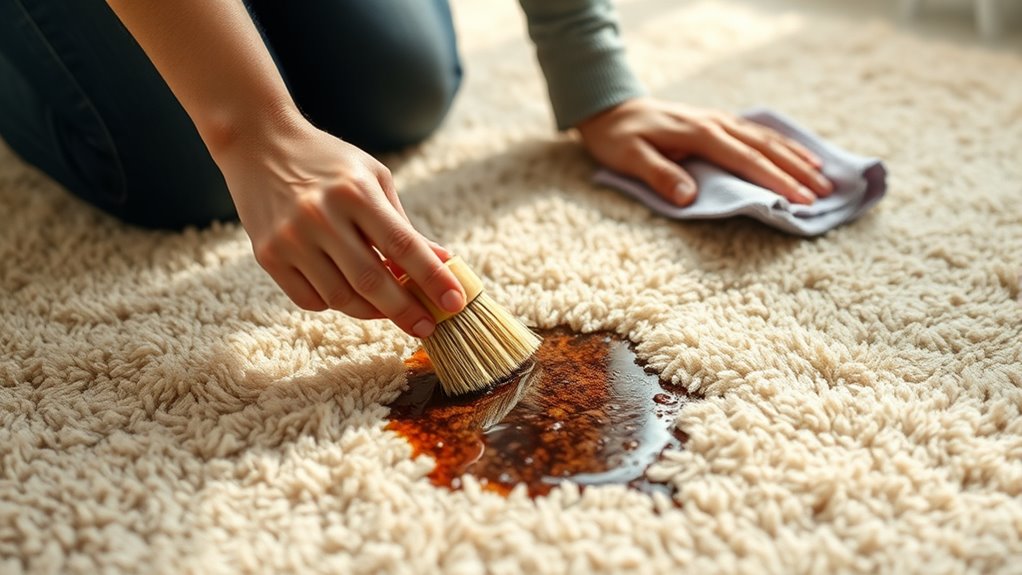
Wondering how to effectively remove stains from your carpet? The key is acting quickly and using the right technique. First, gently blot the stain with a clean cloth to lift excess liquid—avoid rubbing, which can spread the stain or damage fibers. Next, apply a small amount of a suitable cleaning solution, like a 1:4 vinegar and water mixture or an enzyme cleaner for tougher stains. Let it sit briefly to break down the stain, then blot again with a clean cloth. Rinse the area with a little water and blot dry immediately. Never pour cleaning agents directly onto the carpet, and always test a hidden spot first to ensure colorfastness. Using appropriate cleaning solutions can make a significant difference in stain removal effectiveness. Incorporating visual and auditory cues into your cleaning routine can also help identify stubborn stains more effectively. Proper stain removal techniques and understanding carpet fiber care can help preserve your carpet’s appearance and longevity. With patience and proper technique, you can tackle stains effectively without professional help.
Alternative Cleaning Agents for Deep Stains

When dealing with deep stains that resist standard cleaning methods, alternative agents can be highly effective. Dish soap, for instance, works well for breaking down greasy or oily stains—just add a few drops to warm water and apply with a cloth. Fabric conditioner, mixed with water, can loosen stubborn debris embedded in fibers. Laundry detergent, when heavily diluted, is another option for targeted spot cleaning, especially for organic stains. Always test any alternative agent on a hidden area first to avoid discoloration. After applying, rinse thoroughly with clean water and blot dry to prevent residue buildup. Incorporating curiosity about different cleaning options can help you discover effective solutions you might not have considered. These agents are cost-effective and accessible, making them excellent choices for tackling tough stains without needing specialized equipment. Regular use of exfoliation can also help maintain a cleaner carpet surface over time.
Tips for Drying and Maintaining Your Carpet
To keep your carpet in great shape, you should promote rapid airflow to dry it quickly and prevent mold. Limiting foot traffic until it’s fully dry helps avoid re-soiling and damage. Regular deep cleanings also play a key role in maintaining your carpet’s appearance and longevity.
Promote Rapid Airflow
Promoting rapid airflow is essential for drying your carpet effectively and preventing mold or mildew growth. To speed up the process, you can:
- Use fans: Position oscillating fans to blow air across the carpet surface, increasing evaporation.
- Open windows and doors: Create cross-ventilation to boost airflow and dry the area faster.
- Utilize a dehumidifier: Reduce indoor humidity levels, helping moisture escape more quickly from the carpet fibers.
Ensure no furniture or objects block airflow, and avoid walking on the damp carpet. Keeping the space well-ventilated accelerates drying, reduces odors, and protects your carpet’s longevity. Proper airflow also prevents moisture buildup, safeguarding against mold and mildew, and keeping your carpet fresh and clean.
Limit Foot Traffic
Limiting foot traffic on your freshly cleaned or damp carpet is essential for effective drying and long-term maintenance. When you walk on wet or damp areas, you risk re-soiling the fibers and delaying the drying process. To speed up drying, keep shoes off and restrict access to the cleaned area. Place barriers or signs to prevent accidental stepping. If possible, set up fans or open windows to enhance airflow and reduce moisture. Avoid heavy furniture or foot traffic until the carpet is completely dry, typically a few hours. This prevents dirt from being tracked in and prevents fibers from becoming matted or damaged. By limiting foot traffic, you help your carpet dry faster and stay cleaner longer, ensuring better overall maintenance.
Schedule Regular Deep Clean
Scheduling regular deep cleanings keeps your carpet in top condition and helps prevent dirt and stains from building up over time. To maintain a fresh look, follow these tips:
- Set a cleaning schedule: Deep clean every 3-6 months, depending on foot traffic.
- Ensure proper drying: Use fans, open windows, or a dehumidifier to dry the carpet quickly after cleaning, preventing mold.
- Limit foot traffic: Avoid walking on damp areas and place rugs in high-traffic zones to reduce dirt buildup.
Frequently Asked Questions
How Often Should I Deep Clean My Carpet at Home?
You should deep clean your carpet every three to six months to keep it fresh and in good condition. Regular vacuuming helps, but periodic deep cleaning removes embedded dirt, odors, and stains that build up over time. If you have pets or high foot traffic, consider deep cleaning more often. Using natural solutions like vinegar and baking soda can make the process easier and more effective.
Can I Use Homemade Cleaners on All Carpet Types?
Yes, you can use homemade cleaners on most carpets, but be cautious. While vinegar solutions and baking soda are gentle and natural, they might not suit delicate or specialty fibers like wool or silk. You should always test any homemade cleaner on a hidden area first. If the test goes well, apply carefully, avoiding over-wetting. For sensitive carpets, consult manufacturer guidelines or consider professional cleaning to prevent damage.
What Precautions Should I Take to Avoid Carpet Damage?
You should always test any cleaner on a hidden area first to check for colorfastness. Avoid over-wetting the carpet, which can lead to mold and mildew. Use gentle scrubbing tools like a soft-bristle brush, and never scrub harshly to prevent fiber damage. Keep cleaning solutions diluted and rinse thoroughly afterward. Speed up drying with fans or open windows, and never walk on damp carpet to avoid re-soiling.
How Do I Remove Pet Stains and Odors Effectively?
To remove pet stains and odors effectively, first blot the area to absorb moisture. Apply a mixture of equal parts vinegar and water directly onto the stain, then gently blot again. Sprinkle baking soda over the area to neutralize odors, letting it sit for at least 15 minutes. Vacuum thoroughly afterward. For tough stains, use an enzyme cleaner following the product instructions. Always test solutions on a hidden spot first.
Is It Safe to Walk on the Carpet Immediately After Cleaning?
Did you know that walking on a damp carpet can re-soil it within minutes? You should avoid walking on your carpet immediately after cleaning. Wait until it’s thoroughly dry—using fans or open windows speeds this up. This prevents dirt from sticking to the wet fibers and helps prevent mold or mildew growth. Typically, it takes a few hours for the carpet to dry completely, so plan accordingly.
Conclusion
With these simple DIY tricks, your carpet will shine brighter than a superstar on opening night, banishing stains and odors like a superhero saving the day! Imagine walking into a room so fresh, it could make flowers jealous, and your carpets so spotless, they could double as a mirror. Say goodbye to stubborn messes and hello to a home that dazzles everyone who steps inside. Your carpet’s transformation will be nothing short of miraculous—like magic, but all in your own hands!