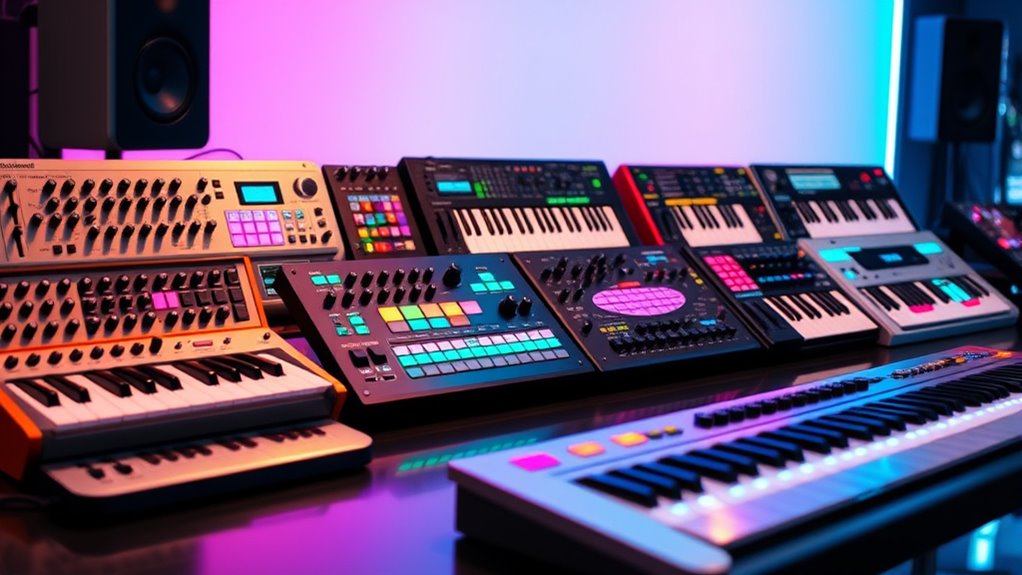
Searching for the best synthesizers in 2026? The market offers a wide range of options, from beginner-friendly models to advanced analog units. The Moog Messenger Monophonic Synthesizer stands out as the top overall pick for its rich sound and build quality, while the Stylophone The Original Pocket Electronic Synthesizer offers a compact, playful experience for casual users. Many buyers face tradeoffs between complexity, price, and versatility—whether they want a straightforward starter or a professional studio instrument. Keep reading for a detailed comparison that helps you find the perfect fit for your needs.

Get everyday essentials delivered free — and shop member deals
- Fast, free delivery on millions of items
- Access to Prime Big Deal Days deals on October 6–7
- Prime Video, Amazon Music and more included
Key Takeaways
- The top synthesizers balance sound quality with ease of use, making it easier for beginners to start creating quickly.
- Analog models like the Moog Messenger provide warmer, richer tones, but often come at a higher price and maintenance cost.
- Digital and hybrid synths, such as the M-VAVE FM-1, offer extensive presets and features, suitable for versatile genres and sound design.
- Compact and portable options like the Stylophone are perfect for casual players or on-the-go musicians, though they lack advanced controls.
- Price ranges vary significantly, so buyers should prioritize features that match their skill level and intended use to avoid overspending or underpowered options.


More Details on Our Top Picks
Synthesizer for Absolute Beginners: From Zero to Your First Synth Sounds in 10 Minutes a Day – No Music Reading, No Frustration
This guide makes synthesizer creation accessible by removing technical barriers, ideal for those who want quick results without prior musical knowledge. Compared with more advanced options like the MOOG Messenger, it offers a much gentler learning curve but lacks detailed technical features for future expansion. It’s perfect for absolute beginners who want immediate gratification, but it might leave more experienced users wanting deeper control or sound design options. The focus on simplicity means it’s less suited for those seeking technical depth or professional quality.
Best For: Complete newcomers eager to produce their first sounds quickly.
Not Ideal For: Experienced synthesists or those wanting detailed sound design tools.
- Easy to follow for beginners
- Quick learning curve with just 10 minutes daily
- No prior music knowledge needed
- Limited technical specifications
- Too basic for advanced users
Verdict: This is the perfect starting point for absolute beginners who want instant results without complexity.
RockJam RJ5061 61-Key Keyboard Piano Kit with Stand, Bench & Headphones
The RockJam RJ5061 offers a comprehensive starter setup for new players, combining a 61-key keyboard with accessories like a stand, bench, and headphones, making it a complete package. Its variety of 200 rhythms and tones, along with demo songs, makes it ideal for learning and immediate play. Compared to digital synths like the M-VAVE FM-1, it emphasizes traditional piano-style playing rather than sound design, but it’s less flexible for electronic music production. This kit suits beginners who want to learn piano or keyboard skills, but it’s limited in advanced features and connectivity options for more experienced musicians.
Best For: Kids and adults starting their musical journey with a focus on traditional keyboard playing.
Not Ideal For: Advanced producers or those seeking deep synthesis and sound editing features.
- Complete beginner set with all accessories
- Wide variety of rhythms and tones
- Includes note stickers and beginner lessons
- Limited to beginner-level features
- No built-in speakers or advanced connectivity
Verdict: This is an excellent starter keyboard for learners, but not for those wanting professional-level features.
- Number of Keys:61
- Includes:Stand, Bench, Headphones, Note Stickers
- Rhythms:200
- Tones:200
- Demo Songs:Yes
MOOG Messenger Monophonic Analog Synthesizer
The MOOG Messenger delivers the warm, rich tones associated with classic MOOG analog synths, enhanced by modern features like dual wavefolding oscillators, a next-gen ladder filter, and expressive full-size keys. It’s best suited for performers and studio musicians who value authentic sound and versatile modulation, especially compared to digital options like the M-VAVE FM-1. Its extensive controls and sequencing capabilities make it powerful, but the complexity may overwhelm beginners, and its monophonic nature limits polyphonic play. For those seeking true analog sound with live performance features, this is a strong choice, though it comes at a higher price point.
Best For: Experienced performers and sound designers who want authentic analog tones and expressive control.
Not Ideal For: Beginners or users needing polyphony and simpler interfaces.
- Rich, classic analog sound with modern features
- Versatile modulation and sequencing options
- Portable with full-size expressive keys
- Complex for beginners
- Monophonic only, limiting chordal play
Verdict: This synthesizer is ideal for seasoned musicians focused on authentic sound and expressive live performance.
- Oscillators:Two wavefolding VCOs with sync and FM, sub-oscillator
- Filter:Next-gen ladder filter with resonance and bass compensation
- Keys:32 semi-weighted, velocity and aftertouch
- Sequencer:64-step with generative features
- Connectivity:6 CV patch points, external audio in, MIDI I/O, USB-C MIDI
- Envelopes:Two ADSR
- LFOs:Two
Our verdict“Best for Live Performance and Analog Sound — a strong pick in this lineup.”
M-VAVE FM-1 Synthesizer Digital Keyboard with 128 Presets and 27-Key Sound Module
The M-VAVE FM-1 packs a versatile FM synthesis engine into a compact, lightweight design, making it perfect for stage use, studio work, or casual practice. Its 128 presets cover a broad sonic palette, and the built-in effects add depth without external gear. Compared to larger digital workstations, its portability is a major advantage, though the limited 27 keys restrict expressive playing for pianists or complex melodic work. The color display simplifies sound editing, but mastery of FM synthesis may require some familiarity with sound design principles. This synth suits mobile musicians and producers who prioritize versatility and convenience over full-range keyboard performance.
Best For: Musicians needing a portable, versatile FM synth with easy editing.
Not Ideal For: Pianists or players needing extensive keyboard range or polyphony for complex arrangements.
- Lightweight, portable design with long battery life
- Versatile FM synthesis engine with many presets
- Multiple connectivity options including Bluetooth and USB-C
- Limited to 27 keys, restricting expressive play
- No built-in speakers
Verdict: This synth offers portability and sound versatility ideal for stage and studio musicians who don’t need a large keyboard.
- Number of Presets:128
- Key Count:27
- Polyphony:12 voices
- Built-in Effects:6
- Battery Life:Up to 12 hours
- Weight:251g
- Connectivity:USB-C, Bluetooth BLE MIDI, 3.5mm MIDI IN
Our verdict“Best Portable FM Synth for On-the-Go — a strong pick in this lineup.”
Akai Professional MPK Mini Plus 37-Key USB MIDI Keyboard Controller
The Akai MPK Mini Plus offers a compact, feature-rich MIDI controller with 37 mini keys, RGB MPC pads, and extensive connectivity, including MIDI, CV/Gate, and USB. Its integration with MPC Beats software and native NKS support makes it ideal for producers who want a versatile setup in a small footprint. Compared with dedicated synthesizers like the MOOG Messenger, it doesn’t generate sound on its own but excels at controlling hardware and software, offering broad control over digital environments. Its limited keys may frustrate pianists seeking full melodic range, but it’s a powerful tool for those who focus on beat-making, live control, or hardware integration on the go.
Best For: Producers and live performers needing a portable, versatile MIDI control surface.
Not Ideal For: Musicians seeking a full-sized keyboard or standalone synthesizer capabilities.
- Compact, portable design suitable for mobile setups
- Extensive connectivity including MIDI, CV/Gate, and USB
- Includes powerful MPC Beats software and sample access
- Limited to 37 keys, not ideal for complex melodic playing
- Requires external power or USB for operation
Verdict: This controller is perfect for producers who want a portable, feature-packed interface for hardware and software control.
- Number of Keys:37
- Octaves:3 full
- Connectivity:USB, MIDI I/O, CV/Gate
- Pads:8 RGB MPC
- Rotary Knobs:8 assignable
- Built-in Sequencer:64-step
- Software Included:MPC Beats
Our verdict“Best for Mobile Production & Hardware Integration — a strong pick in this lineup.”
Wireless Portable FM Synthesizer with Built-in Speaker and Battery, 6 Operators, 32 Algorithms, 128 Preset Sounds, TFT Display, 6 Effects, Arpeggiator, 16-Step Sequencer
This portable FM synthesizer stands out for its combination of mobility and sound versatility, making it ideal for musicians who need to create anywhere without sacrificing sound variety. Compared to the Stylophone, it provides a broader range of sounds and effects, thanks to its 128 presets and 6 effects, but the limited 27 keys restrict complex performances. Its wireless MIDI connectivity offers seamless integration with digital setups, unlike the Make: DIY book, which is purely educational. The built-in speaker is convenient but not suited for professional performances, and the learning curve for FM synthesis remains steep. Still, its real-time controls and battery power make it a compelling choice for mobile producers. This pick makes the most sense for gigging musicians or hobbyists who want portability with versatile sound design options.Pros:- Portable and battery-powered for music creation anywhere
- Wide variety of preset sounds and effects for versatile sound design
- Multiple MIDI options for seamless device integration
Cons:- Limited to 27 keys, which may restrict performance complexity
- Built-in speaker may not satisfy professional audio needs
- Learning curve for advanced FM synthesis features
Best for: Music creators who need a portable, all-in-one FM synthesizer with MIDI connectivity for live or mobile use
Not ideal for: Keyboard players seeking extensive performance range or studio producers needing high-fidelity sound; the 27-key limit hampers complex arrangements
- Number of Operators:6
- Algorithms:32
- Preset Sounds:128
- Built-in Effects:6
- Keys:27 silicone keys
- Display:TFT Screen
- MIDI Interfaces:USB MIDI, Wireless Bluetooth MIDI, 3.5mm MIDI IN
- Power:Battery operated
Our verdict“This synthesizer is best suited for mobile musicians and hobbyists looking for flexible FM sound creation with portability.”
Make: Analog Synthesizers: Make Electronic Sounds the Synth-DIY Way
This book excels at guiding readers through the process of building and understanding analog synthesizers, contrasting with ready-made options like the Stylophone. Its detailed DIY projects and thorough explanations appeal to those eager to learn the technical underpinnings of sound synthesis, but it offers no hardware, making it less suitable for immediate use. Compared to the Bowie Stylophone, which is ready to play, this guide requires time, patience, and technical skill. It’s perfect for hobbyists who want to craft their own instruments rather than rely on pre-made modules. The lack of specific technical specifications means you’ll need to source components yourself, which can be a drawback. Still, it provides a rich foundation for anyone interested in creating unique, custom analog synths.Pros:- Comprehensive explanations of analog sound synthesis
- Detailed DIY projects for building custom synths
- Suitable for beginners and experienced hobbyists alike
Cons:- Lacks specific technical specifications or hardware instructions
- No included components or hardware for building
- Requires prior knowledge or willingness to learn electronics
Best for: Hobbyists and students eager to build and understand analog synthesizers from scratch
Not ideal for: Musicians seeking immediate sound tools or plug-and-play instruments; the DIY nature demands technical skills and time investment
Our verdict“This book offers an invaluable resource for DIY synth builders and sound enthusiasts willing to invest time in technical learning.”
Stylophone The Original Pocket Electronic Synthesizer
The Stylophone remains iconic for its simple design and distinctive sound, making it ideal for beginners and casual players. Unlike more complex synthesizers like the FM model, the Stylophone’s 3-octave range limits performance scope but offers quick accessibility and immediate gratification. Its touch-sensitive metal surface makes it highly intuitive, perfect for those new to synthesis or seeking a fun, portable instrument. Its basic features mean it won’t satisfy advanced musicians looking for extensive control or sound shaping, and batteries need frequent replacement. Still, its unique tone and historical appeal have kept it relevant for decades, especially for those interested in vintage sounds or educational purposes.Pros:- Iconic retro sound loved by famous musicians
- Portable and battery-powered for on-the-go use
- Easy to play with touch-sensitive surface
Cons:- Limited to 3 octaves, restricting melodic range
- Requires batteries, which need frequent replacements
- Basic features may not satisfy advanced users
Best for: Beginners, students, or retro sound enthusiasts wanting a simple, portable synth to explore basic synthesis concepts
Not ideal for: Professional musicians or advanced sound designers requiring extensive range and sophisticated features; the limited octave span and basic controls are restrictive
- Model Name:Original
- Number of Octaves:3
- Power Source:3 x AA batteries
- Connectivity:3.5mm stereo input/output
- Included Components:Stylophone unit
- Warranty:30 days parts
Our verdict“The Stylophone is perfect for beginners and retro sound fans seeking a fun, portable introduction to synthesis.”
Bowie Stylophone – Limited Edition Synthesizer
This limited-edition Bowie Stylophone combines iconic design with simple functionality, making it a stylish collector’s item. Its three modes for synth and bass sounds echo the basic features of the original Stylophone but with a Bowie-inspired aesthetic and embossed logo, adding visual appeal. Compared to the standard Stylophone, its unique design elevates it as a display piece or novelty instrument, though the simplified interface limits sonic diversity. Battery operation adds portability but requires replacements, and its availability may be limited after release. It’s an appealing choice for Bowie fans or collectors who want a distinctive, themed synth rather than a studio workhorse.Pros:- Unique Bowie-inspired design with embossed logo
- Compact and portable for easy use
- Multiple modes for basic synth and bass sounds
Cons:- Limited edition may be hard to find later
- Battery-powered, requiring frequent replacements
- Simplified interface unsuitable for complex sound design
Best for: Fans of David Bowie and collectors looking for a stylish, limited-edition synth with basic sound modes
Not ideal for: Musicians seeking versatile, performance-ready instruments; its simplified features and limited modes restrict creative flexibility
- Design:Limited-edition Bowie-inspired white design
- Power:Battery-powered
- Modes:3 modes for synth and bass sounds
- Features:Embossed Bowie logo, stylus interface
Our verdict“This edition is ideal for Bowie aficionados and collectors wanting a stylish, limited-run synth with nostalgic appeal.”

How We Picked
We evaluated synthesizers based on a combination of sound quality, ease of use, build durability, versatility, and value for money. Priority was given to products that cater to different experience levels, from beginners to seasoned musicians. We also considered user interface intuitiveness, connectivity options, and expandability—traits that impact long-term satisfaction. Ranking reflects a balance between professional features and accessibility, ensuring options for various budgets and goals. Our goal was to highlight choices that truly stand out within their respective categories, not just those with the most features on paper.Factors to Consider When Choosing Synthesizers
Choosing the right synthesizer depends on several key factors that align with your musical goals and experience. Understanding these considerations can prevent costly mistakes and help you select an instrument that grows with your skills. From sound quality to interface complexity, each aspect influences your overall satisfaction and creative potential.Sound Quality and Tone Character
Sound is the core reason to choose a particular synthesizer. Analog synths tend to produce warmer, more organic tones, which are favored in genres like ambient or electronic music. Digital synths often excel in versatility, offering a broad palette of presets and effects. Consider whether you prioritize classic vintage sounds or modern, customizable tones—this choice impacts your model selection significantly.
Ease of Use and Learning Curve
If you’re new to synthesis, look for models with intuitive interfaces, preset banks, and minimal menus. Complex, feature-rich synthesizers can be overwhelming for beginners but are invaluable for advanced users who want deep control. Pay attention to control layout, labeling, and whether the synth offers guided tutorials or community support—these features can accelerate your learning process.
Connectivity and Expansion
Most synthesizers today connect via MIDI, USB, or audio outputs, enabling integration with computers, DAWs, and other gear. If you plan to integrate your synth into a broader setup, check for compatibility and the availability of external inputs or outputs. Some models also support additional modules or expansion kits, which can extend their capabilities over time—worth considering if you want future-proofing.
Portability and Size
Portability is a major factor if you perform live or travel frequently. Compact models like the Stylophone or small MIDI controllers are easy to carry but may lack features. Larger, full-sized keyboards or analog units offer more tactile controls but are less convenient for mobile setups. Think about where and how you’ll use your synth most often to avoid frustration or unnecessary bulk.
Price and Value
Budget constraints influence your options significantly. While high-end synthesizers deliver top-tier sound and features, they come at a premium. Conversely, affordable models can be excellent for learning or casual use but might lack advanced capabilities. Balance your current needs with potential future growth—sometimes investing more upfront saves money in the long run by reducing the need for upgrades.
Frequently Asked Questions
Should I buy a digital or an analog synthesizer?
Choosing between digital and analog synthesizers depends on your sound preferences and budget. Analog synths are prized for their warm, organic tones and hands-on control, making them ideal for vintage sound lovers. Digital synthesizers, on the other hand, typically offer a wider range of sounds, presets, and effects at a lower cost, along with greater versatility for different genres. Consider whether you prioritize authentic vintage sounds or need a flexible instrument that adapts to various styles.
Is it better to start with a small, budget-friendly synth or a more advanced model?
Starting with a budget-friendly synthesizer is often better for beginners, as it reduces initial investment while allowing you to learn the basics of synthesis without feeling overwhelmed. However, if you have specific goals—such as professional production or live performance—you might benefit from a more advanced, feature-rich model from the outset. The key is to match the instrument’s complexity with your current skill level and future ambitions.
Do I need a synthesizer with built-in effects?
Built-in effects can greatly enhance your sound without requiring additional gear, making them appealing for live performance and quick sound shaping. However, dedicated effects units or software often provide higher quality and more options. If portability and simplicity are priorities, a synth with effects might suffice, but if you aim for professional studio work, investing in external effects or plugins can offer more detailed control.
Can I use a MIDI controller instead of a standalone synth?
Using a MIDI controller is a cost-effective way to access a wide range of sounds via virtual instruments and software. However, MIDI controllers lack onboard sound engines, so you’ll need a computer or sound module to generate audio. If portability, flexibility, and the ability to customize sounds are important, a MIDI controller combined with software can be ideal. For standalone performance or practice, a dedicated synth with built-in sounds might be more convenient.
How important is keyboard size and key action for my choice?
The size and feel of the keys significantly impact your playing experience. Full-sized, weighted keys simulate an acoustic piano and are better suited for serious pianists or those practicing on expressive instruments. Smaller keys or synth-action keys are lighter and more portable, suitable for casual play or limited space. Consider your primary use: if you aim to develop finger strength and technique, a full-sized keyboard is preferable.
Conclusion
For those just starting out, the Synthesizer for Absolute Beginners offers an accessible entry point with quick results. Serious sound designers or performing musicians should consider the Moog Messenger Monophonic Synthesizer for its authentic tone and build quality. Budget-conscious buyers will find the Stylophone The Original Pocket Electronic Synthesizer a fun, portable choice, while professionals seeking versatility might prefer digital options like the M-VAVE FM-1. Ultimately, your decision should align with your skill level, budget, and musical goals—there’s a perfect synth for every need in this list.
As an affiliate, we earn on qualifying purchases.Halloween Picks
halloween