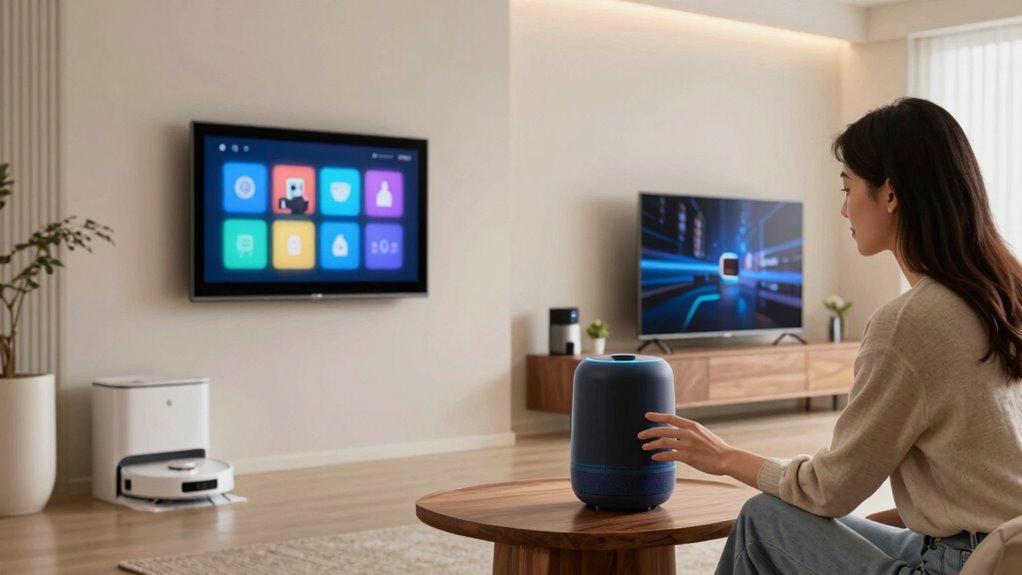

If you’re new to smart homes, choosing the right system can feel overwhelming with so many options designed for different skill levels and budgets. The best starter kits like the Smart Home Starter Kit with Echo Hub offer a straightforward experience, while DIY-focused options like ESPHome and Home Assistant provide customization for tech-savvy users. A key tradeoff in this category is balancing ease of use against expandability and price. Continue reading for a detailed breakdown of the top choices in 2026, helping you find the system that fits your needs and comfort level.

Get everyday essentials delivered free — and shop member deals
- Fast, free delivery on millions of items
- Access to Prime Big Deal Days deals on October 6–7
- Prime Video, Amazon Music and more included
Key Takeaways
- The most user-friendly setups prioritize seamless integration and minimal setup time, making them ideal for complete beginners.
- DIY options like ESPHome and Home Assistant offer customization but require more technical knowledge, suited for those willing to learn.
- Compatibility with voice assistants like Alexa and Google Assistant is a common feature that enhances ease of control across most options.
- Affordable starter kits often limit expandability but provide a reliable foundation for basic automation needs.
- Higher-end hubs like Home Assistant Green deliver advanced automation features but come with a steeper learning curve and price.
| Smart Home Starter Kit with Echo Hub, Amazon Smart Plug, and 4 Amazon Basics Smart Bulbs |  | Best Overall for Beginners Seeking Easy Setup and Versatile Control | Included Devices: Echo Hub, Amazon Smart Plug, 4 Amazon Basics Smart Bulbs | Power Requirements: USB-C PD power supply supporting 5V/2.4A and 9V/3A | Display: 8-inch touch screen with 1280 x 800 resolution | VIEW ON AMAZON | See Our Full Breakdown |
| Smart Home Projects for Beginners: Create Custom Devices and Home Automation Systems Using ESPHome, Home Assistant, and DIY Electronics |  | Best for Tech-Inclined Beginners Who Want Customization and Learning | VIEW ON AMAZON | See Our Full Breakdown | |||
| Aeotec Smart Home Hub – Works as a SmartThings Hub, Z-Wave, Zigbee, Matter Gateway, Compatible with Alexa and Google Assistant |  | Best for Users Wanting Multi-Protocol Compatibility and Reliable Automation | Weight: 1.1 pounds | Connectivity Technology: Ethernet, Wi-Fi, Z-Wave, Zigbee, Matter | Controller Type: Amazon Alexa, Android, Google Assistant, Ring, SmartThings, iOS | VIEW ON AMAZON | See Our Full Breakdown |
| Zigbee Starter Kit for Home Assistant by Pulcro.io |  | Best Budget-Friendly Zigbee Kit for Local Control Enthusiasts | Zigbee USB Dongle: Pre-Flashed Zigbee 3.0, Silicon Labs EFR32MG21 | Smart Plugs: 2 units, rated up to 1100W | Contact Sensors: 2 units | VIEW ON AMAZON | See Our Full Breakdown |
| Smart Home Automation Made Easy for Beginners: Step-by-Step Setup for Alexa, Google, and Apple HomeKit |  | Best Quick Setup Guide for Multi-Platform Compatibility | VIEW ON AMAZON | See Our Full Breakdown | |||
| Home Assistant Green | Smart Home Hub with Advanced Automation |  | Best Overall for Customizable Automation and Privacy | Processor: Quad-core | Storage: 32GB | RAM: 4GB | VIEW ON AMAZON | See Our Full Breakdown |
| Aqara Hub M1S Gen 2 Smart Home Bridge for Alarm System and Home Automation |  | Best for Ecosystem Integration and Security Features | Power Source: Corded Electric | Compatible Devices: Aqara Zigbee devices, Apple HomeKit, Google Assistant, Alexa, IFTTT | Connectivity Technology: Wireless | VIEW ON AMAZON | See Our Full Breakdown |
More Details on Our Top Picks
Smart Home Starter Kit with Echo Hub, Amazon Smart Plug, and 4 Amazon Basics Smart Bulbs
This starter kit stands out for its all-in-one approach, combining an Echo Hub with smart plugs and bulbs, making it ideal for those who want a straightforward, integrated smart home experience. Unlike the more technical Zigbee Starter Kit by Pulcro.io, it offers a user-friendly setup with guided instructions and seamless voice control via Alexa, reducing the learning curve. The included Echo Hub supports multiple protocols, but it requires a stable WiFi or Ethernet connection, which may limit mobility. Its ease of use makes it perfect for new users, though advanced users seeking extensive customization might find the system somewhat limited. The kit’s integration of security features like smart lighting enhances safety without added complexity.
Pros:- Simple quick setup with guided instructions
- Supports a wide range of smart home devices and protocols
- Includes security features like smart lighting for peace of mind
Cons:- Requires constant internet connection via WiFi or Ethernet
- Not portable—designed for fixed placement
Best for: Beginners who want a simple, all-in-one system that works out of the box and integrates voice commands easily.
Not ideal for: Tech-savvy users looking for deep customization or local-only control without reliance on cloud services.
- Included Devices:Echo Hub, Amazon Smart Plug, 4 Amazon Basics Smart Bulbs
- Power Requirements:USB-C PD power supply supporting 5V/2.4A and 9V/3A
- Display:8-inch touch screen with 1280 x 800 resolution
- Audio:Stereo speakers with full-range drivers
- Sensors:Passive infrared (PIR), ambient light sensor (ALS)
- WiFi Compatibility:Dual-band 802.11a/b/g/n/ac
- Bluetooth:A2DP, AVRCP profiles supported
- Smart Home Compatibility:Zigbee, Thread, Matter, WiFi, Bluetooth Low Energy Mesh
- Size:7.9″ W x 5.4″ H x 0.6″ D
Our verdict“This kit makes the most sense for those new to smart homes who value ease of setup and reliable voice control over advanced customization.”
Smart Home Projects for Beginners: Create Custom Devices and Home Automation Systems Using ESPHome, Home Assistant, and DIY Electronics
This book is perfect for those interested in DIY smart home projects, guiding readers through creating personalized automation systems with platforms like ESPHome and Home Assistant. Compared with the plug-and-play simplicity of the Smart Home Starter Kit, this resource emphasizes hands-on building and customization, making it ideal for learners who want to understand how their devices work. However, it involves some electronics knowledge and doesn’t come with hardware, so beginners must source components separately. It’s less suitable for those seeking immediate, out-of-the-box solutions but excellent for learners who enjoy tinkering and want to deepen their understanding of smart home tech.
Pros:- Provides practical, step-by-step DIY instructions
- Covers popular platforms like ESPHome and Home Assistant
- Encourages learning and customization of smart devices
Cons:- No hardware included, requiring user to purchase components separately
- Requires some basic electronics knowledge and troubleshooting skills
- Content may be too advanced for absolute beginners
Best for: Beginners comfortable with basic electronics who want to build and customize their smart home systems.
Not ideal for: Complete novices uninterested in electronics or those seeking ready-to-use kits without technical setup.
Our verdict“This book makes the most sense for DIY-minded beginners who want to learn and create their own smart home setups from scratch.”
Aeotec Smart Home Hub – Works as a SmartThings Hub, Z-Wave, Zigbee, Matter Gateway, Compatible with Alexa and Google Assistant
The Aeotec Smart Home Hub offers broad protocol support, including Z-Wave, Zigbee, and Matter, making it a versatile choice for integrating various smart devices. Compared with the Zigbee Starter Kit by Pulcro.io, which focuses solely on Zigbee, this hub provides a more flexible setup that can support a wider array of products and platforms like Alexa and Google Assistant. Its setup process is straightforward via Wi-Fi or Ethernet, but there’s limited detailed feedback on long-term reliability, which might concern cautious buyers. Designed mainly for North American markets, international users may face compatibility issues. It’s best suited for those seeking a future-proof, multi-protocol hub that can grow with their smart home.
Pros:- Supports multiple protocols including Z-Wave, Zigbee, and Matter
- Easy setup via Wi-Fi or Ethernet with popular apps
- Compatible with Alexa and Google Assistant for voice control
Cons:- Limited information on long-term reliability and user reviews
- Primarily designed for North American use, may not suit international markets
Best for: Smart home enthusiasts who want a flexible, multi-protocol hub capable of integrating many device brands and platforms.
Not ideal for: International users or those seeking a plug-and-play experience without technical setup challenges.
- Weight:1.1 pounds
- Connectivity Technology:Ethernet, Wi-Fi, Z-Wave, Zigbee, Matter
- Controller Type:Amazon Alexa, Android, Google Assistant, Ring, SmartThings, iOS
- Frequency:908.42 MHz
- Color:White
- Warranty:See product page for details
Our verdict“This hub is ideal for users wanting a versatile, future-ready device that can unify various smart protocols and platforms.”
Zigbee Starter Kit for Home Assistant by Pulcro.io
This Zigbee starter kit provides a reliable foundation for local smart home automation using Home Assistant, including a pre-flashed USB dongle, smart plugs, and contact sensors. Compared with the Smart Home Starter Kit, it appeals to tech-savvy users who prefer Zigbee’s local control benefits and want to keep their smart home independent of cloud services. Its straightforward setup and inclusion of essential components make it a good entry point, but it’s limited to Zigbee-compatible devices and requires some technical know-how. If you’re looking for a simple, cost-effective way to start automating with local control, this kit is a solid choice, though absolute beginners might find the initial configuration challenging.
Pros:- Easy to set up with Home Assistant for beginners familiar with the platform
- Reliable Zigbee 3.0 communication for local control
- Includes essential components for a basic smart home system
Cons:- Limited to Zigbee-compatible devices, restricting choices
- Initial setup requires some technical knowledge and troubleshooting
Best for: Home automation beginners comfortable with some technical setup who prefer Zigbee for local control and reliability.
Not ideal for: Complete beginners or those who want immediate plug-and-play solutions without technical configuration.
- Zigbee USB Dongle:Pre-Flashed Zigbee 3.0, Silicon Labs EFR32MG21
- Smart Plugs:2 units, rated up to 1100W
- Contact Sensors:2 units
- Includes:USB extension cable
Our verdict“This kit is an excellent entry point for beginners wanting reliable local control, provided they are comfortable with initial configuration.”
Smart Home Automation Made Easy for Beginners: Step-by-Step Setup for Alexa, Google, and Apple HomeKit
This guide simplifies smart home setup across multiple platforms—Alexa, Google, and Apple HomeKit—making it ideal for absolute beginners who want cross-platform compatibility. Unlike the technical DIY focus of the Book on ESPHome and Home Assistant, this book is purely instructional, providing clear, step-by-step guidance without hardware. It’s perfect for those who prefer a straightforward approach to automating their existing devices or starting fresh, but it offers limited technical details and no hardware components. If you want a user-friendly manual to get your smart home running smoothly across different voice assistants, this is an excellent choice.
Pros:- Easy-to-follow, step-by-step setup instructions
- Supports multiple smart home platforms including Alexa, Google, and Apple HomeKit
- Ideal for complete beginners without technical experience
Cons:- No detailed product specifications or hardware included
- Limited content beyond setup guidance
Best for: Total beginners looking for clear, platform-agnostic setup instructions without technical hassle.
Not ideal for: Intermediate or advanced users seeking detailed technical customization or hardware modifications.
Our verdict“This guide is best for beginners who want a straightforward, cross-platform setup without dealing with complex technical details.”
Home Assistant Green | Smart Home Hub with Advanced Automation
The Home Assistant Green stands out as the most flexible hub for those who want to build a tailored smart home experience. Its fanless, silent design combined with local data processing ensures privacy, making it ideal compared to cloud-dependent options. Compared to the Aqara Hub M1S, it supports a wider range of protocols through USB expansion, empowering users to integrate various devices without vendor lock-in. However, its limited storage and reliance on Ethernet for setup could pose challenges for larger networks or less tech-savvy users. This pick is perfect for DIY enthusiasts who prioritize customization and data security but are comfortable managing a slightly more complex setup. The device’s quad-core processor and 4GB RAM allow robust automation, though additional accessories may be necessary for full connectivity.
Pros:- Supports multiple protocols via USB expansion for flexible device integration
- Fanless, silent operation enhances home comfort
- Keeps home data local and secure for privacy-conscious users
- Pre-installed with Home Assistant simplifies initial setup
Cons:- Limited 32GB storage may restrict large device networks
- Requires Ethernet connection for initial setup, which may be inconvenient
Best for: Tech-savvy beginners who want a highly customizable, privacy-focused system with support for multiple protocols.
Not ideal for: Users seeking a plug-and-play solution with minimal setup, or those with very large device networks needing extensive storage.
- Processor:Quad-core
- Storage:32GB
- RAM:4GB
- Power Consumption:a few watts
- Connectivity:USB expandability for Z-Wave, Zigbee, Thread
- Setup requirement:Ethernet for initial configuration
Our verdict“This hub is best suited for beginners who value customization, privacy, and are comfortable with a slightly more involved setup process.”
Aqara Hub M1S Gen 2 Smart Home Bridge for Alarm System and Home Automation
The Aqara Hub M1S Gen 2 excels as a versatile bridge for users already invested in Aqara devices or seeking seamless integration with popular voice assistants like Apple HomeKit, Google Assistant, and Alexa. Its built-in RGB light, illumination sensor, and alarm speaker add practical automation and security features without requiring additional devices. Compared with the Home Assistant Green, it offers a straightforward setup with ready-made integrations, but its compatibility is limited to Aqara devices, which may restrict expansion if you prefer third-party products. The device’s compact size and support for multiple ecosystems make it ideal for users who prioritize security and simple automation. However, it doesn’t support third-party Zigbee devices or Wi-Fi 6, and full functionality often depends on additional Aqara accessories, which could add to the overall cost.
Pros:- Supports multiple ecosystems including Apple HomeKit, Google Assistant, and Alexa
- Built-in RGB light and illumination sensor for versatile automation
- Includes a speaker for alarms and customizable doorbell ringtones
- Supports secure Wi-Fi with WPA3
Cons:- Limited to Aqara devices, restricting third-party Zigbee support
- Requires 2.4 GHz Wi-Fi, not compatible with Wi-Fi 6 networks
- Full features may need additional Aqara accessories, increasing cost
Best for: Beginners interested in a secure, ecosystem-specific hub that simplifies automation with reliable security features.
Not ideal for: Homeowners who want broad device compatibility beyond Aqara or prefer third-party Zigbee integration without vendor restrictions.
- Power Source:Corded Electric
- Compatible Devices:Aqara Zigbee devices, Apple HomeKit, Google Assistant, Alexa, IFTTT
- Connectivity Technology:Wireless
- Alert Type:Motion, alarms, doorbells
- Sensor Technology:Zigbee
- Range:33 feet
Our verdict“This hub is ideal for beginners who want reliable security and ecosystem integration within the Aqara lineup, but it may limit future device flexibility.”

How We Picked
To determine the best smart home systems for beginners, I focused on factors that matter most to new users: ease of setup, user interface simplicity, compatibility with popular voice assistants, expandability, and overall value. I prioritized products that balance straightforward installation with reliable operation, avoiding overly complex DIY solutions for absolute beginners, while still including some flexible options for those eager to grow. The ranking reflects a combination of user-friendliness, integration capabilities, and price point, ensuring that each pick serves a distinct beginner profile—from total novices to those with some tech experience.Factors to Consider When Choosing Smart Home System For Beginners
When selecting a smart home system as a beginner, it’s important to consider several key factors beyond just features. Ease of setup and user interface are critical, since complicated configurations can turn newcomers away. Compatibility with voice assistants simplifies daily control, while expandability ensures your system can grow with your needs. Budget is also a decisive factor—some systems are more affordable upfront but may limit future upgrades. Lastly, consider the ecosystem you’ll be investing in, as sticking to one brand or protocol can reduce frustration and improve reliability.Ease of Setup and User Experience
For beginners, the primary concern is how quickly and effortlessly the system can be installed and operated. Look for options with clear instructions, minimal wiring, and intuitive apps. A complex setup can discourage ongoing use, so prioritize products known for user-friendly interfaces and guided onboarding. While DIY solutions may promise customization, they often require technical skills, so balance your comfort level with the benefits of flexibility.
Compatibility and Ecosystem
Most beginners will benefit from choosing a system that plays well with common voice assistants like Alexa, Google Assistant, or Apple HomeKit. This compatibility enables voice control and easier integration with devices you might already own. Sticking to one ecosystem can reduce compatibility issues, but some systems also support multiple protocols, offering more flexibility. Consider where you’ll want your smart home to go in the future to avoid costly replacements or complicated integrations later.
Expandability and Protocol Support
While initial setups should be simple, think about future needs. Will you want to add smart locks, cameras, or sensors later? Systems supporting Z-Wave, Zigbee, or Matter protocols tend to offer more options for expansion. However, more protocols can sometimes introduce complexity, so choose a platform that balances expandability with ease of use. Budgeting for future additions can influence your choice now, saving money and effort down the line.
Budget and Value
Entry-level kits are tempting because they are affordable, but they often come with limited device compatibility or features. Consider how much you’re willing to invest upfront versus what you might spend upgrading later. Sometimes, paying a bit more for a system with better support and compatibility can reduce frustration and prevent costly replacements. Remember that ongoing costs, like subscriptions or device upgrades, also factor into the total value.
Reliability and Support
Beginners benefit from systems with reliable performance and accessible customer support. Look for products with positive reviews regarding stability and responsive service. A system that frequently disconnects or is difficult to troubleshoot can turn a fun project into a frustrating experience. When possible, choose brands with active user communities or comprehensive documentation, which can be invaluable as you learn.
Frequently Asked Questions
Can I start with a small smart home system and expand later?
Yes, most smart home systems designed for beginners are built with scalability in mind. Starting with a basic hub or kit can be expanded over time by adding compatible devices such as sensors, switches, or cameras. It’s wise to choose a platform supporting popular protocols like Zigbee, Z-Wave, or Matter, which typically have a broad ecosystem of compatible products. Planning for expansion from the start can save you from replacing the entire system later, making your smart home more versatile and future-proof.
Is it better to choose a system that uses a dedicated app or one that integrates with voice assistants?
Both options have advantages, but for beginners, systems that integrate with voice assistants like Alexa or Google Assistant often provide a more intuitive control experience. These integrations allow for voice commands and simplify daily interactions with your devices. A dedicated app can offer more detailed control and customization but may have a steeper learning curve. Ideally, pick a system that combines both, giving you straightforward voice commands with a user-friendly app for setup and advanced features.
What should I consider if I want my smart home to work with multiple voice platforms?
If you plan to use multiple voice platforms, ensure the system supports all your preferred assistants. Many hubs and ecosystems are compatible with both Alexa and Google Assistant, but some may favor one over the other. Compatibility issues can lead to delays or limited functionality, so checking supported platforms before purchase helps ensure a smooth experience. Also, consider how the app and voice platform handle device grouping and routines to maximize convenience across platforms.
Are DIY solutions suitable for complete beginners?
DIY solutions like ESPHome and Home Assistant can be very powerful, but they generally require a higher level of technical skill than plug-and-play kits. For complete beginners, these options might involve a learning curve in setting up hardware, configuring software, and troubleshooting. However, if you’re interested in learning and willing to invest time, DIY solutions can offer highly customizable and scalable systems in the long run. For most novices, starting with a pre-configured hub or kit provides a less intimidating entry point.
How much should I expect to spend on a beginner-friendly smart home system?
Entry-level systems typically range from around $50 to $200, depending on the number of devices included and features offered. Basic kits with a hub and a few smart devices are quite affordable, but expanding your system or opting for premium hubs can increase costs. Keep in mind that investing in a slightly more expensive system with better compatibility and support might save money and frustration later. Setting a budget early helps narrow choices without sacrificing essential features for beginners.
Conclusion
For absolute beginners seeking simplicity and reliability, the Smart Home Starter Kit with Echo Hub provides an easy, all-in-one solution. Those eager to customize and learn more about home automation may find the Aeotec Smart Home Hub or Home Assistant Green appealing, despite their steeper learning curves. If budget is a priority, starter kits like Pulcro.io’s Zigbee Kit deliver value without sacrificing core functionality. For users with specific needs, such as integration with alarm systems, the Aqara Hub M1S offers a solid bridge between automation and security. Overall, choose based on your comfort with technology, future plans, and budget to build a smart home that truly works for you.Fall Picks
fall essentials
As an affiliate, we earn on qualifying purchases.