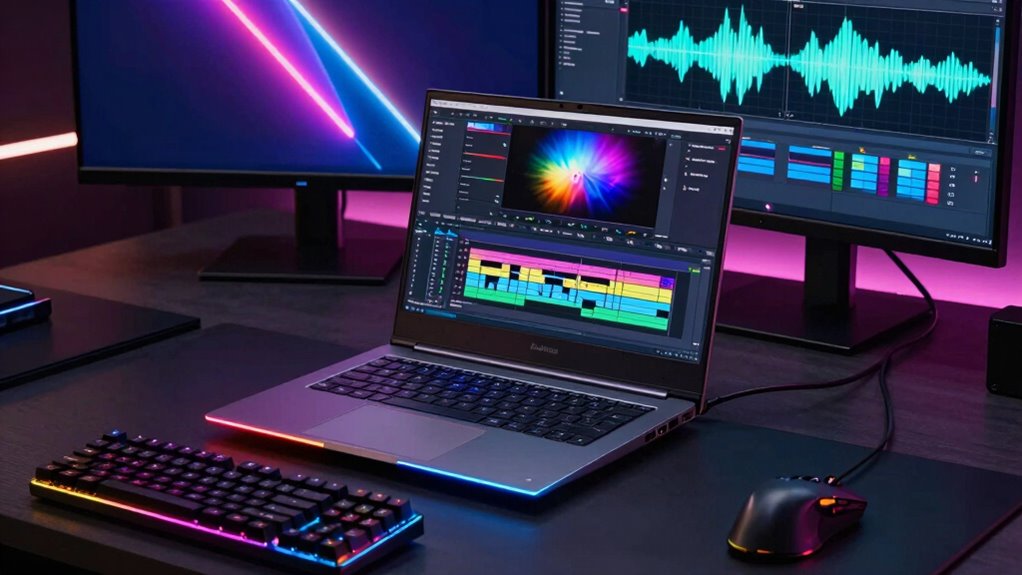

When selecting a gaming laptop for video editing, the key considerations are powerful performance, high-quality display, and reliable build. The Dell XPS 15 9520 stands out as the best overall due to its balanced mix of processing power and display quality. The ASUS ROG Strix G16 offers a high-refresh-rate screen for smooth editing workflows, while the NIMO 17.3″ model provides an excellent option for those prioritizing screen size and GPU power. Each of these options involves tradeoffs, such as price, portability, or thermal management. Continue reading for a detailed breakdown of these models and how they compare in key areas.

Get everyday essentials delivered free with Prime
- Fast, free delivery on millions of items
- Prime Video, Amazon Music and more included
- Member-only deals all year
Key Takeaways
- High-refresh-rate screens like 165Hz benefit video editors working with fast-paced footage or needing smoother preview performance.
- Most top-tier gaming laptops incorporate RTX 5060 or similar GPUs, offering strong acceleration for rendering and multitasking.
- RAM size, especially 32GB, significantly improves editing workflows and multitasking capabilities, justifying higher price points.
- Display quality—resolution, color accuracy, and panel type—remains a critical factor for detailed editing work.
- Battery life often diminishes with high-performance specs; portability may be compromised for desktop-like power.
| Dell XPS 15 9520 (i7-12700H, 32GB, RTX 3050) |  | Best Display for Color-Critical Editing | CPU: Intel 14-Core i7-12700H (up to 4.7GHz) | GPU: NVIDIA GeForce RTX 3050 4GB GDDR6 | RAM: 32GB DDR5 4800MHz | VIEW ON AMAZON | See Our Full Breakdown |
| ASUS ROG Strix G16 (2025) G615JMR-AS74 |  | Best Overall | CPU: Intel Core i7-14650HX (16 cores, up to 5.2GHz) | GPU: NVIDIA GeForce RTX 5060 (Blackwell, DLSS 4) | RAM: 16GB DDR5 5600MHz | VIEW ON AMAZON | See Our Full Breakdown |
| ASUS V16 V3607VM-ES74 |  | Best Budget Entry to Modern GPU Editing | CPU: Intel Core 7 240H (10 cores, 16 threads) | GPU: NVIDIA GeForce RTX 5060, 8GB GDDR7 | RAM: 16GB | VIEW ON AMAZON | See Our Full Breakdown |
| Acer Nitro V 16S (Intel Core 7 240H, 1TB SSD) |  | Best Value Storage-to-Price Pick | CPU: Intel Core 7 240H (10 cores, up to 5.2GHz) | GPU: NVIDIA GeForce RTX 5060, 8GB GDDR7 | RAM: 16GB DDR5 | VIEW ON AMAZON | See Our Full Breakdown |
| Acer Nitro V 16S AI (ANV16S-41-R2AJ, Ryzen 7 260) |  | Best for Heavy Multitasking | CPU: AMD Ryzen 7 260 | GPU: NVIDIA GeForce RTX 5060 Laptop GPU (572 AI TOPS) | RAM: 32GB DDR5 5600MHz (max 32GB) | VIEW ON AMAZON | See Our Full Breakdown |
| Acer Nitro V Gaming Laptop with Intel Core i7-13620H and NVIDIA GeForce RTX 4050 |  | Best Overall for High-Performance Video Editing and Gaming | Processor: Intel Core i7-13620H | Graphics: NVIDIA GeForce RTX 4050 | Display: 15.6″ FHD IPS 165Hz | VIEW ON AMAZON | See Our Full Breakdown |
| NIMO 17.3″ FHD IPS Gaming Laptop, AMD Ryzen 7 7735HS, 32GB DDR5 RAM, 1TB SSD, Radeon 680M |  | Best for Large Screen Video Editing and Creative Work | Screen: 17.3″ FHD IPS, 180-degree hinge | Processor: AMD Ryzen 7 7735HS | RAM: 32GB DDR5 | VIEW ON AMAZON | See Our Full Breakdown |
| Acer Nitro V 15 Gaming Laptop (ANV15-52-586Z) |  | Best Budget-Friendly for Entry-Level Video Editing | Processor: Intel Core i5-13420H | Graphics: NVIDIA GeForce RTX 4050 | Display: 15.6″ FHD IPS 165Hz | VIEW ON AMAZON | See Our Full Breakdown |
| Acer Nitro V Gaming Laptop with Intel Core i5-13420H and NVIDIA GeForce RTX 4050 |  | Best Mid-Range for Balanced Video Editing and Gaming | Processor: Intel Core i5-13420H | Graphics: NVIDIA GeForce RTX 4050 | Display: 15.6″ FHD IPS 144Hz | VIEW ON AMAZON | See Our Full Breakdown |
| gaming laptop for video editing | RAM | Storage | Display | CPU |
|---|---|---|---|---|
| Dell XPS 15 9520 | 32GB DDR5 4800MHz | 1TB PCIe NVMe M.2 SSD | 15.6" FHD+ 1920×1200 IPS, 500 nits, 100% Adobe RGB, 60Hz | Intel 14-Core i7-12700H (up to 4.7GHz) |
| ASUS ROG Strix G16 | 16GB DDR5 5600MHz | 1TB PCIe Gen 4 SSD | 16" FHD+ 1920×1200, 165Hz, 3ms | Intel Core i7-14650HX (16 cores, up to 5.2GHz) |
| ASUS V16 V3607VM-ES74 | 16GB | 512GB PCIe 4.0 SSD | 16" WUXGA 1920×1200, 144Hz, 300 nits | Intel Core 7 240H (10 cores, 16 threads) |
| Acer Nitro V 16S | 16GB DDR5 | 1024GB SSD | 16" WUXGA 1920×1200 IPS, 180Hz, 100% sRGB | Intel Core 7 240H (10 cores, up to 5.2GHz) |
| Acer Nitro V 16S AI | 32GB DDR5 5600MHz (max 32GB) | 1TB PCIe Gen 4 SSD + 1 open M.2 slot | 16" WUXGA IPS 1920×1200, 180Hz, 100% sRGB | AMD Ryzen 7 260 |
| Acer Nitro V Gaming Laptop wit | 16GB DDR5 | 1TB PCIe Gen 4 SSD | 15.6" FHD IPS 165Hz | — |
| NIMO 17.3" FHD IPS Gaming Lapt | 32GB DDR5 | 1TB SSD | — | — |
| Acer Nitro V 15 Gaming Laptop | 8GB DDR5 | 512GB PCIe Gen 4 SSD | 15.6" FHD IPS 165Hz | — |
| Acer Nitro V Gaming Laptop wit | 8GB DDR5 | 512GB PCIe Gen 4 SSD | 15.6" FHD IPS 144Hz | — |
More Details on Our Top Picks
Dell XPS 15 9520 (i7-12700H, 32GB, RTX 3050)
Most gaming laptops in this roundup treat the screen as a gaming tool first; the Dell XPS 15 9520 flips that priority, and that’s exactly why editors should care. Its 100% Adobe RGB panel at 500 nits means the colors graded on this laptop will actually match what clients see on reference monitors — something the ASUS ROG Strix G16’s gaming-focused display can’t promise. With 32GB of DDR5 RAM, it also handles 4K timelines in Premiere or DaVinci more comfortably than the 16GB ASUS V16. The catch is raw GPU muscle: the RTX 3050 lags far behind the RTX 5060 machines here, so GPU-accelerated effects and exports run noticeably slower. The 60Hz panel and resealed (not factory-sealed) configuration further confirm this is a creative workstation wearing a thin gaming badge rather than a true hybrid.
Pros:- 100% Adobe RGB, 500-nit display is the most color-accurate panel in this lineup
- 32GB DDR5 and 1TB NVMe SSD handle large 4K projects comfortably
- 14-core i7-12700H delivers strong timeline scrubbing and rendering performance
- Dual Thunderbolt 4 ports plus SD card reader make offloading camera media painless
Cons:- RTX 3050 is far weaker than the RTX 5060 laptops here for GPU-accelerated effects
- 60Hz refresh rate and resealed upgrade configuration reduce value for the price
Best for: Colorists and editors who need accurate Adobe RGB coverage and strong CPU multitasking more than fast GPU exports
Not ideal for: Editors relying on GPU-heavy workflows like heavy noise reduction, 3D, or AI upscaling — the RTX 3050 will bottleneck those tasks
- CPU:Intel 14-Core i7-12700H (up to 4.7GHz)
- GPU:NVIDIA GeForce RTX 3050 4GB GDDR6
- RAM:32GB DDR5 4800MHz
- Storage:1TB PCIe NVMe M.2 SSD
- Display:15.6″ FHD+ 1920×1200 IPS, 500 nits, 100% Adobe RGB, 60Hz
- Ports:2x Thunderbolt 4, USB-C 3.2 Gen 2, SD card reader
Our verdict“Buy this if color accuracy and quiet professional styling outweigh raw render speed; skip it if your workflow leans on the GPU.”
ASUS ROG Strix G16 (2025) G615JMR-AS74
The ROG Strix G16 earns the top spot because it solves the core problem of a gaming laptop for video editing: sustaining performance under long render loads. The 16-core i7-14650HX is a desktop-class chip that outmuscles the Core 7 240H found in the Acer Nitro V 16S, while the vapor chamber, tri-fan cooling, and liquid metal keep export sessions from thermal throttling — a weakness budget machines often suffer. The RTX 5060 with DLSS 4 accelerates AV1 encoding and AI-assisted tools in modern editing suites. Its compromises are real, though: 16GB of RAM is tight for heavy 4K multitasking (the 32GB Nitro V 16S AMD handles that better), and the 90Wh battery yielding roughly 2 hours of runtime makes it a desk-first machine. Tool-free RAM and SSD access softens the memory limitation considerably.
Pros:- 16-core i7-14650HX is the strongest CPU in this batch for rendering and multitasking
- Flagship cooling (vapor chamber, liquid metal, tri-fan) sustains long export sessions
- RTX 5060 with DLSS 4 and Blackwell architecture accelerates modern editing and encoding workloads
- Tool-free access makes RAM and SSD upgrades easy, future-proofing the 16GB baseline
Cons:- 16GB of RAM out of the box is limiting for serious 4K editing until upgraded
- Around 2 hours of battery life ties it to a power outlet
Best for: Editors who want the fastest sustained rendering and gaming performance in one machine and don’t mind staying plugged in
Not ideal for: Frequent travelers or coffee-shop editors — the 2-hour battery life and 2.65kg heft make it impractical on the go
- CPU:Intel Core i7-14650HX (16 cores, up to 5.2GHz)
- GPU:NVIDIA GeForce RTX 5060 (Blackwell, DLSS 4)
- RAM:16GB DDR5 5600MHz
- Storage:1TB PCIe Gen 4 SSD
- Display:16″ FHD+ 1920×1200, 165Hz, 3ms
- Battery:90Wh (approx. 2 hours typical use)
Our verdict“The most balanced render-and-play machine here — buy it, then budget for a RAM upgrade to 32GB.”
ASUS V16 V3607VM-ES74
The ASUS V16 makes this list by pairing the same RTX 5060 GPU as the pricier ROG Strix G16 with a slimmer, more restrained chassis — effectively trading CPU headroom for a lower price and a more office-friendly look. For an editor whose bottleneck is GPU effects, color grading, or AI tools rather than raw rendering threads, that trade can make sense: the 5060’s 8GB of GDDR7 and AV1 support punch well above this laptop’s price class. The 10-core Core 7 240H is the same processor as the Acer Nitro V 16S, so neither offers the render muscle of the ROG’s HX chip. Where the V16 stumbles is storage: 512GB fills up fast once a few video projects and games coexist, forcing an early SSD upgrade that the Nitro’s 1TB drive avoids. The 300-nit, 144Hz panel is serviceable but not a color-accuracy guarantee like the XPS 15’s Adobe RGB screen.
Pros:- RTX 5060 with 8GB GDDR7 delivers the same GPU acceleration as pricier models here
- 144Hz WUXGA 16:10 display gives extra vertical space for editing timelines
- Slim, matte black design suits classroom or office environments better than gamer styling
- PCIe 4.0 SSD keeps project loading and caching fast
Cons:- 512GB storage is the smallest in this lineup and fills rapidly with footage
- 300-nit panel lacks verified color coverage for grading work
Best for: Students and hobbyist editors who want current-gen RTX 5060 performance and a portable, understated design on a tight budget
Not ideal for: Anyone working with large video libraries — 512GB of storage disappears quickly without an external drive
- CPU:Intel Core 7 240H (10 cores, 16 threads)
- GPU:NVIDIA GeForce RTX 5060, 8GB GDDR7
- RAM:16GB
- Storage:512GB PCIe 4.0 SSD
- Display:16″ WUXGA 1920×1200, 144Hz, 300 nits
- Connectivity:WiFi 6, Bluetooth 5.3
Our verdict“The cheapest way into RTX 5060 editing performance — just plan on adding external or upgraded storage early.”
Acer Nitro V 16S (Intel Core 7 240H, 1TB SSD)
This Acer Nitro V 16S configuration positions itself as the practical middle ground of the roundup. It shares the Core 7 240H and RTX 5060 with the ASUS V16 but doubles the SSD to 1TB, which matters more for video editors than almost any other spec — raw 4K footage eats drive space faster than any other resource. The 180Hz panel with 100% sRGB coverage also edges out the V16’s 144Hz screen for smoother playback and more predictable color. Its 16GB of RAM matches both ASUS machines and trails the AMD Nitro V 16S’s 32GB, so heavily layered timelines will feel the pinch. The bundled USB 3.0 hub is a minor sweetener for connecting card readers and drives. Compared with the ROG Strix G16, you give up the HX-class CPU and premium cooling, so long renders run slower — but for 1080p and light 4K work, the savings are hard to argue with.
Pros:- 1TB SSD stores far more footage than the ASUS V16’s 512GB at a similar price
- 180Hz display with 100% sRGB gives smooth playback and reasonable color fidelity
- RTX 5060 with 8GB GDDR7 handles modern GPU-accelerated editing effects
- Full port loadout including Ethernet and four USB ports plus a bundled hub
Cons:- 16GB RAM limits heavy multitasking and complex 4K timelines
- Core 7 240H renders notably slower than the ROG Strix G16’s i7-14650HX
Best for: Value-focused editors who need lots of fast storage for footage libraries without paying ROG-level prices
Not ideal for: Professional colorists — sRGB coverage is fine for web delivery but falls short of the XPS 15’s Adobe RGB gamut
- CPU:Intel Core 7 240H (10 cores, up to 5.2GHz)
- GPU:NVIDIA GeForce RTX 5060, 8GB GDDR7
- RAM:16GB DDR5
- Storage:1024GB SSD
- Display:16″ WUXGA 1920×1200 IPS, 180Hz, 100% sRGB
- Connectivity:Killer Wi-Fi 6, Gigabit Ethernet, Bluetooth 5.2
Our verdict“The smart storage-per-dollar choice for editors whose footage archive, not render speed, drives their buying decision.”
Acer Nitro V 16S AI (ANV16S-41-R2AJ, Ryzen 7 260)
Where nearly every machine here ships with 16GB, the Acer Nitro V 16S AI comes loaded with 32GB of DDR5 — and for editors, that difference shows up immediately when Premiere, After Effects, a browser full of references, and background exports run simultaneously. That memory advantage makes it a better multitasking companion than its Intel sibling or the ROG Strix G16’s stock configuration. The Ryzen 7 260 plus RTX 5060 (572 AI TOPS) handles timeline scrubbing, AI denoising, and next-gen encoders capably, though it still lacks the render-thread muscle of the ROG’s 16-core HX chip. The spare M.2 slot is a genuine long-term asset: footage archives grow, and adding a second drive beats managing externals. Just know the memory ceiling — 32GB is the maximum, so there’s no upgrade path beyond that, and the 1920×1200 panel trades resolution headroom for refresh rate.
Pros:- 32GB DDR5 doubles the RAM of most rivals here, smoothing heavy multitasking
- Second M.2 slot allows easy storage expansion as footage libraries grow
- RTX 5060 with 572 AI TOPS accelerates AI-assisted editing and ray-traced effects
- 180Hz 100% sRGB display handles both smooth playback and decent color work
Cons:- RAM is capped at 32GB with no upgrade path
- No Thunderbolt support limits fast peripheral and dock options compared with the XPS 15
Best for: Editors who keep many apps and heavy timelines open at once and want expansion room for future storage
Not ideal for: Future-proofers who might eventually want 64GB of RAM — this machine caps out at 32GB with no path beyond it
- CPU:AMD Ryzen 7 260
- GPU:NVIDIA GeForce RTX 5060 Laptop GPU (572 AI TOPS)
- RAM:32GB DDR5 5600MHz (max 32GB)
- Storage:1TB PCIe Gen 4 SSD + 1 open M.2 slot
- Display:16″ WUXGA IPS 1920×1200, 180Hz, 100% sRGB
- Wireless:Wi-Fi 6
Our verdict“The pick for editors who live in a dozen open tabs and layered timelines — buy it for the RAM and the spare drive bay.”
Acer Nitro V Gaming Laptop with Intel Core i7-13620H and NVIDIA GeForce RTX 4050
This model stands out for its combination of a powerful Intel Core i7-13620H processor and NVIDIA GeForce RTX 4050 graphics, making it ideal for intensive video editing alongside gaming. Its 15.6-inch FHD IPS display with 165Hz refresh rate delivers vibrant visuals crucial for editing workflows. Compared to the NIMO 17.3″, it offers a more portable size but sacrifices the larger screen real estate that’s better for detailed editing. The fast 1TB PCIe Gen 4 SSD ensures quick file access, though high-end components may lead to increased power consumption and battery drain. This makes it better suited to users prioritizing raw performance in a relatively portable form, though it’s heavier than ultraportables.
Pros:- High-performance Intel Core i7 processor
- Vibrant visuals with RTX 4050 and 165Hz display
- Fast 1TB PCIe Gen 4 SSD
- Excellent connectivity including Thunderbolt 4
Cons:- High power consumption may reduce battery life
- Limited RAM upgrade capacity (max 32GB)
Best for: Power users who need a portable yet high-performing machine for intensive video editing and gaming
Not ideal for: Travelers seeking ultra-lightweight, long-battery life laptops for casual editing
- Processor:Intel Core i7-13620H
- Graphics:NVIDIA GeForce RTX 4050
- Display:15.6″ FHD IPS 165Hz
- RAM:16GB DDR5
- Storage:1TB PCIe Gen 4 SSD
- Connectivity:Wi-Fi 6, Thunderbolt 4
Our verdict“This laptop is best for users who want top-tier performance for both gaming and detailed video editing, accepting portability tradeoffs.”
NIMO 17.3″ FHD IPS Gaming Laptop, AMD Ryzen 7 7735HS, 32GB DDR5 RAM, 1TB SSD, Radeon 680M
The NIMO 17.3″ offers a spacious display paired with a high-end AMD Ryzen 7 7735HS CPU and 32GB DDR5 RAM, making it ideal for those who prefer detailed visual editing and multitasking. Its 180-degree lay-flat hinge enhances workflow flexibility, especially when sharing work. Compared with the Acer Nitro V, it sacrifices some portability for a significantly larger screen that’s better suited for complex editing. The integrated Radeon 680M graphics are adequate for light editing and casual gaming but not demanding titles, which could be a limitation for some creative tasks. The slim metal chassis under 2.1kg balances portability with a large display—perfect for stationary editing setups but less so for frequent travel.
Pros:- Large 17.3-inch FHD IPS display with flexible hinge
- Generous 32GB DDR5 RAM and dual PCIe 4.0 SSD slots
- Slim, lightweight metal chassis
- Two-year warranty with security features
Cons:- Integrated Radeon graphics are limited for demanding editing tasks
- Bulky for travel despite light weight relative to size
Best for: Creative professionals who prioritize screen size and multitasking over ultra-portability
Not ideal for: Frequent travelers or those needing a lightweight, highly portable editing laptop
- Screen:17.3″ FHD IPS, 180-degree hinge
- Processor:AMD Ryzen 7 7735HS
- RAM:32GB DDR5
- Storage:1TB SSD
- Graphics:AMD Radeon 680M
- Weight:Under 2.1 kg
Our verdict“Best suited for creators who need a large display and expandability for intensive editing, even if it means less portability.”
Acer Nitro V 15 Gaming Laptop (ANV15-52-586Z)
The Acer Nitro V 15 with an Intel Core i5-13420H and NVIDIA GeForce RTX 4050 offers a compelling entry point for video editors on a budget. Its 15.6-inch FHD IPS display with 165Hz provides smooth visuals, essential for editing workflows. Compared to the more powerful Acer Nitro V with i7, it sacrifices some processing prowess but remains capable for basic editing tasks. The 8GB DDR5 RAM out of the box might limit multitasking, requiring an upgrade for heavier workloads. The 512GB SSD ensures decent load times, though modern projects may quickly fill the storage. It’s a sensible choice for casual editors who want decent performance without overspending.
Pros:- Affordable price point
- Smooth 165Hz display for editing and casual gaming
- RTX 4050 with DLSS 3.5 for AI-enhanced visuals
- Upgradable RAM
Cons:- Limited to 8GB RAM initially, needs upgrade for multitasking
- 512GB storage may be insufficient for large editing files
Best for: Beginners or casual editors who need a capable machine on a tight budget
Not ideal for: Heavy professional editors working with large files or complex projects
- Processor:Intel Core i5-13420H
- Graphics:NVIDIA GeForce RTX 4050
- Display:15.6″ FHD IPS 165Hz
- RAM:8GB DDR5
- Storage:512GB PCIe Gen 4 SSD
- Connectivity:Wi-Fi 6, Killer Ethernet
Our verdict“This laptop makes sense for entry-level users seeking a balance of performance and affordability for light to moderate editing tasks.”
Acer Nitro V Gaming Laptop with Intel Core i5-13420H and NVIDIA GeForce RTX 4050
The Acer Nitro V 15 with Intel Core i5-13420H and NVIDIA RTX 4050 strikes a balance between performance and affordability. Its 15.6-inch 144Hz display offers smooth visuals suitable for editing, although it doesn’t match the higher refresh rates of pricier models. Compared with the Acer Nitro V with the i7 processor, it provides slightly less CPU power but still handles editing and gaming well. The 8GB DDR5 RAM is enough for moderate multitasking but will need an upgrade for heavier workloads. Its 512GB SSD is decent, though larger projects could fill it quickly. This pick suits users who want solid performance without overspending on high-end specs.
Pros:- Good balance of CPU and GPU performance
- Smooth 144Hz display for editing and gaming
- Affordable price for a gaming-capable machine
- Support for future RAM upgrades
Cons:- Limited RAM initially, upgrade recommended
- Storage may fill quickly with large files
Best for: Mid-range users balancing editing, gaming, and budget considerations
Not ideal for: Pro editors or users with large, complex projects requiring extensive RAM and storage
- Processor:Intel Core i5-13420H
- Graphics:NVIDIA GeForce RTX 4050
- Display:15.6″ FHD IPS 144Hz
- RAM:8GB DDR5
- Storage:512GB PCIe Gen 4 SSD
- Connectivity:Wi-Fi 6, Killer Ethernet
Our verdict“This laptop is a solid choice for users wanting decent editing performance and gaming capabilities without premium spending.”
How We Picked
The selection process focused on performance, display quality, build reliability, and value for money. I considered processors with high core counts and modern architectures to handle demanding editing workloads, alongside dedicated GPUs capable of accelerating rendering tasks. Portability and thermal management also played roles, as a laptop that overheats or is too bulky diminishes user experience. The rankings reflect the best balance of these factors, with priority given to models that excel in editing-specific features while remaining suitable for gaming. Cost was a secondary factor, ensuring options cover a wide range of budgets without sacrificing core performance needs.| gaming laptop for video editing | CPU | GPU | Connectivity |
|---|---|---|---|
| Dell XPS 15 9520 | Intel 14-Core i7-12700H (up to 4.7GHz) | NVIDIA GeForce RTX 3050 4GB GDDR6 | — |
| ASUS ROG Strix G16 | Intel Core i7-14650HX (16 cores, up to 5.2GHz) | NVIDIA GeForce RTX 5060 (Blackwell, DLSS 4) | — |
| ASUS V16 V3607VM-ES74 | Intel Core 7 240H (10 cores, 16 threads) | NVIDIA GeForce RTX 5060, 8GB GDDR7 | WiFi 6, Bluetooth 5.3 |
| Acer Nitro V 16S | Intel Core 7 240H (10 cores, up to 5.2GHz) | NVIDIA GeForce RTX 5060, 8GB GDDR7 | Killer Wi-Fi 6, Gigabit Ethernet, Bluetooth 5.2 |
| Acer Nitro V 16S AI | AMD Ryzen 7 260 | NVIDIA GeForce RTX 5060 Laptop GPU (572 AI TOPS) | — |
| Acer Nitro V Gaming Laptop wit | — | — | Wi-Fi 6, Thunderbolt 4 |
| NIMO 17.3" FHD IPS Gaming Lapt | — | — | — |
| Acer Nitro V 15 Gaming Laptop | — | — | Wi-Fi 6, Killer Ethernet |
| Acer Nitro V Gaming Laptop wit | — | — | Wi-Fi 6, Killer Ethernet |
Factors to Consider When Choosing Gaming Laptop For Video Editing
Choosing a gaming laptop for video editing involves balancing raw power with display quality and portability. Understanding these factors can help you avoid common pitfalls, such as undervaluing display accuracy or overestimating GPU importance. Here are key considerations to keep in mind:Performance and CPU Power
A high-performance processor, like an Intel Core i7 or AMD Ryzen 7, ensures smooth editing and rendering. Look for recent generations to benefit from efficiency improvements and better multi-core performance. Avoid models with lower-tier CPUs, as they can bottleneck your workflow, especially with 4K footage or complex projects. Remember, a powerful CPU paired with ample RAM is essential for editing large files efficiently.
Graphics Card (GPU)
A dedicated GPU, such as an NVIDIA RTX 4050 or 5060, accelerates rendering, effects processing, and playback. This is especially important for video editing software that leverages GPU hardware, like Adobe Premiere Pro or DaVinci Resolve. However, the most expensive gaming GPUs may not offer proportional benefits for editing tasks alone, so consider your specific software requirements and budget.
Display Quality
An accurate, high-resolution display with good color coverage (preferably AdobeRGB or DCI-P3) is vital for professional editing. A high refresh rate (120Hz or more) can improve preview smoothness but is less critical than color accuracy. Matte screens reduce glare, which helps during long editing sessions. Don’t overlook calibration options or factory color accuracy when choosing a display.
Portability and Battery Life
While high-end specs deliver the power needed for editing, they often come with increased weight and reduced battery life. If you plan to edit on the go, prioritize lighter models with efficient batteries. For stationary use, weight is less critical, and you can focus more on performance and display quality. Keep in mind that performance modes may drain batteries quickly.
Price and Future-Proofing
Investing in slightly higher specs can extend your laptop’s relevance as software updates demand more power. However, overspending on features you won’t use often can be wasteful. Striking a balance between current needs and future-proofing—like opting for the latest CPU and GPU—can save money in the long run. Watch for warranty and upgrade options, especially for RAM and storage, to enhance longevity.
Frequently Asked Questions
Is a gaming laptop necessary for video editing, or can I use a regular laptop?
While gaming laptops typically have powerful GPUs and fast processors, they aren’t strictly necessary for video editing. A high-end ultrabook or workstation with similar specs can handle editing tasks effectively. However, gaming laptops often provide better graphics performance and cooling systems, which can benefit rendering and multitasking. The choice depends on your specific workload, mobility needs, and budget.
How important is a high-refresh-rate display for video editing?
A high-refresh-rate display, such as 120Hz or higher, can make previewing fast-moving footage smoother, but it’s less critical than color accuracy and resolution. For most editing workflows, a 60Hz display with good color reproduction suffices. If you frequently work with fast-paced content or want smoother timeline scrubbing, a higher refresh rate adds value, but prioritize color fidelity for professional work.
Should I prioritize GPU power over CPU performance in a gaming laptop for editing?
Both are important, but the CPU generally impacts overall editing speed and multitasking more directly. A strong GPU accelerates rendering and effects processing, but a high-performance CPU ensures smooth playback and editing of complex projects. Ideally, choose a balanced configuration—an advanced CPU paired with a capable GPU—to avoid bottlenecks in your workflow.
Is battery life a significant concern when choosing a gaming laptop for editing?
Battery life often takes a hit on high-performance gaming laptops due to their powerful components. If you plan to do a lot of editing on the go, look for models with better battery efficiency or consider carrying a portable power bank. For stationary editing, battery life is less critical, and you can connect to power to maximize performance.
What screen size is best for video editing on a gaming laptop?
Screen size depends on your workspace preferences; 15 to 17 inches is typical. Larger screens, like 17.3 inches, offer more workspace but reduce portability. Smaller, 15-inch models are more portable but may limit detailed viewing. Consider a laptop with a high-resolution display (at least 1080p) regardless of size for clear, detailed editing work.
Conclusion
For those seeking the best overall performance, the Dell XPS 15 9520 offers a balanced mix of power, display quality, and portability—ideal for professional editors who also game casually. Budget-conscious buyers should consider models like the Acer Nitro V with RTX 4050, which delivers solid editing performance at a lower price point. Creative professionals prioritizing display accuracy and premium build should explore higher-end options with color-accurate screens and robust GPUs. Beginners or casual editors will benefit from more affordable configurations with ample RAM and good displays, while power users needing the utmost performance should look at models with top-tier GPUs and high-refresh-rate screens. Matching your specific needs and budget will ensure a satisfying editing experience with your gaming laptop.Halloween Picks
halloween
As an affiliate, we earn on qualifying purchases.