
Finding the right EV charging station can feel complex with so many options available. The best picks balance fast charging, ease of use, build quality, and compatibility. The ChargePoint HomeFlex stands out as the top overall choice thanks to its smart features and powerful output, while the EVIQO Level 2 EV Charger J1772 40A offers a reliable, budget-friendly wall solution. Other options excel in portability, WiFi connectivity, or specific vehicle compatibility, but each comes with tradeoffs in price, installation complexity, or charging speed. Continue reading for a detailed breakdown of these models and their key differences.

Get everyday essentials delivered free with Prime
- Fast, free delivery on millions of items
- Prime Video, Amazon Music and more included
- Member-only deals all year
Key Takeaways
- Top chargers combine fast charging capabilities with smart features like WiFi control.
- Hardwired models tend to be more reliable but usually cost more to install than plug-in options.
- Compatibility varies; some chargers are optimized for Tesla, others for NACS or J1772 vehicles, impacting choice based on vehicle type.
- Portability is a standout feature among lower-cost units but often sacrifices some power or smart functionality.
- Price correlates strongly with features—more advanced, WiFi-enabled chargers generally cost more, but may offer better long-term value.





| ev charging station | Cable Length | Amperage | Voltage |
|---|---|---|---|
| EVIQO Level 2 EV Charger J1772 | 25 ft | 40 A | 240V |
| Level 2 EV Charger with WiFi A | 25 ft | — | — |
| ChargePoint HomeFlex Level 2 E | — | 50 A | — |
| Aimiler Level 2 Electric Vehic | 25 ft | 16A-32A | 220V-240V |
| EVDANCE Level 2 EV Charger 40A | 25 ft | 10A to 40A | 240V |
| Level 2 EV Charger for Tesla | 25 ft | — | — |
| EVDANCE Level 1 & 2 EV Charger | 25 ft | 16 A | — |
| Emporia Level 2 EV Charger wit | 25 ft | 48 Amp | 240V |
| ChargePoint HomeFlex Level 2 E | — | 50A | — |
| EVIQO Level 2 EV Charger J1772 | 25 ft | — | 240V |
| EVIQO Level 2 EV Charger NACS | 25 ft | 48 A | 240V |
| EVIQO Level 2 EV Charger NACS | 25 ft | — | 240V |
| Level 2 EV Charger | 25 ft | — | 240V |
More Details on Our Top Picks
EVIQO Level 2 EV Charger J1772 40A NEMA 14-50 – 240V Wall Charging Station
This charger stands out for its combination of reliability, weatherproof design, and smart features, making it a solid pick for most non-Tesla EV owners. Compared with the ChargePoint HomeFlex, it offers similar charging speeds but adds WiFi connectivity for remote control and energy tracking, which the ChargePoint lacks in its basic form. Its weatherproof housing and glow-in-the-dark holster give it an edge for outdoor use in various conditions. However, it requires a dedicated NEMA 14-50 outlet and relies on WiFi for full functionality, which could be a hurdle in less connected homes. This makes it ideal for users wanting a durable, remotely manageable station with outdoor versatility, but less so if you prefer plug-and-play simplicity or don’t have the appropriate outlet.
Pros:- Compatible with all non-Tesla EVs with J1772 ports
- Remote control and energy management via app
- Weatherproof and durable for outdoor use
- Glow-in-the-dark holster for nighttime convenience
Cons:- Requires a dedicated 240V NEMA 14-50 outlet
- WiFi connection needed for full features
Best for: Homeowners seeking a weatherproof, WiFi-enabled charger compatible with all non-Tesla EVs and willing to handle the installation requirements.
Not ideal for: Renters or those without a dedicated 240V NEMA 14-50 outlet, as installation may be complex or unavailable.
- Amperage:40 A
- Voltage:240V
- Connector:J1772
- Cable Length:25 ft
- Housing Rating:IP66 / NEMA 4
- WiFi:Yes, 2.4 GHz
- Certifications:UL, ETL, FCC, Energy Star
- Weight:21.3 pounds
- Dimensions:4.72 x 6.3 x 1.97 inches
Our verdict“This charger is best for homeowners wanting a weatherproof, feature-rich station with remote management capabilities.”
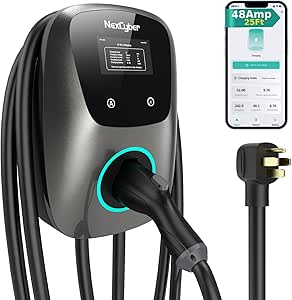
Level 2 EV Charger with WiFi App, 48A NEMA 14-50p, 25ft Cable, ETL Certified
This model offers impressive charging speeds, up to 46 miles per hour, making it ideal for daily fast charging. Its 48A capacity surpasses the 40A options like the EVIQO, providing quicker top-ups for busy households. The WiFi app and smart touch screen make monitoring and control straightforward, while its ETL and Energy Star certifications ensure safety and efficiency. However, it requires professional installation for maximum safety, and its outdoor performance in harsh weather might be less tested than some more weatherproof options. Compared to the EVDANCE, it emphasizes speed and energy management, which benefits users with higher daily usage, but if you need portability, this is less ideal as it’s more of a fixed setup.
Pros:- Fast charging speeds up to 46 miles/hour
- WiFi app for remote monitoring and control
- Durable 25-foot military-grade cable
- Certified for safety and energy efficiency
Cons:- Requires professional installation
- Not compatible with Tesla NACS without an adapter
- Potential outdoor weather limitations compared to IP66 rated models
Best for: Homeowners who prioritize faster charging and remote control for daily EV use, especially with larger battery capacities.
Not ideal for: Renters or users seeking a portable station, as this unit is designed for permanent installation and may require professional setup.
- Charging Speed:Up to 46 miles/hour (hardwired, 48A)
- Cable Length:25 ft
- Connector Type:J1772
- Certification:ETL, FCC, Energy Star
- Protection Degree:NEMA Type 3
- Max Amperage:48A
- WiFi Connectivity:Yes
Our verdict“This charger is best suited for high-usage households needing quick, remote-managed charging with a permanent installation.”
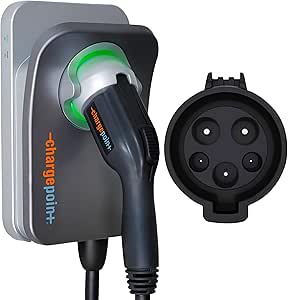
ChargePoint HomeFlex Level 2 EV Charger J1772 – NEMA 14-50 Plug
The ChargePoint HomeFlex offers a versatile, reliable charging experience suitable for both indoor and outdoor setups. Its 50A capacity allows for up to 45 miles per hour, comparable to higher-end chargers like the EVDANCE but with a more established app ecosystem. Its compatibility with non-Tesla EVs via an adapter makes it flexible, and its lightweight design simplifies installation. Unlike the fixed units, it provides a flexible plug-in option, making it easier to move or upgrade. However, it’s dependent on a proper circuit and may require extra accessories for Tesla owners, which could add to total cost. Compared with the other models, it excels in flexibility but may lack some weatherproof features depending on installation conditions.
Pros:- Fast charging up to 45 miles/hour
- Compatible with many EVs using an adapter
- Indoor and outdoor installation capability
- Lightweight and easy to install
Cons:- Requires a suitable circuit for optimal performance
- Additional adapters needed for Tesla vehicles
- May lack some weatherproof features of dedicated outdoor units
Best for: Users seeking a flexible, reliable charger with indoor/outdoor versatility and broad vehicle compatibility.
Not ideal for: Users who want a fully hardwired, weatherproof station without the need for adapters or portability.
- Output Voltage:240 volts
- Input Voltage:240 volts
- Current Rating:50 A
- Amperage:50 A
- Connector Type:NEMA 14-50 Plug (J1772)
- Number of Ports:1
- Warranty:Amazon.com Voluntary 30-Day Return Guarantee
Our verdict“This charger suits owners wanting a flexible, high-capacity station that can be easily moved or upgraded over time.”
Aimiler Level 2 Electric Vehicle (EV) Charger, 32A, 25ft Cable, Wi-Fi App Control, ETL Certified, 220V-240V, NEMA 14-50P Plug, J1772 Connector
This portable charger emphasizes safety and flexibility, with adjustable amperage (16A-32A) and a large TFT display for real-time info, making it suitable for cautious users or those with varying vehicle needs. Its 32A capacity is slightly lower than the 40A or 50A options, but the smart app control adds convenience for scheduling and monitoring. Its weather-resistant, NEMA 4 housing supports outdoor use, similar to the EVIQO but with a more straightforward interface. A potential drawback is that setup and app connectivity can be complex, and it doesn’t support Tesla directly without an adapter. Compared to the EVDANCE, it offers more adjustable features, but less raw power for faster charging.
Pros:- Adjustable current from 16A to 32A
- Large TFT display for real-time info
- Weather-resistant and portable design
- Wi-Fi app control for remote scheduling
Cons:- Lower max amperage limits charging speed
- Requires an adapter for Tesla vehicles
- Setup and connectivity may be challenging for some
Best for: Home users who want a safe, adjustable charger that’s easy to monitor and control, especially if they have multiple EVs or PHEVs.
Not ideal for: Owners of high-capacity EVs needing maximum power or those seeking a fully portable, high-wattage station.
- Amperage:16A-32A
- Cable Length:25 ft
- Voltage:220V-240V
- Plug Type:NEMA 14-50P
- Certification:ETL
- Protection Degree:NEMA Type 4
Our verdict“This charger is best for cautious homeowners wanting adjustable, monitored charging with safety features in a portable design.”
EVDANCE Level 2 EV Charger 40Amp, 240V, 9.6KW Portable Electric Vehicle Charging Station with NEMA 14-50P, 25FT Cable, Adjustable Current, Delay Timer for J1772 BEVs/PHEVs
The EVDANCE charger provides a high power level of 9.6kW with adjustable current up to 40A, making it a strong choice for on-the-go users and those who value portability. Its large TFT display offers clear real-time info, similar to Aimiler but with slightly higher wattage. The inclusion of safety features like delay timers and anti-leakage detection enhances reliability. Its IP66 waterproof rating means it can handle outdoor conditions better than some indoor-focused models. However, it requires an adapter for Tesla vehicles, and setup can be complex, potentially deterring less tech-savvy users. Compared to the Aimiler, it emphasizes power and portability, but at the possible expense of ease of use for some.
Pros:- Fast charging up to 9.6kW
- Large TFT display for real-time info
- Portable with 25ft cable and accessories
- Weather-resistant IP66 rating
Cons:- Requires an adapter for Tesla vehicles
- Setup may be complex for some users
- Price not specified
Best for: Active EV owners needing a portable, high-wattage charger for varied locations and on-the-go charging.
Not ideal for: Tesla owners without an adapter or users who prefer a fixed, permanently installed station with minimal setup.
- Voltage:240V
- Amperage:10A to 40A
- Wattage:9600W
- Cable Length:25 ft
- Plug Type:NEMA 14-50P
- Compatibility:J1772
- Waterproof Rating:IP66
- Operating Temperature:-22°F to +122°F
Our verdict“This charger is perfect for on-the-move EV owners seeking high power and portability with safety features.”
Level 2 EV Charger for Tesla, 48Amp/11.5KW, UL 2594, Energy Star
This charger stands out for offering a high charging power of 11.5kW, providing up to 46 miles of range per hour—ideal for those who want fast, reliable home charging. Compared with the EVDANCE Level 1 & 2 EV Charger, it delivers significantly higher power, but this also means it requires professional hardwired installation. Its smart app control and compatibility with all NACS EVs make it versatile and convenient, though it lacks WiFi 5GHz support and an included J1772 adapter, which could be a drawback for some users. The UL 2594 certification and Energy Star label assure safety and efficiency, making it a top choice for daily drivers who prioritize speed and safety.
Pros:- Fast charging with up to 46 miles per hour
- Overheat protection ensures safety during daily use
- Smart app control for remote management and energy tracking
- Compatible with all NACS EVs and PHEVs
Cons:- Requires professional hardwired installation, adding upfront cost
- Lacks support for 5GHz WiFi networks
Best for: Tesla owners or other NACS EV drivers seeking fast, safe, and reliable home charging with smart features.
Not ideal for: Homeowners preferring plug-in units or those who lack access to licensed electricians for installation.
- Charging Power:11.5kW
- Current:6A to 48A, adjustable
- Connector:NACS (Tesla-style)
- Cable Length:25 ft
- Dimensions:9.8 x 8.7 x 4.4 inches
- Weight:13.45 pounds
- Certifications:UL 2594, ETL, Energy Star, CSA
- WiFi Support:2.4GHz only
Our verdict“This pick suits EV owners who want high-speed, safe charging with smart control and are prepared for professional installation.”
EVDANCE Level 1 & 2 EV Charger, Portable J1772 Electric Vehicle Charger with 25FT Cable
The EVDANCE Level 1 & 2 EV Charger excels as a portable, versatile charging option, especially compared to fixed installations like the Emporia Level 2 EV Charger. Its 25-foot cable and robust build make it ideal for drivers who need flexibility or travel frequently. While it doesn’t support Tesla directly without an adapter, its compatibility with most major EVs and PHEVs in North America makes it a practical choice for many. The LED indicators provide clear status updates, but its 16A output offers less power than some dedicated Level 2 chargers, meaning slightly slower charging speeds. Its portability and broad compatibility make it best for users who value convenience and mobility over maximum power.
Pros:- Lightweight and easy to carry
- Long 25-foot cable for flexible positioning
- Compatible with most North American EVs and PHEVs
- LED indicators for quick status checks
Cons:- Not compatible with Tesla vehicles without an adapter
- Limited to 16A output, slower than higher-power chargers
Best for: EV owners needing a portable charging solution that can be used across different locations and outlets.
Not ideal for: Drivers seeking the fastest charging speeds or those with Tesla vehicles without adapters.
- Model:EV-ACS1601U
- Amperage:16 A
- Wattage:3.84 KW
- Cable Length:25 ft
- Weight:7 pounds
- Certification:ETL, FCC, CE
- Protection Level:IP66
- Fire Rating:UL 94 V-0
Our verdict“This portable charger is perfect for EV owners who prioritize flexibility and travel readiness over raw charging speed.”
Emporia Level 2 EV Charger with J1772 Connector, 48 Amp, 240V, WiFi Enabled, 25ft Cable
The Emporia Level 2 EV Charger delivers impressive charging speeds of up to 46 miles per hour, matching the Level 2 EV Charger for Tesla but with added smart features. Its WiFi connectivity allows for remote scheduling and energy management, making it ideal for tech-savvy users who want control from afar. Compared to the ChargePoint HomeFlex, its WiFi capabilities are more integrated for home automation. However, it’s a hardwired setup, which can increase installation complexity and cost. Its UL listing and ENERGY STAR certification provide reassurance on safety and efficiency. This charger is best suited for those who want fast, connected, and customizable home charging but are willing to handle professional installation.
Pros:- High charging speed of up to 46 miles/hour
- WiFi-enabled for remote scheduling and energy monitoring
- UL listed and ENERGY STAR certified for safety
- Long 25-foot cable for flexibility
Cons:- Requires professional hardwired installation
- Higher upfront cost and complexity compared to plug-in models
Best for: Tech-oriented EV owners seeking fast, remotely manageable charging with smart features.
Not ideal for: Users who prefer plug-in chargers or want a lower-cost, no-install option.
- Charging Speed:Up to 46 miles/hour
- Amperage:48 Amp
- Voltage:240V
- Cable Length:25 ft
- Connector:J1772
- WiFi Enabled:Yes
- Installation:Hardwired with Whip
- Certifications:UL, ENERGY STAR
Our verdict“This charger suits EV owners who want fast, connected charging with smart management features and are comfortable with professional installation.”
ChargePoint HomeFlex Level 2 EV Fast Charger, J1772, Smart, Hardwired, 50A
The ChargePoint HomeFlex offers a dependable 45-mile-per-hour charging rate, comparable to the Emporia but with a more established ecosystem and app control. Its smart features allow for remote scheduling and energy management, making it suitable for homeowners who want seamless integration with a trusted brand. While it requires a dedicated circuit and a WiFi connection, its durability and safety certifications make it a solid choice for long-term use. Compared to the Level 2 EV Charger for Tesla, it is more flexible across different EV brands and offers a more refined app experience, though it might be less suited for Tesla-only users who prefer NACS-compatible units.
Pros:- Consistent 45 miles/hour charging speed
- Smart app control for remote management
- Durable, UL-certified for safety
- Compatible with a wide range of EVs
Cons:- Requires a dedicated circuit, which might increase installation costs
- Needs WiFi for full functionality
Best for: Homeowners seeking a reliable, smart, and widely compatible Level 2 charger with robust app features.
Not ideal for: Tesla owners who want NACS-specific chargers or those who prefer plug-in units over hardwired setups.
- Connector:J1772
- Amperage:50A
- Power:Level 2
- Charging Speed:Up to 45 miles/hour
- Cable:Cold-resistant
- Installation:Indoor or outdoor
Our verdict“This charger fits homeowners who prioritize reliability, safety, and smart features in a well-established brand.”
EVIQO Level 2 EV Charger J1772 48A – Hardwired 240V Wall Charging Station
The EVIQO Level 2 EV Charger is designed for rugged outdoor use, with weatherproofing and safety features like IP66 certification and glow-in-the-dark holster. Its 48A capacity aligns with other high-power chargers like the ChargePoint HomeFlex, but its hardwired setup makes it less flexible for users who want plug-in convenience. It supports remote control and updates via WiFi, appealing to those who want a durable, outdoor-ready solution. Compared to portable options like the EVDANCE, it offers more permanence and weather resistance, though at the expense of installation flexibility. This model makes sense for EV owners with outdoor setups who need reliable, heavy-duty charging infrastructure.
Pros:- Weatherproof and certified for outdoor use
- High 48A charging capacity
- Remote control and scheduling available via WiFi
- Glow-in-the-dark holster for nighttime use
Cons:- Requires professional hardwired installation
- Less flexible because it’s not plug-in
Best for: Homeowners with outdoor EV parking needing a weatherproof, hardwired station for daily use.
Not ideal for: Users seeking a portable or plug-in charger for occasional or indoor use.
- Connector:J1772
- Max Current:48A
- Voltage:240V
- Cable Length:25 ft
- Weatherproof:IP66 / NEMA 4
- Warranty:3 years
- Weight:20.2 pounds
Our verdict“This unit is ideal for outdoor EV chargers that demand durability, weather resistance, and high power, with installation handled professionally.”
EVIQO Level 2 EV Charger NACS 48A – Hardwired 240V Wall Charging Station
This charger stands out for its seamless compatibility with Tesla vehicles and other NACS EVs without the need for adapters, unlike the EVIQO Level 2 EV Charger J1772 40A NEMA 14-50. Its weatherproof housing and WiFi app control provide convenient remote management, making it highly suitable for outdoor installations. However, the 48A limit means it’s slightly less powerful than some premium options, and professional installation is required, which adds complexity and cost. Compared to the Level 2 EV Charger with WiFi App, 48A, it offers slightly more amperage but lacks the same plug flexibility. This pick makes the most sense for owners who want a reliable, weatherproof charger with Tesla compatibility and remote features, willing to invest in professional setup.
Pros:- Compatible with Tesla and other NACS EVs without adapters
- Weatherproof IP66/NEMA 4 housing suited for outdoor use
- WiFi control for remote charging management and scheduling
- Glow-in-the-dark holster for ease of nighttime docking
Cons:- Requires professional installation by a licensed electrician
- Adapter for non-Tesla vehicles not included
- Limited to 48A charging speed unless DIP switches are adjusted
Best for: Tesla owners and EV users needing a weatherproof, WiFi-enabled charger with broad NACS compatibility
Not ideal for: Homeowners seeking a plug-and-play solution without professional installation or needing higher amperage for faster charging
- Amperage:48 A
- Voltage:240V
- Cable Length:25 ft
- Housing:IP66 / NEMA 4
- Connectivity:WiFi
- Compatibility:Tesla NACS, other EVs with NACS port (with adapter)
- Installation:Hardwired, professional installation required
- Warranty:3 years
Our verdict“This is an excellent choice for Tesla owners who prioritize outdoor durability and remote management, accepting the need for professional setup.”
EVIQO Level 2 EV Charger NACS 40A NEMA 14-50 – 240V Wall Charging Station
This charger provides a balanced mix of power and convenience, delivering up to 40A and supporting Tesla and other NACS EVs without adapters, much like the ChargePoint HomeFlex. Its weatherproof design and WiFi connectivity make it suitable for both indoor and outdoor use, with remote control capabilities via a mobile app. Compared with the 48A EVIQO model, it offers slightly less current but at a more affordable price point. Its 3-year warranty and certifications like UL and Energy Star add to its appeal, though it requires a dedicated 50A NEMA 14-50 outlet, which could be a barrier for some. This makes it a solid choice for those seeking dependable performance paired with good value, especially in residential settings.
Pros:- Compatible with Tesla and other NACS EVs without adapters
- Weatherproof and suitable for outdoor installation
- Remote control and scheduling via mobile app
- UL, ETL, FCC, and Energy Star certifications
Cons:- Requires a dedicated 50A NEMA 14-50 outlet
- WiFi connection needed for full remote features
- Slightly lower amperage than 48A models
Best for: Homeowners needing a reliable, weatherproof charger with app control and standard NEMA 14-50 outlet support
Not ideal for: Owners with existing 50A outlets incompatible with NEMA 14-50 plugs or seeking higher amperage for faster charging
- Power Output:40A
- Voltage:240V
- Cable Length:25 ft
- Outlet Type:NEMA 14-50
- WiFi Compatibility:Yes, 2.4 GHz
- Weatherproof Rating:IP66 / NEMA 4
- Certifications:UL, ETL, FCC, Energy Star
- Warranty:3 years
Our verdict“This charger offers dependable NACS compatibility and smart features at a compelling price for residential users.”
Level 2 EV Charger, 40Amp/9.6KW/240V, NEMA 14-50P, Wi-Fi (2.4 GHz)
The IYILO Level 2 EV Charger excels in delivering rapid charging—up to 7 times faster than standard units—making it ideal for busy households needing quick turnaround times, similar to the EVDANCE 40Amp. Its smart app control supports energy management, load balancing, and remote upgrades, offering a modern, efficient charging experience. The automatic overheating protection enhances safety, especially when used with a dedicated 50A circuit. Unlike the other two models, it emphasizes speed and smart capabilities, but only supports 2.4 GHz WiFi, limiting connectivity options in some homes. The NEMA 14-50P plug may require modification to fit certain outlets, which could be inconvenient. This pick is best for tech-savvy owners who want fast, app-controlled charging with safety features.
Pros:- Fast charging up to 9.6 kW, significantly reducing charge times
- Smart app controls for scheduling, energy tracking, and updates
- Automatic overheating protection enhances safety
- Supports load sharing and dynamic load balancing
Cons:- Limited to 2.4 GHz WiFi, no 5 GHz support
- Requires professional installation with a 50A breaker
- NEMA 14-50P plug may need fitting adjustments
Best for: Tech-oriented homeowners seeking fast, smart, and safe home charging that maximizes speed and remote control features
Not ideal for: Users with only basic needs or those lacking a 50A circuit, since installation complexity and limited WiFi bands may be issues
- Charging Power:9.6 kW
- Current:40A
- Voltage:240V
- Cable Length:25 ft
- Connector Type:NEMA 14-50P
- Wi-Fi:2.4 GHz only
- Waterproof Rating:NEMA 4
- Certification:ETL, Energy Star, UL 2594, CSA
- Warranty:3 years
Our verdict“This charger is best suited for owners prioritizing rapid, smart home charging, and comfortable with installation complexities.”

How We Picked
Our evaluation focused on performance, build quality, ease of use, and value for different types of buyers. We prioritized chargers with reliable power delivery, user-friendly controls, and robust safety certifications like ETL or UL. Compatibility considerations, such as vehicle connector types and whether the unit is hardwired or plug-in, also influenced rankings. Cost was balanced against features to identify options that offer the best overall experience without unnecessary extras. This approach ensures that each product serves a specific need, from budget-friendly models to premium smart chargers.
Factors to Consider When Choosing Ev Charging Stations
Choosing an EV charging station involves more than just wattage and connectors. Several factors influence how well a charger fits your needs, budget, and vehicle. Understanding these can help you avoid common pitfalls and make a smarter investment.
Charging Speed and Power Output
Most household chargers operate at Level 2, delivering 240V power, but their charging rates vary from 32A to 50A. Higher amperage chargers can replenish your vehicle faster but may require upgraded wiring or a more complex installation. Consider your daily driving habits and your vehicle’s maximum charging capacity to choose a unit that balances speed with installation complexity.
Connector Compatibility
The most common connector type is J1772, compatible with nearly all non-Tesla EVs, while Tesla owners may need an adapter or choose models with NACS connectors. Some chargers include multiple connectors or NACS compatibility for future-proofing. Picking the right connector ensures your vehicle can use the charger without additional accessories, saving time and hassle.
Smart Features and Connectivity
WiFi-enabled chargers allow remote monitoring, scheduling, and firmware updates, adding convenience and control. However, these features often come at a higher cost and may require app management. Decide if smart controls are worth the investment based on how often and how conveniently you want to manage your charging sessions.
Installation and Portability
Fixed, hardwired units tend to be more durable and reliable, but they can be costly and complex to install. Portable chargers offer flexibility, allowing you to use them at different locations or for emergency backup. Your choice depends on whether you want a permanent solution or a versatile, mobile unit.
Price and Future-Proofing
Cheaper models may save upfront costs but often lack features like smart connectivity or faster charging. Investing in a higher-end unit with smart features and higher amperage might provide better value over time, especially if you plan to upgrade your vehicle or expand your EV fleet. Weigh your current needs against potential future requirements to find the best long-term fit.
Frequently Asked Questions
Can I install an EV charger myself, or do I need a professional?
While some Level 2 EV chargers are designed for DIY installation, most homes will benefit from professional wiring, especially for high-amperage units that require electrical upgrades. Improper installation can lead to safety hazards or code violations, so consulting an electrician ensures compliance and optimal performance. Even if a unit claims easy installation, verifying local electrical codes and safety standards is a wise step.
Will a higher amperage charger always charge my vehicle faster?
Not necessarily. Your vehicle’s onboard charger limits the maximum charging rate, so installing a 50A charger won’t necessarily speed up charging if your car only supports 32A. Check your vehicle’s specs before investing in a higher amperage unit to ensure you won’t be paying extra for features you can’t utilize. The right amperage balances your vehicle’s capacity with your home’s wiring and your charging needs.
Are WiFi-enabled chargers worth the extra cost?
WiFi-enabled chargers offer remote control, scheduling, and firmware updates, which can enhance convenience and future-proof your setup. However, if you prefer simple, plug-and-play operation or don’t want to deal with app management, a basic model may suffice. Consider how much you value remote management versus initial cost savings when choosing between smart and non-smart units.
What’s the difference between portable and wall-mounted chargers?
Portable chargers provide flexibility, allowing you to use them at multiple locations or for emergencies, but they often limit power capacity and may lack smart features. Wall-mounted units are more permanent, usually offer higher power output, and can include advanced features such as scheduling and app control. Your choice depends on whether you need mobility or a dedicated, high-capacity station at a fixed location.
Is it better to buy a charger designed specifically for Tesla or a universal one?
Tesla-specific chargers or adapters may deliver faster or more optimized charging for Tesla vehicles, but universal J1772 chargers work with nearly all non-Tesla EVs. If you own a Tesla, a dedicated Tesla charger or one with NACS compatibility can streamline charging. For mixed vehicle households, a versatile, universal charger with multiple connectors or adapters offers greater flexibility and future-proofing.
Conclusion
For most buyers, the ChargePoint HomeFlex offers a compelling mix of speed, smart features, and ease of use, making it the best overall choice. Budget-conscious users or those seeking portability might prefer the EVIQO Level 2 EV Charger J1772 40A for reliable, simple charging. Those seeking premium features and future-proofing should consider models like the ChargePoint HomeFlex or the Emporia Level 2 EV Charger. Beginners or occasional chargers will benefit from plug-in models, while EV owners with specific vehicle types should focus on compatibility. Matching your vehicle needs, budget, and installation preferences will lead you to the ideal station.
As an affiliate, we earn on qualifying purchases.Fall Picks
fall essentials