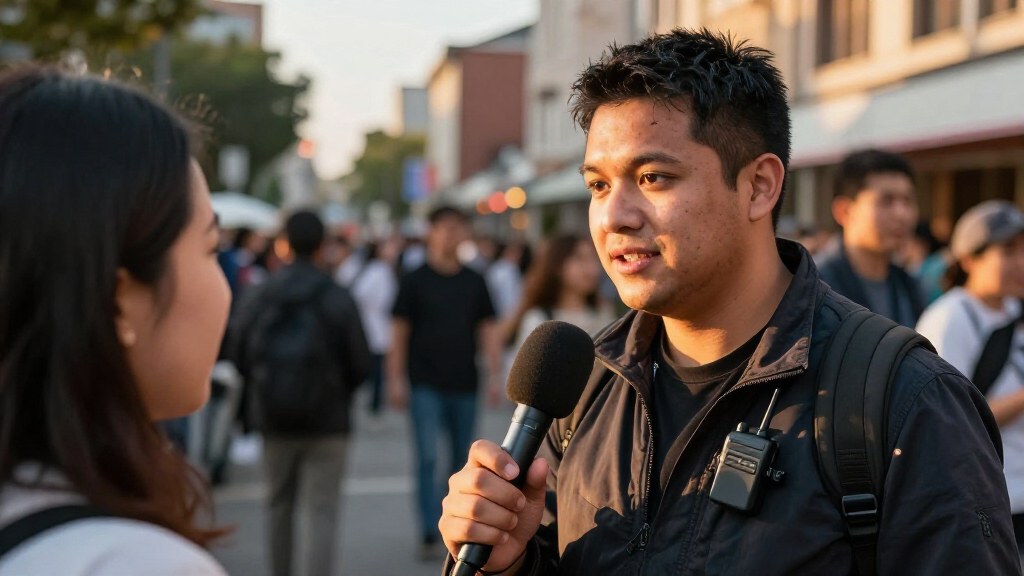

The best wireless news gathering microphones balance fast setup, clear speech, and a format that suits the interview. I put the COMICA Revo S Wireless Handheld Microphone first for its reporter-friendly handheld design, while the DJI Mic Mini two-transmitter kit stands out for compact two-person recording and the RØDE Wireless Micro USB-C Kit for a small phone-based setup. The main tradeoffs are handheld control versus discreet lavalier placement, and dedicated camera connections versus phone-first convenience. Compatibility, wind protection, and backup recording options also affect whether a mic is ready for unpredictable field work. Read on for the full breakdown and guidance on choosing the right setup.

Get everyday essentials delivered free with Prime
- Fast, free delivery on millions of items
- Prime Video, Amazon Music and more included
- Member-only deals all year
Complete the kit


Key Takeaways
- The COMICA Revo S handheld format leads this roundup for reporter-style interviews; the USB-C receiver version is the more targeted choice when a compatible USB-C device is central to the workflow.
- The DJI Mic Mini kits favor compact, two-person recording, but choose between the standard receiver kit and mobile receiver version based on how you plan to connect and record.
- The WHX-PRO is the camera-focused handheld option, making its system format and camera compatibility more relevant than phone-first convenience.
- The Mini Mic Pro and RØDE Wireless Micro prioritize small lavalier-style setups, which suit lighter, less conspicuous recording but do not give a reporter the familiar handheld interview format.
- Receiver type matters as much as microphone style: the products in this lineup split across handheld, camera, and mobile workflows, so checking device connections before buying can prevent a field-use mismatch.
| COMICA Revo S Wireless Handheld Microphone |  | Best for USB-C Handheld Reporting | Connector: USB Type-C | Capsule: 14 mm condenser | Polar pattern: Cardioid, unidirectional | VIEW LATEST PRICE | See Our Full Breakdown |
| DJI Mic Mini Wireless Microphone Kit (2 Transmitters, 1 Receiver, Charging Case) | 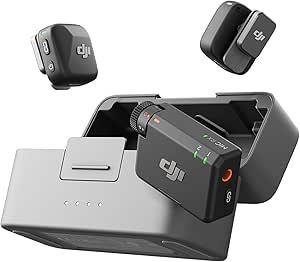 | Best for Two-Person Field Interviews | Included: 2 transmitters, 1 receiver, charging case, accessories | Transmitter weight: 10 g | Sampling rate: 48 kHz | VIEW LATEST PRICE | See Our Full Breakdown |
| WHX-PRO VHF Wireless Handheld Microphone System for Cameras |  | Best for Basic Camera-Rig Reporting | System type: Single-channel VHF wireless | Operating frequencies: 169.445 MHz and 170.245 MHz | Microphone: Handheld, unidirectional pickup with built-in transmitter | VIEW LATEST PRICE | See Our Full Breakdown |
| DJI Mic Mini (2 Transmitters + 1 Mobile Receiver) – Ultralight with Active Noise Cancelling |  | Best Compact Mobile Kit | Form factor: Lavalier | Transmitter weight: 10 g | Transmission range: Up to 300 m | VIEW LATEST PRICE | See Our Full Breakdown |
| COMICA Revo S Wireless Handheld Microphone with USB-C Receiver |  | Best for Multi-Device Handheld Reporting | Connectivity: Wireless, USB Type-C | Recording quality: 48 kHz/24-bit | Wireless range: Up to 65 ft | VIEW LATEST PRICE | See Our Full Breakdown |
| Mini Mic Pro Wireless Lavalier Microphone for iPhone and Android | 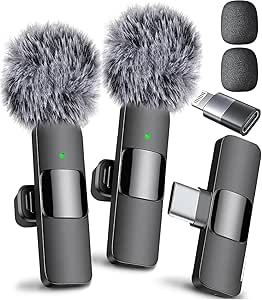 | Best for Mixed-Connector Phone Teams | Connectivity: Wireless | Connectors: Lightning and USB Type-C | Microphones included: 2 lavalier microphones | VIEW LATEST PRICE | See Our Full Breakdown |
| RØDE Wireless Micro USB-C Microphone Kit with 2 Mics and Charging Case |  | Best for Long Mobile Reporting Days | Connectivity: USB Type-C | Compatible devices: iPhone 15 and later; Android USB-C devices | Microphones: 2 wireless transmitters with built-in microphones | VIEW LATEST PRICE | See Our Full Breakdown |
| wireless news gathering microphone | Polar pattern | Battery life | Connectivity |
|---|---|---|---|
| COMICA Revo S Wireless Handhel | Cardioid, unidirectional | Up to 15 hours | — |
| DJI Mic Mini Wireless Micropho | — | — | Bluetooth, DJI OsmoAudio, USB Type-C |
| WHX-PRO VHF Wireless Handheld | — | — | — |
| DJI Mic Mini | Omnidirectional | Up to 11.5 hours | Bluetooth, Wi-Fi, USB-C |
| COMICA Revo S Wireless Handhel | Cardioid, unidirectional | Up to 15 hours | Wireless, USB Type-C |
| Mini Mic Pro Wireless Lavalier | Omnidirectional | Up to 6 hours per charge | Wireless |
| RØDE Wireless Micro USB-C Micr | Omnidirectional | Up to 21 hours combined with charging case | USB Type-C |
More Details on Our Top Picks
COMICA Revo S Wireless Handheld Microphone
I’d choose the COMICA Revo S for a reporter who wants a handheld mic that plugs straight into a USB-C phone, tablet, or computer, rather than a clip-on transmitter and separate receiver. Its cardioid 14 mm condenser capsule favors sound from the person in front, a useful fit for stand-ups and short interviews where handling the mic is practical. Three gain levels and one-key denoise offer quick adjustments without a more involved camera rig. Compared with the WHX-PRO, this model records digitally over USB-C instead of relying on a VHF receiver and 3.5 mm camera connection. That makes setup simpler on compatible devices, but its device support is narrower: iPhone use requires a USB-C-to-Lightning OTG adapter, and USB-C or OTG support is required. The built-in battery is rated for up to 15 hours, though the handheld design is less discreet than a lavalier.
Pros:- USB-C digital output supports a straightforward connection to compatible devices.
- Cardioid condenser capsule focuses pickup toward the interview subject.
- Three gain levels and one-key denoise allow quick sound adjustments.
- Built-in battery is rated for up to 15 hours of use.
Cons:- Lightning iPhones require a separate USB-C-to-Lightning OTG adapter.
- Compatibility depends on USB-C or OTG support, limiting use across some devices.
- Handheld form is more conspicuous and less convenient for hands-free reporting than a lavalier.
Best for: Mobile reporters who want to hold a microphone during interviews and record directly to a USB-C phone, tablet, or laptop.
Not ideal for: Reporters using Lightning-only iPhones without an OTG adapter, or crews needing a discreet clip-on mic or camera-mounted receiver.
- Connector:USB Type-C
- Capsule:14 mm condenser
- Polar pattern:Cardioid, unidirectional
- Recording quality:48 kHz/24-bit
- Noise reduction:One-key Calmix denoise
- Gain control:3 levels
- Battery life:Up to 15 hours
- Form factor:Handheld
Our verdict“Choose the Revo S if you want a USB-C handheld for direct-to-device interviews and can confirm your device supports its connection.”
DJI Mic Mini Wireless Microphone Kit (2 Transmitters, 1 Receiver, Charging Case)
For a reporter recording a subject and interviewer together, I’d rank the DJI Mic Mini kit above the single-mic COMICA Revo S: it includes two transmitters and one receiver, so each person can wear a mic without passing a handheld back and forth. At 10 g per transmitter, the units are discreet, while the charging case supports up to 48 hours of battery life across recharges. That reserve is useful for multi-day assignments, although it is not the same as 48 hours of continuous recording. Two noise-cancellation settings and automatic limiting help manage changing surroundings and sudden loudness. The listed 400 m maximum range offers more reach than the 300 m figure for the other DJI Mic Mini here, but real-world conditions can affect wireless links. Unlike the Revo S’s direct handheld setup, this kit adds a receiver and depends on device compatibility; its direct OsmoAudio connection is limited to supported DJI devices. It is also not waterproof.
Pros:- Two transmitters support recording two interview participants at once.
- Charging case provides up to 48 hours of battery life across recharges.
- Lightweight 10 g transmitters are discreet on-camera.
- Two noise-cancellation levels and automatic limiting help handle changing sound levels.
Cons:- Not waterproof, which restricts use in rain or wet field conditions.
- Direct OsmoAudio connection works only with supported devices.
- A receiver-based kit requires more setup than the direct USB-C COMICA Revo S.
Best for: Field reporters who regularly record two-person interviews and want a compact wireless kit with a charging case for extended assignments.
Not ideal for: Solo reporters seeking the simplest handheld USB-C connection, or crews working in wet conditions or relying on unsupported DJI OsmoAudio devices.
- Included:2 transmitters, 1 receiver, charging case, accessories
- Transmitter weight:10 g
- Sampling rate:48 kHz
- Audio bit depth:24-bit via direct OsmoAudio connection
- Maximum transmission range:Up to 400 m
- Battery life with case:Up to 48 hours
- Noise cancellation:Basic and Strong levels
- Connectivity:Bluetooth, DJI OsmoAudio, USB Type-C
Our verdict“Pick this DJI kit for two-person interviews and long assignments, provided your recording device and weather conditions suit the system.”
WHX-PRO VHF Wireless Handheld Microphone System for Cameras
The WHX-PRO suits a reporter who needs a handheld microphone feeding a camera through a familiar 3.5 mm connection. Its receiver mounts on a camera cold shoe, and separate microphone and headphone outputs make it easier to integrate into a basic camera reporting setup than the USB-C-first COMICA Revo S. The tradeoff is an older, simpler wireless approach: this is a single-channel VHF system with only two selectable frequencies, not a flexible two-person kit like the DJI Mic Mini. That can be adequate for one reporter or one interview subject, but offers fewer options when a frequency is congested or the assignment needs multiple mics. The supplied information does not specify a transmission range or battery runtime, so I wouldn’t choose it when those figures are central to planning a remote shoot. Its camera-oriented 3.5 mm outputs also make it less direct for phone-first workflows.
Pros:- Cold-shoe receiver mounts directly to a compatible camera rig.
- 3.5 mm microphone output connects to camera audio inputs.
- Separate headphone output supports monitoring.
- Two selectable operating frequencies provide a basic frequency choice.
Cons:- Single-channel design does not support a two-mic interview setup.
- Only two selectable VHF frequencies offer less flexibility than more adjustable systems.
- No transmission range or battery runtime is provided in the supplied specifications.
Best for: Camera operators and field reporters who want a simple handheld VHF mic system with a cold-shoe receiver and 3.5 mm connections.
Not ideal for: Phone-first reporters, multi-person interview crews, or teams that need several frequency choices and documented range or runtime.
- System type:Single-channel VHF wireless
- Operating frequencies:169.445 MHz and 170.245 MHz
- Microphone:Handheld, unidirectional pickup with built-in transmitter
- Receiver mount:Cold shoe
- Outputs:3.5 mm microphone and headphone
- Weight:4.5 ounces
- Power source:Battery powered
Our verdict“Choose the WHX-PRO for a basic camera-mounted, single-mic setup, not for phone-first work or multi-person wireless interviews.”
DJI Mic Mini (2 Transmitters + 1 Mobile Receiver) – Ultralight with Active Noise Cancelling
I’d give this DJI kit the compact-mobile role for reporters who want two 10 g lavalier transmitters and a mobile receiver without carrying the larger charging-case setup described for the other DJI Mic Mini. The omnidirectional lavalier format frees both hands and is less visually dominant than the handheld COMICA Revo S, though it picks up sound from around the mic rather than focusing forward on a speaker. Its stated 300 m range is shorter than the 400 m listed for the charging-case DJI kit, while the 11.5-hour operating time is a clear on-assignment limit to plan around. Basic and Strong noise cancellation give a reporter options as surroundings change, and the listed 48 kHz/24-bit audio suits detailed capture. The single-channel specification and mobile receiver make it a more focused setup than the two-transmitter, one-receiver arrangement might suggest; confirm the connection path for your device before relying on it. It is not waterproof, and magnets may affect medical devices or storage media.
Pros:- 10 g transmitters keep the microphones lightweight and discreet.
- Up to 300 m transmission range supports movement between reporter and subject.
- 48 kHz/24-bit audio and two noise-cancellation levels suit varied interview settings.
- Up to 11.5 hours of operation covers many field assignments.
Cons:- The 11.5-hour operating time is shorter than the up-to-48-hour case-supported figure for the other DJI Mic Mini kit.
- Not waterproof, limiting confidence in wet-weather reporting.
- Magnets may interfere with medical devices or storage media.
- Omnidirectional pickup can capture surrounding sound rather than emphasizing only the speaker.
Best for: Mobile journalists who need a lightweight, hands-free two-transmitter lavalier setup for interviews and short-to-medium field assignments.
Not ideal for: Reporters needing a longer stated operating time, wet-weather use, or a system without magnets near sensitive medical devices or storage media.
- Form factor:Lavalier
- Transmitter weight:10 g
- Transmission range:Up to 300 m
- Battery life:Up to 11.5 hours
- Audio resolution:48 kHz/24-bit
- Noise cancellation:Basic and Strong levels
- Connectivity:Bluetooth, Wi-Fi, USB-C
- Polar pattern:Omnidirectional
Our verdict“Choose this DJI kit for discreet, hands-free mobile reporting when its operating time, connection path, and non-waterproof design fit the assignment.”
COMICA Revo S Wireless Handheld Microphone with USB-C Receiver
This version of the COMICA Revo S is the more adaptable pick for reporters who move between a phone, computer, and other compatible recording devices: it includes USB-C-to-Lightning and USB-C-to-USB-A adapters. The core appeal remains a handheld cardioid mic with 48 kHz/24-bit recording, one-touch noise reduction, and three gain settings, so it fits interviews where the reporter can hold the mic near the speaker. Compared with the other Revo S in this roundup, the included adapters broaden the connection options, and this listing also specifies a wireless range of up to 65 ft. It still lacks the two-person convenience of the DJI Mic Mini kit, whose two transmitters can capture both sides of an interview. The Revo S’s 350 mAh battery is rated for up to 15 hours, but actual runtime may vary. Buyers should also verify device compatibility rather than assume every adapter enables every recording app or connection.
Pros:- Included Lightning and USB-A adapters broaden compatibility beyond USB-C devices.
- Cardioid 14 mm condenser capsule suits focused, close-range interview pickup.
- 48 kHz/24-bit recording, one-touch noise reduction, and three gain levels offer useful control.
- Wireless range is specified at up to 65 ft.
Cons:- Handheld use occupies a hand and is more conspicuous than the DJI Mic Mini lavalier transmitters.
- Does not provide two transmitters for recording both interview participants at once.
- The up-to-15-hour battery figure may vary with use, and adapter support can depend on the device.
Best for: Mobile reporters who prefer a handheld mic and regularly switch among compatible USB-C, Lightning, and USB-A devices.
Not ideal for: Crews recording two speakers at once, people who need a hands-free lavalier, or buyers whose devices do not support the listed adapters and connection method.
- Connectivity:Wireless, USB Type-C
- Recording quality:48 kHz/24-bit
- Wireless range:Up to 65 ft
- Battery life:Up to 15 hours
- Battery capacity:350 mAh
- Capsule:14 mm condenser
- Polar pattern:Cardioid, unidirectional
- Included adapters:USB-C to Lightning and USB-C to USB-A
Our verdict“Pick this Revo S when adapter flexibility and a handheld interview style matter more than hands-free capture or two-person recording.”
Mini Mic Pro Wireless Lavalier Microphone for iPhone and Android
The Mini Mic Pro is a practical choice for reporters who switch between Lightning and USB-C devices: its included adapters let the receiver connect to compatible iPhones, Android phones, tablets, and laptops. That flexibility gives it an advantage over the RØDE Wireless Micro USB-C, which requires a USB-C device. Two lavalier microphones make it useful for short interviews, while the included foam and deadcat wind protection help manage indoor airflow and outdoor breezes. Its compact build suits quick mobile stand-ups, but the six-hour battery limit leaves less room for extended assignments than the RØDE kit’s charging-case setup. The listed 2.4 GHz frequency specification also describes the wireless band rather than an audio response range, so buyers seeking clearly stated audio-frequency specs may prefer another option.
Pros:- Includes both Lightning and USB-C adapters for compatible devices
- Two lavalier microphones support two-person interviews
- Foam tips and deadcat tips offer options for indoor and outdoor wind protection
- Compact, lightweight design is easy to carry in a reporting kit
Cons:- Up to six hours of battery life may not cover a full day of gathering
- The listed 2.4 GHz figure is unclear as an audio specification
- The stated warranty coverage is shorter than the RØDE Wireless Micro’s five-year warranty
Best for: Mobile reporters and small interview teams who use a mix of Lightning and USB-C devices and want two lavalier mics in one compact kit.
Not ideal for: Reporters covering long shifts without charging breaks, or buyers who need clearly specified audio-frequency response information.
- Connectivity:Wireless
- Connectors:Lightning and USB Type-C
- Microphones included:2 lavalier microphones
- Polar pattern:Omnidirectional
- Battery life:Up to 6 hours per charge
- Weight:80 g
- Dimensions:3 x 0.5 x 0.25 inches
- Included wind protection:2 foam tips and 2 deadcat tips
- Warranty:90-day refund guarantee and 6-month warranty
Our verdict“Choose the Mini Mic Pro if your reporting kit spans Lightning and USB-C devices and your assignments fit within its six-hour battery window.”
RØDE Wireless Micro USB-C Microphone Kit with 2 Mics and Charging Case
For reporters using a USB-C phone, the RØDE Wireless Micro offers a tidy two-person setup with a receiver that plugs directly into the device. Its pre-paired microphones and GainAssist level balancing reduce setup steps and help keep changing voices more consistent—useful when an interview starts on the move. The charging case provides up to 21 hours of combined use, a major endurance advantage over the Mini Mic Pro’s six-hour per-charge limit. Windshields and magnetic attachments add placement flexibility, though this kit is less adaptable across devices: unlike the Mini Mic Pro, it has no Lightning connector. It also depends on a USB-C phone, so reporters with older Lightning iPhones need another system. The five-year warranty adds reassurance for regular field use.
Pros:- Two pre-paired microphones can connect without an app or manual pairing
- GainAssist automatically balances audio levels
- Charging case provides up to 21 hours of combined use
- Includes windshields, magnetic attachments, and a five-year warranty
Cons:- Requires a compatible USB-C device and does not support Lightning iPhones
- The receiver’s direct-connect design is less adaptable across device connectors than the Mini Mic Pro’s included adapters
Best for: USB-C iPhone 15-or-later and Android reporters who conduct two-person interviews and need a compact kit with extended charging-case runtime.
Not ideal for: Reporters using Lightning iPhones or teams that need one receiver kit to work across both Lightning and USB-C devices.
- Connectivity:USB Type-C
- Compatible devices:iPhone 15 and later; Android USB-C devices
- Microphones:2 wireless transmitters with built-in microphones
- Polar pattern:Omnidirectional
- Channels:2
- Frequency response:20 Hz–20 kHz
- Battery life:Up to 21 hours combined with charging case
- Included accessories:USB-C receiver, charging case, USB-C cable, 2 windshields, and 2 magnetic attachments
- Warranty:5 years
Our verdict“Pick the RØDE Wireless Micro for USB-C mobile reporting when quick two-person setup and charging-case endurance matter more than Lightning compatibility.”

How We Picked
I ranked these wireless news gathering microphones around the realities of reporting: getting a usable connection quickly, choosing a format that fits the interview, and matching the receiver to the camera or phone already in use. I gave weight to speech capture practicality, setup simplicity, portability, and workflow fit. A handheld mic can be easier to direct between a reporter and guest, while a lavalier kit can leave hands free; neither format is automatically better for every assignment.
The order reflects how broadly useful each product appears for news gathering, not a claim that every kit suits every device or reporting style. I favored versatile interview use near the top, then placed more specialized camera and mobile options according to their narrower strengths. Compatibility and meaningful tradeoffs shaped the ranking: the two COMICA Revo S listings differ by receiver, the DJI kits target distinct connection setups, and the compact lavalier kits trade handheld control for a smaller profile. Buyers should confirm exact device support and included accessories before relying on any kit for a live assignment.
| wireless news gathering microphone | Polar pattern | Battery life | Connectivity |
|---|---|---|---|
| COMICA Revo S Wireless Handhel | Cardioid, unidirectional | Up to 15 hours | — |
| DJI Mic Mini Wireless Micropho | — | — | Bluetooth, DJI OsmoAudio, USB Type-C |
| WHX-PRO VHF Wireless Handheld | — | — | — |
| DJI Mic Mini | Omnidirectional | Up to 11.5 hours | Bluetooth, Wi-Fi, USB-C |
| COMICA Revo S Wireless Handhel | Cardioid, unidirectional | Up to 15 hours | Wireless, USB Type-C |
| Mini Mic Pro Wireless Lavalier | Omnidirectional | Up to 6 hours per charge | Wireless |
| RØDE Wireless Micro USB-C Micr | Omnidirectional | Up to 21 hours combined with charging case | USB Type-C |
Factors to Consider When Choosing Wireless News Gathering Microphones
For field reporting, a microphone is only as useful as the complete recording chain around it. I would choose by assignment and device first, then weigh convenience against control and backup options.
Match the microphone format to the interview
Handheld microphones make it straightforward to pass the mic between an interviewer and a guest, and they can feel natural in stand-up reports. Lavalier microphones clip to clothing and keep hands free, which helps for demonstrations, walk-and-talks, or a presenter who needs to handle equipment. A lavalier can be less suitable when several people need to speak into one mic or when clothing rustle is hard to manage. Think about who will hold, wear, or share the microphone before focusing on compactness. The Revo S listings and WHX-PRO suit handheld-style use, while the Mini Mic Pro and RØDE kit point toward a smaller wearable setup. For interviews with multiple speakers, a two-transmitter kit may reduce mic handoffs, but placement and recording-channel behavior still matter.
Check the receiver against your actual recording device
Wireless kits can use different receiver connections, so a familiar brand name does not guarantee a direct fit with every camera or phone. Confirm the connector and supported device type, then check whether your camera needs a separate adapter or input cable. A USB-C receiver is convenient only when the phone or other device accepts that connection and the recording app recognizes the audio source. Mobile-first setups can simplify phone reporting, while a camera-oriented receiver may suit a dedicated video rig better. Avoid assuming that a USB-C port alone guarantees full compatibility, especially across phones, tablets, and cameras. If assignments use more than one device, plan for the adapters and mounting accessories the whole chain requires.
Plan for noise, wind, and changing locations
Street interviews bring traffic, wind, crowds, and reverberant indoor spaces, and wireless transmission does not remove those problems by itself. Mic placement and wind protection often affect speech clarity more than a long feature list. A handheld mic can be positioned deliberately toward the active speaker, whereas a lavalier depends on a secure clip and sensible placement on clothing. Noise-cancelling features may help in some settings, but they should not replace a quiet position, careful mic placement, or a short test recording. Check which wind accessories are actually included and whether they fit the intended microphone. For a deadline-driven assignment, leave time to listen back before recording a full interview.
Decide how many people need to be recorded
A one-transmitter setup may be simpler for a solo reporter, but a two-transmitter kit can help when a correspondent and guest need separate microphones. More transmitters do not automatically mean a better interview: the receiver must support the intended arrangement, and the recording device may handle channels differently. Check whether voices are recorded separately or combined if editing control matters. Separate tracks can help balance speakers later, while a mixed output may be faster to publish but harder to repair if one voice is too loud. For recurring interviews, plan for the common number of speakers rather than buying around an occasional edge case. This is one reason the DJI two-transmitter kits deserve attention from teams that regularly record conversations.
Treat battery and backup plans as part of the kit
Battery life is only one part of field reliability: charging access, remaining-charge visibility, and the ability to keep recording through a long assignment matter too. A charging case can make it easier to carry and recharge a compact kit between interviews, but it does not replace a pre-assignment charge check. Confirm how the transmitter and receiver are powered and whether the kit supports recording backups or has any limitation that matters to your workflow. If a key interview cannot be repeated, consider a second recording path, such as a camera’s onboard audio or a separate recorder. Do not assume a wireless link alone protects against interference, a loose connector, or a depleted battery. Build a brief connection and playback check into the reporting routine.
Frequently Asked Questions
Should I choose a handheld wireless mic or a lavalier for street interviews?
Choose a handheld mic when the reporter needs to move it between speakers or conduct quick interviews in public. A lavalier makes more sense when the subject needs both hands free or the microphone should stay out of the shot. Wind and clothing noise can affect lavalier recordings, while a handheld mic asks the reporter to manage distance and keep it aimed at the active speaker. In this lineup, the COMICA Revo S and WHX-PRO represent the handheld approach, while the Mini Mic Pro and RØDE Wireless Micro suit more compact wearable recording. Let the format follow the assignment rather than choosing only by size.
Which of these microphones should I pick for recording directly to a phone?
Start by identifying the phone’s connector and checking that the receiver is listed as compatible with that device and its recording apps. The DJI Mic Mini mobile receiver version and the COMICA Revo S USB-C receiver listing are the most explicitly phone-oriented options in this group, while the Mini Mic Pro and RØDE Wireless Micro are compact mobile-style kits. That does not make them interchangeable: connector fit, app support, and included components can differ. If you also record to a camera, check whether you need a separate receiver or adapter for that device. Test the full phone-and-app combination before an important interview.
Is a two-transmitter kit worthwhile for one reporter and one interviewee?
It can be useful when both people need consistent mic placement or when you want to avoid passing a single handheld mic back and forth. The DJI Mic Mini two-transmitter kits are the clearest fit in this roundup for that kind of conversation. A second transmitter adds another unit to charge, position, and monitor, so it may be unnecessary for solo stand-ups or brief street questions. Check how the receiver sends the two voices to your recording device and whether the channels remain separate. If the workflow is usually one speaker at a time, a simpler kit may be easier to manage.
Can I use a camera-focused wireless mic system with my phone?
Sometimes, but the connection may require an adapter and the phone must recognize the receiver as an audio input. The WHX-PRO is presented as a system for cameras, so do not assume it plugs directly into a phone. An adapter can add bulk and may not work with every phone or recording app. Check manufacturer compatibility details for the exact camera or phone model, then test audio capture and playback with the intended app. If phone reporting is your main use, a kit with a receiver designed for that connection can reduce setup uncertainty.
What should I check before relying on a wireless mic for a live news assignment?
Confirm the transmitter and receiver connect, the recording device recognizes the mic, and the recorded speech plays back at a usable level. Check battery charge, receiver fit, mic placement, and wind protection before leaving for the assignment. In a noisy location, make a short test recording and listen for traffic, clothing rustle, or interference rather than trusting a status indicator alone. Keep a backup audio path available for interviews that cannot be repeated. Also verify that every required cable or adapter is packed, since a compatible microphone is not useful if the receiver cannot connect to the recorder.
Conclusion
Best overall: I would start with the COMICA Revo S Wireless Handheld Microphone for reporter-style interviews that benefit from a handheld format. Best value: the WHX-PRO is the camera-oriented alternative for buyers whose existing workflow fits its system, while the COMICA USB-C receiver version is a focused pick for compatible USB-C recording. Best premium: I would choose the RØDE Wireless Micro USB-C Kit when a compact two-mic mobile setup is the priority. Best for beginners: the DJI Mic Mini two-transmitter kit offers a clear route into recording two people, provided its receiver matches the device. For specific needs, choose the Mini Mic Pro for a small lavalier-style phone setup or the DJI Mic Mini mobile receiver kit for phone-first two-person recording. Match the receiver to your recorder and the microphone format to your interview before making the final call.