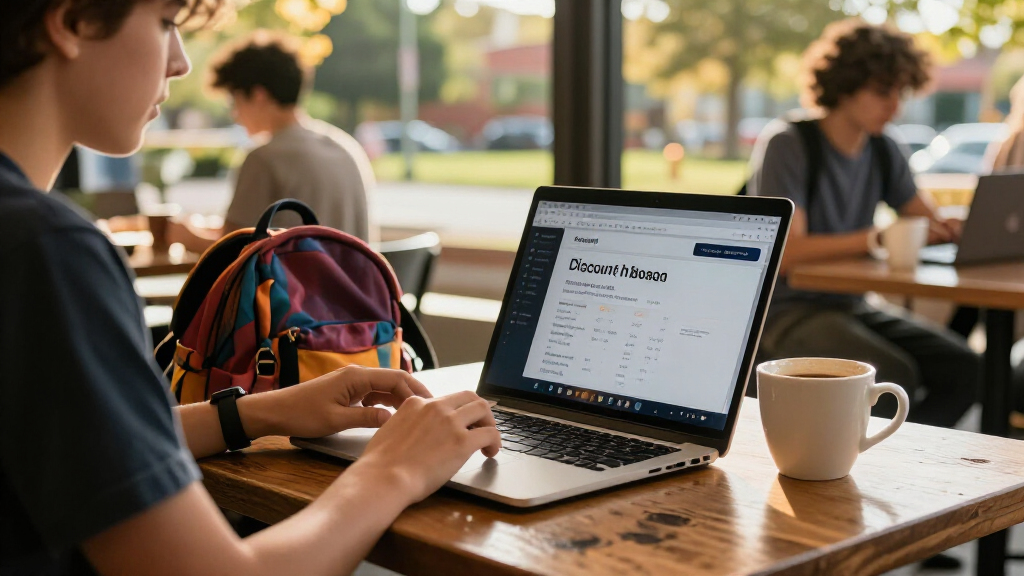
The best laptop deals for students balance dependable coursework performance, comfortable everyday use, and a price that leaves room in the school budget. My best overall pick is the Dell 15.6-inch Laptop with Ryzen 5, which offers the strongest stated processor in this lineup for multitasking and more demanding assignments. The Windows 11 laptop with Core i3 and 12GB RAM is a capable alternative for students who want a backlit keyboard, while the MacBook Air 15-inch with M5 is the premium choice for a larger display and higher-end hardware. The main tradeoffs are between processing power and cost, compactness and screen space, and low-memory entry models versus systems with more room for multitasking. Read on for the full comparison, buying advice, and recommendations by student type.

Get everyday essentials delivered free — and shop member deals
- Fast, free delivery on millions of items
- Access to Prime Big Deal Days deals on October 6–7
- Prime Video, Amazon Music and more included
Key Takeaways
- The Dell Ryzen 5 leads on stated processing capability, making it the strongest fit here for students juggling demanding coursework and several apps.
- The Core i3 Windows laptop pairs 12GB RAM with a backlit keyboard, a practical combination for students who want a traditional Windows computer for regular typing and multitasking.
- The 15-inch MacBook Air is the premium outlier: its M5 chip, 16GB RAM, 512GB SSD, and Liquid Retina display offer a more capable configuration, but exceed the needs of basic coursework.
- Several entry models have only 4GB RAM, including the HP Stream, Phantom, Chromebook, and HP ultra-light laptop; that limits comfortable multitasking even when storage is advertised in a large combined figure.
- Operating system and storage type matter as much as the headline specs: ChromeOS and Windows suit different software needs, while eMMC, UFS, SSD, and add-on storage are not interchangeable.


| laptop deals for student | Processor | Storage | Display | Memory |
|---|---|---|---|---|
| HP New Everyday Slim Laptop 20 | Intel N150 | 128GB SSD plus 1TB OneDrive cloud storage | 14-inch HD, 1366 x 768, 220 nits | 4GB DDR5 SDRAM |
| Apple 2026 MacBook Air 15-inch | Apple M5 chip | 512GB SSD | 15.3-inch Liquid Retina | 16GB unified memory |
| 15.6" FHD IPS Student Laptop w | Celeron J4105 quad-core | 256GB SSD | 15.6-inch FHD IPS, 1920 x 1080 | 12GB |
| 15.6" FHD IPS Student Laptop w | Celeron J4105 quad-core | 256GB SSD, expandable up to 2TB | 15.6-inch FHD IPS, 1920 x 1080 | 12GB |
| HP Stream 14" HD Student & Bus | Intel N150 | 128GB UFS plus 1TB docking station | 14-inch HD, 1366 x 768 | 4GB DDR4 |
| Phantom 15.6" FHD Laptop | Intel Core M3, 2 cores and 4 threads, 1.1GHz up to 3.0GHz | 128GB SSD; expandable up to 2TB | 15.6-inch IPS, 1920 x 1080 | 4GB DDR3 |
| 2026 Windows 11 Pro Laptop | Intel 4425Y | 256GB SSD | 15.6-inch FHD IPS | 16GB DDR4 |
| HP Ultrabook 14 Laptop Compute | 13th Gen Intel N150, up to 3.6GHz | 128GB SSD | 14-inch LCD, 1366 x 768 | 4GB DDR4 |
| Windows 11 Laptop with Intel C | Intel Core i3, 2 cores and 4 threads, up to 3.4GHz | 256GB SSD | 15.6-inch Full HD LED, 1920 x 1080 | 12GB DDR3L-1600; listed maximum 12GB |
| HP 14" HD Chromebook Laptop fo | Intel Celeron N4120 | 64GB eMMC | 14-inch HD anti-glare, 1366 x 768 | 4GB LPDDR4x |
| HP Laptop 2026 Student Busines | Intel N150, 4 cores, up to 3.6GHz | 128GB UFS | 14-inch HD anti-glare, 1366 x 768 | 4GB LPDDR5-4800 |
| Dell 15.6-inch Laptop with AMD | AMD Ryzen 5 7520U | 512GB SSD | 15.6 inches, 1920 x 1080 | — |
| 15.6” AI Laptop with Office 3 | Celeron J4105 | 256GB SSD; expansion listed up to 2TB | 15.6-inch Full HD IPS, 1920 x 1080 | 12GB DDR4 |
| HP 14" Ultra-Light Laptop for | Intel Celeron N4500 | 64GB eMMC plus 64GB SD card | 14 inches, 1366 x 768 | 4GB DDR4 |
| HP 14" Laptop for Students and | Intel N150 quad-core, up to 3.6GHz | 128GB UFS plus 500GB external drive | 14-inch HD anti-glare, 1366 x 768 | 4GB LPDDR5 |
More Details on Our Top Picks
HP New Everyday Slim Laptop 2026-2027 Edition with Microsoft Office 365, Intel N150, 128GB SSD, Windows 11, Rose Gold
For students who mainly write papers, browse course sites, and stream between classes, this 3.24-pound 14-inch laptop keeps the load manageable and lists up to 11.5 hours of battery life. Its Intel N150 and 4GB of memory suit basic work, but leave little headroom for many open tabs or heavier software. Compared with the similarly compact HP Stream 14, this model specifies a 128GB SSD rather than UFS storage and includes 1TB of OneDrive cloud storage, which can help keep coursework accessible without filling local space. The tradeoff is a 1366 x 768 display: text and video are less sharp than on the 15.6-inch FHD student laptops in this roundup. I’d choose it for portability and routine assignments, not demanding multitasking or media work.
Pros:- Light 3.24-pound design is easier to carry between classes
- Listed battery life of up to 11.5 hours suits long days away from an outlet
- Includes Microsoft 365 and 1TB of OneDrive cloud storage
- USB-C, USB-A, HDMI, and an SD card reader support common peripherals
Cons:- 4GB RAM limits comfortable multitasking
- 1366 x 768 resolution is less sharp than the FHD screens on the 15.6-inch student laptops
- Intel N150 is aimed at basic tasks rather than demanding workloads
Best for: Students who carry a laptop across campus and mostly use documents, web-based coursework, and streaming.
Not ideal for: Students who regularly run demanding apps, keep many browser tabs open, or need a crisp Full HD display.
- Processor:Intel N150
- Memory:4GB DDR5 SDRAM
- Storage:128GB SSD plus 1TB OneDrive cloud storage
- Display:14-inch HD, 1366 x 768, 220 nits
- Operating system:Windows 11 Home 64-bit
- Battery life:Up to 11.5 hours
- Weight:3.24 lbs
- Ports:USB-C, USB-A, HDMI 1.4b, SD card reader, headphone/mic jack, AC smart pin
Our verdict“Choose this HP for portable, everyday coursework and cloud-backed files, but skip it if you need stronger multitasking or a Full HD screen.”
Apple 2026 MacBook Air 15-inch Laptop with M5 Chip, 16GB RAM, 512GB SSD, Liquid Retina Display, 12MP Camera, Touch ID, Wi-Fi 7, Starlight
This is the premium choice for students who want room for heavier creative work, demanding multitasking, and long stretches away from a charger. The M5 chip and 16GB unified memory put it well ahead of the N150 HP laptops here for workload headroom, while the 15.3-inch Liquid Retina display gives documents and media more space and detail than their HD panels. Its listed battery life of up to 18 hours also exceeds the six-hour estimate for the Celeron J4105 student laptops. That extra capability comes with a clear tradeoff: buyers need to be comfortable with macOS, and its two Thunderbolt 4 ports may call for adapters for classroom peripherals. It is also a poor fit for students who require Windows-only software. I’d put this above the budget picks for capability, but not for affordability or Windows compatibility.
Pros:- M5 chip and 16GB unified memory offer more workload headroom than the entry-level Windows laptops here
- 15.3-inch Liquid Retina display provides a larger, sharper workspace than the HD panels
- Listed battery life of up to 18 hours supports long study days
- 512GB SSD provides more local storage than the 128GB options in this roundup
Cons:- macOS may not support Windows-only applications required by some courses
- Two Thunderbolt 4 ports can mean carrying adapters for common peripherals
- No dedicated GPU option for students who specifically need one
Best for: Students in creative or technical programs who need strong multitasking, a large sharp screen, and long listed battery life.
Not ideal for: Students on tight budgets, those who need Windows-only course software, or anyone who relies on many built-in ports without adapters.
- Processor:Apple M5 chip
- Memory:16GB unified memory
- Storage:512GB SSD
- Display:15.3-inch Liquid Retina
- Camera:12MP Center Stage
- Battery life:Up to 18 hours
- Wireless:Wi-Fi 7, Bluetooth 6
- Ports:Two Thunderbolt 4, MagSafe, headphone jack
Our verdict“Pick the MacBook Air if capability, display quality, and battery life matter more than Windows compatibility and keeping costs down.”
15.6″ FHD IPS Student Laptop with Office 365 and AI Assistant
The main reason to choose this model over the compact HP Stream 14 is its 15.6-inch 1920 x 1080 IPS display: lecture slides, split-screen notes, and video have more room and sharper detail than on a 14-inch HD screen. Its 12GB RAM also gives it more breathing space for everyday multitasking than the HP’s 4GB, and the listed 256GB SSD offers twice the stated local capacity of the HP New Everyday Slim. Still, the Celeron J4105 is an entry-level processor, so extra memory does not make it a good choice for demanding editing or intensive applications. The six-hour battery estimate is also shorter than the HP New Everyday Slim’s listed maximum, making outlet access more relevant during a long campus day. I’d shortlist it for browser-based study and a roomy screen, while treating the included Office subscription as a limited-term addition.
Pros:- 15.6-inch Full HD IPS screen is sharper and roomier than the HP Stream 14’s HD display
- 12GB RAM exceeds the 4GB in the compact HP options
- 256GB SSD provides local storage for coursework and applications
- Includes a one-year Office 365 subscription and a 180-degree hinge
Cons:- Celeron J4105 is a basic processor and may struggle with demanding workloads
- Approximately six hours of listed battery life is shorter than the HP New Everyday Slim’s stated maximum
- 256GB SSD may be limiting for students storing large media or project files
Best for: Students who want a large Full HD screen for documents and lectures, plus more memory for routine multitasking.
Not ideal for: Students who need all-day unplugged use, demanding processor performance, or substantial local storage for large project files.
- Processor:Celeron J4105 quad-core
- Memory:12GB
- Storage:256GB SSD
- Display:15.6-inch FHD IPS, 1920 x 1080
- Operating system:Windows 11 Home
- Battery:7000mAh, listed at approximately 6 hours
- Weight:3.7 pounds
- Connectivity:Wi-Fi 5, Bluetooth 4.2, USB-C, Mini HDMI
Our verdict“Choose this model for a sharper, larger study screen and more RAM than the compact HP laptops, but not for heavy workloads or long days without charging.”
15.6″ FHD IPS Student Laptop with Office 365 and AI Assistant
This version suits students who like the 15.6-inch FHD layout of the other Celeron student laptop but want a stated path to more storage: its 256GB SSD is expandable up to 2TB. That makes it a more flexible pick for growing collections of class files than the B0H5BYM75Q listing, which specifies 256GB but does not give the same expansion ceiling. The core performance remains similar, with a Celeron J4105 and 12GB RAM, so this is still aimed at everyday coursework rather than demanding creative or technical software. Its six-hour battery estimate also falls short of the HP New Everyday Slim’s listed maximum, and neither the processor nor the battery makes it the strongest choice for intensive, all-day campus use. Choose it over the other Celeron model when future storage capacity matters; otherwise, their main student-use profile is much alike.
Pros:- 15.6-inch 1920 x 1080 display gives coursework more screen space than the 14-inch HP models
- SSD is listed as expandable up to 2TB
- 12GB RAM supports more everyday multitasking than the 4GB HP options
- Includes a one-year Office 365 subscription and a flexible 180-degree hinge
Cons:- Celeron J4105 is suited to basic work rather than processor-heavy applications
- Listed battery life is about six hours, limiting long sessions away from an outlet
- Starts with 256GB SSD storage, so reaching higher capacity requires an upgrade
Best for: Students who prefer a large FHD screen and expect their local file library to grow, especially if SSD expansion is useful.
Not ideal for: Students who need a high-performance processor, longer unplugged study sessions, or a laptop with ample storage already installed.
- Processor:Celeron J4105 quad-core
- Memory:12GB
- Storage:256GB SSD, expandable up to 2TB
- Display:15.6-inch FHD IPS, 1920 x 1080
- Operating system:Windows 11 Home
- Battery:7000mAh, listed at approximately 6 hours
- Weight:3.7 pounds
- Connectivity:Wi-Fi 5, Bluetooth 4.2, USB 3.2, Type-C, Mini HDMI
Our verdict“Pick this Celeron laptop over the similar FHD model if you value a stated upgrade path to larger SSD storage more than stronger performance or longer battery life.”
HP Stream 14″ HD Student & Business Laptop with AI Copilot, Intel N150, 4GB RAM, 1.12TB Storage, Windows 11, Willow Green
The HP Stream is a sensible compact pick for students whose coursework lives mostly online: it weighs 3.24 pounds and includes Wi-Fi 6, Bluetooth 5.4, and a useful mix of USB, HDMI, and media-card ports. Its 128GB UFS storage is paired with a stated 1TB docking station, giving it a different storage approach from the HP New Everyday Slim, which pairs a 128GB SSD with OneDrive cloud storage. That bundled capacity should not be mistaken for more internal laptop storage, though. Both HP models have 4GB RAM and an HD 1366 x 768 screen, so neither is built for heavy multitasking or sharp, detailed media work. Unlike the New Everyday Slim, this listing does not specify battery life, making it harder to judge for full days on campus. I’d favor it for wireless convenience and portable basics, provided its storage setup matches your needs.
Pros:- 3.24-pound chassis is convenient for carrying between classes
- Wi-Fi 6 and Bluetooth 5.4 provide newer wireless connectivity than the Celeron student laptops’ Wi-Fi 5 and Bluetooth 4.2
- Ports include USB-C, two USB-A, HDMI, and a media-card reader
- Includes a one-year Office 365 subscription and a stated 1TB docking station
Cons:- 4GB RAM and Intel N150 limit performance for heavier multitasking
- 1366 x 768 display is less detailed than the 15.6-inch FHD panels in this roundup
- Battery-life information is not specified
Best for: Students who want a light 14-inch Windows laptop for web-based coursework and value Wi-Fi 6 plus a bundled docking station.
Not ideal for: Students who need a crisp Full HD display, dependable all-day battery-life information, or more than 4GB RAM for multitasking.
- Processor:Intel N150
- Memory:4GB DDR4
- Storage:128GB UFS plus 1TB docking station
- Display:14-inch HD, 1366 x 768
- Operating system:Windows 11
- Weight:3.24 lbs
- Wireless:Wi-Fi 6, Bluetooth 5.4
- Ports:USB-C, two USB-A, HDMI, headphone/microphone combo, media-card reader
Our verdict“Choose the HP Stream for a lightweight, Wi-Fi 6-equipped laptop centered on online study, but favor the HP New Everyday Slim if you want stated battery life and cloud-storage details.”
Phantom 15.6″ FHD Laptop – 4GB RAM, 128GB SSD, Windows 11
The Phantom 15.6-inch makes sense for students who want a roomy Full HD screen for lecture notes, readings, and video calls without stepping up to a more capable processor. Its anti-glare IPS panel is sharper than the HD screen on the HP 14-inch Chromebook, while HDMI and MicroSD give students practical ways to connect a monitor or add storage. The tradeoff is that the Phantom’s 4GB of RAM and dual-core Core M3 are better suited to light coursework than juggling many browser tabs or demanding applications. Its stated four-hour battery life also makes it a weaker campus companion than the Chromebook, which lists up to 14 hours. I’d choose this for mostly desk-based study where display size matters more than all-day unplugged use.
Pros:- 15.6-inch Full HD IPS display with an anti-glare finish
- 128GB SSD with listed expansion support up to 2TB
- HDMI, USB-C, USB 3.0, and MicroSD connectivity
- 3.46-pound listed weight for a laptop with a large display
Cons:- 4GB RAM can constrain multitasking
- Listed battery life is only four hours
- Dual-core Core M3 is a poor fit for demanding applications
Best for: Students who mainly work at a desk and want a 15.6-inch Full HD screen for documents, online lessons, and streaming.
Not ideal for: Students who need to run demanding software, keep many apps open, or get through a full day of classes without charging.
- Display:15.6-inch IPS, 1920 x 1080
- Processor:Intel Core M3, 2 cores and 4 threads, 1.1GHz up to 3.0GHz
- Memory:4GB DDR3
- Storage:128GB SSD; expandable up to 2TB
- Graphics:Intel HD Graphics 615
- Battery life:4 hours
- Weight:3.46 pounds
- Operating system:Windows 11
- Connectivity:Wi-Fi, Bluetooth 5.0, USB 3.0, USB-C, HDMI, MicroSD
Our verdict“Choose the Phantom for a large Full HD study screen and flexible ports, but skip it if long battery life or heavier multitasking is a priority.”
2026 Windows 11 Pro Laptop, 16GB RAM, 256GB SSD, 15.6″ FHD IPS Display, Lightweight Portable
Among these five picks, this Windows 11 Pro laptop has the most listed memory, giving students more room to keep research tabs, documents, and video calls open together than the 4GB Phantom or HP Ultrabook 14. Its 256GB SSD also doubles the listed capacity of those two Windows alternatives, which is useful for coursework stored locally. The 15.6-inch FHD IPS screen and 1080p webcam suit remote classes, and its Ethernet port may help in dorms or shared study spaces. But 16GB RAM does not make the Intel 4425Y a strong choice for compute-heavy assignments, and the four-hour battery listing limits it for a day spent moving between classes. I’d rank it for memory-heavy everyday study, not sustained unplugged use or demanding specialist software.
Pros:- 16GB DDR4 memory supports more simultaneous apps than the 4GB options
- 256GB SSD provides more listed storage than the Phantom and HP Ultrabook 14
- 15.6-inch Full HD IPS display and 1080p webcam suit online classes
- Includes USB, HDMI, and Ethernet ports
Cons:- Listed battery life is up to four hours
- Intel 4425Y is not aimed at processor-intensive workloads
- Three USB ports may be limiting for students with several peripherals
Best for: Students who routinely keep many browser tabs and productivity apps open, want Windows 11 Pro, and can charge between classes.
Not ideal for: Students who need long battery life or plan to run demanding engineering, creative, or gaming software.
- Display:15.6-inch FHD IPS
- Processor:Intel 4425Y
- Memory:16GB DDR4
- Storage:256GB SSD
- Graphics:Integrated Intel Graphics
- Battery life:Up to 4 hours
- Weight:3.5 pounds
- Operating system:Windows 11 Pro
- Ports:3 USB, HDMI, Ethernet, M.2 slot
Our verdict“Pick this model when multitasking memory and Windows 11 Pro matter more than all-day battery life or high-performance computing.”
HP Ultrabook 14 Laptop Computer – Rose Gold, 128GB SSD, Windows 11 Home, MS Office 365 Included
The HP Ultrabook 14 is the compact Windows choice here, with a 14-inch chassis that is easier to fit on a crowded lecture desk than the 15.6-inch Phantom or Windows 11 Pro laptop. Its Microsoft 365 Personal subscription is a practical inclusion for students who rely on Word, Excel, and PowerPoint, though buyers should check the subscription term and renewal details. The quad-core Intel N150 is a different kind of proposition from the Phantom’s dual-core Core M3, but the HP still has only 4GB RAM, so the processor does not remove the memory limit for heavy multitasking. Its 1366 x 768 display is also less detailed than the Full HD screens on those larger rivals. I’d favor it for portable document work, not media detail or running many applications at once.
Pros:- 14-inch size is more compact than the 15.6-inch alternatives
- Quad-core Intel N150 processor
- Includes a one-year Microsoft Office 365 Personal subscription
- Wi-Fi 6 and HDMI are listed
Cons:- 4GB RAM can restrict multitasking
- 1366 x 768 resolution is less sharp than Full HD
- Battery life is not specified in the supplied product data
Best for: Students who want a smaller Windows laptop for notes and Office coursework and value the included Microsoft 365 Personal subscription.
Not ideal for: Students who need a Full HD display, substantial multitasking headroom, or a listed all-day battery.
- Display:14-inch LCD, 1366 x 768
- Processor:13th Gen Intel N150, up to 3.6GHz
- Memory:4GB DDR4
- Storage:128GB SSD
- Operating system:Windows 11 Home
- Included software:One-year Microsoft Office 365 Personal subscription
- Connectivity:Wi-Fi 6, HDMI, USB
- Dimensions:12.76 x 8.86 x 0.71 inches
- Color:Rose Gold
Our verdict“Choose the HP Ultrabook 14 for compact Windows coursework and included Office, but look elsewhere for a sharper screen or more memory.”
Windows 11 Laptop with Intel Core i3, 15.6-inch Display, 12GB RAM, 256GB SSD, Backlit Keyboard, WiFi 6
This is my strongest all-round Windows pick in this group because it pairs a Full HD 15.6-inch screen with 12GB RAM, a 256GB SSD, and a listed battery life of about seven hours. That combination gives students more room for everyday multitasking than the Phantom or HP Ultrabook 14, both of which list 4GB RAM, while avoiding the four-hour battery claim attached to the Windows 11 Pro laptop. The backlit keyboard can help during late study sessions, and Wi-Fi 6 plus a broad port selection supports campus and desk setups. The tradeoff is a two-core Core i3, so demanding editing, engineering workloads, and modern games are not its strength. Its 12GB memory is listed as non-upgradeable, which also limits future expansion.
Pros:- 12GB RAM offers more multitasking capacity than the 4GB models
- 15.6-inch Full HD display provides more detail than the HD Chromebook and HP Ultrabook 14
- Approximately seven hours of stated battery life exceeds the four-hour Windows alternatives
- Backlit keyboard, Wi-Fi 6, HDMI, USB-C, and TF card slot
Cons:- Two-core Intel Core i3 is not suited to demanding workloads
- 12GB RAM is listed as the maximum and is not upgradeable
- Battery runtime may vary with use
Best for: College students who want a general-purpose Windows laptop for research, documents, online classes, and moderate multitasking.
Not ideal for: Students running processor-heavy creative or technical software, or those who want to upgrade memory later.
- Display:15.6-inch Full HD LED, 1920 x 1080
- Processor:Intel Core i3, 2 cores and 4 threads, up to 3.4GHz
- Memory:12GB DDR3L-1600; listed maximum 12GB
- Storage:256GB SSD
- Graphics:Intel UHD Graphics 620
- Battery:57.75Wh; approximately 7 hours
- Weight:3.6 pounds
- Operating system:Windows 11
- Connectivity:Wi-Fi 6, Bluetooth 5.2, 3 USB 3.0, HDMI 2.1, USB-C with PD3.0, TF card slot
Our verdict“For everyday college work, this is the best-balanced Windows option here, provided your courses do not require heavy computing power.”
HP 14″ HD Chromebook Laptop for Students, Intel Quad-Core N4120, 4GB RAM, 64GB eMMC, WiFi, Webcam, HDMI, USB-A & C, 14-Hour Battery Life, Chrome OS
The HP Chromebook is the clearest pick for students who prioritize battery life and simple online work: its listed runtime reaches up to 14 hours, far beyond the four-hour figures for the Phantom and Windows 11 Pro laptop. Chrome OS suits browser-based coursework, video calls, and web apps, while USB-C, HDMI, and USB-A make connecting common accessories straightforward. The compromise is 64GB eMMC storage, less than the SSD capacity in every Windows laptop in this batch, plus a 1366 x 768 screen that offers less detail than the Full HD panels on the Phantom and Core i3 model. Its 4GB RAM and Celeron processor also point toward light tasks rather than demanding software. I’d pick it for online classes and mobility, not specialist applications or large local files.
Pros:- Up to 14 hours of stated battery life
- Chrome OS provides a straightforward setup for web-based study
- USB-A, USB-C, HDMI, and headphone jack are included
- 3.35-pound weight is lower than the listed weights of the other 15.6-inch laptops here
Cons:- 64GB eMMC offers substantially less storage than the SSD-equipped Windows options
- 14-inch HD display is less detailed than Full HD alternatives
- 4GB RAM and Celeron N4120 limit demanding workloads
Best for: Students whose coursework is mostly browser-based and who need a lightweight laptop with long listed battery life between charges.
Not ideal for: Students who need Windows-only applications, substantial local storage, a Full HD screen, or demanding processing performance.
- Display:14-inch HD anti-glare, 1366 x 768
- Processor:Intel Celeron N4120
- Memory:4GB LPDDR4x
- Storage:64GB eMMC
- Graphics:Intel UHD Graphics 600
- Battery life:Up to 14 hours
- Weight:3.35 pounds
- Operating system:Chrome OS
- Ports:2 USB 3.0 Type-A, USB 3.0 Type-C, HDMI, headphone jack
Our verdict“Choose the HP Chromebook for web-based classes and long stretches away from a charger, but not for Windows software or storage-heavy coursework.”
HP Laptop 2026 Student Business, Copilot AI + Office 365, 128GB UFS, Intel CPU
For a student whose workload is mostly notes, web research, email, and streaming, this HP pairs a portable 3.24-pound build with up to 11 hours of video playback. Wi-Fi 6 and the included Office 365 Personal subscription suit campus routines, while its USB-C, USB-A, and HDMI ports give it useful flexibility for class peripherals and external displays. Compared with the HP 14″ Ultra-Light Laptop, it has more listed UFS storage and a newer N150 processor, but the two share the same key limitation: just 4GB of RAM. That can make having several browser tabs and apps open frustrating. The 14-inch screen is also HD rather than Full HD, and the N150 is meant for everyday work, not demanding creative software. Choose it for simple coursework and portability, not a heavy multitasking load.
Pros:- Light 3.24-pound design is easier to carry between classes
- Up to 11 hours of video playback suits a long day away from an outlet
- Includes an Office 365 Personal subscription
- Wi-Fi 6 and USB-C, USB-A, and HDMI support everyday campus connections
Cons:- 4GB RAM can constrain multitasking and make heavier workloads a poor fit
- The 1366 x 768 display is less sharp than Full HD options in this roundup
- Intel N150 is aimed at basic computing, not demanding applications
Best for: Students who mainly write documents, browse course sites, stream video, and want an included Office subscription in a compact Windows laptop.
Not ideal for: Students who regularly run many apps at once, use demanding creative or technical software, or need a sharper Full HD display.
- Processor:Intel N150, 4 cores, up to 3.6GHz
- Memory:4GB LPDDR5-4800
- Storage:128GB UFS
- Display:14-inch HD anti-glare, 1366 x 768
- Battery life:Up to 11 hours video playback
- Weight:3.24 lbs
- Operating system:Windows 11 Home
- Connectivity and ports:Wi-Fi 6, Bluetooth 5.4, USB-C, USB-A, HDMI, headphone/microphone jack
Our verdict“Pick this HP for portable document work and streaming with Office included, but skip it if your classes call for heavy multitasking or sharper visuals.”
Dell 15.6-inch Laptop with AMD Ryzen 5 7520U and Radeon 610M, Windows 11 Home
The Dell makes the strongest case here for students who want roomier, sharper visuals: its 15.6-inch Full HD display gives documents and split-screen work more space than the 14-inch HD screens on the HP Laptop 2026 and HP 14″ Ultra-Light. A Ryzen 5 7520U and 512GB SSD also make it a more capable everyday-work choice than those 4GB, 128GB-class HP configurations, with more local room for class files and applications. The tradeoff is portability: at 4.2 pounds, it is heavier than either HP 14-inch option. Its Radeon 610M is integrated graphics, so the listed graphics memory does not make this a gaming-focused laptop. Wi-Fi 5 is also an older wireless standard than the Wi-Fi 6 or 6E found on those HP models. I’d choose the Dell for a larger study screen and stronger everyday specs, not for the lightest campus bag.
Pros:- 15.6-inch Full HD screen offers more room for reading and side-by-side work
- 512GB SSD provides more built-in storage than the listed 128GB and 256GB alternatives
- Ryzen 5 7520U is better suited to everyday workloads than the N150 and Celeron options here
- Includes HDMI, USB 3.2 Gen 1, and an SD card slot
Cons:- At 4.2 pounds, it is heavier than the 14-inch HP laptops in this batch
- Radeon 610M integrated graphics are not a strong choice for demanding games
- Wi-Fi 5 is older than the Wi-Fi 6 and Wi-Fi 6E listed on several competing models
Best for: Students who work with several windows, keep substantial coursework on-device, and prefer a 15.6-inch Full HD screen over a lighter 14-inch laptop.
Not ideal for: Commuters prioritizing the lightest possible laptop, or students who need strong gaming graphics or newer Wi-Fi 6 connectivity.
- Processor:AMD Ryzen 5 7520U
- Graphics:AMD Radeon 610M
- Display:15.6 inches, 1920 x 1080
- Storage:512GB SSD
- Operating system:Windows 11 Home
- Weight:4.2 pounds
- Connectivity:Wi-Fi 5 (802.11ac), Bluetooth 5
- Ports:USB 2.0, USB 3.2 Gen 1, HDMI, Secure Digital card slot
Our verdict“Choose the Dell if you value a Full HD study workspace and larger SSD more than a lighter carry, but look elsewhere for demanding gaming or newer Wi-Fi.”
15.6” AI Laptop with Office 365, 12GB RAM, 256GB SSD, Windows 11
Among the smaller-storage student options here, this model stands out for its 12GB of RAM and 15.6-inch Full HD IPS screen. That memory gives a student more headroom for switching among browser tabs, documents, and video calls than the 4GB HP Laptop 2026 or HP 14″ Ultra-Light, while the wide-viewing-angle display is better suited to shared notes or watching lectures. It also includes Windows 11 and Office 365, and its SSD can be expanded up to 2TB according to the supplied specifications. Still, the Celeron J4105 is a basic processor, so extra RAM does not turn it into a strong choice for intensive editing or other demanding software. The Dell 15.6-inch Laptop is the more convincing pick for processor capability and 512GB built-in storage; this one favors memory capacity and the stated expansion option.
Pros:- 12GB RAM gives more multitasking headroom than the 4GB HP models in this batch
- 15.6-inch Full HD IPS display supports clear reading and wide viewing angles
- Includes Windows 11 and Office 365
- Storage is listed as expandable up to 2TB
Cons:- Celeron J4105 remains a basic processor despite the larger memory allocation
- 256GB internal SSD is less capacity than the Dell’s 512GB SSD
- Intel UHD Graphics 600 is suited to basic visuals rather than demanding graphics work
Best for: Students who keep many browser tabs and documents open, want a large Full HD screen, and mostly use lightweight coursework apps.
Not ideal for: Students running demanding creative, engineering, or gaming software, or anyone who wants more than 256GB of internal storage without expansion.
- Processor:Celeron J4105
- Memory:12GB DDR4
- Storage:256GB SSD; expansion listed up to 2TB
- Display:15.6-inch Full HD IPS, 1920 x 1080
- Graphics:Intel UHD Graphics 600
- Battery:7000mAh
- Operating system:Windows 11 Home
- Connectivity:Wi-Fi 5 (802.11ac), Bluetooth 4.2, HDMI, USB 3.2, Type-C
Our verdict“Choose this model for RAM-heavy everyday multitasking and a large Full HD screen, but favor the Dell for stronger listed processing and more built-in storage.”
HP 14″ Ultra-Light Laptop for Students & Home with 1-Year Microsoft 365, Intel Celeron N4500, 4GB RAM, 64GB eMMC + 64GB SD Card, 12-Hour Battery, Wi-Fi 6, Windows 11 Home in S Mode, White
This HP suits students who value a light bag and long stretches away from an outlet more than screen detail or speed. At 3.2 pounds with up to 12 hours of listed battery life, it is easy to carry and can cover a day of basic browsing, documents, and video. Wi-Fi 6E, a one-year Microsoft 365 subscription, and a useful set of USB and HDMI ports add practical value. Against the HP Laptop 2026, this model lists a slightly longer battery life and Wi-Fi 6E, while the other HP has a newer N150 processor and 128GB of UFS storage. This model’s 64GB eMMC plus 64GB SD card is a more constrained setup, and the 4GB RAM and 1366 x 768 screen limit its appeal for multitasking and detailed reading. Windows 11 S Mode may also restrict app installation until switched out.
Pros:- Up to 12 hours of listed battery life
- Light 3.2-pound weight suits daily campus travel
- Includes a one-year Microsoft 365 subscription
- Wi-Fi 6E and a broad selection of USB, HDMI, and SD card connections
Cons:- 4GB RAM is restrictive for multitasking and heavier coursework
- 64GB eMMC plus a 64GB SD card offers limited internal storage
- 1366 x 768 screen is less detailed than the Full HD displays on the Dell and 15.6-inch AI laptop
- Windows 11 Home in S Mode can limit app choices until switched out
Best for: Students who carry their laptop daily, use lightweight web and document apps, and want long listed battery life with Microsoft 365 included.
Not ideal for: Students who install a wide range of software, keep many apps open, store large media or course files locally, or prefer a Full HD screen.
- Processor:Intel Celeron N4500
- Memory:4GB DDR4
- Storage:64GB eMMC plus 64GB SD card
- Display:14 inches, 1366 x 768
- Battery life:Up to 12 hours
- Weight:3.2 pounds
- Operating system:Windows 11 Home in S Mode; can switch out of S Mode
- Connectivity and ports:Wi-Fi 6E, Bluetooth 5.4, USB-C 3.2 Gen 1, 2x USB-A 3.2 Gen 1, HDMI 1.4b, SD card reader
Our verdict“Pick this HP for light basic coursework and long battery life, but the HP Laptop 2026 is the better fit if you want a newer listed processor and more built-in storage.”
HP 14″ Laptop for Students and Business with Windows 11 Pro and Copilot AI
This HP’s distinctive draw is its package: the 128GB UFS drive plus a 500GB external drive comes with a wireless mouse, earbuds, HDMI cable, and other accessories. That can make it convenient for a student who wants peripherals and extra file space without sourcing each item separately. Its 3.24-pound, 14-inch form also matches the portability of the HP Laptop 2026, and Windows 11 Pro is listed rather than Home. But the external drive is separate from the laptop’s internal storage, so it is less convenient for files needed everywhere. The HP Laptop 2026 is the more sensible comparison if Office 365 and longer listed video playback matter; this bundle lists up to nine hours of battery life and does not specify an Office subscription. Both have 4GB RAM and an HD display, limiting their fit for heavier coursework and multitasking.
Pros:- Includes a 500GB external drive, wireless mouse, earbuds, and additional accessories
- Light 3.24-pound build is practical for carrying to class
- Windows 11 Pro is listed
- Wi-Fi 6, Bluetooth 5.4, and HDMI support common student connections
Cons:- 4GB RAM can limit multitasking and heavier academic applications
- 1366 x 768 display is lower resolution than the Full HD alternatives in this batch
- The extra 500GB is external, so it is less convenient than built-in SSD capacity
- Listed battery life of up to nine hours is shorter than the other HP models’ claims
Best for: Students who want a lightweight Windows laptop with included accessories and a separate drive for storing files they do not need constantly.
Not ideal for: Students who need strong multitasking, a Full HD screen, or all their files available without carrying an external drive.
- Processor:Intel N150 quad-core, up to 3.6GHz
- Memory:4GB LPDDR5
- Storage:128GB UFS plus 500GB external drive
- Display:14-inch HD anti-glare, 1366 x 768
- Battery:3-cell, 41Wh; up to 9 hours
- Weight:3.24 lbs
- Operating system:Windows 11 Pro
- Connectivity and ports:Wi-Fi 6, Bluetooth 5.4, USB-C, USB-A, HDMI, SD card reader, headphone/mic
- Included accessories:Wireless earbuds, external drive, USB extension, HDMI cable, mouse pad, wireless mouse
Our verdict“Choose this HP if the included accessories and external storage matter most, but pick the HP Laptop 2026 for a listed Office subscription and longer video-playback battery life.”
How We Picked
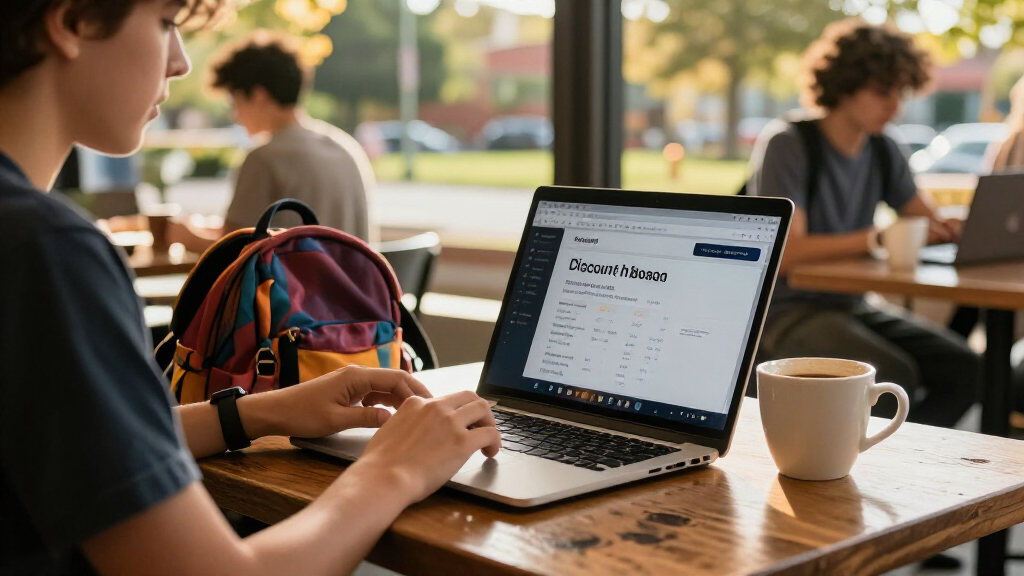
I ranked these laptops around student tasks rather than promotional labels: writing papers, attending video classes, researching online, managing files, and carrying a computer between home and campus. The most weight went to the stated processor, RAM, storage type and capacity, screen resolution, battery claims, keyboard details, and operating system. Configurations with more memory and a named SSD generally rank ahead of 4GB systems for students who need multiple tabs and apps open at once. I also considered whether the listed features solve a real student need, such as a larger screen for split-screen work or a lighter 14-inch design for commuting.
The order favors balanced, versatile configurations first, then narrower picks for students with specific needs or simpler workloads. That puts the Dell Ryzen 5 and Core i3 options ahead of models with limited memory, while the MacBook Air earns a distinct premium role for its stronger stated configuration rather than being treated as the default choice. Several listings provide incomplete or overlapping details, and two student laptop entries have the same product name; I do not assume that they differ without confirmed specifications. I also treat advertised bundled software, AI features, and combined storage claims cautiously: buyers should verify licensing, exact configuration, and what storage is built in before choosing.
| laptop deals for student | Operating system |
|---|---|
| HP New Everyday Slim Laptop 20 | Windows 11 Home 64-bit |
| Apple 2026 MacBook Air 15-inch | — |
| 15.6" FHD IPS Student Laptop w | Windows 11 Home |
| 15.6" FHD IPS Student Laptop w | Windows 11 Home |
| HP Stream 14" HD Student & Bus | Windows 11 |
| Phantom 15.6" FHD Laptop | Windows 11 |
| 2026 Windows 11 Pro Laptop | Windows 11 Pro |
| HP Ultrabook 14 Laptop Compute | Windows 11 Home |
| Windows 11 Laptop with Intel C | Windows 11 |
| HP 14" HD Chromebook Laptop fo | Chrome OS |
| HP Laptop 2026 Student Busines | Windows 11 Home |
| Dell 15.6-inch Laptop with AMD | Windows 11 Home |
| 15.6” AI Laptop with Office 3 | Windows 11 Home |
| HP 14" Ultra-Light Laptop for | Windows 11 Home in S Mode; can switch out of S Mode |
| HP 14" Laptop for Students and | Windows 11 Pro |
Factors to Consider When Choosing Laptop Deals For Students
A student laptop purchase is a balance between what coursework requires now and what will still feel usable after a year of updates, new classes, and heavier multitasking. I would start with software compatibility and memory, then weigh portability, screen comfort, and storage. A low upfront cost can be appealing, but the least capable configuration may create more friction during everyday work.
Match the Operating System to Your Course Software
Before comparing processors, check whether your school or course requires specific desktop software. Windows 11 supports a broad range of familiar desktop applications, while ChromeOS is best suited to browser-based work and services that have compatible web or Android versions. A Chromebook can be a sensible choice for online assignments, but it may not run specialist Windows programs used in some science, design, or business courses. Mac students should also check app availability and whether instructors provide materials in compatible formats. A laptop that cannot run a required tool is a poor fit even if its advertised specifications look attractive.
Think Beyond the Processor Name
Processor labels alone do not tell you how smoothly a laptop will handle a full day of coursework. Memory capacity shapes multitasking: video calls, research tabs, and a document open together place more pressure on a 4GB system than on a machine with 12GB or 16GB. Entry-level processors can handle basic browsing and writing, but demanding software or frequent multitasking calls for more headroom. Do not assume an AI label means the laptop has the performance or memory needed for specialized work. Match the whole configuration to your workload, especially if your course involves coding, creative applications, or large datasets.
Check What the Storage Claim Actually Means
Storage listings can combine different types of capacity, so look for the built-in drive type and size rather than relying on the biggest number in a headline. An SSD and eMMC storage are not the same, and a memory card or cloud account does not replace internal space for installed applications. Students who keep lecture recordings, project files, or media locally may need more capacity than a browser-focused user. Check whether the storage can be upgraded; do not assume it can. Leave room for operating system updates and course software instead of planning to fill the drive completely.
Choose a Screen Size You Can Work On
A 15.6-inch display gives more room for reading, spreadsheets, and side-by-side windows, but it takes up more space in a backpack and on a crowded desk. A 14-inch laptop favors portability, which can matter for students moving between classes every day. Resolution also affects how much content fits on screen and how clear text appears, so an FHD display can be more comfortable for long study sessions than an HD panel. Consider where most work will happen: a compact screen is easier to carry, while a larger panel can reduce reliance on an external monitor. If you choose a smaller laptop, check whether it supports the external display connections your study setup needs.
Treat Battery Claims as a Planning Guide
Long battery-life claims can help narrow options, but actual runtime varies with screen brightness, video calls, workload, and battery age. Plan around your longest stretch away from an outlet rather than assuming a stated maximum will match daily use. Students who spend most of the day in lecture halls may value battery capacity more than a small performance advantage. Those who study mainly at home or in a library with accessible charging can put more weight on memory, screen quality, or processing ability. Check the charger size and charging method too, since they affect how convenient the laptop is to carry.
Verify Bundled Software and the Exact Configuration
Listings that mention Microsoft 365, Office, or Copilot can describe a trial, a subscription, an included license, or simply a software feature. Confirm the license length and terms before counting bundled software as a saving, and check whether your school already provides access. Product names may also cover multiple configurations, so verify RAM, storage, display resolution, and operating system on the exact item you plan to buy. This is especially relevant when a listing gives a broad storage total or repeats a generic student-laptop title. Clear, item-specific specifications are more useful than a long feature list with ambiguous wording.
Frequently Asked Questions
Is 4GB of RAM enough for a student’s laptop?
4GB is best reserved for light, browser-focused work, such as writing simple documents and attending occasional online classes. It leaves less room for multiple tabs, video calls, and other applications to run together, so the computer may feel constrained during a busy study session. For regular multitasking, I would favor a configuration with at least 12GB from this lineup. Also check whether the memory is upgradeable rather than assuming you can add more later. Course software requirements should guide the final choice.
Should I choose a Chromebook or a Windows laptop for college?
The deciding factor is usually software compatibility, not the logo on the lid. A Chromebook suits web-based coursework and students who mainly use browser tools, while Windows is a safer fit when classes require desktop applications or specialized programs. Ask your department about software before buying, particularly for engineering, design, or technical subjects. A Chromebook can cover everyday documents and online learning but may not replace a Windows computer for every course. If your needs could change over several years, a more versatile operating system may be worth the extra cost.
Do students need a dedicated graphics card?
Most students writing papers, browsing, streaming lectures, and using standard productivity applications do not need a dedicated graphics card. Integrated graphics are generally enough for everyday schoolwork, including the Radeon 610M listed with the Dell Ryzen 5 model. Students taking courses in 3D modeling, advanced video editing, or graphics-heavy development should check the specific software requirements before choosing. None of the listed product titles identifies a dedicated graphics card, so specialist users should confirm the exact configuration or look beyond this lineup. Avoid paying for graphics capability you will not use.
Is a large advertised storage total the same as a large SSD?
No. A headline total can combine internal storage with a memory card or other add-on, and different storage types can perform differently. Check the built-in drive’s capacity and type, then see whether any extra space is removable or included separately. A 128GB SSD is not equivalent to a larger combined figure that includes external or card-based storage. Students installing large applications or saving video files locally should prioritize the internal drive details. Cloud storage can help, but it is not a full substitute when internet access is limited.
Is a premium laptop worth it if I only need it for classes?
A premium model can make sense when you value a stronger configuration, a larger or better-quality display, and a laptop you expect to keep for several years. Basic writing and research do not require premium hardware, so paying extra for capacity you will not use may be poor value. The MacBook Air in this roundup is the standout premium configuration, while the Dell Ryzen 5 and Core i3 options offer more practical Windows choices for many coursework needs. Consider your major, expected lifespan, and existing devices before spending more. Also confirm that any required campus software runs on the operating system you choose.
Conclusion
Best overall: I recommend the Dell 15.6-inch Laptop with Ryzen 5 for students who want the strongest stated processor in this group and a Windows setup for varied coursework. Best value: the Core i3 Windows 11 laptop with 12GB RAM is the more balanced everyday pick for typing, research, and multitasking, though buyers should verify its exact configuration. Best premium: choose the 15-inch MacBook Air with M5 if you want its 16GB memory, 512GB SSD, and larger Liquid Retina screen and your required apps support macOS. Best for beginners: the HP 14-inch Chromebook suits students whose work stays in the browser, but its 4GB RAM and ChromeOS limit its range. For a light carry, look at the 14-inch HP options; for a basic Windows machine, compare their memory and storage carefully before choosing. I would skip any model with 4GB RAM for heavy multitasking, and I would confirm software licensing and built-in storage before relying on bundled claims.
Fall Picks
fall essentials
As an affiliate, we earn on qualifying purchases.