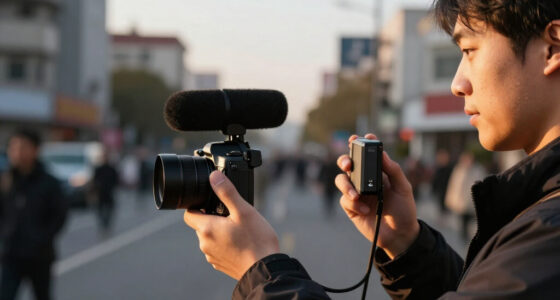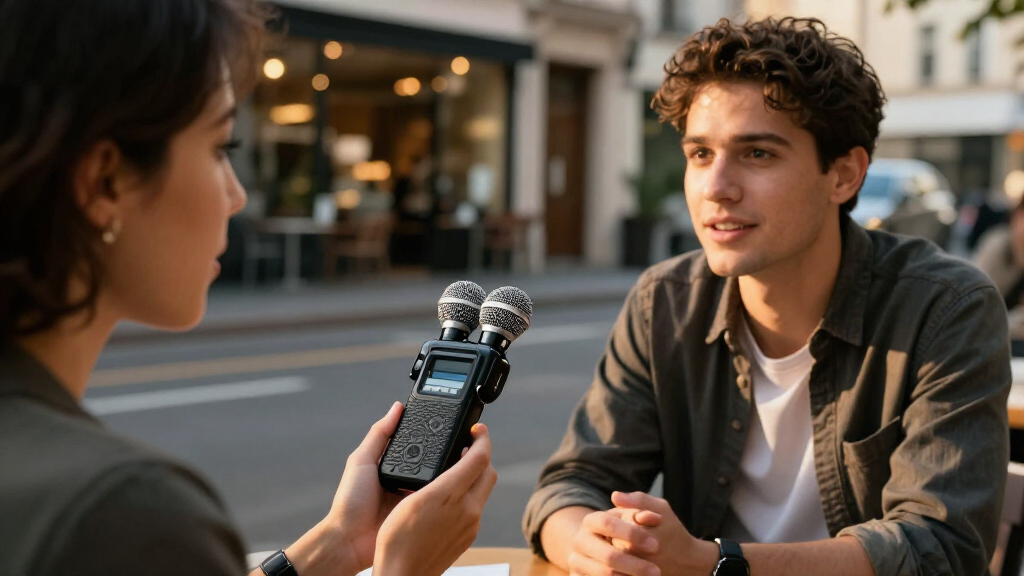

For most interviewers, the Zoom H1essential is the strongest overall choice in this lineup because its stereo recording approach is better suited to capturing the room and both sides of a conversation than a basic voice memo device. The EVISTR L359 stands out for a transcription-oriented workflow, while the EVIDA 64GB USB recorder offers a simpler option for everyday voice capture. The main tradeoff is between purpose-built audio controls and convenient features such as voice activation, large storage claims, and transcription tools. Those extras can help, but they do not replace good microphone placement or a clear recording workflow. Read on for the full breakdown and a guide to choosing a recorder for the way you conduct interviews.

Get everyday essentials delivered free with Prime
- Fast, free delivery on millions of items
- Prime Video, Amazon Music and more included
- Member-only deals all year
Key Takeaways
- Zoom H1essential leads for recording quality and interview flexibility: its stereo recorder design serves field conversations better than the lineup’s simpler voice recorders, though it may take more setup.
- EVISTR L359 is the workflow pick: its advertised AI transcription feature may help with follow-up, but buyers should check what the transcription service requires and supports.
- Storage capacity is not the same as interview readiness: several listings advertise 64GB or more, but microphone placement, file transfer, and dependable controls matter more during a live conversation.
- Voice activation suits note-taking better than unpredictable dialogue: quiet pauses and soft answers can be missed, so continuous recording is the safer choice for consequential interviews.
- The lineup favors convenience over documented interview-specific detail: many models emphasize playback, noise reduction, or battery claims, while the Zoom stands apart as a dedicated portable stereo recorder.
| Zoom H1essential Portable Stereo Recorder |  | Best Overall for Interview Audio | Microphone configuration: Built-in X/Y stereo | Recording feature: 32-bit float | Microphone format: WAV | VIEW LATEST PRICE | See Our Full Breakdown |
| EVIDA 128GB Digital Voice Recorder with Playback and Voice Activation |  | Best for Long Meetings and Interviews | Storage capacity: 128 GB | Recording formats: MP3 at 128 or 192 kbps; WAV at 1536 kbps | Microphone: Built-in mono microphone with noise cancellation | VIEW LATEST PRICE | See Our Full Breakdown |
| Lymorvex 72GB Magnetic Voice Recorder with Voice Activation and AI Noise Reduction |  | Best Compact Recorder for Hands-Free Placement | Storage capacity: 72 GB | Continuous recording time: Up to 72 hours | Maximum stated recording time: Up to 9,800 hours at 192 kbps | VIEW LATEST PRICE | See Our Full Breakdown |
| 16GB Voice-Activated Digital Voice Recorder with USB Rechargeable Battery |  | Best for Playback and Interview Review | Storage capacity: 16 GB | Recording formats: MP3, WAV | Recording quality: 32–192 kbps | VIEW LATEST PRICE | See Our Full Breakdown |
| EVIDA 64GB USB Digital Voice Recorder with Noise Reduction |  | Best for Simple One-Switch Recording | Storage capacity: 64 GB | Continuous recording time: Up to 15 hours | Charging time: 2 hours | VIEW LATEST PRICE | See Our Full Breakdown |
| Tonfarb 136GB Digital Voice Recorder with Playback |  | Best for Long Interview Days | Storage: 136GB total: 8GB built-in plus included 128GB TF card | Recording formats: MP3, WAV | Audio quality: Up to 1536 kbps PCM | VIEW LATEST PRICE | See Our Full Breakdown |
| Cappsu Digital Voice Recorder with Playback, 32GB Built-in Memory |  | Best for Beginners | Model: V02 | Memory: 32GB built-in | Recording bitrate: Up to 1536 Kbps | VIEW LATEST PRICE | See Our Full Breakdown |
| Elasound Voice-Activated Recorder with AI Noise Reduction, 128GB Storage, and 100-Hour Battery |  | Best for Extended Sessions | Storage: 128GB TF card; product information also lists 136GB | Audio storage claim: Up to 9,800 hours at 32kbps | Continuous recording time: Up to 100 hours | VIEW LATEST PRICE | See Our Full Breakdown |
| Sunlan 16GB Digital Voice Recorder with Playback |  | Best Compact Pick | Storage capacity: 16GB | Recording format: WAV | Recording quality: Up to 1536 kbps | VIEW LATEST PRICE | See Our Full Breakdown |
| EVISTR L357 64GB Digital Voice Recorder with Playback |  | Best for Adjustable Interview Control | Model: L357 | Storage: 64GB | Recording formats: WAV, MP3 | VIEW LATEST PRICE | See Our Full Breakdown |
| 68GB Voice-Activated Recorder with Playback |  | Best for High-Capacity Simple Recording | Brand and model: NekSide USB-02 | Storage: 68 GB | Microphone: Built-in, mono | VIEW LATEST PRICE | See Our Full Breakdown |
| HoTiyan 8GB Digital Voice Recorder with Voice Activation and MP3 Playback |  | Best for Playback and File Review | Brand and model: HoTiyan H-10001 | Storage capacity: 8 GB | Recording formats: MP3, WAV | VIEW LATEST PRICE | See Our Full Breakdown |
| Pexqil 136GB Voice Recorder with AI Noise Reduction and Voice Activation |  | Best for Maximum Built-In Storage | Storage capacity: 136 GB | Claimed recording capacity: Up to 18,800 hours | Battery life: Up to 48 hours | VIEW LATEST PRICE | See Our Full Breakdown |
| EVISTR L359 Digital Voice Recorder with 128GB Storage and AI Transcription |  | Best for Transcription-Assisted Interviews | Brand and model: EVISTR L359 | Storage capacity: 128 GB | Maximum recording bitrate: 3072 Kbps | VIEW LATEST PRICE | See Our Full Breakdown |
| Tonfarb 64GB Digital Voice Recorder with Playback |  | Best for On-Device Interview Review | Memory: 64 GB | Recording formats: MP3, WAV | Maximum recording quality: 1536 kbps PCM | VIEW LATEST PRICE | See Our Full Breakdown |
| portable audio recorders for interview | Microphone | Weight | Headphone jack | Storage capacity |
|---|---|---|---|---|
| Zoom H1essential Portable Ster | — | 92 g | 3.5 mm | — |
| EVIDA 128GB Digital Voice Reco | Built-in mono microphone with noise cancellation | 3.35 ounces | — | 128 GB |
| Lymorvex 72GB Magnetic Voice R | — | 1 ounce | 3.5 mm | 72 GB |
| 16GB Voice-Activated Digital V | Built-in stereo | 1.6 ounces | 3.5 mm | 16 GB |
| EVIDA 64GB USB Digital Voice R | Built-in | 14.7 g | 3.5 mm | 64 GB |
| Tonfarb 136GB Digital Voice Re | — | 97g or 100g, depending on listing detail | — | — |
| Cappsu Digital Voice Recorder | Built-in; external microphone included | 1.6 oz | 3.5 mm | — |
| Elasound Voice-Activated Recor | Built-in; clip-on microphone included | 0.17 kg | 3.5 mm | — |
| Sunlan 16GB Digital Voice Reco | Built-in mono microphone with noise cancellation | 35g | — | 16GB |
| EVISTR L357 64GB Digital Voice | Built-in stereo | — | — | — |
| 68GB Voice-Activated Recorder | Built-in, mono | — | — | — |
| HoTiyan 8GB Digital Voice Reco | Built-in stereo | — | 3.5 mm | 8 GB |
| Pexqil 136GB Voice Recorder wi | — | 1 ounce | — | 136 GB |
| EVISTR L359 Digital Voice Reco | Built-in, mono | — | — | 128 GB |
| Tonfarb 64GB Digital Voice Rec | Built-in stereo | — | 3.5 mm | — |
More Details on Our Top Picks
Zoom H1essential Portable Stereo Recorder
The Zoom H1essential is my strongest pick for interviews where recording quality matters more than long unattended run time. Its built-in X/Y microphones capture stereo sound, while 32-bit float recording helps accommodate speakers who shift from quiet answers to sudden emphatic ones. Compared with the EVIDA VR01, which emphasizes long recording time and file management, the H1essential is better suited to capturing a natural, detailed conversation than storing hours of basic voice notes. USB-C microphone mode also gives it a useful second job for computer or mobile-device recording. The tradeoff is its two-AAA-battery power and a more limited 10-hour stated recording time. Choose it for sit-down interviews and field conversations; skip it if you mainly need a pocket recorder to run unattended for days.
Pros:- Built-in X/Y microphones capture stereo sound for a fuller sense of the interview setting
- 32-bit float recording helps accommodate unexpected changes in speaker volume
- USB-C microphone mode supports direct use with compatible computers and mobile devices
- Spoken menu guidance and a simple recording workflow can make operation easier
Cons:- Requires two AAA batteries rather than relying on a rechargeable internal battery
- Listed digital recording time is 10 hours, shorter than the extended runtimes claimed for the EVIDA VR01 and Lymorvex recorder
Best for: Interviewers who want stereo capture, more headroom for changing voices, and the option to record directly to a computer or mobile device
Not ideal for: People recording long meetings without access to spare batteries, or buyers who only need a simple mono voice-note recorder
- Microphone configuration:Built-in X/Y stereo
- Recording feature:32-bit float
- Microphone format:WAV
- Connectivity:USB Type-C
- Headphone jack:3.5 mm
- Power:2 AAA batteries
- Digital recording time:10 hours
- Weight:92 g
Our verdict“Choose the H1essential for interview audio flexibility and stereo capture, but pick a simpler long-runtime recorder for unattended voice notes.”
EVIDA 128GB Digital Voice Recorder with Playback and Voice Activation
The EVIDA VR01 suits interviewers who need ample storage and long continuous recording more than stereo detail. Its built-in mono microphone, adjustable voice activation, and noise cancellation are geared toward spoken material, while folders, bookmarks, and playback controls help organize and revisit files. The claimed 54-hour continuous recording time and 128GB capacity make it a more practical choice for extended sessions than the Zoom H1essential, which offers stereo X/Y microphones and 32-bit float capture but lists a 10-hour recording time. That distinction matters: the VR01 favors duration and voice-note convenience, not the more spacious sound capture of the Zoom. It also lacks a headphone jack, limiting on-device listening, and its listed C-battery requirement may not suit buyers expecting a rechargeable recorder. I’d choose it for lengthy interviews where storage is the priority.
Pros:- 128GB storage provides substantial room for recorded interviews
- Voice activation offers six adjustable sensitivity levels
- Listed continuous recording time reaches up to 54 hours
- Playback, folders, bookmarks, password protection, and A-B repeat aid file handling
Cons:- Built-in microphone is mono, unlike the Zoom H1essential’s X/Y stereo microphones
- No headphone jack for direct listening through wired headphones
- Listed C-battery requirement may be inconvenient for buyers seeking rechargeable power
Best for: Researchers, students, and interviewers who record long sessions and want voice activation, file folders, and substantial onboard storage
Not ideal for: Interviewers who need stereo ambience, headphone monitoring, or a compact rechargeable recorder for frequent field use
- Storage capacity:128 GB
- Recording formats:MP3 at 128 or 192 kbps; WAV at 1536 kbps
- Microphone:Built-in mono microphone with noise cancellation
- Voice activation:6 adjustable sensitivity levels
- Maximum continuous recording time:54 hours
- Connectivity:USB 2.0
- Screen size:1.5 inches
- Weight:3.35 ounces
Our verdict“Pick the VR01 for long voice-focused sessions and organized file handling, not for stereo recording or headphone monitoring.”
Lymorvex 72GB Magnetic Voice Recorder with Voice Activation and AI Noise Reduction
The Lymorvex stands out for interviewers who want a small recorder that can attach to a metal surface. Its built-in magnet and one-touch operation make it easy to place near a speaker, while voice activation and claimed AI noise reduction target speech rather than stereo ambience. It also lists up to 72 hours of continuous recording per charge, giving it a longer stated run time than the Zoom H1essential’s 10 hours. The Zoom is the stronger fit when stereo capture and 32-bit float matter; the Lymorvex instead prioritizes compact placement, battery endurance, and quick transfers through USB-C or OTG. Its claimed 9,800-hour storage figure applies at 192 kbps, so that number depends on recording settings. I’d favor it for discreet, fixed-position interviews, but not for buyers who need verified pro-audio controls or stereo microphones.
Pros:- One-ounce body and built-in magnet support compact, hands-free placement
- One-touch operation and voice activation simplify starting speech recordings
- Claimed continuous recording time is up to 72 hours per charge
- USB-C and OTG support file transfer across listed device types
Cons:- Built-in microphone details do not specify a stereo configuration like the Zoom H1essential
- The 9,800-hour capacity claim depends on recording at 192 kbps
- AI noise reduction and recording performance are not described with detailed technical parameters
Best for: Interviewers who need a lightweight recorder that can attach to a metal desk or fixture and run for extended sessions
Not ideal for: Buyers seeking stereo microphones, detailed manual audio controls, or a recorder with clearly established performance data
- Storage capacity:72 GB
- Continuous recording time:Up to 72 hours
- Maximum stated recording time:Up to 9,800 hours at 192 kbps
- Audio formats:MP3, WAV
- Charging interface:USB Type-C
- Full charge time:2 hours
- Headphone jack:3.5 mm
- Weight:1 ounce
Our verdict“Choose the Lymorvex for compact, magnetic placement and long claimed runtime, but choose the Zoom H1essential when stereo capture is the priority.”
16GB Voice-Activated Digital Voice Recorder with USB Rechargeable Battery
This 16GB recorder is a practical pick when interviews need to be captured and reviewed on the device. Its built-in stereo microphone, voice activation, and MP3/WAV recording cover basic field conversations, while A-B repeat and variable playback speed can help when checking a quote or replaying a hard-to-hear passage. Compared with the EVIDA VR01, it offers a 3.5 mm headphone jack and a rechargeable battery, though the EVIDA lists far more storage and a much longer continuous recording time. The stated 1,120-hour capacity is tied to the lowest 32 kbps setting, so it should not be mistaken for high-quality interview storage. The 199-file limit also puts a ceiling on organization. I’d choose it for short interviews and convenient review, not frequent, high-quality recording across many sessions.
Pros:- Built-in stereo microphone records more than a single-channel voice note
- A-B repeat and variable playback speed help review interview passages
- Rechargeable battery supports up to 20 hours of continuous recording
- 3.5 mm headphone jack allows direct listening
Cons:- The maximum 1,120-hour capacity requires the low 32 kbps recording setting
- Limited to 199 recording files
- Micro USB connectivity is less convenient than the USB-C connection on the Zoom H1essential and Lymorvex
Best for: Students and occasional interviewers who want onboard playback tools, a headphone jack, and rechargeable power
Not ideal for: Researchers with many long interviews or buyers who need high-bitrate recording, extensive file capacity, or a large file limit
- Storage capacity:16 GB
- Recording formats:MP3, WAV
- Recording quality:32–192 kbps
- Microphone:Built-in stereo
- Continuous recording battery life:Up to 20 hours
- Maximum recording files:199
- Headphone jack:3.5 mm
- Weight:1.6 ounces
Our verdict“Choose this recorder for short interviews you want to replay on-device, but look elsewhere for extensive, high-quality interview archives.”
EVIDA 64GB USB Digital Voice Recorder with Noise Reduction
The EVIDA 64GB is aimed at interviewers who value fast, low-fuss recording over detailed audio control. A single switch starts or stops capture, and files save automatically, which can reduce missed moments when a conversation begins unexpectedly. Its 64GB storage and 3.5 mm headphone jack make it more practical for basic interview work than a recorder without direct listening, such as the EVIDA VR01. But the VR01 lists 128GB and up to 54 hours of continuous recording, while this model lists only 15 hours. The compact 14.7-gram design is easy to carry, though the data also gives conflicting power details: the description says rechargeable, while the specification lists one C battery. That ambiguity makes it harder to plan for long field days. I’d pick it for brief, straightforward interviews, not demanding all-day recording.
Pros:- Single-switch operation makes starting and stopping a recording straightforward
- Automatic file saving reduces the risk of losing a completed recording
- 64GB storage and a 3.5 mm headphone jack support practical interview use
- Compact 14.7-gram design is easy to carry
Cons:- Listed continuous recording time is up to 15 hours, shorter than the EVIDA VR01’s stated 54 hours
- Power information conflicts: the description refers to rechargeable operation, while the specifications list one C battery
- The supplied data does not specify recording formats or microphone channel configuration
Best for: People recording short interviews or quick notes who want a compact device with one-switch operation and automatic file saving
Not ideal for: Journalists and researchers recording long sessions who need dependable battery information, extensive runtime, or advanced audio controls
- Storage capacity:64 GB
- Continuous recording time:Up to 15 hours
- Charging time:2 hours
- Microphone:Built-in
- Hardware interface:USB 2.0
- Headphone jack:3.5 mm
- Dimensions:2.58 x 0.4 x 0.78 inches
- Weight:14.7 g
Our verdict“Choose this EVIDA for simple, brief interviews where one-switch operation matters more than long runtime or detailed recording controls.”
Tonfarb 136GB Digital Voice Recorder with Playback
The Tonfarb suits interviewers who need ample recording time without frequent charging. Its stated 68-hour battery life and 136GB total storage make it a stronger fit for back-to-back conversations than the Cappsu V02, which offers up to 20 hours of continuous recording and 32GB built-in. One-touch recording reduces the chance of missing an opening question, while voice activation can help conserve space during pauses. WAV recording at up to 1536 kbps is listed, but the headline capacity of 9,775 hours applies to MP3, not that higher-quality format. The listing also gives two different weights, 97g and 100g, so portability figures are not perfectly consistent. I’d choose it for long sessions, not for buyers seeking verified capacity figures or a clearly specified interview microphone setup.
Pros:- 136GB total storage includes 8GB built-in memory and a 128GB TF card.
- Claimed battery life of up to 68 hours supports extended recording schedules.
- One-touch recording and voice activation offer convenient ways to start and manage sessions.
- WAV and MP3 recording plus USB-C transfer provide format and connection flexibility.
Cons:- The 9,775-hour capacity figure applies to MP3 recording, not the listed 1536 kbps PCM quality.
- Product information conflicts on weight, listing both 97g and 100g.
- The built-in microphone setup is not described as stereo or as a dedicated interview mic.
Best for: Interviewers recording multiple long conversations between charges who want generous onboard-plus-card storage and simple start controls.
Not ideal for: Buyers who need clearly verified storage and weight figures, or a specified stereo microphone setup for two-person interviews.
- Storage:136GB total: 8GB built-in plus included 128GB TF card
- Recording formats:MP3, WAV
- Audio quality:Up to 1536 kbps PCM
- Maximum recording time:Up to 9,775 hours (MP3)
- Battery life:Up to 68 hours
- Connectivity:USB-C, USB 2.0
- Microphone features:Dual noise-reduction microphones; voice activation
- Dimensions:0.47 × 1.45 × 4 inches
- Weight:97g or 100g, depending on listing detail
Our verdict“Choose the Tonfarb for long interview days and generous storage, provided you can live with unclear weight details and MP3-dependent capacity claims.”
Cappsu Digital Voice Recorder with Playback, 32GB Built-in Memory
The Cappsu keeps the interview workflow simple: one-click recording, built-in 32GB storage, and a compact body that weighs 1.6 ounces. That makes it an approachable choice for students, first-time oral-history recorders, or anyone who wants to start recording without sorting out a memory card. Compared with the Tonfarb 136GB, it gives up storage and continuous runtime, but its included external microphone may help when the recorder needs to sit away from the speaker. Voice activation is listed, with up to 50 hours in that mode, though continuous recording is rated at up to 20 hours. Placement still matters: the product information says best results may require keeping it close to the sound source. Skip it for all-day interview runs unless you can recharge between sessions.
Pros:- 32GB of built-in storage avoids dependence on a separate memory card.
- One-click recording offers a simple way to begin an interview.
- Lightweight 1.6-ounce body is easy to carry in a pocket or bag.
- Included external microphone and earphone add useful recording and monitoring options.
Cons:- Continuous recording is listed at up to 20 hours, shorter than the Tonfarb’s 68-hour claim.
- Best results may require positioning the recorder close to the speaker.
- Voice-activated recording can extend listed runtime, but it may not suit interviews with long pauses or quiet speech.
Best for: New interviewers, students, and casual oral-history recorders who want a small device with built-in memory and straightforward controls.
Not ideal for: Reporters recording long, uninterrupted interview days who cannot recharge and need more than 20 hours of continuous recording.
- Model:V02
- Memory:32GB built-in
- Recording bitrate:Up to 1536 Kbps
- Battery life:Up to 20 hours continuous; up to 50 hours voice-activated
- Interface:USB Type-C
- Microphone:Built-in; external microphone included
- Headphone jack:3.5 mm
- Dimensions:4.16 × 1.46 × 0.47 inches
- Weight:1.6 oz
Our verdict“Pick the Cappsu for uncomplicated, portable interview recording, but choose a longer-running model for demanding full-day schedules.”
Elasound Voice-Activated Recorder with AI Noise Reduction, 128GB Storage, and 100-Hour Battery
For interviewers who prioritize runtime, the Elasound’s stated 100 hours of continuous recording is its defining advantage. It outlasts the EVISTR L357’s listed 32-hour continuous recording time, making it a better match for travel, multi-day fieldwork, or infrequent charging. One-touch recording and voice activation keep operation simple, while AI-powered triple noise reduction is intended to improve vocal clarity in less controlled settings. The tradeoff is uncertainty in the listing: storage is described as both 128GB and 136GB, and the 9,800-hour figure depends on low-bitrate 32kbps recording. Unlike the EVISTR, the Elasound is listed with MP3 recording only, which gives buyers less format flexibility. I’d favor it for long capture windows, not for those who need dependable capacity claims or explicit WAV support.
Pros:- Claimed 100-hour continuous runtime exceeds the listed runtime of the EVISTR L357.
- Voice activation and one-touch controls support quick, low-effort interview capture.
- AI-powered triple noise reduction is designed to help with vocal clarity.
- Included clip-on microphone and adapters add recording and transfer options.
Cons:- Storage is inconsistent in the product information, which lists both 128GB and 136GB.
- The 9,800-hour capacity claim is based on 32kbps recording.
- MP3-only format listing offers less flexibility than the EVISTR L357’s WAV and MP3 support.
Best for: Field interviewers and travelers who need long recording sessions between charges and value voice activation and noise-reduction features.
Not ideal for: Editors who require WAV files, verified storage capacity, or clearly documented high-bitrate recording time.
- Storage:128GB TF card; product information also lists 136GB
- Audio storage claim:Up to 9,800 hours at 32kbps
- Continuous recording time:Up to 100 hours
- Audio format:MP3
- Microphone:Built-in; clip-on microphone included
- Noise reduction:AI-powered triple noise reduction
- Connection:USB Type-C
- Weight:0.17 kg
- Headphone jack:3.5 mm
Our verdict“Choose the Elasound for its unusually long claimed runtime, but skip it if WAV recording or unambiguous storage details matter to your workflow.”
Sunlan 16GB Digital Voice Recorder with Playback
At just 35g and 3.3 inches long, the Sunlan is the most pocket-friendly option in this group. Its one-button recording and WAV capture make it a straightforward choice for short interviews where a small, easy-to-carry recorder matters more than stereo sound or long playback. It offers more than 30 hours of recording time, but playback is listed at up to seven hours, a notable limit if you plan to review lengthy interviews on the device. Compared with the Cappsu, it is lighter and smaller, while the Cappsu offers more storage and includes an external microphone. The Sunlan’s mono built-in microphone also makes it less suited to capturing two speakers with spatial separation. I’d choose it for quick, portable one-on-one conversations, not as a primary recorder for extended reporting days.
Pros:- At 35g, it is lighter than the other listed recorders in this batch.
- One-button recording simplifies starting an interview quickly.
- WAV recording at up to 1536 kbps supports a higher-quality option than the Elasound’s listed MP3 format.
- Voice activation, noise reduction, and A-B repeat provide useful recording and review controls.
Cons:- The built-in microphone records in mono, limiting separation between interview speakers.
- Playback time is listed at only up to seven hours.
- 16GB storage is less than the Cappsu’s 32GB and substantially below the larger-capacity models.
Best for: Interviewers who need a very light, compact recorder for short one-on-one conversations and simple playback.
Not ideal for: Users recording two-person discussions who want stereo capture, or anyone who expects to review long sessions using the built-in playback.
- Storage capacity:16GB
- Recording format:WAV
- Recording quality:Up to 1536 kbps
- Recording time:More than 30 hours
- Playback time:Up to 7 hours
- Microphone:Built-in mono microphone with noise cancellation
- Connectivity:USB
- Dimensions:0.5 × 1.4 × 3.3 inches
- Weight:35g
Our verdict“Choose the Sunlan when minimal size and weight matter most for short interviews, but look elsewhere for stereo capture or long playback.”
EVISTR L357 64GB Digital Voice Recorder with Playback
The EVISTR L357 is the most control-oriented choice here for interviewers who want to tune capture rather than rely on basic automatic settings. Its stereo microphone, seven recording-gain levels, and seven voice-activation sensitivity levels give more room to adapt to different speaker distances and room conditions than the Sunlan’s mono, built-in setup. WAV and MP3 support also give editors a choice between formats, while scheduled recording can help with interviews that start at a fixed time. Its 64GB storage sits between the Cappsu’s 32GB and the Tonfarb’s 136GB. The main concern is battery information: the listing gives up to 32 hours of recording and 35 hours of playback, but also cites a conflicting 100-hour average. I’d choose it for adjustable controls, not if runtime certainty is the priority.
Pros:- Built-in stereo microphone is better suited to capturing two-person conversations than the Sunlan’s mono microphone.
- Seven gain and seven voice-activation sensitivity levels allow tailored settings.
- WAV and MP3 recording provide format options for different editing and storage needs.
- USB-C transfers and Windows and Mac compatibility simplify moving interview files.
Cons:- Battery information conflicts: 32 hours of recording and 35 hours of playback are also accompanied by a 100-hour average claim.
- Its 64GB capacity is smaller than the Tonfarb’s stated 136GB total storage.
- The one-inch screen is modest for reviewing settings and files.
Best for: Interviewers who want stereo capture, adjustable gain, and flexible voice-activation settings for varied recording environments.
Not ideal for: Buyers who need a clearly stated, dependable battery runtime or prefer the simplest possible one-button setup.
- Model:L357
- Storage:64GB
- Recording formats:WAV, MP3
- Microphone:Built-in stereo
- Recording gain:7 adjustable levels
- Voice activation:7 sensitivity levels
- Continuous recording time:Up to 32 hours; listing also cites 100-hour average battery life
- Connectivity:USB Type-C; Windows and Mac compatibility
- Dimensions and weight:3.86 × 1.2 × 0.47 inches; 2.24 oz
Our verdict“Pick the EVISTR L357 for stereo recording and finer control over interview capture, but not if you need an unambiguous battery-life figure.”
68GB Voice-Activated Recorder with Playback
The NekSide USB-02 suits interviewers who want ample onboard space without a large device: its 68GB storage and voice activation can keep long sessions on hand while reducing stretches of silence. Compared with the HoTiyan H-10001, it offers far more storage, but the HoTiyan gives you stereo microphones and more playback controls. The NekSide’s built-in microphone is mono, so it is better for a single speaker at close range than for capturing a room or two-person conversation with separation. Recordings default to WAV, which is useful when you want an uncompressed file but can use storage quickly; MP3 requires computer conversion. USB-C and OTG offer transfer options, though OTG depends on a compatible phone or tablet. Its appeal is capacity and straightforward recording, not mic flexibility.
Pros:- 68GB of built-in storage for keeping many recordings on the device
- Voice activation can limit silent sections in a recording
- DSP 6.0 noise reduction is intended to reduce background noise
- USB-C and OTG support provide computer and compatible mobile transfer options
Cons:- Built-in microphone records in mono, limiting stereo room capture
- WAV is the default format, and MP3 requires conversion on a computer
- OTG transfers depend on phone or tablet compatibility
Best for: Interviewers recording frequent, single-speaker conversations who want large built-in storage and can transfer or convert files as needed
Not ideal for: People interviewing multiple speakers across a table, or anyone who needs MP3 files ready to share without computer conversion
- Brand and model:NekSide USB-02
- Storage:68 GB
- Microphone:Built-in, mono
- Noise reduction:DSP 6.0
- Default recording format:WAV
- Hardware interface:USB Type-C
- OTG:Direct transfer to compatible smartphones and tablets
- Dimensions:0.58 x 0.58 x 6 in
Our verdict“Choose the NekSide if storage for close-range, single-speaker interviews matters more than stereo capture or ready-to-share MP3 files.”
HoTiyan 8GB Digital Voice Recorder with Voice Activation and MP3 Playback
The HoTiyan H-10001 puts more emphasis on reviewing recordings than on storing a large archive. Its stereo microphone is a useful distinction from the mono NekSide USB-02 for interviews where voices or room ambience come from more than one direction. After a session, A-B repeat and variable-speed playback make it easier to revisit a quote or transcribe a passage without moving the file to another device. MP3 and WAV support also gives you more choice than recorders that default to WAV. The tradeoff is 8GB of storage, modest beside the NekSide’s 68GB, and the listing gives conflicting recording-time figures. Its 1.1-inch screen may make browsing files fiddly. I’d choose it for hands-on listening tools, not for keeping a large set of interviews on the recorder.
Pros:- Built-in stereo microphone can capture a broader interview scene than a mono mic
- MP3 and WAV recording formats offer flexibility for storage and editing workflows
- A-B repeat and variable-speed playback help with quote checking and transcription
- Voice activation, timestamps, and password protection add useful recording and file controls
Cons:- 8GB storage is limited compared with the NekSide USB-02 and other high-capacity options
- The product listing gives conflicting recording-time figures across bitrates
- The 1.1-inch screen can make file navigation less convenient
Best for: Students, oral-history interviewers, and researchers who want stereo capture and on-device tools for replaying and transcribing short sessions
Not ideal for: Interviewers recording many long sessions who need high onboard capacity or a larger screen for file management
- Brand and model:HoTiyan H-10001
- Storage capacity:8 GB
- Recording formats:MP3, WAV
- Microphone:Built-in stereo
- Recording bitrates:32, 64, 128, 192 kbps
- Continuous recording time:Up to 20 hours
- Connection:Micro USB 2.0
- Headphone jack:3.5 mm
- Screen size:1.1 inches
Our verdict“Pick the HoTiyan for stereo recording and convenient on-device review, but skip it if you need expansive storage for repeated interviews.”
Pexqil 136GB Voice Recorder with AI Noise Reduction and Voice Activation
For interviewers who want to keep a large archive on one device, the Pexqil offers 136GB of storage, double the NekSide USB-02’s 68GB. Its one-button recording and voice activation favor quick starts and can reduce recording during silence, while the one-ounce weight makes it easy to carry between interviews. Pexqil also claims up to 48 hours of battery life and DSP 5.0 AI noise reduction, but the stated 18,800-hour capacity and 97% noise-filtering figure depend on settings and conditions rather than guaranteeing results for every interview. Unlike the EVISTR L359, it does not list transcription features; its focus is straightforward capture and capacity. The product data names personal computers as compatible devices, so I would check phone compatibility before relying on OTG for mobile transfers.
Pros:- 136GB capacity provides more onboard storage than the other recorders in this batch
- One-button and voice-activated modes support quick starts and reduced silent recording
- One-ounce weight is convenient for a portable interview kit
- USB-C and OTG support offer direct-transfer options
Cons:- Recording-capacity and noise-filtering figures are product claims that can vary with settings and conditions
- Compatible-device information specifies a personal computer, leaving phone support unclear
- Built-in microphone is listed without a stereo specification
Best for: Field interviewers who prioritize very high onboard storage, a lightweight recorder, and simple one-button operation
Not ideal for: Buyers who need clearly documented phone compatibility, built-in transcription tools, or a specified stereo microphone
- Storage capacity:136 GB
- Claimed recording capacity:Up to 18,800 hours
- Battery life:Up to 48 hours
- Weight:1 ounce
- Noise reduction:DSP 5.0 AI; product claims filtering up to 97% of ambient noise
- Recording modes:Voice-activated and one-button recording
- Hardware interface:USB Type-C
- Data transfer:OTG
- Compatible devices listed:Personal computer
Our verdict“Choose the Pexqil when maximum storage and light carry matter most, but verify your transfer setup and do not rely on its headline claims alone.”
EVISTR L359 Digital Voice Recorder with 128GB Storage and AI Transcription
The EVISTR L359 is the most workflow-focused pick here: beyond recording, its AI DVR Link app offers transcription in 113 languages, summaries, speaker identification, and other analysis tools. That can reduce the time between an interview and a usable draft, a different advantage from the Pexqil’s larger 136GB capacity, which prioritizes storage instead. The L359 pairs 128GB storage with MP3 and WAV recording, voice activation, and one-touch operation. Its listed maximum recording time is 33 hours, while the 9,216-hour storage figure applies at 32 kbps, so those figures describe different conditions. There are practical limits: AI features require the app, and transfers to a phone use a wired OTG cable rather than Bluetooth. The built-in mono microphone also favors a simple setup over stereo room capture.
Pros:- AI DVR Link app offers transcription in 113 languages plus summaries and speaker identification
- 128GB storage accommodates a substantial set of interview files
- MP3 and WAV formats support different recording and editing needs
- One-touch controls, voice activation, password protection, and wired OTG support a practical interview workflow
Cons:- Transcription and analysis features require the AI DVR Link app
- Phone transfers use wired OTG rather than Bluetooth
- Built-in microphone is mono, and the 33-hour maximum recording-time figure is distinct from the low-bitrate storage-capacity claim
Best for: Journalists, researchers, and interviewers who want app-based transcription and summaries alongside portable recording
Not ideal for: People who want app-independent transcription, wireless phone transfers, or stereo microphone capture
- Brand and model:EVISTR L359
- Storage capacity:128 GB
- Maximum recording bitrate:3072 Kbps
- Maximum recording time:33 hours
- Storage recording capacity:Up to 9,216 hours at 32 kbps
- Audio formats:MP3, WAV
- Transcription languages:113
- Microphone:Built-in, mono
- Connection:USB Type-C; wired OTG
Our verdict“Choose the L359 if app-based transcription can save time after interviews; pick another recorder if you want stereo capture or wireless transfers.”
Tonfarb 64GB Digital Voice Recorder with Playback
The Tonfarb is a practical middle ground for interviewers who want a larger display and playback controls without relying on a companion app. Its 1.44-inch screen is larger than the HoTiyan H-10001’s 1.1-inch display, which should make basic file checks and navigation more manageable. A built-in stereo microphone, voice activation, and noise reduction suit sit-down conversations, while A-B looping and bookmarking help when you need to revisit a quote. The 64GB capacity is less than the Pexqil’s 136GB, but still gives this recorder a more generous archive than the HoTiyan. I would not buy it without clarifying its power arrangement: the product information lists both a 600 mAh battery and an included AAA battery. Its claimed 48-hour recording time also depends on operating conditions.
Pros:- Built-in stereo microphone is suited to capturing voices across a sit-down interview
- 1.44-inch screen is larger than the HoTiyan H-10001’s listed display
- A-B loop playback and bookmarking support quote review and transcription
- 64GB storage, voice activation, and MP3/WAV formats give useful recording flexibility
Cons:- Battery information conflicts between a 600 mAh battery and one included AAA battery
- 64GB storage is less than the Pexqil’s 136GB
- The claimed 48-hour continuous recording time may vary with settings and use
Best for: Interviewers who want a screen, stereo capture, and playback tools for checking quotes directly on the recorder
Not ideal for: Buyers who need clearly specified battery compatibility, maximum storage, or an app-based transcription workflow
- Memory:64 GB
- Recording formats:MP3, WAV
- Maximum recording quality:1536 kbps PCM
- Continuous recording time:Up to 48 hours
- Microphone:Built-in stereo
- Screen size:1.44 inches
- Headphone jack:3.5 mm
- USB interface:USB 2.0
- Dimensions:0.47 x 1.45 x 4 inches
Our verdict“Choose the Tonfarb for screen-based file review and stereo capture, but confirm its battery setup before relying on it for long interview days.”

How We Picked
I ranked these recorders by how well their stated design and features map to interview work: capturing two people clearly, starting and managing a recording without fuss, retaining usable files, and moving audio into a transcription or editing workflow. The Zoom H1essential ranks first because it is the clearest dedicated stereo recorder in the lineup. The EVISTR L359 follows for its transcription-oriented feature set, while straightforward EVIDA and EVISTR voice recorders offer practical alternatives for buyers who prioritize simple operation.
I treated advertised storage, battery life, noise reduction, and AI features as useful only when they connect to a real interview need. A large capacity does not improve sound, and automatic activation may cut off quiet speech. Several product listings provide limited detail about microphone configuration, supported file formats, or how noise reduction works, so I did not treat those claims as equal to documented recording controls. The ordering reflects the available product information and intended use; buyers should confirm compatibility and included accessories before relying on a recorder for important work.
| portable audio recorders for interview | Microphone |
|---|---|
| Zoom H1essential Portable Ster | — |
| EVIDA 128GB Digital Voice Reco | Built-in mono microphone with noise cancellation |
| Lymorvex 72GB Magnetic Voice R | — |
| 16GB Voice-Activated Digital V | Built-in stereo |
| EVIDA 64GB USB Digital Voice R | Built-in |
| Tonfarb 136GB Digital Voice Re | — |
| Cappsu Digital Voice Recorder | Built-in; external microphone included |
| Elasound Voice-Activated Recor | Built-in; clip-on microphone included |
| Sunlan 16GB Digital Voice Reco | Built-in mono microphone with noise cancellation |
| EVISTR L357 64GB Digital Voice | Built-in stereo |
| 68GB Voice-Activated Recorder | Built-in, mono |
| HoTiyan 8GB Digital Voice Reco | Built-in stereo |
| Pexqil 136GB Voice Recorder wi | — |
| EVISTR L359 Digital Voice Reco | Built-in, mono |
| Tonfarb 64GB Digital Voice Rec | Built-in stereo |
Factors to Consider When Choosing Portable Audio Recorders For Interviews
Choosing an interview recorder starts with the setting and the consequences of a missed answer. A one-on-one conversation in a quiet room has different needs from a mobile interview in a café or a remote field setting. These broader checks can help you avoid buying around headline storage or AI claims alone.
Match the microphone setup to the conversation
For a face-to-face interview, both voices need to reach the microphone at similar levels. A stereo recorder can capture a wider sense of the room, while a compact voice recorder may be easier to place between two people. Neither design guarantees clear speech if the device sits far away or points toward a noisy source. Before buying, check whether the recorder has built-in microphones suited to the distance you expect and whether it accepts an external mic. A common mistake is choosing by storage capacity while overlooking microphone placement. If you regularly interview more than one guest, prioritize flexible mic positioning over maximum memory.
Choose recording controls that fit the stakes
Voice activation can save space during long sessions, but it may fail to capture a quiet opening word or a pause followed by a soft answer. For research, journalism, or any conversation where missing a sentence matters, continuous recording is the safer default. Look for controls you can operate by feel, a clear recording indicator, and a way to confirm recording has started. A device that is easy to check reduces the chance of discovering an empty file afterward. For casual notes, automated activation may be a reasonable convenience. Match the feature to how costly a recording gap would be.
Treat noise reduction as a supporting tool
Noise reduction can make speech easier to hear, but it cannot separate every voice from traffic, HVAC, or overlapping speakers without affecting sound quality. The room and microphone position usually have a larger effect than a processing label. If you work in busy locations, consider whether the recorder supports an external microphone or a windscreen, and plan to make a short sample recording before the interview. Do not assume an “AI” label describes a particular level of cleanup; check whether processing happens during recording or later. Keeping an unprocessed original, when possible, gives you more options in editing. A quieter setup often beats stronger processing.
Plan the handoff from recording to transcript
A recorder is only part of an interview workflow: files must reach a computer or transcription service in a format that service accepts. Check connection type, file format, transfer method, and whether transcription requires an account or a separate app. Claims of AI transcription can describe very different tools, including features with language, usage, or connectivity limits. A common buying mistake is assuming transcription is included and works offline. If you handle sensitive interviews, review where audio is stored and processed before uploading it. A basic recorder with an easy, reliable file transfer can be a better fit than a feature-heavy device with a clumsy handoff.
Buy capacity for your recording habits, not the largest number
Long interviews and frequent fieldwork call for enough memory to avoid repeated transfers, but a large capacity claim does not tell you how many hours fit at the selected recording quality. Runtime, file size, and available charging options all affect whether a device can handle a full day. Check whether memory is built in, expandable, or both, and confirm how the recorder signals low battery or storage. For a single short interview, simple file management may matter more than a very large advertised capacity. For a day of back-to-back sessions, bring a charging plan and leave room for extra takes. Test the complete recording duration before depending on a new device for an important assignment.
Frequently Asked Questions
Is the Zoom H1essential a better interview choice than a basic voice recorder?
It is the stronger fit when you want a dedicated stereo recorder and more flexibility for recording a conversation in its surroundings. A basic voice recorder may be easier to carry and operate for quick notes or a quiet one-on-one chat. The best choice depends on whether control over the recording setup matters more than simplicity. Check the controls and file workflow you will actually use before choosing. Either model still depends on placing the microphones close enough to the speakers.
Should I use voice activation for a recorded interview?
Use it when saving space or capturing occasional spoken notes matters more than recording every pause and soft response. In a formal interview, voice activation can miss the start of a quiet answer or resume too late after silence. Continuous recording gives you a more complete source file, though it uses more storage and may take longer to review. If you want to use activation, test it with the speakers’ actual volume and room noise first. Keep a backup recording for interviews where gaps would be a problem.
Does AI noise reduction make a recorder suitable for noisy locations?
It may help make speech clearer, but the feature name alone does not show how well it handles a particular room or overlapping voices. Noise reduction cannot reliably fix a microphone that is too far away or speech masked by loud noise. Ask whether processing is applied during recording or afterward, and whether you can keep the original audio. Make a short test in a similar environment before relying on it. When possible, reduce background noise and move the recorder closer to the speakers.
Is a recorder with AI transcription worth choosing over one without it?
It can be useful if transcription is already part of your workflow and the tool supports your language, file type, and privacy needs. The EVISTR L359 is the lineup’s transcription-oriented option, but buyers should verify what its AI feature includes and whether it depends on an app, account, or internet connection. A transcription feature does not replace a clear recording, and automated text may need correction. If you already use a separate transcription service, easy file transfer may matter more than built-in AI. Compare the full workflow rather than the feature label.
How much storage do I need for interviews?
The right amount depends on recording quality, interview length, and how often you can transfer files; a storage figure by itself does not reveal recording hours. Check the product’s supported formats and estimate capacity using the settings you plan to use. Leave spare room for longer sessions, retakes, and any backup recordings. Also consider whether you can move files quickly and confirm how the device warns you when memory is nearly full. For important work, test the setup with a session of similar length before the real interview.
Conclusion
For the best overall interview recorder, choose the Zoom H1essential if you want a dedicated stereo design and are comfortable managing a more hands-on setup. For transcription-oriented work, consider the EVISTR L359 after checking the details and limits of its AI workflow. For a straightforward everyday value pick, look at the EVIDA 64GB USB recorder, while recognizing that the product listing offers less interview-specific detail than the Zoom. Beginners who want a simple voice recorder can start with an EVIDA or EVISTR model that has the controls and file transfer method they prefer. For long sessions, compare battery and storage behavior; for noisy field interviews, prioritize mic placement and external mic support over headline noise-reduction claims.
Fall Picks

eufy Security Essential 7-Piece Alarm System with HomeBase Mini
As an affiliate, we earn on qualifying purchases.