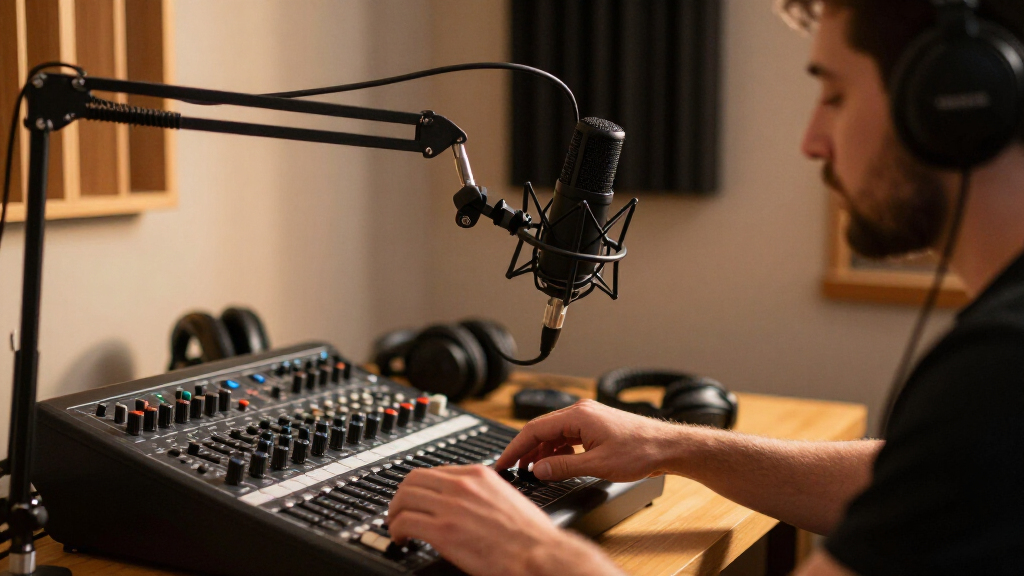

Podcast recording equipment ranges from a single USB microphone to a full setup for several hosts, and the right choice depends on how many people you record and where you work. My best overall pick is the Zoom PodTrak P4 for its four XLR inputs and separate headphone outputs, which suit a growing multi-person show. The Logitech Blue Yeti is a straightforward desktop option, while the MAONO PD200W offers a hybrid wireless approach. The main tradeoff is simplicity versus flexibility: all-in-one bundles can get you started quickly, but may include features you do not need or leave less room to expand. Read on for the full breakdown and guidance on choosing a setup that fits your recording plans.

Get everyday essentials delivered free with Prime
- Fast, free delivery on millions of items
- Prime Video, Amazon Music and more included
- Member-only deals all year
Complete the kit

Key Takeaways
- The Zoom PodTrak P4 stands apart for multi-host recording because it provides four XLR microphone inputs and four headphone outputs; it is a different kind of purchase from a USB mic that connects directly to a computer.
- The Blue Yeti and MAONO A04 represent simpler USB-microphone routes, while the P4 and multi-person bundles suit shows that need several microphones and individual monitoring.
- Bundles that include a mixer, microphones, and sound effects can offer an all-in-one start, but buyers should check whether the included connections and controls match their actual recording workflow.
- The MAONO PD200W and Movo PodPro-TH address portable or flexible recording setups, while desktop USB microphones are better suited to a fixed recording spot.
- The lineup includes several similarly named BM-800 and mixer bundles; comparing exact included components matters more than relying on the word “podcast” in a product name.
| Mini Mic Pro Wireless Lavalier Microphone for iPhone and Android |  | Best for Mobile Podcast Interviews | Compatibility: iPhone, Android, tablets, and laptops | Connectors: USB-C and Lightning adapters included | Battery life: Up to 6 hours per charge | VIEW LATEST PRICE | See Our Full Breakdown |
| Sktome Podcast Equipment Bundle for Two with V8s Voice Changer and BM-800 Microphones |  | Best Two-Person Starter Bundle | Microphones: 2 condenser microphones | Sound card: V8s with voice changer and sound effects | Connectivity: USB and 3.5 mm jack | VIEW LATEST PRICE | See Our Full Breakdown |
| Logitech Blue Yeti USB Microphone – Blackout | 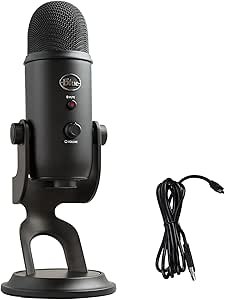 | Best Versatile Desktop Microphone | Type: USB condenser microphone | Pickup patterns: Cardioid, omni, bidirectional, and stereo | Connectivity: USB | VIEW LATEST PRICE | See Our Full Breakdown |
| BM-800 Podcast Equipment Bundle with Voice Changer and Live Sound Card |  | Best All-in-One Solo Recording Kit | Model: AM100-V8 | Microphone type: BM-800 condenser | Pickup pattern: Cardioid | VIEW LATEST PRICE | See Our Full Breakdown |
| 4-Person Podcast Equipment Bundle with M100 Audio Mixer and Dynamic Microphones |  | Best for Four-Person Roundtables | Microphones: 4 dynamic microphones | Microphone inputs: Dual XLR and dual 3.5 mm | Mixer battery: 4000 mAh rechargeable | VIEW LATEST PRICE | See Our Full Breakdown |
| Movo 4-Person USB Podcast Equipment Bundle with Four Condenser Microphones, Hub, and Case |  | Best for Four-Person USB Recording | Microphones: 4 condenser microphones | USB hub: 4-port | Power input: 5V USB-C | VIEW LATEST PRICE | See Our Full Breakdown |
| Also GO Podcast Equipment Bundle with F998 Audio Mixer and BM800 Microphone |  | Best for Built-In Effects and Connections | Mixer channels: 2 | Connectivity: Bluetooth and USB | Connector: 3.5 mm jack | VIEW LATEST PRICE | See Our Full Breakdown |
| TENLAMP G10 Creator Audio Mixer Bundle with Microphone |  | Best for Cross-Platform Creator Controls | Included components: Audio mixer, condenser microphone, and accessories | Audio features: Noise reduction, voice changer, sound effects, bass, treble, reverb, and pitch controls | Compatibility: Windows, Mac, iOS, and Android | VIEW LATEST PRICE | See Our Full Breakdown |
| MAONO PD200W Hybrid Wireless Podcast Microphone |  | Best Hybrid Microphone | Microphone type: Dynamic | Connectivity: Wireless, USB, and XLR | Capsule size: 30 mm | VIEW LATEST PRICE | See Our Full Breakdown |
| Movo PodPro-TH Portable Podcast Equipment Bundle for iPhone, Android, and Computers |  | Best Portable Two-Person Recording Kit | Audio interface: MDX-2 dual-channel USB audio interface | Microphones: 2 CastMic XLR cardioid dynamic microphones | Microphone frequency response: 40 Hz–16 kHz | VIEW LATEST PRICE | See Our Full Breakdown |
| ZealSound K66 USB Condenser Microphone with Noise Reduction, Gain and Volume Controls, and Mute |  | Best for Simple, Flexible Recording | Microphone type: Condenser | Pickup pattern: Cardioid | Frequency response: 40 Hz–18 kHz | VIEW LATEST PRICE | See Our Full Breakdown |
| Podcast Equipment Bundle – Recording Studio Package with Microphone, Voice Changer, and Audio Interface |  | Best for Two-Person Creative Sessions | Microphones: Two condenser microphones with anti-vibration suspension arms | Microphone pickup: Omnidirectional | Interface: USB-C audio interface | VIEW LATEST PRICE | See Our Full Breakdown |
| MAONO A04 USB Condenser Microphone Kit, 192 kHz/24-bit |  | Best Complete Starter Kit | Capsule: 16 mm electret condenser | Polar pattern: Cardioid | Sampling rate and bit depth: 192 kHz/24-bit | VIEW LATEST PRICE | See Our Full Breakdown |
| TENLAMP G9 Audio Mixer Bundle with Microphone |  | Best for Portable Effects-Driven Streaming | Channels: 2 | Microphone: 3.5 mm condenser microphone | Connectivity: Auxiliary, Bluetooth, USB, and XLR | VIEW LATEST PRICE | See Our Full Breakdown |
| Zoom PodTrak P4 Podcast Recorder with 4 XLR Mic Inputs and 4 Headphone Outputs |  | Best for Multi-Guest Podcasts | Microphone inputs: 4 XLR inputs with phantom power | Headphone outputs: 4 with individual volume controls | Sound pads: 4 programmable | VIEW LATEST PRICE | See Our Full Breakdown |
| podcast recording equipment | Connectivity | Compatibility |
|---|---|---|
| Mini Mic Pro Wireless Lavalier | — | iPhone, Android, tablets, and laptops |
| Sktome Podcast Equipment Bundl | USB and 3.5 mm jack | — |
| Logitech Blue Yeti USB Microph | USB | Mac and PC |
| BM-800 Podcast Equipment Bundl | USB | — |
| 4-Person Podcast Equipment Bun | USB plug-and-play and Bluetooth | Windows, iOS, and Android |
| Movo 4-Person USB Podcast Equi | — | Mac and Windows |
| Also GO Podcast Equipment Bund | Bluetooth and USB | — |
| TENLAMP G10 Creator Audio Mixe | — | Windows, Mac, iOS, and Android |
| MAONO PD200W Hybrid Wireless P | Wireless, USB, and XLR | — |
| Movo PodPro-TH Portable Podcas | USB-A, USB-C, and Lightning cables | — |
| ZealSound K66 USB Condenser Mi | USB; USB-C and Lightning adapters included | Windows PC, Mac, PS4, PS5, iPhone, iPad, and USB-C devices |
| Podcast Equipment Bundle | — | Windows, macOS, Android, iOS, Chrome OS, smartphones, PC, PS5, and Xbox |
| MAONO A04 USB Condenser Microp | USB and USB Type-C | — |
| TENLAMP G9 Audio Mixer Bundle | Auxiliary, Bluetooth, USB, and XLR | Windows, Mac, iOS, and Android |
| Zoom PodTrak P4 Podcast Record | — | — |
More Details on Our Top Picks
Mini Mic Pro Wireless Lavalier Microphone for iPhone and Android
For a podcast recorded on a phone, this lavalier keeps the setup lighter than the Logitech Blue Yeti or the desktop bundles in this roundup. Its USB-C and Lightning adapters suit a mix of newer phones and other devices, while plug-and-play operation avoids a separate app or Bluetooth pairing. The included foam and furry covers are useful for interviews recorded outdoors, where wind can distract from speech. At under an ounce, it is easy to clip on and carry; the phone can also charge while the mic is in use.
The tradeoff is a single-mic, mobile-first setup, not a complete desk studio for multiple hosts. Battery life is up to six hours, and the listing gives no specific audio measurements or device-model guidance. I’d choose it over the Blue Yeti for phone-based field interviews, but not for a seated two-person show that needs multiple microphones.
Pros:- Under-one-ounce design is easy to carry and clip on for interviews.
- USB-C and Lightning adapters support a range of phones, tablets, and laptops.
- Foam and furry covers help reduce wind noise during outdoor recording.
- The phone can charge while the microphone is in use.
Cons:- Up to six hours of battery life may limit long recording days.
- Only one lavalier microphone is included, so it does not equip a multi-host setup.
- Audio specifications and supported device models are not detailed.
Best for: Mobile podcasters and interviewers who record directly to a USB-C or Lightning phone and want a compact lavalier with wind covers.
Not ideal for: Hosts building a fixed multi-person studio or recording sessions longer than six hours without a charging break; it is a single wireless lavalier, not a full studio kit.
- Compatibility:iPhone, Android, tablets, and laptops
- Connectors:USB-C and Lightning adapters included
- Battery life:Up to 6 hours per charge
- Weight:Under 1 ounce
- Wind protection:High-density foam and furry cover
- Connection:Plug and play; no app or Bluetooth required
Our verdict“Choose this lavalier for lightweight, phone-based podcast interviews, but pick a multi-microphone kit for a desk-bound show with several hosts.”
Sktome Podcast Equipment Bundle for Two with V8s Voice Changer and BM-800 Microphones
This bundle makes the most sense when two people need microphones and basic accessories in one package. It includes two BM-800 condenser mics, boom arms, earphones, and a V8s sound card with voice-changing and sound-effect controls. That gives a new co-hosted show more of its recording setup at once than the single-microphone BM-800 Podcast Equipment Bundle with Voice Changer and Live Sound Card. Its unidirectional pickup pattern is aimed at a speaker rather than the whole room, which suits close-up vocal recording.
The V8s effects can add playfulness to streams, but they are not a substitute for clean dialogue or a dedicated editing workflow. The listing specifies USB and 3.5 mm connections, but setup needs and software support are not described in detail. Its listed signal-to-noise ratio is 78 dB, and the sound card requires charging before use. I’d favor it over the single-mic BM-800 package for two beginners, not for hosts prioritizing a simple, effects-free setup.
Pros:- Includes two condenser microphones and two boom arms for co-hosts.
- Sound card adds voice-changing and sound-effect controls.
- Package includes earphones, shock holders, screens, foam covers, and cables.
- Unidirectional pickup pattern is suited to close-miked speech.
Cons:- The sound card requires charging before use.
- The listed signal-to-noise ratio is 78 dB, with no further audio performance details provided.
- Effects-focused controls may be unnecessary for a clean, conventional podcast workflow.
Best for: Two-person podcast teams who want a pair of microphones, boom arms, and a sound card with effects for casual recording or streaming.
Not ideal for: Solo hosts who do not need duplicate equipment, or production-focused users who want detailed software guidance and a straightforward audio chain.
- Microphones:2 condenser microphones
- Sound card:V8s with voice changer and sound effects
- Connectivity:USB and 3.5 mm jack
- Polar pattern:Unidirectional
- Signal-to-noise ratio:78 dB
- Enclosure material:Metal
- Compatible devices:Gaming console, laptop, PC, and smartphone
- Included package:Sound board, 2 microphones, 2 boom arms, 2 earphones, 2 shock holders, 2 microphone screens, 2 foam covers, cables, USB charging cable, and manual
Our verdict“Pick this bundle when two new hosts want microphones and playful sound effects together, rather than a simpler solo setup.”
Logitech Blue Yeti USB Microphone – Blackout
The Blue Yeti stands apart from the bundles here because it is a single USB microphone with four selectable pickup patterns, rather than a collection of entry-level mics and a sound card. Cardioid mode fits a solo host speaking toward the mic; bidirectional can capture two people facing each other, while omni and stereo modes cover other recording arrangements. Onboard gain, pattern, mute, and headphone controls make adjustments accessible without hunting through menus, and no-latency monitoring lets a host hear the input as they record.
Compared with the Mini Mic Pro, this is better suited to a desk than mobile interviews, and it needs a Mac or PC with USB. Blue VO!CE and Logitech G HUB add software options, but full functionality depends on installing G HUB. The desktop stand also takes up space, and the package lacks a built-in shock mount, so desk vibration may need extra treatment. I’d choose it for a flexible home studio, not a compact travel kit.
Pros:- Four pickup patterns support different solo and group recording arrangements.
- Onboard mute, gain, pattern, and headphone-volume controls simplify adjustments.
- No-latency headphone monitoring supports real-time listening while recording.
- USB plug-and-play setup works with Mac and PC.
Cons:- Large desktop footprint is less convenient than a compact lavalier or portable kit.
- Full Blue VO!CE functionality requires Logitech G HUB.
- No built-in shock mount is included to isolate desk vibration.
Best for: Desktop podcasters using a Mac or PC who want one USB mic for solo episodes, interviews, and varied pickup patterns.
Not ideal for: Mobile field reporters or hosts with limited desk space who need a portable, multi-microphone kit or built-in vibration isolation.
- Type:USB condenser microphone
- Pickup patterns:Cardioid, omni, bidirectional, and stereo
- Connectivity:USB
- Compatibility:Mac and PC
- Software:Blue VO!CE and Logitech G HUB
- Controls:Headphone volume, pattern selection, instant mute, and mic gain
- Monitoring:No-latency headphone monitoring
- Color:Blackout
Our verdict“Choose the Blue Yeti for a flexible Mac or PC desk setup, and skip it if portability or multiple included microphones matter more.”
BM-800 Podcast Equipment Bundle with Voice Changer and Live Sound Card
This package is a fuller starting point for one host than the Logitech Blue Yeti: it pairs a BM-800 condenser mic with a scissor arm, shock mount, pop filter, and live sound card. That bundle can reduce the need to source basic desk accessories separately, while the cardioid pickup pattern focuses on speech in front of the microphone. The sound card’s voice-changing and sound effects make it more geared toward streaming and playful live content than the Yeti’s multi-pattern desktop recording.
Its stated compatibility spans computers, phones, tablets, and several consoles, which gives it more device range on paper than the Mac/PC-focused Blue Yeti. But the listing does not name software support, and the sound card needs charging before use. The 192 kHz maximum sample-rate claim does not by itself describe the whole recording chain or guarantee better podcast dialogue. I’d pick this for a host wanting an accessory-rich starter package, not someone seeking a clearly documented, software-led workflow.
Pros:- Includes a BM-800 microphone, adjustable arm, shock mount, and pop filter.
- Sound card adds voice-changing and live sound effects.
- Listed compatibility covers computers, mobile devices, tablets, and gaming consoles.
- Cardioid pickup pattern is suited to a host speaking in front of the mic.
Cons:- Sound card requires charging before use.
- No specific software support is listed, leaving the recording workflow less defined.
- The 192 kHz maximum sample-rate figure does not clarify the full audio performance.
Best for: Solo beginners who want a microphone, desk arm, shock mount, pop filter, and sound effects in one compatible-with-many-devices package.
Not ideal for: Podcasters who want detailed software instructions, multiple included microphones, or a simple USB mic without a separate sound card.
- Model:AM100-V8
- Microphone type:BM-800 condenser
- Pickup pattern:Cardioid
- Connectivity:USB
- Audio input:3.5 mm jack
- Maximum sample rate:192 kHz
- Channels:1
- Compatible devices:Laptop, PC, mobile phone, tablet, PS4, Xbox, and Switch
- Weight:1.37 kg
Our verdict“Choose this for a solo starter setup that bundles desk accessories and live effects, but favor the Blue Yeti for a more direct USB-mic workflow.”
4-Person Podcast Equipment Bundle with M100 Audio Mixer and Dynamic Microphones
For a roundtable, the main advantage here is the four dynamic microphones and a mixer with individual channel controls. That makes it a more direct fit for a four-host conversation than the Sktome bundle, which supplies microphones for two people, or the single-mic Logitech Blue Yeti. Included desktop stands, monitor earphones, cables, shock mounts, and foam covers help equip the group without building the accessory list from scratch. Noise reduction and audio effects provide additional live controls, while Bluetooth playback can bring in music or other audio.
The tradeoff is a larger, more involved setup than a solo USB mic or lavalier. The mixer has a rechargeable 4000 mAh battery, but no runtime is specified, so I can’t judge how long a portable session might last. USB plug-and-play compatibility is listed for Windows, iOS, and Android, though specific devices and software are not named. I’d choose it for groups that need separate mic channels, not solo creators who value simplicity.
Pros:- Four dynamic microphones equip a full roundtable from one package.
- Mixer provides individual channel controls and noise reduction.
- Included earphones, stands, shock mounts, and foam covers support a group setup.
- Bluetooth playback and audio effects add options for live sessions.
Cons:- Mixer battery runtime is not specified.
- Compatibility claims do not identify specific devices or recording software.
- A four-microphone mixer setup is less compact and simple than a solo USB mic.
Best for: Four-host podcast teams and small roundtable creators who need individual microphones, channel controls, and included monitoring accessories.
Not ideal for: Solo podcasters or mobile interviewers who need a compact, simple setup; the four-mic mixer package adds equipment they may not use.
- Microphones:4 dynamic microphones
- Microphone inputs:Dual XLR and dual 3.5 mm
- Mixer battery:4000 mAh rechargeable
- Connectivity:USB plug-and-play and Bluetooth
- Compatibility:Windows, iOS, and Android
- Lighting:4 adjustable RGB modes
- Included accessories:Desktop stands, monitor earphones, cables, shock mounts, foam covers, and earphone splitters
Our verdict“Choose this for a four-person show that needs separate microphones and mixer controls, not for a solo or travel-first podcast.”
Movo 4-Person USB Podcast Equipment Bundle with Four Condenser Microphones, Hub, and Case
For a group that wants to record four voices without assembling separate microphones and connections, this Movo bundle puts the core setup together: four condenser microphones and a hub designed to support them at once. Its plug-and-play Mac and Windows compatibility makes it simpler to get started than the Movo PodPro-TH, which uses an interface and XLR microphones for two-person recording. The 3.5 mm headphone output adds a way to monitor audio, while the hard-shell case suits podcasters who need to pack up between sessions. The tradeoff is that this is a USB-hub-based setup, not a full mixer with the sound-shaping controls offered by the Also GO bundle. It also needs 5V USB-C power for stable operation, so it is best for a group recording near a suitable power source.
Pros:- Supports four condenser microphones simultaneously
- Includes a headphone output for monitoring
- Plug-and-play operation with Mac and Windows
- Hard-shell case makes the kit easier to transport and store
Cons:- Requires 5V USB-C power for stable operation
- Does not list the audio-shaping and voice-effect controls found on mixer bundles
- The hub-centered setup is less suited to buyers seeking an XLR interface workflow
Best for: Four-person podcast teams recording at a desk who want a bundled USB microphone setup with headphone monitoring.
Not ideal for: Mobile groups recording away from USB-C power, or hosts who need mixer-based voice effects and detailed sound controls.
- Microphones:4 condenser microphones
- USB hub:4-port
- Power input:5V USB-C
- Headphone output:3.5 mm
- Compatibility:Mac and Windows
- Included case:Hard-shell carrying case
Our verdict“Choose this Movo bundle for four-person USB recording with a case and monitoring, but skip it if you need a feature-rich mixer or a power-independent setup.”
Also GO Podcast Equipment Bundle with F998 Audio Mixer and BM800 Microphone
The Also GO bundle is the pick here for creators who want sound effects, voice effects, recording modes, and noise reduction built into their podcast setup. It also bundles microphones, boom arms, shock mounts, pop filters, an earphone, and connection cables, giving it a broader accessory package than the TENLAMP G10, whose included accessories are not specified. Bluetooth and USB connectivity add flexibility across compatible computers, phones, and gaming consoles, though the connection method varies by device: the listing recommends Bluetooth for phones and cables for computers. That makes setup less straightforward than the plug-and-play simplicity of the four-microphone Movo hub. The listed two-channel mixer also points toward a smaller recording setup, not the Movo bundle’s four-mic group sessions. Buyers should follow the charging guidance before first use or after extended storage.
Pros:- Bundles microphones, boom arms, shock mounts, pop filters, and cables
- Mixer offers sound effects, voice effects, recording modes, and noise reduction
- Supports Bluetooth and USB connections for compatible devices
- Includes an earphone for monitoring
Cons:- Device-specific connection guidance can make setup less consistent
- The listing advises charging fully before first use or after long storage
- Two-channel mixer is a less direct fit for larger group recordings than the four-mic Movo bundle
Best for: New podcasters and streamers who want a broad accessory kit plus built-in voice effects for a compact setup.
Not ideal for: Four-person podcast teams, or buyers who want one consistent wired connection method across phones and computers.
- Mixer channels:2
- Connectivity:Bluetooth and USB
- Connector:3.5 mm jack
- Microphone type:Studio condenser
- Microphone polar pattern:Super cardioid
- Compatible devices:Laptop, smartphone, speaker, and voice recorder
- Included accessories:Microphones, boom arms, earphone, shock mounts, pop filters, foam caps, XLR cables, USB cable, and 3.5 mm audio cables
Our verdict“Pick the Also GO bundle for a feature-heavy, accessory-rich creator setup, not for four-person recording or the simplest device-to-device connections.”
TENLAMP G10 Creator Audio Mixer Bundle with Microphone
The TENLAMP G10 suits a creator who wants to adjust voice character while recording, with bass, treble, reverb, pitch, and voice-effect controls on the bundled mixer. Its compatibility spans Windows, Mac, iOS, and Android, a wider stated platform list than the Also GO bundle’s device-specific connection guidance. Plug-and-play setup also keeps it approachable for podcasting, gaming, and streaming without requiring a driver installation. The limitation is how little the product data says about the hardware: it does not identify the accessories beyond the mixer and condenser microphone, or provide technical audio specifications. That makes it harder to judge recording quality and package completeness than the Movo PodPro-TH, which lists its microphones, inputs, outputs, cables, and battery details. This is a controls-first choice, not the clearest pick for buyers prioritizing documented recording specs.
Pros:- Offers real-time bass, treble, reverb, and pitch controls
- Includes voice effects and noise reduction
- Works with Windows, Mac, iOS, and Android
- Plug-and-play setup requires no drivers
Cons:- Included accessories are not specified beyond the mixer and microphone
- No technical audio specifications are provided
- The listed bundle centers on one condenser microphone rather than a multi-person setup
Best for: Multiplatform creators who want a mixer with real-time tone and voice effects for podcasts, streams, or gaming.
Not ideal for: Buyers who need clearly listed audio specifications, a defined accessory inventory, or a multi-microphone interview package.
- Included components:Audio mixer, condenser microphone, and accessories
- Audio features:Noise reduction, voice changer, sound effects, bass, treble, reverb, and pitch controls
- Compatibility:Windows, Mac, iOS, and Android
- Setup:Plug and play; no drivers required
- Use cases:Streaming, podcasting, gaming, singing, and voice recording
- Microphone:Condenser
Our verdict“Choose the G10 if live sound controls and broad device compatibility matter most, but favor a better-documented kit if you need to plan a specific recording chain.”
MAONO PD200W Hybrid Wireless Podcast Microphone
The MAONO PD200W stands apart from the bundled mixer kits because it is a dynamic microphone with wireless, USB, and XLR connectivity. That range lets a podcaster start with a direct USB connection, record wirelessly when a cable would get in the way, or use XLR as the setup grows. Its cardioid pickup and noise-cancellation feature are aimed at focusing on the speaker, while the listed up-to-60-hour battery life supports extended wireless use. Compared with the Movo PodPro-TH, this is a more flexible microphone choice but not the same ready-made two-person kit: the Movo includes two mics, a dual-channel interface, cables, stands, and a case. The PD200W supports a dual-mic setup with separate tracks, though camera and Lightning accessories are sold separately. RGB lighting also reduces battery life when enabled.
Pros:- Offers wireless, USB, and XLR connectivity
- Dynamic cardioid microphone design with noise cancellation
- Battery life is listed at up to 60 hours
- Supports a dual-mic setup with separate audio tracks
Cons:- Camera and Lightning accessories are sold separately
- RGB lighting uses more battery power
- Unlike the Movo PodPro-TH, it is not presented as a complete two-microphone interface-and-accessory kit
Best for: Solo podcasters or interview hosts who want one microphone that can shift between wireless, USB, and XLR recording.
Not ideal for: Buyers who need a complete two-microphone interface bundle, or mobile creators who require camera and Lightning accessories in the box.
- Microphone type:Dynamic
- Connectivity:Wireless, USB, and XLR
- Capsule size:30 mm
- Polar pattern:Cardioid
- Signal-to-noise ratio:82 dB
- Maximum SPL:128 dB
- Wireless range:60 m
- Battery life:Up to 60 hours
- Features:RGB lighting, noise cancellation, and MaonoLink app support
Our verdict“Choose the PD200W for flexible microphone connectivity and wireless recording, but pick the Movo PodPro-TH if you need two mics and a recording interface in one package.”
Movo PodPro-TH Portable Podcast Equipment Bundle for iPhone, Android, and Computers
For two-person interviews recorded across phones and computers, the Movo PodPro-TH is the most clearly specified portable system in this group. Its dual-channel USB interface pairs with two CastMic cardioid dynamic microphones, and the included USB-A, USB-C, and Lightning cables cover PC, Mac, iPhone, iPad, and Android devices. Two headphone outputs make it practical for both speakers to monitor, while the travel case keeps the mics and accessories together. Compared with the MAONO PD200W, this package is less about choosing one microphone’s wireless, USB, or XLR mode and more about getting two XLR mics and an interface ready for an interview. Its main compromise is power: battery life is listed at up to eight hours, falling to three with phantom power on. The tabletop stands can also restrict mic placement.
Pros:- Includes two XLR cardioid dynamic microphones and a dual-channel interface
- Connects to PC, Mac, iPhone, iPad, and Android devices with included cables
- Provides two headphone outputs for shared monitoring
- Includes tabletop stands, XLR cables, and a travel case
Cons:- Battery life drops to three hours when phantom power is on
- Tabletop stands may limit microphone positioning
- More involved than a direct USB microphone such as the MAONO PD200W when only one speaker is recording
Best for: Two-person interviewers and traveling podcasters who need an interface, two dynamic microphones, and cables for phones or computers.
Not ideal for: Hosts who need long sessions with phantom power enabled, adjustable boom-arm placement, or a single wireless microphone setup.
- Audio interface:MDX-2 dual-channel USB audio interface
- Microphones:2 CastMic XLR cardioid dynamic microphones
- Microphone frequency response:40 Hz–16 kHz
- Battery life:Up to 8 hours; 3 hours with phantom power on
- Inputs:2 XLR inputs with 48V phantom power
- Outputs:2 headphone outputs and stereo 1/4-inch outputs
- Connectivity:USB-A, USB-C, and Lightning cables
- Compatible devices:PC, Mac, iPhone, iPad, and Android devices
- Included accessories:2 tabletop mic stands, 2 XLR cables, USB-A cable, USB-C cable, Lightning cable, and travel case
Our verdict“Choose the PodPro-TH for a portable two-person interview rig with broad device connections, but avoid it if phantom-powered sessions need to run for long stretches.”
ZealSound K66 USB Condenser Microphone with Noise Reduction, Gain and Volume Controls, and Mute
The K66 suits a solo host who wants a straightforward USB microphone with useful controls close at hand. Its cardioid pickup pattern focuses on sound from the front, while the headphone jack supports zero-latency monitoring—helpful for catching delivery or audio issues as you record. Compared with the more involved MAONO A04 kit, the K66 offers fewer setup accessories, but its included USB-C and Lightning adapters make it easier to connect across computers, phones, and consoles. A mute button with an LED indicator is handy for quick pauses, and noise reduction may help with common background sounds. That feature is not a substitute for a quiet recording space, though, and the listing does not specify a stand or mount. I’d choose it for flexible solo use, not a complete desk setup.
Pros:- Physical controls for microphone level, monitoring, and echo
- Zero-latency headphone monitoring through a 3.5 mm jack
- USB-C and Lightning adapters support a broad range of listed devices
- Instant mute button includes an LED status indicator
Cons:- Noise reduction is described as reducing, not eliminating, background sounds
- The product description does not specify an included stand or mounting accessories
Best for: Solo podcasters who want physical level, monitoring, and mute controls and need to record on a computer or compatible phone.
Not ideal for: Buyers who need a complete mic-and-boom-arm kit or rely on noise reduction to remove persistent background noise.
- Microphone type:Condenser
- Pickup pattern:Cardioid
- Frequency response:40 Hz–18 kHz
- Sampling rate:46 kHz
- Sensitivity:−45 dB ±3 dB
- Monitoring:Zero-latency via 3.5 mm headphone jack
- Controls:Microphone volume, monitoring volume, echo, and mute
- Connectivity:USB; USB-C and Lightning adapters included
- Compatibility:Windows PC, Mac, PS4, PS5, iPhone, iPad, and USB-C devices
Our verdict“Choose the K66 for a flexible solo setup with hands-on controls, but look to the MAONO A04 if you need a microphone kit with mounting accessories.”
Podcast Equipment Bundle – Recording Studio Package with Microphone, Voice Changer, and Audio Interface
This bundle is aimed at creators who want more than a basic microphone: it pairs two condenser mics and suspension arms with a USB-C interface, voice-changing modes, and instrument input. That makes it a more playful, flexible choice for co-hosts or live streams than the solo-focused ZealSound K66. Direct support for guitar, bass, and electronic drums also opens the door to recording music without adding a separate instrument interface. The four voice modes and ten effects may suit entertainment-led shows, though they are not the main reason to choose recording gear for spoken-word clarity. The description calls the microphones omnidirectional, so the pair may pick up more room sound than a front-focused cardioid setup. I’d also plan for possible manual driver setup, and the battery needs a full charge before first use or after long storage.
Pros:- Includes two condenser microphones with anti-vibration suspension arms
- USB-C interface is listed as compatible with a broad range of operating systems and devices
- Voice changer provides four modes and ten preset sound effects
- Direct input supports electric guitar, bass, and electronic drums
Cons:- Omnidirectional microphones may capture more surrounding room sound than a cardioid option such as the ZealSound K66
- Driver installation may require manual support
- Battery needs a full charge before first use or after long storage
Best for: Two-person podcast or streaming teams who want included microphones, voice effects, and the option to connect instruments.
Not ideal for: Solo hosts seeking a minimal, room-focused spoken-word setup or buyers who need predictable automatic driver installation.
- Microphones:Two condenser microphones with anti-vibration suspension arms
- Microphone pickup:Omnidirectional
- Interface:USB-C audio interface
- Voice changer modes:Female, Male, Child, and Monster
- Sound effects:10 preset effects
- Instrument input:Electric guitar, bass, and electronic drums
- Compatibility:Windows, macOS, Android, iOS, Chrome OS, smartphones, PC, PS5, and Xbox
Our verdict“Pick this bundle for two-person shows that mix conversation, effects, or instruments, but choose a simpler cardioid mic if room-noise control is the priority.”
MAONO A04 USB Condenser Microphone Kit, 192 kHz/24-bit
The A04 stands out for giving a new podcaster the core desk hardware in one package: a cardioid USB microphone, adjustable scissor arm, shock mount, pop filter, and windscreen. Those accessories help position the mic and reduce plosive bursts without requiring a separate mounting purchase. Its listed 192 kHz/24-bit chipset offers high-resolution capture, although a spec this high does not by itself guarantee a better-sounding podcast than a well-positioned mic. Compared with the ZealSound K66, the A04 is the stronger choice for a ready-to-mount desktop setup; the K66 is more adaptable for phone connections and adds onboard controls. The A04’s cardioid pattern favors a single speaker in front of the mic, not a group gathered around one capsule. It also does not work with Xbox, and the clamp is limited to desktops under 2.1 inches thick.
Pros:- Includes an adjustable scissor arm, shock mount, pop filter, and foam windscreen
- Cardioid pattern suits a single speaker positioned in front of the microphone
- USB plug-and-play connectivity is listed for computers and several compatible devices
- Metal enclosure and 16 mm electret condenser capsule
Cons:- Not compatible with Xbox
- Desk clamp is intended for desktops less than 2.1 inches thick
- Single-channel cardioid design is less suited to capturing multiple speakers around one microphone
Best for: First-time desktop podcasters and streamers who want a microphone, boom arm, shock mount, and pop filtering in one kit.
Not ideal for: Xbox users, people recording several speakers around one mic, or anyone whose desk exceeds the stated clamp thickness.
- Capsule:16 mm electret condenser
- Polar pattern:Cardioid
- Sampling rate and bit depth:192 kHz/24-bit
- Frequency response:30 Hz–16 kHz
- Signal-to-noise ratio:70 dB
- Channels:1
- Connectivity:USB and USB Type-C
- Included accessories:Scissor arm, shock mount, pop filter, foam windscreen, boom arm base, USB-A/USB-C to USB-B cable, and manual
- Compatibility note:Not compatible with Xbox; desk clamp intended for desktops less than 2.1 inches thick
Our verdict“Choose the A04 if you want a full desktop mounting kit for solo recording; choose the ZealSound K66 for broader phone connections and onboard controls.”
TENLAMP G9 Audio Mixer Bundle with Microphone
The G9 is the most mixer-oriented option here for creators who want Bluetooth playback, a rechargeable battery, and adjustable vocal effects in a single portable kit. Its two channels and supplied 3.5 mm condenser microphone make it a flexible starting point for streaming, karaoke, or informal podcast sessions. Compared with the Zoom PodTrak P4, though, the G9 is less clearly built around multitrack podcast production: the Zoom specifies four XLR inputs, four separately controlled headphone outputs, and multitrack recording. The G9 instead emphasizes reverb, tone adjustments, pitch, and built-in effects, which can make a live stream more interactive but add less value to a straightforward interview. Its listed connections include XLR and USB, yet the included microphone is 3.5 mm. The product data does not state battery runtime or software update support, so I would not choose it for a long session without checking those details.
Pros:- Combines a two-channel mixer, 3.5 mm condenser microphone, and accessories
- Bluetooth playback and battery-powered operation support portable sessions
- Offers 12 built-in effects and two customizable effect buttons
- Adjustable reverb, bass, treble, and pitch with two save modes
Cons:- Battery runtime is not specified in the product details
- Software update support date is listed as unknown
- The description does not specify multitrack recording or individual headphone volume controls like the Zoom PodTrak P4
Best for: Mobile streamers and casual podcasters who want a battery-powered mixer with Bluetooth playback and customizable effects.
Not ideal for: Interview producers who need clearly specified multitrack recording, several independent headphone feeds, or a known battery runtime.
- Channels:2
- Microphone:3.5 mm condenser microphone
- Connectivity:Auxiliary, Bluetooth, USB, and XLR
- Audio inputs:XLR and 3.5 mm
- Output connectors:Auxiliary and USB Type-C
- Sound effects:12 built-in effects and 2 customizable effect buttons
- Audio settings:Adjustable reverb, bass, treble, and pitch; 2 save modes
- Power:Battery powered; 5 V
- Compatibility:Windows, Mac, iOS, and Android
Our verdict“Choose the G9 for portable streaming with hands-on vocal effects, but favor the Zoom PodTrak P4 for structured, multitrack podcast interviews.”
Zoom PodTrak P4 Podcast Recorder with 4 XLR Mic Inputs and 4 Headphone Outputs
The PodTrak P4 earns its place as the most production-focused recorder in this group. Four XLR inputs with phantom power let a host connect several microphones, while four headphone outputs with individual volume controls give guests their own listening levels. That makes it a better fit for roundtable recording than the two-mic Podcast Equipment Bundle, which adds voice effects and instrument input but does not list the same multitrack workflow. The P4 records inputs and sound pads as separate tracks, and automatic Mix-Minus supports remote interviews by helping prevent a caller’s audio from being sent back to them. Its tradeoff is portability: two AA batteries provide up to 3.5 hours, which may not cover a long recording day. It also offers fewer built-in entertainment effects than the TENLAMP G9.
Pros:- Four XLR microphone inputs support phantom power
- Four headphone outputs each have individual volume controls
- Multitrack recording captures inputs and sound pads separately
- Automatic Mix-Minus supports remote interviews through TRRS and USB
Cons:- Battery life is listed as up to 3.5 hours on two AA batteries
- Requires separate XLR microphones for recording multiple hosts
- Two-in/two-out USB audio interface mode is less extensive than its standalone recording inputs
Best for: Hosts recording multi-guest shows or remote interviews who need several XLR microphones, separate headphone feeds, and multitrack recording.
Not ideal for: Creators seeking a simple USB microphone, extensive live voice effects, or long battery-powered sessions without spare batteries.
- Microphone inputs:4 XLR inputs with phantom power
- Headphone outputs:4 with individual volume controls
- Sound pads:4 programmable
- Recording:Multitrack recording for all inputs and sound pads
- Remote interview support:Automatic Mix-Minus via TRRS jack and USB
- USB audio interface:2-in/2-out
- Power:2 AA batteries
- Battery life:Up to 3.5 hours
Our verdict“Choose the PodTrak P4 for multi-guest and remote-interview production, but pick a simpler microphone kit if you record alone and do not need separate tracks.”
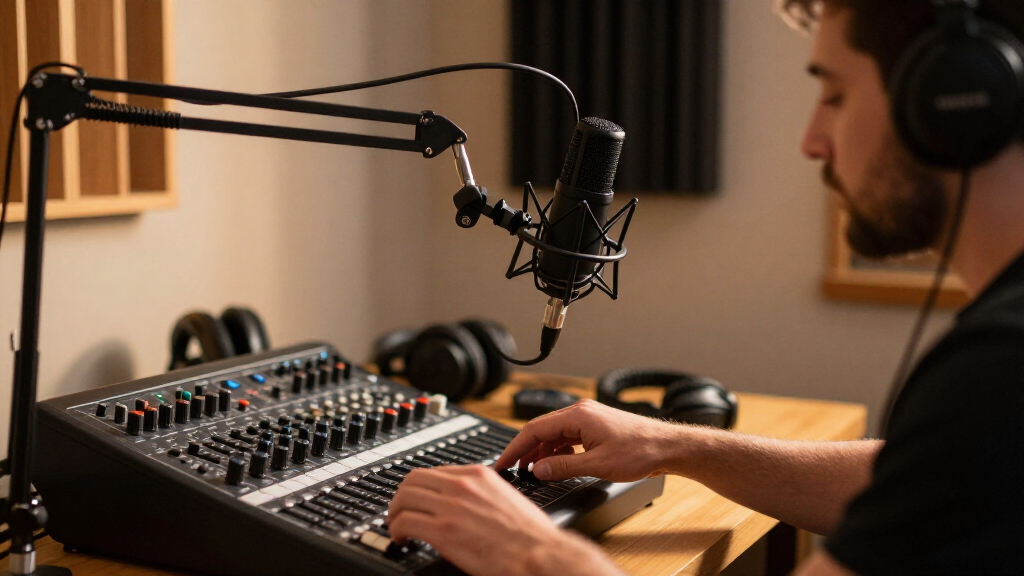
How We Picked
I ranked these options by how well their stated setup serves real podcast formats: solo recording, remote or mobile capture, and shows with multiple people in one room. I gave weight to the recording path and connection options, including direct USB use, wireless flexibility, XLR inputs, headphone monitoring, and whether a bundle supplies several microphones or an audio mixer. Usability also mattered: a setup that reduces the number of separate parts can help a beginner, while a recorder with independent inputs can better support a show that may grow.
The order reflects the balance of capability, flexibility, and fit—not a claim that every buyer needs the most connections. The Zoom PodTrak P4 ranks first because its four mic inputs and headphone outputs directly address a common multi-host need. The USB microphones and portable options follow for specific, simpler workflows; bundled mixer kits are more specialized because their value depends on the included components and how much control a host wants. I treated product names and listed specifications as the basis for comparison and did not assume unlisted recording features or accessories.
Factors to Consider When Choosing Podcast Recording Equipment
Before choosing podcast recording equipment, start with the way you will record rather than the longest feature list. A solo host at a desk needs a different signal path from four people sharing a room, and a mobile interview setup has different constraints again. These checks can help you avoid buying extra gear that adds setup work without improving the recordings you plan to make.
Match the input count to the people in the room
Count every voice that needs its own microphone, including a co-host or in-person guest. A USB microphone is usually a direct route for one person, but it does not by itself create separate microphone inputs for a panel. For multiple hosts, look for a recorder or interface with enough mic inputs and a way for each person to monitor audio. Buying for your current show can save money and setup time; buying with one likely guest or co-host in mind may reduce the chance of replacing the core device soon. Avoid assuming that a bundle with several microphones can connect them all independently to your computer.
Choose a connection path you can manage
USB microphones simplify a computer-based setup because the mic can connect directly to a compatible device, while XLR microphones generally need a mixer, recorder, or interface. A hybrid or wireless mic may suit mobile recording, but check what receiver or connection method the package requires for your phone or computer. Every extra component adds a possible cable, setting, or compatibility issue. For a first show, a short and familiar signal path may be more useful than a bundle with many effects. If you want separate tracks or more control later, plan for the right connections now instead of assuming a basic USB mic will provide them.
Plan monitoring before you record guests
Headphone monitoring lets speakers hear the recording feed and can reveal a muted mic, distracting noise, or an uneven level before the session ends. When several people are recording together, check how many headphone outputs the device offers and whether each participant can listen at a comfortable level. A single output may be workable for a solo show, but can create a practical limitation for a table full of guests. Do not confuse headphone volume controls with independent recording channels; they solve different problems. For remote calls, also check how the chosen setup handles the computer or phone audio you need to capture.
Treat bundled extras as workflow choices
Bundles can reduce the task of buying a microphone, mixer, and other parts separately, but more included items do not automatically mean a better fit. Voice effects and sound pads may suit a casual, live-style show, yet add little to a clean interview recording if you will not use them. Check the exact microphone count, cable types, device connections, and included accessories against your plan. A kit may also make it harder to swap one component if your needs change. Compare the complete signal path, not just the box contents or the number of controls.
Decide what portability really means for your show
Recording away from a desk can mean a phone-based interview, a compact kit for occasional travel, or a self-contained recorder for a group. Those needs are not interchangeable: a small wireless microphone can reduce cable clutter for one speaker, while a multi-input recorder is better suited to several microphones in one location. Before choosing, identify what powers the equipment and how it connects to the device you will use on location. Also think about packing, setup time, and whether you need to monitor several people. If most episodes happen at home, prioritize a reliable stationary setup over portability you rarely use.
Buy for the recording environment, not just the microphone
A microphone cannot fully compensate for a noisy, echoing room, so room choice and mic placement belong in the equipment decision. A sensitive microphone can capture more of the space around it, which may be a drawback in an untreated room. Before spending more on extra processing or sound effects, consider whether a quieter location and consistent speaking distance could address the main problem. Keep a practical budget for the complete setup, including any required cables, stands, headphones, or adapters that are not confirmed in the package details. This helps prevent a seemingly simple purchase from turning into an incomplete recording chain.
Frequently Asked Questions
Can I start a podcast with only a USB microphone?
Yes, a USB microphone can be a sensible starting point for a solo host recording to a computer. It reduces the number of separate devices in the signal path and can make setup easier than using an XLR mic with a mixer. It is less suited to recording several microphones independently through one connection. Before buying, check compatibility with your computer or phone and confirm what accessories the package includes. If you expect to add in-person co-hosts, choose a setup with a clear path to more inputs.
Do I need a mixer or recorder if my podcast has two or more people?
Not every multi-person show needs the same device, but each speaker needs a workable microphone connection and a way to monitor the recording. A mixer or recorder can provide multiple inputs and make group sessions easier to manage than relying on one desktop mic. Check whether the device records separate channels or only a combined mix if editing each voice independently matters to you. Also count headphone outputs, since one monitoring connection may not serve everyone. Pick based on your recording and editing workflow, not simply the number of microphones in a bundle.
Is an all-in-one podcast bundle better than buying separate components?
A bundle can simplify shopping when its microphones, mixer, and connections match the way you plan to record. It may be a poor fit if it includes effects you will not use or lacks an adapter or connection your devices require. Separate components make it easier to choose each part and replace one item later, but require more compatibility checks. Compare the complete recording path from microphone to computer or recorder before deciding. For a new host, fewer mismatched parts can matter more than having the most controls.
What should I check before using podcast equipment with a phone?
Check that the microphone or mixer supports your phone’s connection type and that any required receiver, adapter, or cable is included or available. A product described as compatible with phones may still depend on specific connectors or recording apps. For wireless setups, confirm how the receiver connects and how the microphone is powered during a session. Test the full chain, including monitoring and recording, before an important interview. A phone-friendly label alone does not confirm that every feature works with every device.
Should I choose the Zoom PodTrak P4 or a USB microphone for a new show?
Choose based on the show you plan to record, not a general idea that one device is more advanced. The P4 is the stronger fit when you need several XLR microphone inputs and headphone outputs for a group. A USB microphone is a simpler route for a solo host who records at a computer and does not need several mic channels. The P4 also means working with a more involved recording setup, while a USB mic keeps the equipment list shorter. If the show may add in-person hosts soon, the extra input capacity can justify starting with a recorder.
Conclusion
For a show with several in-person voices, I recommend the Zoom PodTrak P4 as the best overall because its four XLR inputs and four headphone outputs address the needs of a group more directly than a single USB mic. For a best-value route focused on fewer separate parts, compare the bundled mixer kits against the exact microphones and connections you need rather than paying for effects you will not use. Beginners recording solo can start with a direct USB option such as the Logitech Blue Yeti or MAONO A04; choose based on compatibility and the controls that fit your workflow. For a more flexible wireless approach, the MAONO PD200W is the standout option in this lineup, while the Movo PodPro-TH suits buyers prioritizing phone and computer portability. If you want a premium-style setup with room for a multi-host format, favor the P4’s input and monitoring capacity; if your show is only one voice at a desk, a simpler microphone is likely the better match.
Halloween Picks
halloween
As an affiliate, we earn on qualifying purchases.