For most video journalists, I’d choose the Canon EOS R6 Mark II as the best overall option here: its full-frame system and versatile kit configurations suit demanding reporting better than the entry-level bodies. The Canon EOS R50 V stands out for video-focused shooting, while the Sony ZV-E10 is a compact, approachable pick for solo reporters watching their kit size. The main tradeoffs are sensor and low-light capability, reliable audio and handling, and whether a bundle’s lenses actually fit your reporting assignments. A camera body alone may leave room for a better lens and microphone, but a kit can get you filming sooner. Read on for the full breakdown of all 15 options and how I’d match them to different newsroom needs.

Get everyday essentials delivered free with Prime
- Fast, free delivery on millions of items
- Prime Video, Amazon Music and more included
- Member-only deals all year
Key Takeaways
- The Canon EOS R6 Mark II is the strongest all-around choice in this lineup, while its body-only and 24-105mm bundle versions suit different lens and setup needs.
- The EOS R50 V is the video-first alternative; its body-only version favors reporters with existing compatible lenses, while its 14-30mm bundle offers a ready wide-angle setup.
- The EOS R50 kits cover several practical entry points, but the body-only, standard-lens, and two-lens bundles differ in how much gear a reporter must source separately.
- The EOS R100 packages prioritize basic camera access and bundled lenses; they are less compelling for demanding video work than the R50 and R50 V options.
- The Sony ZV-E10 and a6400 offer APS-C alternatives, while the older Panasonic GH4 is a distinct legacy 4K option that calls for closer scrutiny of workflow and condition.
| Sony ZV-E10 Mirrorless Camera with 16-50mm II Lens and Accessory Bundle, Black |  | Best Starter Kit for Solo Video Journalists | Camera type: Mirrorless | Sensor: APS-C CMOS | Included lens: Sony E PZ 16-50mm f/3.5-5.6 OSS II | VIEW LATEST PRICE | See Our Full Breakdown |
| Canon EOS R50 Mirrorless Camera Kit with RF-S 18-45mm Lens, Shoulder Bag and 128GB Memory Card |  | Best for Beginner Reporters | Camera type: Mirrorless | Sensor: 24.2MP APS-C CMOS | Included lens: RF-S 18-45mm f/4.5-6.3 IS STM | VIEW LATEST PRICE | See Our Full Breakdown |
| Panasonic Lumix DMC-GH4 16.05MP Mirrorless Camera Body with 4K Video |  | Best for Weather-Sealed 4K Field Work | Camera type: Mirrorless, Micro Four Thirds | Sensor: 16.05MP Digital Live MOS CMOS | Mount: Micro Four Thirds | VIEW LATEST PRICE | See Our Full Breakdown |
| Canon EOS R6 Mark II Mirrorless Camera with RF 24-105mm Lens Bundle |  | Best Premium Ready-to-Shoot Bundle | Camera type: Full-frame mirrorless | Sensor: 24.2MP full-frame CMOS | Included lens: Canon RF 24-105mm f/4-7.1 IS STM | VIEW LATEST PRICE | See Our Full Breakdown |
| Canon EOS R6 Mark II Full-Frame Mirrorless Camera (Body Only) |  | Best Premium Body for Existing Lens Owners | Camera type: Full-frame mirrorless | Sensor: Approx. 24.2 effective MP CMOS | Image processor: DIGIC X | VIEW LATEST PRICE | See Our Full Breakdown |
| Canon EOS R50 V Mirrorless Camera with RF-S 14-30mm Lens Bundle |  | Best for Run-and-Gun Interviews | Sensor: 24.2MP APS-C CMOS | Processor: DIGIC X | Included lens: Canon RF-S 14-30mm f/4-6.3 IS STM PZ | VIEW LATEST PRICE | See Our Full Breakdown |
| Canon EOS R50 Mirrorless Camera with RF-S 18-45mm and 55-210mm Lenses, 24.2MP APS-C Sensor, 4K Video, 64GB Card and Accessories |  | Best for Reporting with Multiple Focal Lengths | Sensor: 24.2MP APS-C CMOS | Processor: DIGIC X | Included lenses: RF-S 18-45mm f/4.5-6.3 IS STM and RF-S 55-210mm f/5-7.1 IS STM | VIEW LATEST PRICE | See Our Full Breakdown |
| Canon EOS R100 Mirrorless Camera with RF-S 18-45mm Lens, 64GB SD Card and Camera Bag | 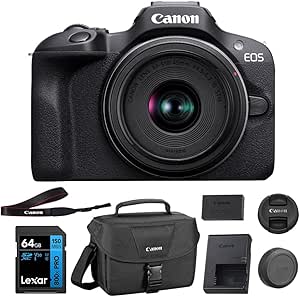 | Best Entry-Level Kit for Basic Video | Sensor: 24.1MP APS-C CMOS | Processor: DIGIC 8 | Included lens: 18-45mm | VIEW LATEST PRICE | See Our Full Breakdown |
| Canon EOS R50 Mirrorless Camera (Body Only) |  | Best Lightweight Body for an Existing Canon Kit | Sensor: 24.2MP APS-C CMOS | Processor: DIGIC X | Mount: Canon RF | VIEW LATEST PRICE | See Our Full Breakdown |
| Sony Alpha a6400 APS-C Mirrorless Camera with 16–50mm Lens, Black | 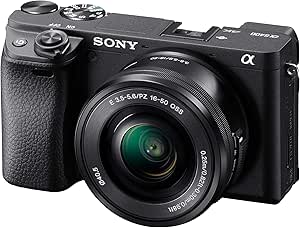 | Best Sony-System Alternative | Sensor: APS-C CMOS; listed resolution is inconsistent in the product information | Included lens: 16-50mm | Mount: Sony E | VIEW LATEST PRICE | See Our Full Breakdown |
| Canon EOS R8 Full-Frame Mirrorless Camera Kit with RF 75-300mm Lens, 64GB Memory Card, and Shoulder Bag |  | Best for Full-Frame Reach | Sensor: 24.2MP full-frame CMOS | Lens mount: Canon RF | Included lens: Canon RF 75-300mm f/4-5.6 | VIEW LATEST PRICE | See Our Full Breakdown |
| Canon EOS R50 V Mirrorless Camera (Body Only) |  | Best for Video-First Beginners | Sensor: 24.2MP APS-C CMOS | Image processor: DIGIC X | Lens mount: Canon RF | VIEW LATEST PRICE | See Our Full Breakdown |
| Canon EOS R100 Mirrorless Camera with RF-S 18-45mm and RF 75-300mm Lenses |  | Best Two-Lens Starter Kit | Sensor: 24.2MP APS-C CMOS | Image processor: DIGIC 8 | Lens mount: Canon RF | VIEW LATEST PRICE | See Our Full Breakdown |
| Canon EOS R100 Mirrorless Camera with RF-S 18-45mm F4.5-6.3 IS STM Lens | 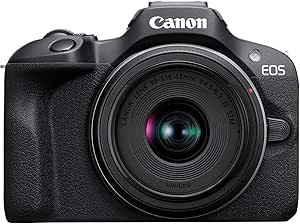 | Best Simple, Lightweight Kit | Sensor: 24.1MP APS-C CMOS | Image processor: DIGIC 8 | Lens mount: Canon RF | VIEW LATEST PRICE | See Our Full Breakdown |
| Canon EOS R50 Mirrorless Camera Bundle with RF-S 18-45mm and 55-210mm Lenses, Shoulder Bag, and 64GB Memory Card |  | Best Ready-to-Report APS-C Bundle | Sensor: 24.2MP APS-C CMOS | Image processor: DIGIC X | Lens mount: Canon RF | VIEW LATEST PRICE | See Our Full Breakdown |
| mirrorless cameras for video journalism | Sensor | Autofocus | Video | Display |
|---|---|---|---|---|
| Sony ZV-E10 Mirrorless Camera | APS-C CMOS | Real-time tracking and eye autofocus | 2160p (4K) | Vari-angle touchscreen |
| Canon EOS R50 Mirrorless Camer | 24.2MP APS-C CMOS | Dual Pixel CMOS AF II with 651 zones | UHD 4K 30p; Full HD up to 120p | 3-inch vari-angle touchscreen |
| Panasonic Lumix DMC-GH4 16.05M | 16.05MP Digital Live MOS CMOS | 49-point | UHD 3840×2160 at 30p/24p; DCI 4096×2160 at 24p | 3-inch articulating OLED touchscreen |
| Canon EOS R6 Mark II Mirrorles | 24.2MP full-frame CMOS | Dual Pixel CMOS AF II | 4K 60p | — |
| Canon EOS R6 Mark II Full-Fram | Approx. 24.2 effective MP CMOS | — | — | 3.0-inch vari-angle touchscreen, 1.62 million dots |
| Canon EOS R50 V Mirrorless Cam | 24.2MP APS-C CMOS | Dual Pixel CMOS AF with eye, face, and subject detection | Uncropped 4K at 30p; Full HD at 120p | Articulating LCD touchscreen |
| Canon EOS R50 Mirrorless Camer | 24.2MP APS-C CMOS | Dual Pixel CMOS AF II with 651 autofocus points | UHD 4K at 30p | 3-inch vari-angle touchscreen |
| Canon EOS R100 Mirrorless Came | 24.1MP APS-C CMOS | Dual Pixel CMOS AF with up to 143 zones and face, eye, animal, and vehicle detection | 4K up to 24 fps; Full HD up to 60 fps; HD up to 120 fps | — |
| Canon EOS R50 Mirrorless Camer | 24.2MP APS-C CMOS | Dual Pixel CMOS AF II with subject detection and tracking | 6K-oversampled 4K at up to 30 fps | — |
| Sony Alpha a6400 APS-C Mirrorl | APS-C CMOS; listed resolution is inconsistent in the product information | Phase detection and contrast detection | 4K UHD (3840 × 2160) | 3-inch tilting touchscreen LCD |
| Canon EOS R8 Full-Frame Mirror | 24.2MP full-frame CMOS | Dual Pixel AF II with people, animal, and vehicle tracking | Oversampled 4K UHD up to 60p | — |
| Canon EOS R50 V Mirrorless Cam | 24.2MP APS-C CMOS | Dual Pixel CMOS AF II with people, animal, and vehicle detection | — | — |
| Canon EOS R100 Mirrorless Came | 24.2MP APS-C CMOS | Dual Pixel CMOS AF with Eye Detection AF | 4K recording | 3-inch fixed screen |
| Canon EOS R100 Mirrorless Came | 24.1MP APS-C CMOS | Dual Pixel CMOS AF with face and eye detection | 4K up to 24 fps, using the central area of the sensor | 3-inch LCD |
| Canon EOS R50 Mirrorless Camer | 24.2MP APS-C CMOS | 651 autofocus points | UHD 4K | — |
More Details on Our Top Picks
Sony ZV-E10 Mirrorless Camera with 16-50mm II Lens and Accessory Bundle, Black
The Sony ZV-E10 is a practical starting point for a reporter who shoots stand-ups, interviews, and quick social clips alone. Its real-time tracking and eye autofocus can keep a presenter in focus while framing changes, and the vari-angle touchscreen makes self-monitoring straightforward. The included 16-50mm power zoom and bundled essentials mean less setup shopping than with the body-only Panasonic Lumix DMC-GH4. Sony also offers an APS-C sensor and 4K recording in a compact creator-focused package.
The tradeoff is that this kit leans more toward run-and-gun content creation than rugged field reporting: it is not water resistant, and no weather protection is listed. The built-in directional microphone is useful for nearby speech, but a serious interview setup will still benefit from an external mic. I’d choose the Canon EOS R50 for its subject-recognition autofocus and slow-motion option; the ZV-E10 makes more sense when the bundled lens and accessories matter most.
Pros:- APS-C sensor with 4K recording suits detailed field and interview footage.
- Real-time tracking and eye autofocus help keep a moving or self-filming presenter in focus.
- Vari-angle touchscreen supports self-framing and flexible interview angles.
- Includes a 16-50mm II power zoom and a useful starter accessory bundle.
Cons:- The camera is not water resistant, limiting confidence in wet field conditions.
- The bundled soft bag and flexible tripod do not replace a dedicated audio or support setup.
- A directional built-in microphone is less adaptable than an external microphone for interviews in noisy locations.
Best for: Solo reporters and student journalists who need an APS-C 4K camera, a kit zoom, and basic accessories for presenter-led clips and interviews.
Not ideal for: Journalists covering rain-exposed assignments or relying on a camera body for extended handheld shooting who need weather protection or more clearly specified stabilization.
- Camera type:Mirrorless
- Sensor:APS-C CMOS
- Included lens:Sony E PZ 16-50mm f/3.5-5.6 OSS II
- Lens mount:Sony E-mount
- Video:2160p (4K)
- Autofocus:Real-time tracking and eye autofocus
- Display:Vari-angle touchscreen
- ISO range:100-32,000; expandable to 51,200
- Bundle accessories:64GB memory card, soft bag, card reader, Micro HDMI cable, flexible tripod, hand strap, memory card wallet, and cleaning kit
Our verdict“Choose the ZV-E10 if you want an accessible, bundled APS-C 4K setup for solo reporting, but skip it for assignments that demand weather protection.”
Canon EOS R50 Mirrorless Camera Kit with RF-S 18-45mm Lens, Shoulder Bag and 128GB Memory Card
For a new video journalist who also needs a capable stills camera, the Canon EOS R50 offers a well-rounded APS-C starting point. Its 24.2MP sensor and Dual Pixel CMOS AF II with 651 zones give it a stronger on-paper focus and detail package than the simpler Sony ZV-E10 kit, while recognition and tracking for people, animals, and vehicles can help when subjects move unpredictably. Oversampled 4K at 30p provides a useful standard reporting format, and Full HD at up to 120p allows slow-motion cutaways.
The included RF-S 18-45mm lens and 128GB card make it ready for basic assignments, but its f/4.5-6.3 maximum aperture is limiting in dim interiors. With only one card slot, there is no in-camera second-card backup. Compared with the full-frame Canon EOS R6 Mark II, the R50 is lighter and less demanding as an entry kit, but it lacks that model’s 4K 60p option. I’d pick it for general beginner reporting, not demanding low-light work.
Pros:- 24.2MP APS-C sensor supports detailed stills alongside video work.
- Dual Pixel CMOS AF II offers broad subject recognition and tracking.
- Records UHD 4K at 30p and Full HD slow motion up to 120p.
- Kit includes an RF-S zoom lens, 128GB memory card, carrying case, battery, and charger.
Cons:- The included lens’s f/4.5-6.3 maximum aperture can constrain indoor and low-light shooting.
- One memory card slot provides no in-camera card backup.
- 4K recording tops out at 30p, unlike the Canon EOS R6 Mark II’s 4K 60p.
Best for: First-time video journalists who want one lightweight APS-C camera for interviews, short-form video, and still photographs, with a lens and memory card included.
Not ideal for: Reporters who routinely film in dim rooms, need 4K 60p, or require a second memory card slot for recording redundancy.
- Camera type:Mirrorless
- Sensor:24.2MP APS-C CMOS
- Included lens:RF-S 18-45mm f/4.5-6.3 IS STM
- Video:UHD 4K 30p; Full HD up to 120p
- Autofocus:Dual Pixel CMOS AF II with 651 zones
- Display:3-inch vari-angle touchscreen
- ISO range:100-32,000; expandable to 51,200
- Connectivity:Wi-Fi, USB Type-C, Micro HDMI
- Included memory card:128GB SanDisk Ultra
Our verdict“The EOS R50 kit is a strong first reporting camera for mixed video and photo assignments, provided you can work around its slow kit lens and single card slot.”
Panasonic Lumix DMC-GH4 16.05MP Mirrorless Camera Body with 4K Video
The Panasonic Lumix DMC-GH4 stands apart from the newer Canon EOS R50 and Sony ZV-E10 by putting a weather-sealed magnesium alloy body ahead of beginner-friendly kit convenience. It records both UHD 4K and DCI 4K, giving video-focused journalists a choice that the listed R50’s UHD 4K 30p specification does not match. Its articulating OLED touchscreen and electronic viewfinder also offer useful framing options when glare or camera placement makes one viewing method inconvenient.
This is a more deliberate, gear-dependent choice: the listing is body only, and there is no in-camera image stabilization, so buyers must budget for a compatible lens and a stable handheld or support setup. Its 16.05MP sensor and 49-point autofocus make it less appealing than the EOS R50 for a beginner who wants newer subject-recognition tracking. I’d favor the GH4 when weather sealing and DCI 4K matter more than a turnkey kit or modern automated focus.
Pros:- Records UHD 4K and DCI 4K, offering more format choice than the listed EOS R50.
- Weather-sealed magnesium alloy construction is suited to tougher field conditions.
- Articulating OLED touchscreen and electronic viewfinder support varied shooting positions.
- Micro Four Thirds mount can suit buyers who already have compatible lenses.
Cons:- Body-only configuration requires a separate lens before shooting.
- No image stabilization is included in the camera.
- Its 16.05MP sensor and 49-point autofocus are less compelling for buyers seeking newer tracking features.
Best for: Experienced field journalists who already own Micro Four Thirds lenses and value a weather-sealed body with UHD and DCI 4K recording.
Not ideal for: New reporters seeking a ready-to-shoot kit, in-camera stabilization, or the newer subject-recognition autofocus described for the Canon EOS R50.
- Camera type:Mirrorless, Micro Four Thirds
- Sensor:16.05MP Digital Live MOS CMOS
- Mount:Micro Four Thirds
- Video:UHD 3840×2160 at 30p/24p; DCI 4096×2160 at 24p
- Autofocus:49-point
- Image stabilization:None
- Display:3-inch articulating OLED touchscreen
- Body:Weather-sealed magnesium alloy
- Included configuration:Body only
Our verdict“Pick the GH4 if you already have Micro Four Thirds lenses and need a weather-sealed 4K body; choose the EOS R50 for a simpler, more automated starter kit.”
Canon EOS R6 Mark II Mirrorless Camera with RF 24-105mm Lens Bundle
The Canon EOS R6 Mark II bundle is the most capable ready-to-shoot option here for a journalist who needs full-frame video and a broad focal range in one purchase. Its 4K 60p recording gives more motion flexibility than the Canon EOS R50’s 4K 30p, while Dual Pixel CMOS AF II subject tracking supports fast-moving interviews and location scenes. The included RF 24-105mm lens spans wide establishing shots through tighter framing, and optical stabilization rated up to five stops with that lens can help when a tripod is impractical.
The lens is still a compromise: its f/4-7.1 variable aperture limits light gathering, particularly at the long end, so full-frame does not automatically solve dim-scene challenges. The listed bundle weight of 6.2 pounds also makes it less attractive for long handheld days than the 375 g EOS R50. I’d choose this package over the body-only R6 Mark II when having a zoom and field accessories together matters more than tailoring the lens selection.
Pros:- Full-frame 24.2MP sensor paired with 4K 60p video.
- Dual Pixel CMOS AF II supports subject tracking for active reporting scenes.
- Included 24-105mm zoom covers a broad range of interview and location framing.
- Optical stabilization with the included lens is rated up to five stops.
Cons:- The lens’s variable f/4-7.1 maximum aperture can restrict low-light exposure.
- The listed bundle weight of 6.2 pounds is substantial for handheld reporting.
- The bundle’s 64GB card and included accessories may not suit a journalist who wants to select their own field kit.
Best for: Working journalists who want a full-frame 4K 60p camera, a versatile included zoom, and basic field accessories in one kit.
Not ideal for: Reporters who prioritize a light carry, need a brighter zoom for dim interiors, or already have RF lenses and would rather buy a body only.
- Camera type:Full-frame mirrorless
- Sensor:24.2MP full-frame CMOS
- Included lens:Canon RF 24-105mm f/4-7.1 IS STM
- Lens mount:Canon RF
- Video:4K 60p
- Autofocus:Dual Pixel CMOS AF II
- Continuous shooting:Up to 40 fps
- Image stabilization:Optical; up to 5 stops with included lens
- Listed item weight:6.2 pounds
Our verdict“Choose this R6 Mark II bundle for a versatile full-frame reporting setup with 4K 60p, but favor the body-only version if you already own lenses or want to choose a brighter zoom.”
Canon EOS R6 Mark II Full-Frame Mirrorless Camera (Body Only)
For journalists who already own RF lenses, the Canon EOS R6 Mark II body delivers the core video capability of the bundled R6 Mark II without locking the buyer into its RF 24-105mm f/4-7.1 zoom. Its uncropped 4K up to 60 fps and Full HD recording up to 180 fps give more format and motion options than the EOS R50’s listed 4K 30p and 120p Full HD ceiling. Subject, face, and eye detection can also help maintain focus as interview subjects move, while the vari-angle screen supports awkward camera placements.
This premium body is a poor first-camera purchase if you need to start filming immediately: no lens is included, unlike the R6 Mark II bundle or the ZV-E10 kit. Some advertised modes also have resolution or format limits, so check the intended recording settings before planning a workflow. I’d choose this version over the bundle when existing lenses make body-only purchasing more sensible; otherwise, the bundled R6 Mark II offers a ready-to-shoot zoom.
Pros:- Full-frame 24.2MP sensor with uncropped 4K recording up to 60 fps.
- Full HD recording supports frame rates up to 180 fps for slow-motion footage.
- Subject, face, and eye detection assist focus during interviews and moving scenes.
- Vari-angle touchscreen and OLED electronic viewfinder offer flexible monitoring.
Cons:- Body-only configuration does not include a lens.
- Some advertised shooting and recording modes have resolution or format limits.
- Compared with the R6 Mark II bundle, buyers must select and supply their own lens and accessories.
Best for: Experienced video journalists with compatible Canon RF lenses who want full-frame uncropped 4K 60p and advanced subject detection in a body they can build around.
Not ideal for: First-time buyers or reporters without a compatible lens who need a complete camera kit for immediate assignment use.
- Camera type:Full-frame mirrorless
- Sensor:Approx. 24.2 effective MP CMOS
- Image processor:DIGIC X
- Video recording:Uncropped 4K up to 60 fps; Full HD up to 180 fps
- Continuous shooting:Up to 40 fps with electronic shutter at 20 MP
- Display:3.0-inch vari-angle touchscreen, 1.62 million dots
- Viewfinder:0.5-inch OLED EVF, 3.69 million dots, 120 fps
- Wireless connectivity:5 GHz Wi-Fi and Bluetooth 5
- Included configuration:Body only
Our verdict“Buy the body-only R6 Mark II if you already have RF glass and want its 4K 60p features without a bundled lens; choose the bundle if you need a ready-to-shoot setup.”
Canon EOS R50 V Mirrorless Camera with RF-S 14-30mm Lens Bundle
The EOS R50 V bundle suits reporters who need a compact setup for interviews, stand-ups, and quick social clips. Its uncropped 4K at 30p keeps the full view of the lens, while eye and subject detection can help maintain focus when a speaker shifts position. The included power-zoom 14-30mm lens gives a useful wide-to-standard framing range, and the articulating touchscreen helps when working from a low angle or filming yourself. Compared with the EOS R50 dual-lens bundle, this kit favors a wider video-focused lens over long-reach coverage. The tradeoff is its f/4-6.3 variable aperture, which limits light gathering as you zoom, along with no water resistance. I’d choose it for mobile reporting in controlled or fair-weather settings, not assignments where weather sealing or low-light flexibility is a priority.
Pros:- Uncropped 4K recording at 30p preserves the lens’s full field of view.
- Eye, face, and subject detection helps keep interview subjects in focus.
- Articulating touchscreen supports self-shot stand-ups and awkward camera positions.
- The 14-30mm power-zoom lens and included essentials provide a ready-to-shoot kit.
Cons:- The lens’s f/4-6.3 aperture gives up light as you zoom, limiting flexibility in darker locations.
- The camera is not water resistant, making it a weaker choice for exposed field assignments.
- The listed 4.4-pound item weight is a substantial load for a compact run-and-gun setup.
Best for: Solo reporters and small newsroom crews who need a wide-framing, self-monitoring camera for interviews and short-form field video.
Not ideal for: Journalists covering rainy events or dim interiors who need weather protection or a brighter lens across the zoom range.
- Sensor:24.2MP APS-C CMOS
- Processor:DIGIC X
- Included lens:Canon RF-S 14-30mm f/4-6.3 IS STM PZ
- Video:Uncropped 4K at 30p; Full HD at 120p
- Autofocus:Dual Pixel CMOS AF with eye, face, and subject detection
- Display:Articulating LCD touchscreen
- Connectivity:USB-C
- Included card:64GB SDXC UHS-I U1
Our verdict“Choose this bundle for wide, mobile reporting and self-shot video when weather protection and low-light lens speed are not your main needs.”
Canon EOS R50 Mirrorless Camera with RF-S 18-45mm and 55-210mm Lenses, 24.2MP APS-C Sensor, 4K Video, 64GB Card and Accessories
This dual-lens EOS R50 kit is the most adaptable option here when a story may shift from a nearby interview to distant action. The 18-45mm lens covers general scenes, while the 55-210mm reaches subjects that a standard kit zoom cannot; that range can be useful at press events where moving closer is not possible. Its UHD 4K at 30p, vari-angle touchscreen, and subject-tracking autofocus make it more capable for video work than the entry-level EOS R100. An electronic viewfinder also helps when bright outdoor light makes the rear screen hard to see. The cost of that flexibility is a two-lens kit with relatively slow maximum apertures, so indoor footage may need more light. I’d pick it over the R50 V bundle for reach, but not for a simpler, wider video-first setup.
Pros:- Two lenses cover wide-to-telephoto framing without requiring an immediate lens purchase.
- Dual Pixel CMOS AF II with subject tracking supports moving people and other subjects.
- UHD 4K at 30p and a vari-angle touchscreen suit interview and field video.
- Electronic viewfinder is useful for framing outdoors in bright conditions.
Cons:- Both included lenses have relatively slow maximum apertures, restricting low-light options.
- Changing lenses in the field takes time and can expose the sensor to dust.
- The kit’s accessories may vary, so buyers should verify what is included.
Best for: Field journalists who cover a mix of interviews, events, and distant subjects and want two focal-length ranges in one kit.
Not ideal for: Reporters who mainly film in dim interiors or need a lightweight one-lens setup; both included zooms have narrow maximum apertures.
- Sensor:24.2MP APS-C CMOS
- Processor:DIGIC X
- Included lenses:RF-S 18-45mm f/4.5-6.3 IS STM and RF-S 55-210mm f/5-7.1 IS STM
- Video:UHD 4K at 30p
- Autofocus:Dual Pixel CMOS AF II with 651 autofocus points
- Continuous shooting:Up to 15 fps
- Viewfinder:2.36-million-dot electronic viewfinder
- Display:3-inch vari-angle touchscreen
- Connectivity:Wi-Fi and Bluetooth
Our verdict“Choose this kit if reporting assignments demand both standard and telephoto coverage and you can manage slower lenses and lens changes.”
Canon EOS R100 Mirrorless Camera with RF-S 18-45mm Lens, 64GB SD Card and Camera Bag
The EOS R100 kit is a straightforward entry point for a reporter who needs a small camera for occasional clips, simple interviews, and stills. Face and eye detection can reduce focus work when recording a single speaker, and the included 18-45mm lens, card, and bag cover basic setup needs. Its key limitation for journalism is 4K capped at 24 fps, which offers less flexibility for motion than the 30p recording on the EOS R50 models. The R100 also uses an older DIGIC 8 processor and a tilting screen rather than the more flexible vari-angle displays on the R50 options. Full HD reaches 60 fps, with HD at 120 fps for slow motion, but this is not the strongest pick for fast-moving assignments. I’d reserve it for light-duty video rather than daily newsroom production.
Pros:- 24.1MP APS-C sensor supports detailed stills alongside video.
- Face, eye, animal, and vehicle detection can assist with subject-focused shooting.
- Full HD recording reaches 60 fps, with HD recording up to 120 fps.
- The kit includes an 18-45mm lens, memory card, and camera bag.
Cons:- 4K recording is limited to 24 fps, unlike the 30p modes on the EOS R50 models.
- The 3-inch screen tilts but is not specified as a vari-angle display.
- Continuous shooting tops out at 6.5 fps, making it less suited to fast action stills.
Best for: New or occasional video journalists who want a simple APS-C camera kit for interviews, basic field clips, and still photography.
Not ideal for: Reporters who need 4K at 30p, fast action coverage, or a screen that can face forward for self-shot stand-ups.
- Sensor:24.1MP APS-C CMOS
- Processor:DIGIC 8
- Included lens:18-45mm
- Video:4K up to 24 fps; Full HD up to 60 fps; HD up to 120 fps
- Autofocus:Dual Pixel CMOS AF with up to 143 zones and face, eye, animal, and vehicle detection
- Continuous shooting:Up to 6.5 fps
- Screen:3-inch tilting LCD
- Connectivity:Wi-Fi and Bluetooth
Our verdict“Pick the R100 for occasional reporting and basic video if its 24p 4K ceiling and less flexible screen fit your assignments.”
Canon EOS R50 Mirrorless Camera (Body Only)
The body-only EOS R50 is a strong fit for a journalist who already owns compatible Canon RF lenses and wants a compact 4K camera without another kit zoom. Its 6K-oversampled 4K at up to 30 fps and Dual Pixel CMOS AF II subject tracking give it a more video-ready foundation than the EOS R100, especially when a subject moves within the frame. At 13.28 ounces, the listed body weight favors a light shoulder or small-bag setup. The catch is immediate: there is no lens included, so this is not a complete field kit for a new buyer. The listed recording capacity of 60 minutes may also constrain long events or extended interviews. Compared with the bundled EOS R50 options, this version makes sense when lens choice matters more than getting accessories in one package.
Pros:- 6K-oversampled 4K recording is available at up to 30 fps.
- Dual Pixel CMOS AF II tracks subjects, supporting moving-subject coverage.
- The listed 13.28-ounce weight suits a compact mobile setup.
- Bluetooth, Wi-Fi, Micro HDMI, and USB provide connection options.
Cons:- Body-only package has no lens, so it cannot be used for field shooting without a separate purchase.
- Listed video recording capacity is 60 minutes, which may limit longer events or interviews.
Best for: Canon RF lens owners who need a lightweight body for short interviews, mobile reporting, and 4K clips.
Not ideal for: First-time camera buyers or journalists without a compatible lens who need a ready-to-record kit for an assignment.
- Sensor:24.2MP APS-C CMOS
- Processor:DIGIC X
- Mount:Canon RF
- Video:6K-oversampled 4K at up to 30 fps
- Autofocus:Dual Pixel CMOS AF II with subject detection and tracking
- Continuous shooting:Up to 15 fps
- Weight:13.28 ounces
- Connectivity:Bluetooth, Wi-Fi, Micro HDMI, and USB
- Package:Body only; lens not included
Our verdict“Choose this body if you already own a Canon RF lens and prioritize compact 4K capture over a complete bundled kit.”
Sony Alpha a6400 APS-C Mirrorless Camera with 16–50mm Lens, Black
The Sony a6400 gives video journalists a compact alternative to the Canon kits, with an included 16-50mm lens and 4K recording for everyday interviews and field clips. Its phase- and contrast-detection autofocus and 11 fps continuous shooting add versatility for stills between video assignments. Compared with the Canon EOS R50, however, the listed details are less compelling for a video-first buyer: the R50 specifies subject tracking and 6K-oversampled 4K, while this listing does not provide a frame-rate breakdown or similar video-processing detail. The a6400’s tilting LCD can help with low-angle framing, but the product data does not identify it as fully articulating, limiting self-shot monitoring. I’d consider it when Sony E-mount compatibility is the deciding factor; buyers choosing a system from scratch may prefer the more clearly specified Canon R50 options.
Pros:- The included 16-50mm lens provides a usable general-purpose framing range.
- Records 4K UHD video for standard newsroom clips and interviews.
- Phase- and contrast-detection autofocus supports a range of focusing conditions.
- Compact listed weight of 10.3 ounces helps keep a mobile kit light.
Cons:- The LCD is listed as tilting rather than fully articulating, limiting self-shot monitoring.
- The product information contains inconsistent sensor-resolution details.
- The listing does not specify a 4K frame rate, making video-mode comparison harder.
Best for: Journalists already invested in Sony E-mount lenses who want a compact camera with a basic zoom for interviews and general field coverage.
Not ideal for: New video-first buyers who need clearly specified frame rates, an articulating self-monitoring screen, or detailed subject-tracking information.
- Sensor:APS-C CMOS; listed resolution is inconsistent in the product information
- Included lens:16-50mm
- Mount:Sony E
- Video:4K UHD (3840 × 2160)
- Autofocus:Phase detection and contrast detection
- Continuous shooting:Up to 11 frames per second
- Display:3-inch tilting touchscreen LCD
- Connectivity:Wi-Fi, USB, and Micro-HDMI
- Weight:10.3 ounces
Our verdict“Choose the a6400 if Sony E-mount compatibility and a compact kit matter more than the clearer video specifications and tracking details of the EOS R50.”
Canon EOS R8 Full-Frame Mirrorless Camera Kit with RF 75-300mm Lens, 64GB Memory Card, and Shoulder Bag
I’d choose this kit when a journalism assignment calls for full-frame low-light capability and the ability to film distant action. Its 24.2MP sensor records oversampled 4K up to 60p, while Dual Pixel AF II can track people, animals, and vehicles—useful when subjects move unpredictably. The included 75-300mm lens reaches farther than the R50 bundle’s 55-210mm zoom, but it is a poor match for tight interviews or cramped interiors. Its f/4-5.6 maximum aperture also limits light gathering, so the body’s full-frame advantage can be blunted by the bundled lens. Compared with the APS-C R50, this is the more compelling choice for challenging light and 4K slow-motion options, but the kit’s long telephoto emphasis makes it less versatile for run-and-gun reporting.
Pros:- Full-frame 24.2MP sensor is well suited to detailed footage and low-light reporting.
- Oversampled 4K recording up to 60p gives more flexibility for motion and slow-motion clips.
- Dual Pixel AF II tracks people, animals, and vehicles.
- Kit includes a 75-300mm telephoto zoom, 64GB card, and shoulder bag.
Cons:- The included 75-300mm lens is poorly suited to close interviews and confined locations.
- The lens’s f/4-5.6 aperture can limit available-light shooting.
- No built-in flash.
Best for: Video journalists covering outdoor events, wildlife, or distant subjects who want full-frame image quality and 4K 60p in a lightweight body.
Not ideal for: Reporters focused on interviews, indoor stories, or wide establishing shots who need a fast, wide lens; the included 75-300mm zoom is long and relatively slow.
- Sensor:24.2MP full-frame CMOS
- Lens mount:Canon RF
- Included lens:Canon RF 75-300mm f/4-5.6
- Video:Oversampled 4K UHD up to 60p
- Autofocus:Dual Pixel AF II with people, animal, and vehicle tracking
- Viewfinder:Electronic
- Included card:64GB memory card
- Included accessories:Shoulder bag, battery, charger, camera cover, camera strap, and shoe cover
Our verdict“Pick this kit for full-frame 4K 60p and distant outdoor coverage, but choose a wider-lens bundle for everyday interview reporting.”
Canon EOS R50 V Mirrorless Camera (Body Only)
The R50 V is the clearest fit here for a reporter who wants a video-oriented control layout rather than a ready-to-shoot kit. Its front record button and vertical-video tripod mount make solo pieces to camera and portrait-format reporting easier to set up. It records full-width 4K at 29.97p; the faster 59.94p option is cropped, which narrows the field of view and can make wide framing harder. Dual Pixel CMOS AF II detects people, animals, and vehicles, matching the subject-tracking approach of the R8, though this camera uses an APS-C sensor rather than the R8’s full-frame sensor. Unlike the R50 bundle, this is body only, so I’d budget for a lens and memory card before assigning it to field work.
Pros:- Front record button is convenient for solo recording and pieces to camera.
- Vertical-video tripod mount supports portrait-format reporting setups.
- Full-width 4K recording is available at 29.97p.
- Dual Pixel CMOS AF II detects people, animals, and vehicles.
Cons:- Body-only package includes no lens, so it is not ready for reporting straight away.
- 4K at 59.94p is cropped, reducing the available wide-angle view.
- APS-C sensor does not offer the same full-frame low-light advantage as the R8.
Best for: Solo video journalists and social-first reporters who value a front record button, vertical mounting, and interchangeable lenses.
Not ideal for: Buyers who need a complete field kit immediately or frequently shoot wide 4K at 60p; no lens is included, and that frame rate is cropped.
- Sensor:24.2MP APS-C CMOS
- Image processor:DIGIC X
- Lens mount:Canon RF
- Video recording:Full-width 4K at 29.97p; cropped 4K at 59.94p; Full HD at 119.8p
- Autofocus:Dual Pixel CMOS AF II with people, animal, and vehicle detection
- Screen:3-inch LCD
- Connectivity:Wi-Fi
- Memory card types:SD and microSD
Our verdict“Choose the R50 V for a video-first solo workflow and vertical mounting, provided you already have a compatible lens or plan to buy one.”
Canon EOS R100 Mirrorless Camera with RF-S 18-45mm and RF 75-300mm Lenses
This R100 bundle’s main advantage is two focal-length ranges in one package: the 18-45mm lens covers everyday scenes, while the 75-300mm lens reaches distant subjects. That flexibility can help a new journalist practice framing before investing in additional glass. Its 24.2MP APS-C sensor and Dual Pixel autofocus provide a straightforward starting point, but video performance is more basic than the R50 or R50 V options in this group. The listing specifies 4K recording without a frame rate, so I wouldn’t choose it for assignments that depend on a defined high-frame-rate 4K mode. The fixed screen also makes self-recorded stand-ups harder to monitor. Compared with the R100 kit that includes only the 18-45mm lens, this bundle covers more reach, at the cost of carrying a second lens.
Pros:- Two included lenses cover everyday framing and distant subjects.
- 24.2MP APS-C sensor provides detailed stills and video capture.
- Dual Pixel autofocus includes Eye Detection AF.
- Battery and charger are included with the camera and lenses.
Cons:- The fixed screen is awkward for self-recorded stand-ups and monitoring from unusual angles.
- The provided specs do not state a 4K frame rate, limiting confidence for motion-focused assignments.
- Carrying and changing two lenses adds bulk and slows quick changes in the field.
Best for: New camera owners who want a broad starter lens range for mixed photography and occasional video reporting.
Not ideal for: Video journalists who need a flip-out screen, confirmed 4K frame-rate options, or a streamlined one-lens field setup.
- Sensor:24.2MP APS-C CMOS
- Image processor:DIGIC 8
- Lens mount:Canon RF
- Included lenses:RF-S 18-45mm f/4.5-6.3 IS STM and RF 75-300mm f/4-5.6
- Video:4K recording
- Autofocus:Dual Pixel CMOS AF with Eye Detection AF
- Display:3-inch fixed screen
- Connectivity:Wi-Fi
Our verdict“This is a sensible first interchangeable-lens kit for broad focal-length coverage, but reporters prioritizing video workflow should favor the R50 or R50 V.”
Canon EOS R100 Mirrorless Camera with RF-S 18-45mm F4.5-6.3 IS STM Lens
I’d place this R100 kit ahead of the more elaborate R100 two-lens bundle for reporters who want a simple everyday setup rather than extra telephoto reach. The stabilized 18-45mm lens covers general scenes, and face and eye detection can help keep an interview subject in focus. The tradeoff is a notably constrained video mode: 4K tops out at 24 fps and uses the central area of the sensor, making framing wider scenes more difficult than on the R50 V’s full-width 4K at 29.97p. The included lens and compact body make this an accessible entry point, but the fixed 3-inch LCD is less useful for solo stand-ups than an articulating screen. I’d treat it as an occasional-video camera, not the strongest choice for demanding daily video assignments.
Pros:- Included 18-45mm lens provides a practical everyday zoom range.
- Image-stabilized lens can help reduce shake during handheld clips.
- Face and eye detection autofocus supports interview framing.
- Compact APS-C camera body is approachable for first-time interchangeable-lens users.
Cons:- 4K video is limited to 24 fps.
- 4K uses the central area of the sensor, restricting wide-angle framing.
- Fixed LCD is inconvenient for self-recording and monitoring from the front.
Best for: Beginners who need a compact camera and stabilized standard zoom for interviews, basic b-roll, and still photography.
Not ideal for: Reporters who regularly film moving scenes, need 4K at 30p or faster, or must monitor themselves while recording.
- Sensor:24.1MP APS-C CMOS
- Image processor:DIGIC 8
- Lens mount:Canon RF
- Included lens:RF-S 18-45mm f/4.5-6.3 IS STM
- Video:4K up to 24 fps, using the central area of the sensor
- Autofocus:Dual Pixel CMOS AF with face and eye detection
- Display:3-inch LCD
- Connectivity:Bluetooth, Wi-Fi, USB, and HDMI
Our verdict“Choose this kit for simple, occasional 4K reporting with a stabilized standard zoom, not for fast-moving or self-filmed video work.”
Canon EOS R50 Mirrorless Camera Bundle with RF-S 18-45mm and 55-210mm Lenses, Shoulder Bag, and 64GB Memory Card
For a new reporter who wants a ready-to-shoot two-lens package, this R50 bundle is the most balanced APS-C choice in this batch. The 18-45mm lens handles interviews and general scenes, while the 55-210mm adds reach without the more specialized 75-300mm lens supplied with the R8 and R100 bundles. Its vari-angle touchscreen is useful for low-angle framing and self-recorded stand-ups, and the 651-point autofocus system supports quick subject acquisition. The R50 V is more explicitly built around video controls, including a front record button and vertical mount, but this R50 bundle is more complete: it includes both lenses, a card, and a bag. The tradeoff is APS-C capture rather than the R8’s full-frame low-light performance, and the camera is not water resistant.
Pros:- Two lenses cover standard reporting scenes and more distant subjects.
- Vari-angle touchscreen aids self-recording and flexible interview framing.
- 651-point autofocus supports broad subject coverage.
- Bundle includes a 64GB card and shoulder bag, reducing setup gaps.
Cons:- Camera is not water resistant, which limits confidence in wet field conditions.
- APS-C sensor gives up the R8’s full-frame low-light advantage.
- Two lenses add weight and require changes when framing needs shift.
Best for: Field reporters starting with interchangeable lenses who need a versatile standard zoom, telephoto reach, and a screen that can face forward.
Not ideal for: Journalists working in rain or demanding low-light situations who need weather resistance or the full-frame sensor advantage of the R8.
- Sensor:24.2MP APS-C CMOS
- Image processor:DIGIC X
- Lens mount:Canon RF
- Included lenses:RF-S 18-45mm f/4.5-6.3 IS STM and RF-S 55-210mm f/5-7.1 IS STM
- Video:UHD 4K
- Autofocus:651 autofocus points
- Screen:3-inch vari-angle touchscreen
- Included accessories:Shoulder bag, 64GB SanDisk Extreme PRO UHS-I SDXC card, battery, charger, strap, and caps
Our verdict“Pick this bundle for a flexible, ready-to-use APS-C reporting kit, unless weather protection or full-frame low-light performance is your priority.”
How We Picked
I ranked these mirrorless cameras for video journalism by how well their stated systems support real reporting tasks: capturing interviews and B-roll, adapting to changing light, recording usable sound, and moving quickly between locations. I gave greater weight to the camera platform and video-oriented design than to bundle size. A two-lens package can be convenient, but extra accessories do not make a camera a better reporting tool if the core body or lens coverage is a poor match.
The ranking also reflects usability, lens flexibility, and practical ownership. Full-frame options rank highly for reporters who need more room in challenging light, while APS-C kits can be easier to carry and less demanding to outfit. I distinguish body-only listings from lens bundles because buyers may already own compatible glass—or may need a complete working setup immediately. The GH4 sits apart as an older model, so its 4K capability does not by itself put it ahead of newer choices.
Factors to Consider When Choosing Mirrorless Cameras For Video Journalism
Choosing a reporting camera means planning the whole recording setup, not just comparing sensor labels. I’d start with the assignments you cover most often, then check whether your camera, lens, audio gear, storage, and power choices work together as a dependable field kit.
Match the Camera to Your Reporting Conditions
Think about where interviews and live standups happen before deciding whether full-frame is worth carrying. Indoor events, evening scenes, and fast-changing light can make a larger sensor useful, but it cannot replace good exposure, a suitable lens, or careful lighting. Daytime street reporting may be better served by a smaller APS-C setup that you are more likely to bring along. Don’t choose on sensor size alone: handling, focus behavior, stabilization, and the lenses you can access affect usable footage too. If assignments vary, favor a system that leaves room to add lenses rather than spending the whole kit budget on one body.
Treat Audio as Part of the Camera Decision
Video journalism depends on intelligible speech, so check the camera’s audio connections and monitoring workflow before buying. A built-in microphone is useful for reference sound, but it is rarely a substitute for a properly placed external microphone in a noisy interview or street scene. Plan for the microphone, wind protection, cables, and headphones alongside the camera. A compact camera may be easy to carry yet awkward once a microphone receiver and other accessories are attached. The common mistake is buying a camera bundle and discovering that the remaining budget does not cover the sound equipment that makes the footage publishable.
Choose Lenses for Assignments, Not Bundle Count
A wide lens can help with standups in tight rooms, while a longer lens gives more framing options from a respectful distance. Two-lens bundles look flexible, but check the focal lengths, aperture range, and stabilization of each lens against the stories you cover. A slow kit zoom may be less useful in dim interiors than one brighter lens, even if it covers more focal lengths. For interviews, decide whether you need a natural perspective, a wider environmental frame, or a tight shot from across the room. Buying a body-only camera can be sensible if you already own compatible lenses, but new system buyers should count the cost and weight of the glass they still need.
Plan for Long Recording Days
Field work can involve long interviews, repeated takes, and little time near a charger. Check battery availability, charging options, recording limits, heat behavior, and card requirements for the exact recording modes you plan to use. A high-resolution mode can consume storage quickly, so include spare cards and a reliable backup routine in your kit plan. Do not assume a memory card bundled with a camera is suitable for every video format; verify its stated speed and capacity against the camera’s requirements. A spare battery and a way to move footage securely may improve a reporting day more than an accessory bundle’s extra bag.
Compare Kits by What You Still Need
Bundle contents can make a first setup easier, but they can also add accessories you may not use. Separate the camera and lens value from cards, bags, and miscellaneous extras, then list the equipment needed to record a complete story. If you already have lenses or audio gear, a body-only version can avoid duplication and leave funds for a more useful microphone or support system. If you are starting from scratch, a kit lens can get you shooting quickly, but check whether the lens suits both interviews and location footage. The right package is the one that closes gaps in your workflow, not the one with the longest accessory list.
Account for Size, Support, and System Growth
A camera that is comfortable for handheld reporting is not automatically comfortable for a full day with a microphone, headphones, and spare batteries attached. Consider how you will carry and support the rig, especially if you often work alone or move through crowds. Small bodies can be discreet, though their controls may feel cramped during quick adjustments; larger systems can offer more room but add weight. Check the lens system’s future options before settling on a body, since upgrading glass may matter more than replacing the camera later. I’d favor a setup that can grow toward your assignments without forcing you to replace every component.
Frequently Asked Questions
Should I choose the Canon EOS R6 Mark II or an EOS R50 for newsroom work?
I’d choose the R6 Mark II when low-light assignments, full-frame lens options, or a more capable primary camera justify a larger system investment. The R50 makes more sense for lighter reporting, a smaller kit, or a first step into interchangeable-lens video. Compare the exact listings: the R6 Mark II appears as both a body-only camera and a 24-105mm bundle, while the R50 appears in several lens and accessory configurations. If you need to buy a full setup, account for audio, batteries, and storage before committing to the body. For a reporter with compatible lenses already in hand, body-only may be the cleaner choice.
Is a body-only camera a good choice if I’m starting from scratch?
Usually, a body-only listing is less convenient for a new buyer because it does not include a lens to frame interviews or location footage. It can still be a smart choice if you have compatible glass, or if you want to select a lens that better suits your reporting than a basic kit zoom. Before buying, confirm the mount and budget for the lens, microphone, memory card, batteries, and any support gear you need. Compare that full setup with the included-lens bundles rather than judging the body-only option in isolation. For a first reporting kit, convenience matters only if the included lens is actually useful for your assignments.
Do I need a two-lens bundle for video journalism?
Not necessarily: a second lens helps only when its focal range serves stories you regularly cover. A wide option can help with cramped interview spaces, while a telephoto lens can frame distant subjects without moving closer. But a basic zoom and a longer lens may both be slow in low light, and changing lenses can cost time or expose the sensor to dust. Many solo journalists may prefer one versatile lens plus a microphone and spare battery. Choose a two-lens package when its specific coverage solves a real assignment problem, not just because it includes more equipment.
Is the Panasonic GH4 still worth considering for field video?
The GH4 may interest buyers seeking an older camera with 4K recording, but that specification alone does not make it the best reporting choice. Compared with newer options in this lineup, it calls for extra attention to current workflow needs, available lenses, condition, and support. Check that the recording formats and connections suit the editing and audio setup you already use. Also verify what is included, since the listed product is a camera body rather than a complete filming kit. I’d favor it only when its capabilities and system fit a specific workflow better than a newer camera you can equip readily.
Which camera should I pick for solo interviews and run-and-gun reporting?
For a video-first compact setup, I’d compare the EOS R50 V with the Sony ZV-E10, then decide based on your preferred lens system and the exact bundle. The R50 V’s video-oriented positioning makes it a strong candidate, while the ZV-E10 offers an APS-C option with a kit lens. For interviews, neither camera choice removes the need to plan microphone placement, monitoring, and a stable frame. For run-and-gun work, prioritize a lens range that covers both your usual standup distance and nearby B-roll. Before settling, check the recording and audio features you need on the exact model and package rather than relying on the product family name.
Conclusion
My best overall recommendation is the Canon EOS R6 Mark II for reporters who need a more capable full-frame platform; choose the 24-105mm bundle if you need a lens, or body-only if you already have compatible glass. For best value and a first reporting kit, the Canon EOS R50 with the 18-45mm lens is the more approachable starting point, while its body-only version suits existing Canon lens owners. The best video-focused alternative is the EOS R50 V, particularly for buyers who want a camera aimed at video work; the body-only and 14-30mm bundle serve different kit needs. For a compact APS-C setup, consider the Sony ZV-E10, and choose the a6400 if its specific camera-and-lens configuration better fits your workflow. I’d reserve the R100 bundles for basic, budget-conscious needs and consider the GH4 only when its older platform fits a defined workflow. Before choosing, set aside room for sound, storage, and power: those pieces can matter as much as the camera body on a reporting assignment.
Halloween Picks

Panefright Halloween Window Projector – Scary Projector for Spooky Decor

Vexalify 11-Inch Halloween Pumpkin Fog Machine with 12-Color Lights

Jenaai 5.3-Foot Motion-Activated Halloween Animatronic Skeleton
As an affiliate, we earn on qualifying purchases.