
To improve yard drainage and prevent water pooling, start by evaluating your landscape grading. Create a gentle slope away from your foundation, ideally 2%, extending at least 10 feet. Incorporate stormwater management features like rain gardens, French drains, or dry wells, and add permeable surfaces to boost water absorption. Regularly maintain gutters and downspouts to direct runoff away from your yard. Keep exploring to uncover more effective strategies for a dry, healthy yard.
Key Takeaways
- Evaluate and regrade your yard to ensure a gentle slope away from your home and low spots.
- Install drainage solutions like French drains, dry wells, or rain gardens to redirect excess water.
- Use permeable surfaces such as gravel or permeable pavers to enhance water absorption.
- Maintain gutters and downspouts to channel roof runoff away from the yard effectively.
- Regularly inspect and clear drainage systems to ensure optimal water flow and prevent pooling.
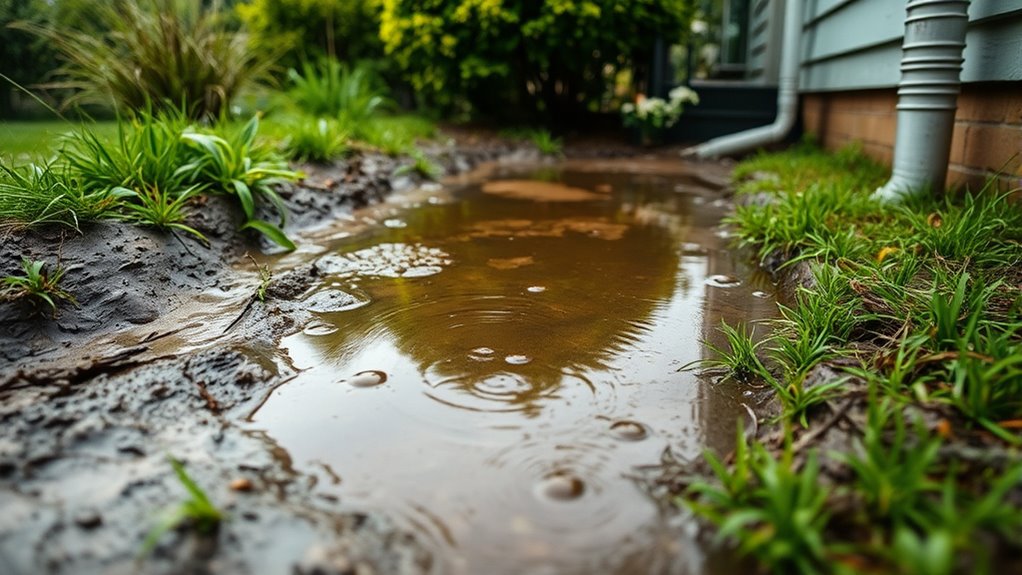
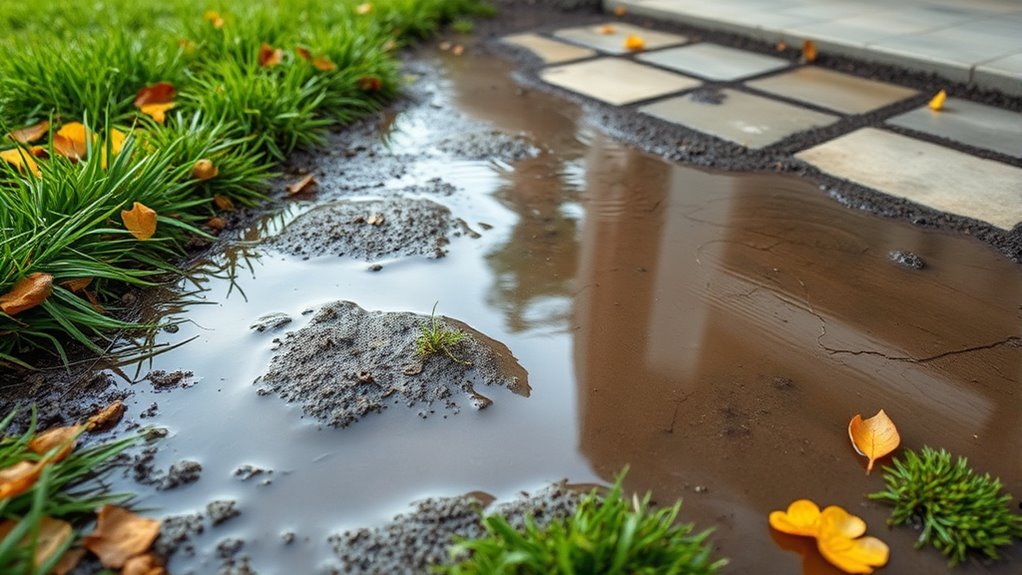
Are you frustrated with water pooling or flooding in your yard after heavy rain? If so, you’re not alone. Standing water can damage your lawn, create muddy patches, and even lead to foundation issues if it’s left unchecked. The good news is that you can improve your yard’s drainage by focusing on effective stormwater management and proper landscape grading. These strategies help redirect excess water away from problem areas, ensuring your yard stays dry and healthy.
Tackle yard flooding with stormwater management and proper grading to keep your lawn dry and healthy.
Stormwater management involves designing your yard to handle heavy rain efficiently. It starts with understanding how water flows across your property. You want to prevent water from pooling in low spots or near your home’s foundation. Installing features like rain gardens, French drains, or dry wells can help collect and redirect stormwater. These systems work by providing designated areas where water can temporarily collect and slowly seep into the ground, reducing runoff and erosion. Incorporating permeable surfaces, such as gravel or permeable pavers, also allows water to pass through and soak into the soil instead of creating puddles. Properly managing stormwater plays a crucial role in preventing water accumulation and protecting your landscape. Additionally, regular maintenance of existing drainage features ensures they function effectively over time. Effective stormwater management is essential for long-term yard health and resilience.
Landscape grading is perhaps the most vital step in improving yard drainage. It involves reshaping the land to ensure water flows away from your house and other vulnerable areas. You should start by evaluating your current slope and identifying any low spots where water tends to gather. The goal is to create a gentle slope, ideally a 2% grade, that directs water at least 10 feet away from your foundation. If your yard slopes toward your house, you might need to add soil or build up the landscape to redirect water. Proper grading prevents water from seeping into basements or causing erosion around your foundation. Additionally, installing gutters and downspouts to channel roof runoff away from your yard, reducing the volume of water that needs to be managed on the ground. Combining good grading practices with stormwater management techniques creates a holistic approach that minimizes water pooling and protects your property. Proper landscape design can further enhance the effectiveness of your drainage system by guiding water flow naturally. Additionally, considering the use of high-quality projectors or other landscape features can enhance the overall functionality of your yard drainage system.
French drain system for yard drainage
As an affiliate, we earn on qualifying purchases.
As an affiliate, we earn on qualifying purchases.
Frequently Asked Questions
How Can I Tell if My Yard Has Poor Drainage?
You can tell if your yard has poor drainage by looking for soakage signs like soggy ground or persistent puddles after rain. Drainage indicators include water standing in low spots or slow runoff during storms. To be sure, perform a simple test: dig a hole, fill it with water, and see how long it takes to drain. If it takes longer than 24 hours, your yard likely has drainage issues.
Are There Eco-Friendly Drainage Solutions Available?
Yes, eco-friendly drainage solutions are available. You can create a rain garden to absorb excess water naturally, or install permeable pavement to allow water to seep through, reducing pooling. These methods not only improve drainage but also support local ecosystems. By choosing these sustainable options, you help protect the environment while effectively managing yard water issues. Both rain gardens and permeable pavements are excellent, eco-conscious ways to improve your yard’s drainage.
How Long Does It Take to Improve Yard Drainage?
Improving yard drainage is like guiding water through a maze; it varies based on your soil absorption and water flow. Usually, it takes a few days to weeks for new solutions like drainage pipes or soil amendments to demonstrate results. You’ll notice less pooling as water moves more efficiently. Patience is key, but consistent effort ensures your yard will soon drain better and stay dry longer after heavy rains.
Can Planting Certain Grass Types Help Drainage?
Yes, planting certain grass types can help improve drainage. You should focus on grass selection and planting strategies that promote healthy root systems and absorb water efficiently. Choose drought-tolerant, deep-rooted grasses like fescue or buffalo grass, and guarantee proper soil preparation before planting. These strategies encourage better water penetration and reduce pooling, making your yard less prone to water issues and enhancing overall drainage.
Is Professional Drainage Assessment Necessary?
A professional drainage assessment isn’t just helpful; it’s essential—like having a doctor diagnose a mysterious illness. You should consider a professional evaluation if pooling persists despite DIY efforts. A drainage assessment by experts pinpoints underlying issues and offers tailored solutions, saving you time and money. Trusting professionals guarantees your yard’s drainage system receives the expert attention it needs, transforming your yard from a soggy mess into a dry, beautiful space.
rain garden kit for stormwater management
As an affiliate, we earn on qualifying purchases.
As an affiliate, we earn on qualifying purchases.
Conclusion
Improving your yard drainage isn’t just about avoiding puddles; it’s about reclaiming your outdoor space and peace of mind. Some believe that adding more soil or rerouting water solves everything, but the real key is understanding your yard’s unique needs. When you invest in proper drainage solutions, you’re not just fixing a problem—you’re creating a healthier, more beautiful yard where you can relax without worry. Take action today; your outdoor oasis awaits.
permeable pavers for driveway
As an affiliate, we earn on qualifying purchases.
As an affiliate, we earn on qualifying purchases.
yard grading tools
As an affiliate, we earn on qualifying purchases.
As an affiliate, we earn on qualifying purchases.