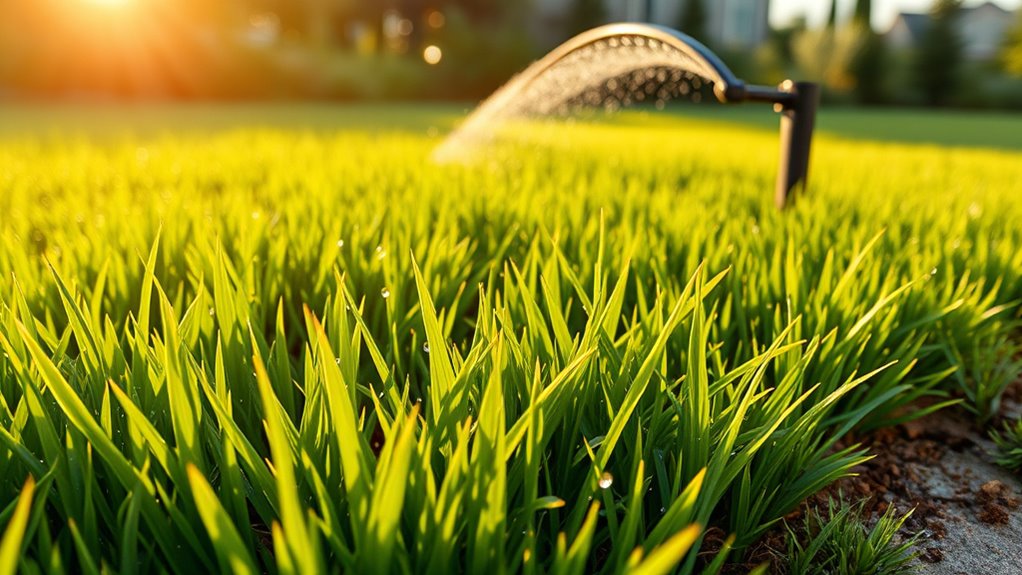

To keep your grass green during a drought, focus on watering deeply and infrequently, aiming for about an inch of water weekly early in the morning. Raise your mower blades to 3-4 inches to provide shade and cool roots, while avoiding cutting more than one-third of the grass at once. These simple steps help encourage deep roots and conserve moisture. Keep exploring online tips to learn even more ways to maintain a lush lawn in tough times.
Key Takeaways
- Water deeply and early in the morning to promote deep root growth and reduce evaporation.
- Mow at higher heights (3-4 inches) to shade soil and retain moisture.
- Water about 1 inch weekly, adjusting for rainfall and soil type, to keep grass healthy.
- Use efficient irrigation methods like soaker hoses or drip systems to conserve water.
- Avoid cutting more than one-third of grass height at once and keep mower blades sharp for healthier turf.
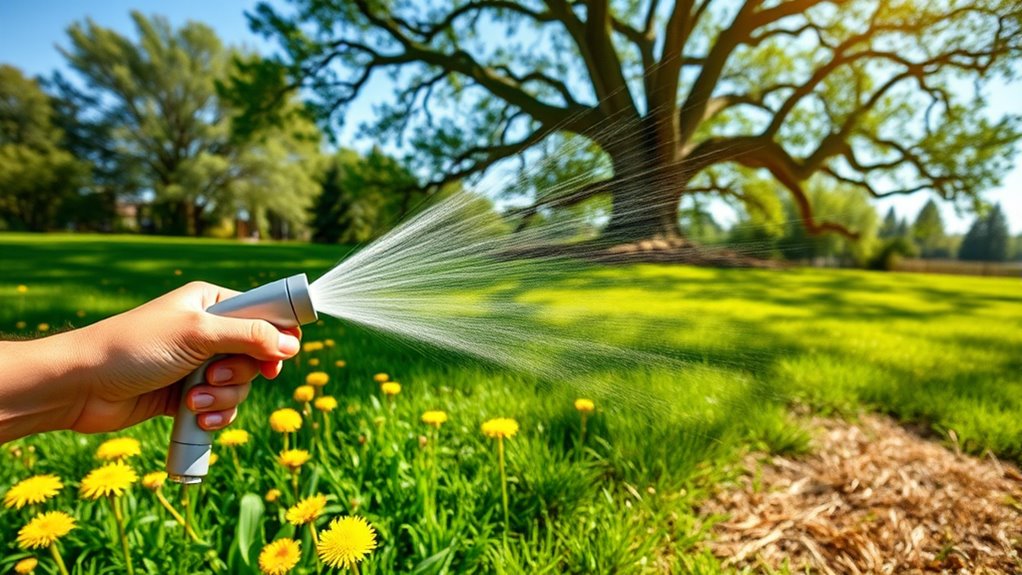
Summer is the best time to give your lawn extra attention to keep it healthy and vibrant. During this season, your grass faces intense heat and often limited rainfall, making proper lawn care essential. One of the most critical aspects is establishing effective watering schedules. Instead of frequent, shallow watering, aim for deep soakings that encourage roots to grow deeper into the soil. Water early in the morning, ideally between 4 and 10 a.m., so your grass can absorb moisture before the heat of the day causes evaporation. This approach not only conserves water but also helps prevent fungal diseases that thrive in damp, shady areas overnight. Keep in mind that the goal is to provide about an inch of water per week, including rainfall, but adjust based on your soil type and grass variety. Deep, infrequent watering is far more beneficial than daily quick douses, which can weaken your lawn’s resilience during drought conditions. Additionally, using appropriate irrigation techniques such as soaker hoses or drip irrigation can improve water efficiency and distribution across your lawn.
Another essential task is maintaining the correct mowing heights. During summer, you should set your mower blade higher than usual—generally around 3 to 4 inches—depending on your grass type. Taller grass shades the soil, reducing evaporation and keeping the roots cooler. This also helps your lawn better withstand drought stress and improves its overall health. Cutting grass too short exposes the roots to direct sunlight, making them more susceptible to drying out and weeds taking hold. By keeping your grass slightly taller, you promote a denser turf that crowds out weeds and resists pests. Remember to mow regularly but avoid removing more than one-third of the grass height at a time to prevent stress and damage.
Additionally, adjusting your mowing schedule during peak summer days can be beneficial. Mow early in the morning or late in the afternoon to avoid the hottest part of the day, which can stress your grass further. Sharp blades are imperative to achieve clean cuts, reducing injury and disease entry points. Consistency in mowing and watering, combined with strategic adjustments to your lawn care routine, will help your grass stay green and healthy even under drought conditions. Proper watering schedules and mowing heights are simple but powerful tools in summer lawn care. When you take these steps, you’re giving your lawn the best chance to thrive despite the challenging weather, resulting in a lush, vibrant yard that’s the envy of the neighborhood.
Frequently Asked Questions
How Often Should I Water During a Drought?
During a drought, you should water your lawn about once or twice a week, focusing on a deep watering schedule. Check soil moisture first; if it feels dry a few inches down, it’s time to water. This helps roots grow deeper and stay healthy. Avoid frequent shallow watering, as it encourages weak roots. Adjust your watering based on weather conditions and soil moisture levels for the best results.
What Type of Grass Is Best for Drought Resistance?
Think of your lawn as a resilient athlete in a marathon—choosing the right gear matters. Opt for drought-tolerant species like Bermuda grass, buffalo grass, or zoysia, which are built to withstand dry conditions. When selecting grass, focus on drought-resistant varieties that require less water and maintenance. These hardy options help your lawn stay lush longer, even when the weather’s playing hardball, keeping your yard vibrant and healthy.
Can Fertilizing Help My Lawn Stay Green in Drought?
Fertilizing can help your lawn stay green in drought conditions, but it’s essential to choose a drought-tolerant grass and focus on improving soil nutrients. Use a balanced fertilizer to strengthen roots and promote healthy growth. Additionally, aerating your lawn enhances soil aeration, allowing better water absorption and reducing stress. This combo helps your grass stay resilient and lush, even during dry spells.
Are There Natural Remedies to Retain Soil Moisture?
You can retain soil moisture naturally with mulching techniques and soil amendments. Mulching helps trap moisture, preventing evaporation, while organic matter like compost improves soil structure, increasing its water-holding capacity. Think of your soil as a sponge; enhancing its ability to retain water means less watering and healthier grass. By combining these methods, you create a resilient lawn that withstands drought stress, proving nature’s solutions can be both simple and effective.
How Do I Identify and Treat Drought Stress in Grass?
You can identify drought stress in your grass by checking for a bluish-gray hue and footprints that linger. To treat it, focus on improving root health by deep watering early in the morning, ensuring soil aeration to enhance moisture absorption. Avoid over-fertilizing, which can weaken roots further. Regularly monitor soil moisture levels and adjust watering accordingly to keep your grass healthy and resilient during drought conditions.
Conclusion
So, enjoy your perfectly green lawn while the drought persists—because who wouldn’t want to spend extra time watering and tending to grass that’s practically begging for mercy? Ironically, all that effort might just make your yard the envy of the neighborhood, even if it’s secretly suffering. But hey, at least your lawn looks great while it’s thriving on borrowed time. Just remember, beauty is fleeting—kind of like that lush green you’re desperately trying to keep.