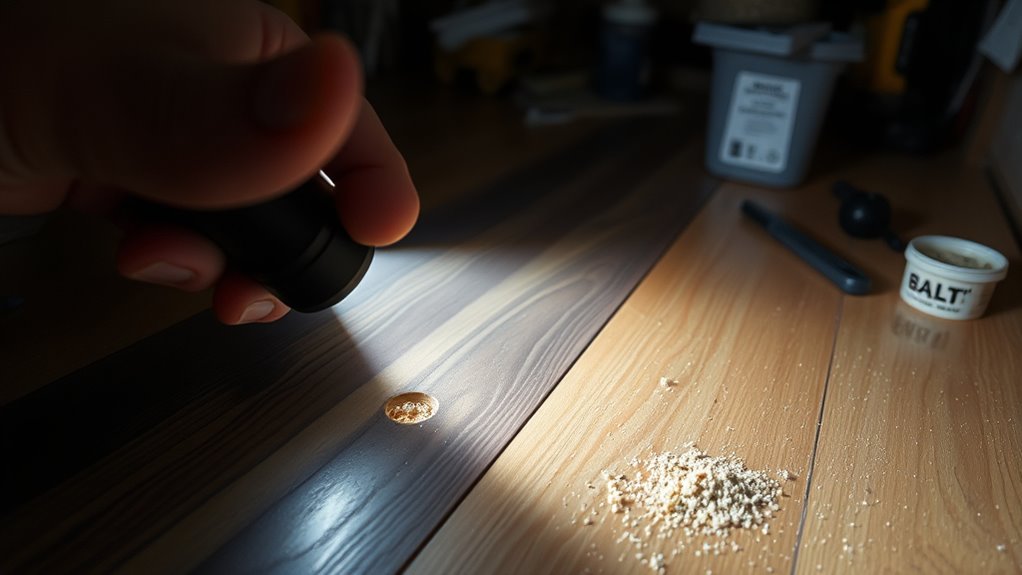

To check your home for termites, gather tools like a flashlight, screwdriver, and protective coveralls. Look for mud tubes, discarded wings, and damaged wood both outside and inside. Pay close attention to areas where wood contacts soil, cracks, or moisture. Tap suspect wood to hear hollow sounds and probe for hidden galleries. If you want to learn more effective inspection tips and prevention strategies, keep exploring the detailed steps below.
Key Takeaways
- Use a flashlight, screwdriver, and inspection probe to visually and physically check wood surfaces and hidden areas for mud tubes, wings, or damage.
- Look for mud tubes, hollow sounds, small holes, and discarded wings near walls, foundation, and wooden structures.
- Inspect exterior and interior surfaces, focusing on areas where wood contacts soil or moisture, including baseboards, door frames, and foundation cracks.
- Set up monitoring traps like damp cardboard near suspected termite activity zones and check regularly.
- Maintain a clean, dry environment around your home, remove wood debris, and conduct routine inspections to prevent and detect infestations early.
Gathering the Necessary Inspection Tools
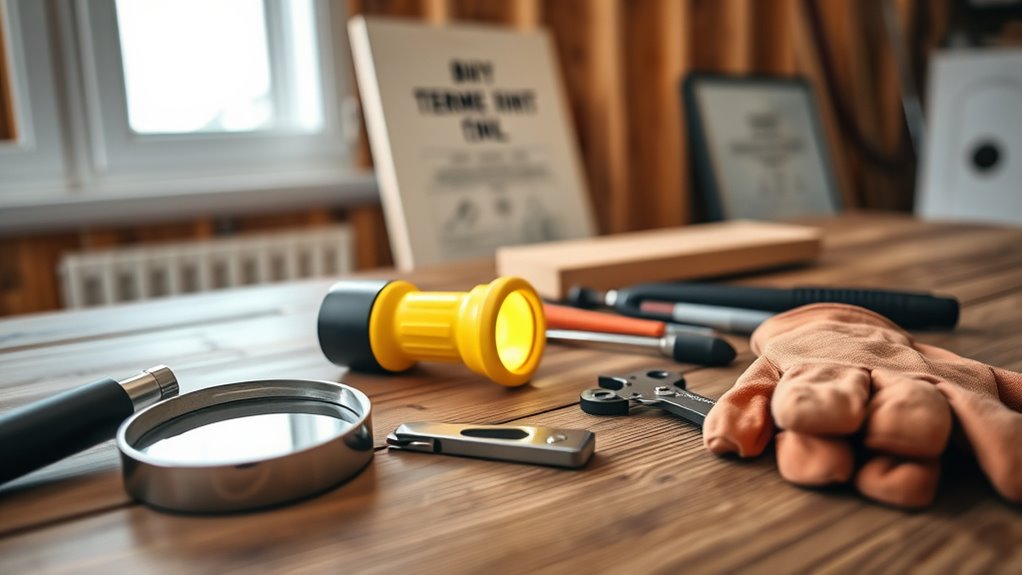
Are you ready to inspect your property for termites? Before you begin, gather the essential tools to make your inspection thorough and effective. Start with disposable coveralls to keep your clothes clean and protected, especially when working in dark or dusty areas. A bright flashlight is vital for illuminating crawlspaces, basements, and cracks that are hard to see in low light. Use a screwdriver or pocket knife to gently tap and probe wood surfaces, checking for hollow sounds or damaged wood. An inspection probe, though optional, can help you identify hidden galleries for a more professional check. If you suspect an active infestation, a trench shovel may be needed for digging trenches around your foundation. Having these tools ready guarantees a complete inspection, increasing your chances of spotting early signs of termites. Additionally, understanding how termite detection tools work can help you select the most effective equipment for your inspection. Knowing about damage patterns can assist you in recognizing the signs of termite activity more accurately. Remember to also consider proper ventilation during your inspection to detect any moisture issues that attract termites. Proper inspection techniques can significantly improve your ability to identify termite activity early, especially when combined with knowledge of the signs of infestation.
Recognizing Common Signs of Termite Activity
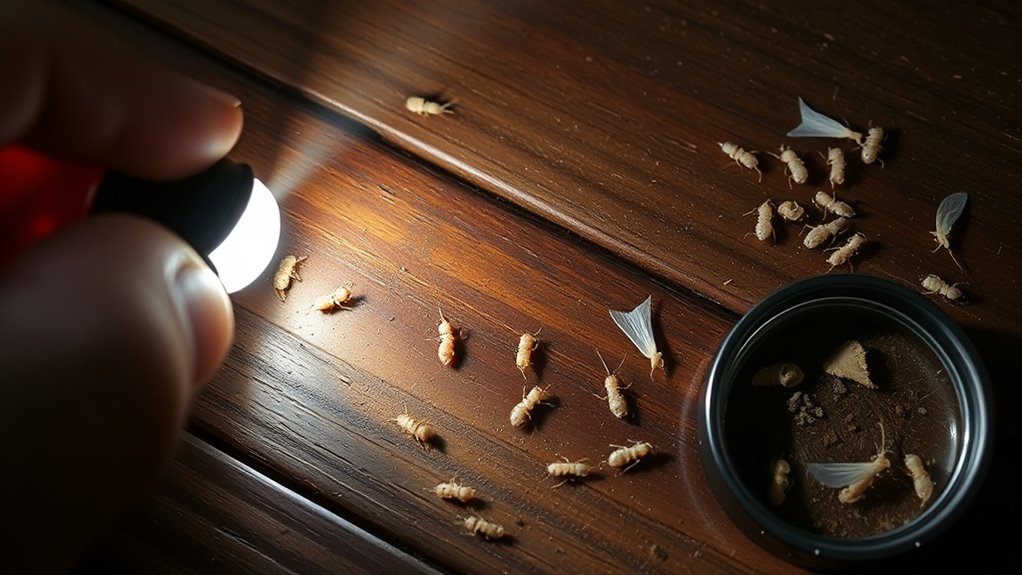
You should keep an eye out for mud tubes on walls or foundations, as they’re a clear sign of termite activity. Discarded wings near windows or light sources also indicate recent swarms. Additionally, damaged wood that sounds hollow or has small holes is a strong clue that termites are present. Be aware that termite activity can sometimes be hidden behind walls, so inspecting for signs of infestation regularly is essential. Regular monitoring and understanding damage indicators can help catch infestations early before they cause significant damage. Incorporating inspection techniques similar to those used in deep-sky imaging can improve your chances of detecting hidden issues early. Using effective detection methods can further enhance the accuracy of your inspections. Developing a routine inspection schedule ensures ongoing vigilance against termite threats.
Mud Tubes Evidence
Have you ever noticed thin, mud-lined tubes snaking along walls, foundations, or wooden structures? These are termite mud tubes, a key sign of infestation. They serve as protected pathways for termites to travel between their nest and food sources. If you spot these tubes, it indicates an active colony nearby. Check carefully, as mud tubes can be mistaken for dirt or debris. The tubes are usually 1/8 to 1/2 inch in diameter and may be found on:
| Location | Appearance | Significance |
|---|---|---|
| Foundation walls | Mud tubes along the surface | Active termite activity |
| Wooden beams | Mud covering or tunnels | Damage or ongoing feeding |
| Interior walls | Mud trails near baseboards | Possible infestation inside |
| Exterior siding | Tubes on siding or trim | Entry points or nesting sites |
| Basement/crawlspace | Mud tubes along framing | Hidden colonies, moisture |
Always inspect these tubes thoroughly; they’re a clear warning. Recognizing common signs of termite activity can help you catch an infestation early and take appropriate action, especially since proper inspection techniques are essential for accurate detection. Being knowledgeable about the behavior of termites can further assist in identifying early warning signs and preventing extensive damage. Additionally, understanding local termite species can help tailor your inspection methods for more effective detection.
Wing Discards Found
When inspecting for signs of termite activity, spotting discarded wings is a strong indicator of a nearby colony. Termites shed their wings after swarming to establish new colonies, so finding these wings signals recent activity. Look closely around windows, doors, light fixtures, and other entry points where swarms are attracted. The wings are usually small, translucent, and about 1/4 inch long, often found in clusters. Check windowsills, doorframes, and light fixtures for these tiny remnants. If you notice wings along with other signs like mud tubes or damaged wood, it confirms that termites are nearby. Regularly inspecting these areas helps catch an infestation early, reducing potential damage and making treatment more effective. Early detection of termite signs can save you from costly repairs later. Additionally, understanding termite behavior can improve your inspection routine and help prevent severe infestations. Recognizing signs of activity such as discarded wings and mud tubes is crucial for timely intervention. Keep an eye out for these wing leftovers during your routine checks, and being aware of the Gold IRA Rollovers process can help diversify your investments and protect your assets from inflation.
Damaged Wood Signs
Damaged wood is a clear sign that termites may be active nearby. When inspecting, look for small holes or tunnels on wooden surfaces, which indicate internal damage. Tap the wood gently with a screwdriver or pocket knife—hollow sounds suggest termites have eaten away the interior. Crushed or crumbling joints and sagging or buckling wooden structures also point to infestation. You might notice wood that feels soft or spongy under your touch. Sometimes, damaged wood is accompanied by sawdust-like frass around the area. Keep an eye out for blistering or bubbling paint on wooden surfaces, which can hide underlying termite damage. Recognizing these signs early helps you address the problem before it worsens, protecting your home from extensive damage. Additionally, understanding the easy homemade flautas can help you prepare quick snacks during home inspections or repairs.
Targeting High-Risk Areas Around Your Property

Wondering where to focus your termite inspection efforts? Start with high-risk areas around your property. Check the foundation walls, especially where soil contacts wood or concrete. Inspect basement and crawlspace vents, looking for mud tubes or damaged wood. Examine wooden decks, porches, and outdoor structures for signs of infestation. Look for cracks in brick or gaps in cement that could serve as entry points. Pay attention to skirting boards, door jambs, and corners near ceilings, as termites often hide there. Don’t forget to review areas where wood touches soil or moisture accumulates, like around gutters or leaky pipes. Target these zones systematically, as termites prefer moist, wood-to-soil contact, increasing your chance of spotting early signs before a full-blown infestation develops.
Conducting a Visual Inspection of the Exterior and Interior

Start your inspection by carefully examining your exterior walls for mud tubes, damaged wood, or cracks where termites could enter. Next, check the foundation and surrounding soil for signs of activity, like mud trails or displaced soil. Finally, inspect interior surfaces such as walls, baseboards, and corners for hollow sounds, paint bubbling, or tiny holes that indicate an infestation.
Exterior Wall Checks
Conducting a visual inspection of your exterior and interior walls is a crucial step in identifying signs of termite activity. Start by examining the exterior walls for mud tubes, which termites build to travel between their colony and food sources. Look for bubbling, cracked, or bubbling paint, as termites often damage the surface beneath. Check wooden elements like soffits, fascia boards, and window frames for small holes or hollow sounds when tapped. Inside, inspect wall surfaces, especially near baseboards and around windows, for water stains, blistered paint, or damaged drywall. Use a flashlight to illuminate dark corners and examine for any hidden signs. Pay close attention to areas where wood contacts soil or moisture, as these are prime spots for termite activity.
Foundation and Soil
Have you inspected the foundation and surrounding soil recently? Look for signs like mud tubes, damaged wood, or cracks around the foundation. Check for areas where soil has shifted, settled, or appears moist, as these can attract termites. Pay close attention to the base of your home and any wooden elements in contact with soil. Use the following table to guide your inspection:
| Area | What to Look For | Potential Warning Signs |
|---|---|---|
| Foundation Walls | Cracks, bubbling paint, mud tubes | Entry points, moisture buildup |
| Soil Near Foundation | Moist, uneven, or disturbed soil | Termite trails or tunnels |
| Wooden Structures | Damage, hollow sounds, mud residues | Signs of active infestation |
| Interior Contact Points | Floor joists, beams, skirting boards | Discoloration, wood damage |
Regular checks help catch infestations early.
Interior Surface Inspection
Inspecting interior surfaces is a pivotal step in identifying termite activity before it causes significant damage. Begin by examining walls, especially near corners, doorways, and windows, for small holes or blistered paint. Look for mud tubes or tunnels on baseboards, skirting boards, and behind furniture. Tap wooden surfaces with a screwdriver; a hollow sound indicates internal damage. Probe suspicious areas to see if the wood feels soft or crumbly. Check for discarded wings or frass near light fixtures, vents, or windows. Pay attention to any buckling or swelling in drywall or plaster. Additionally, inspect around pipe penetrations, electrical outlets, and gaps where termites could enter. Conducting a thorough visual check helps catch early signs of infestation, saving your home from extensive damage.
Using Probing Techniques to Detect Hidden Damage
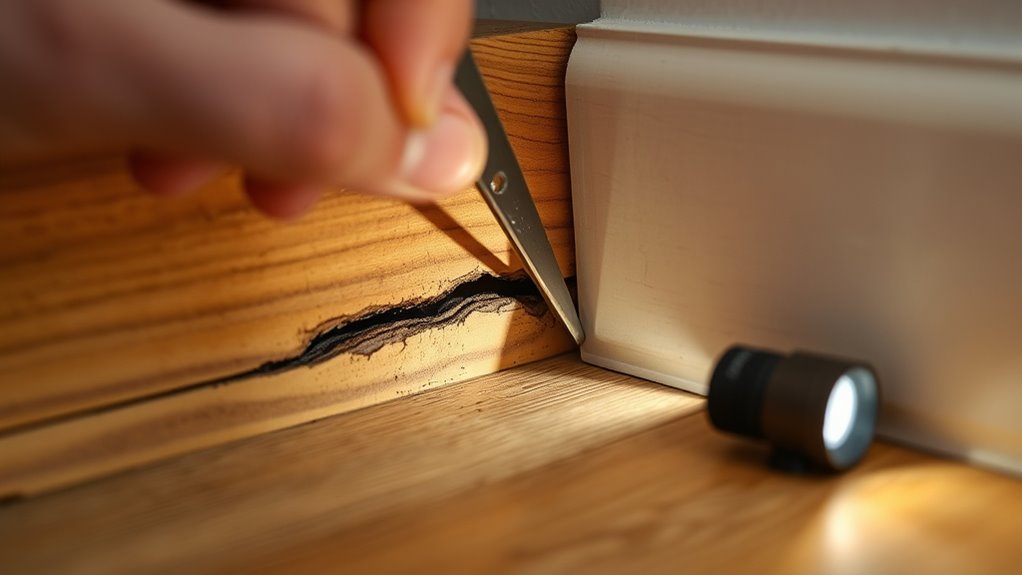
Probing is a crucial technique for uncovering hidden termite damage that isn’t visible on the surface. You’ll need a screwdriver, pocket knife, or inspection probe to gently insert into suspect wood areas. Carefully press into wood surfaces, listening for a hollow sound or feeling for soft spots indicating decay. If the wood feels spongy or crumbles easily, it’s likely compromised. Use the probe along the grain and corners of beams, door jambs, or floorboards where damage might hide behind paint or veneer. Be thorough but gentle to avoid damaging unaffected areas. Probing helps you identify galleries or tunnels termites create inside wood, revealing infestations that surface inspections might miss. Regular probing in suspected zones gives you a clearer picture of hidden damage and helps determine if further action is necessary.
Examining Wood Surfaces and Structural Elements
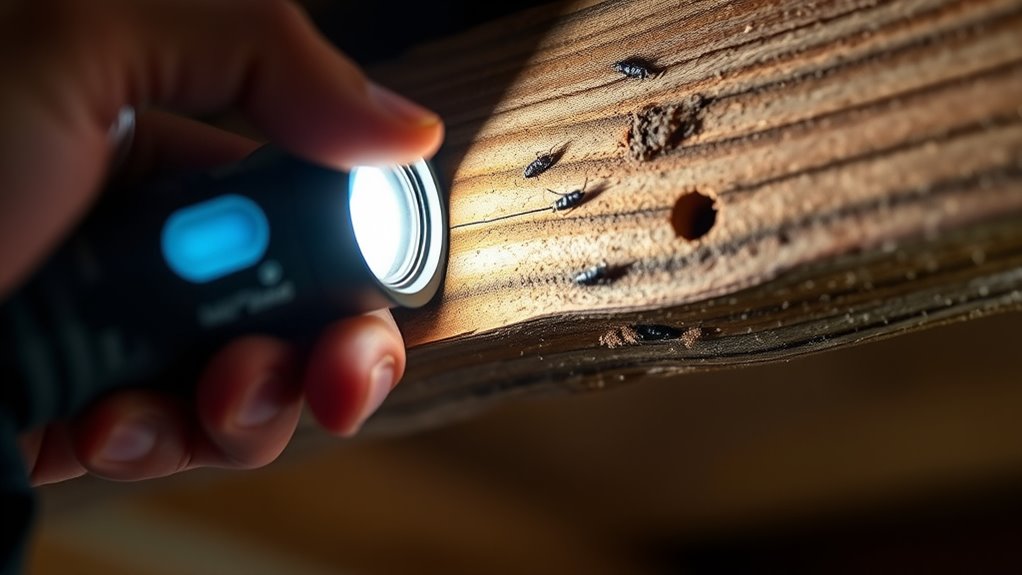
After using probing techniques to detect hidden damage, focus on examining wood surfaces and structural elements directly. Look for signs like small holes, frass (termite droppings), and hollow sounds when tapped. Use your flashlight to inspect dark or hidden areas thoroughly. Pay special attention to beams, joists, and door frames for any swelling, cracking, or bubbling paint. These can indicate termite activity. Also, check for mud tubes along baseboards, cracks, or gaps where termites might enter. Keep an eye on the following key areas:
| Area | Signs to Look For | Action Needed |
|---|---|---|
| Wooden beams | Hollow sounds, dents | Probe and inspect closely |
| Door jambs | Mud tubes, damage | Repair or treat if needed |
| Floorboards | Swelling, holes | Remove and examine underneath |
Monitoring Your Home With Cardboard Traps

Monitoring your home for termites is simple and effective using cardboard traps. To set one up, wet several pieces of plain corrugated cardboard and stack them in areas where termites might hide, such as near the foundation or under rocks. Place the traps on soil or on the ground close to your home’s foundation. Leave them undisturbed for about a week, then check them carefully. If you notice mud tubes, tiny termite workers, or swarms on the cardboard, it indicates activity nearby. Replace the traps if needed and monitor regularly—every six months to a year. Cardboard traps are a low-cost, non-invasive way to detect early signs of termites, helping you act before serious damage occurs.
Implementing Preventative Measures to Deter Infestation

Implementing preventative measures is essential to keep termites from establishing a foothold around your home. Start by removing wood debris, fallen leaves, and mulch near your foundation, as these attract termites. Guarantee proper drainage around your property to prevent excess moisture, which termites thrive on. Repair any cracks or gaps in your foundation, walls, and around windows and doors to eliminate entry points. Keep wooden structures, such as decks and porches, away from soil contact by using concrete or metal supports. Ventilate crawlspaces and basements to reduce humidity levels. Consider installing physical barriers like metal shields during construction or renovation. Regularly inspect your property, especially moist or wood-to-soil contact areas, and address issues promptly. These steps create an environment less inviting for termites and help safeguard your home.
When to Seek Professional Assistance

Knowing when to call in a professional can save you time, money, and effort in managing termite problems. If you notice persistent mud tubes, discarded wings, or damaged wood that you can’t fully inspect, it’s time to seek expert help. When signs are widespread or damage appears extensive, DIY methods may not be enough. Also, if you find termite activity despite recent treatments, professionals can assess if retreatment is necessary. If you’re unsure about the severity of the infestation or uncomfortable handling chemicals, professionals provide safer, more effective solutions. Remember, early intervention can prevent costly repairs later. Trust a pest control expert when your inspections reveal signs of a significant infestation or if you want reassurance that your home is fully protected.
Frequently Asked Questions
How Often Should I Perform a DIY Termite Inspection?
You should perform a DIY termite inspection at least once every six months to catch any early signs of an infestation. Regular checks help you spot mud tubes, damaged wood, or discarded wings before the problem worsens. Pay special attention to high-risk areas like basements, crawlspaces, and around your foundation. Consistent inspections allow you to take prompt action, preventing extensive damage and costly treatments later on.
Are DIY Methods Effective for Large or Severe Infestations?
DIY methods aren’t effective for large or severe infestations—you need professional treatment. While DIY techniques can handle small problems, they lack the strength and precision to eliminate a major colony. Think of DIY as a first defense, like a bandage, but serious infestations require experts with advanced tools. Ignoring this can lead to extensive damage, higher costs, and prolonged infestation, so don’t rely solely on DIY for severe issues.
Can I Identify Termite Species During a Home Inspection?
Yes, you can sometimes identify termite species during a home inspection by observing their physical traits and the damage they cause. Look for differences like wing size and shape, body segmentation, and mud tube characteristics. However, accurately identifying species often requires a professional with expertise and proper tools, as many termites look similar. If you’re unsure, it’s best to consult an exterminator for precise identification and treatment options.
What Are the Safety Precautions When Applying DIY Termite Treatments?
Think of treating termites as entering a guarded fortress—you need to wear your armor. Always wear disposable coveralls, gloves, and eye protection to shield yourself from chemicals. Work in well-ventilated areas, and keep children and pets away. Follow product instructions carefully, avoid inhaling fumes, and wash up thoroughly afterward. By respecting these safety rules, you guarantee your defense remains strong while protecting your health.
How Do I Differentiate Between Termite Damage and Other Wood Issues?
You can differentiate termite damage from other wood issues by inspecting for hollow sounds when you tap the wood with a screwdriver, indicating internal tunnels. Look for mud tubes on walls or wood surfaces, which are unique to termites. Damaged wood often has small holes or crumbling edges, but unlike rot, it may feel dry. Swollen paint, buckling floors, and discarded wings are additional signs that point toward termite activity.
Conclusion
Think of your home as a fortress, and regular inspections as your watchful shield. By staying vigilant, you catch the tiny signs of termites before they breach your defenses. With each inspection, you’re tending a garden of safety, pruning away hidden threats. Remember, your attention is the key to keeping your home’s heart strong and intact. Stay proactive, and let your care be the beacon that keeps unwelcome guests at bay.