
TL;DR

Get everyday essentials delivered free — and shop member deals
- Fast, free delivery on millions of items
- Access to Prime Big Deal Days deals on October 6–7
- Prime Video, Amazon Music and more included
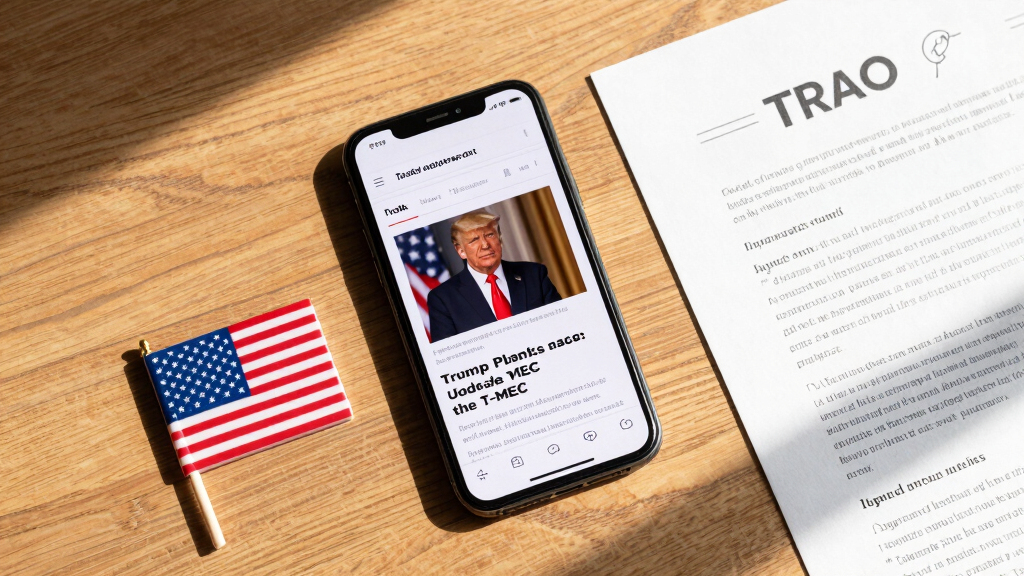
Former President Donald Trump has expressed intentions to undo the USMCA trade agreement. While this move could reshape U.S.-Mexico-Canada trade relations, experts warn that breaking the deal would involve substantial costs. The development raises questions about future trade policy and legal repercussions.
Former President Donald Trump has publicly announced plans to undo the United States-Mexico-Canada Agreement (USMCA), a trade deal he helped negotiate and implement in 2020. This development signals potential shifts in U.S. trade policy and could significantly impact economic relations with Mexico and Canada, making it a key issue for policymakers and businesses alike.
During recent remarks, Trump indicated his intention to revoke the USMCA, citing dissatisfaction with current trade policies and economic outcomes. However, experts note that legally withdrawing from the agreement would be complex and costly. Analysts from trade law firms suggest that breaking the treaty could trigger substantial penalties, including fines or compensation payments, due to the treaty’s binding provisions and dispute resolution mechanisms.
Legal experts emphasize that the USMCA, like its predecessor NAFTA, includes clauses designed to prevent unilateral withdrawal without consequences. Breaking the deal could lead to trade disruptions, increased tariffs, or retaliatory measures from Mexico and Canada, further complicating the process.
While Trump’s statements have garnered attention, there has been no formal legal move or legislative proposal introduced to formally revoke the agreement as of now. The Biden administration has not publicly commented on the possibility of renegotiating or withdrawing from the USMCA, leaving the future of the deal uncertain.
Potential Economic and Diplomatic Impacts of Reversing USMCA
The possibility of undoing the USMCA raises questions about the stability of North American trade relations and the broader U.S. economic strategy. If Trump or any future administration attempts to withdraw, it could lead to trade disruptions, increased costs for businesses, and diplomatic tensions with Mexico and Canada. The legal and financial repercussions could also set precedents affecting future trade agreements and negotiations.
For businesses operating across North America, the uncertainty surrounding the deal’s status could influence investment decisions and supply chain planning. Additionally, the move could impact U.S. relations with its neighbors, potentially complicating cooperation on other economic and security issues.
As an affiliate, we earn on qualifying purchases.
Background on USMCA and Previous Trade Policy Changes
The USMCA replaced NAFTA in July 2020, aiming to modernize trade rules, improve labor standards, and address digital trade. Signed under the Trump administration, the deal was viewed as a cornerstone of his economic policy. Since then, the Biden administration has largely maintained the agreement but has not indicated plans to alter or revoke it.
Throughout Trump’s presidency, he frequently criticized NAFTA and sought to renegotiate or replace it, culminating in the USMCA. While the agreement has been in effect for nearly four years, Trump’s recent statements suggest he remains interested in reversing it, though no formal steps have been taken to do so.
The legal framework of the USMCA includes dispute resolution mechanisms and penalties for breach, which could complicate any attempt at unilateral withdrawal.
“Any attempt to unilaterally withdraw from the USMCA would likely trigger dispute resolution processes and potential penalties.”
— Former U.S. Trade Representative, Michael Lee
As an affiliate, we earn on qualifying purchases.
Legal and Political Barriers to Reversing USMCA
It remains unclear whether Trump’s statements reflect a serious policy shift or are political rhetoric. There is no formal legal process underway to revoke the USMCA, and the Biden administration has not signaled support for such a move. The legal and diplomatic hurdles could prevent or delay any attempt to undo the agreement.
Additionally, the economic impact of such a move is uncertain, as it depends on the response from Mexico and Canada, and how U.S. businesses would adapt to potential disruptions.
As an affiliate, we earn on qualifying purchases.
Legal and Political Steps Toward Reconsideration of USMCA
Next steps include monitoring official statements from the Biden administration and congressional actions regarding trade policy. Legal experts suggest that any formal attempt to withdraw would require legislative approval and could face lengthy court challenges. Diplomatically, negotiations with Mexico and Canada might intensify if the U.S. moves toward revoking the deal.
Observers will also watch for any legislative proposals or executive actions that could signal a shift in U.S. trade policy regarding the USMCA in the coming months.
As an affiliate, we earn on qualifying purchases.
Key Questions
Can Trump legally revoke the USMCA?
Revoking the USMCA would require legislative approval and could involve complex legal procedures. It is not an automatic process and could face legal challenges.
What are the potential penalties for breaking the USMCA?
The agreement includes dispute resolution mechanisms and provisions for penalties, which could include fines or compensation payments, depending on the circumstances.
How would breaking the USMCA affect U.S. trade relations?
It could lead to trade disruptions, increased tariffs, and diplomatic tensions with Canada and Mexico, affecting supply chains and economic stability.
Has any formal move been made to undo the USMCA?
No, as of now, there has been no official legal or legislative action to revoke the agreement. Trump’s statements are currently political in nature.
Source: google-trends
Halloween Picks
halloween
As an affiliate, we earn on qualifying purchases.