
TL;DR

Get everyday essentials delivered free — and shop member deals
- Fast, free delivery on millions of items
- Access to Prime Big Deal Days deals on October 6–7
- Prime Video, Amazon Music and more included
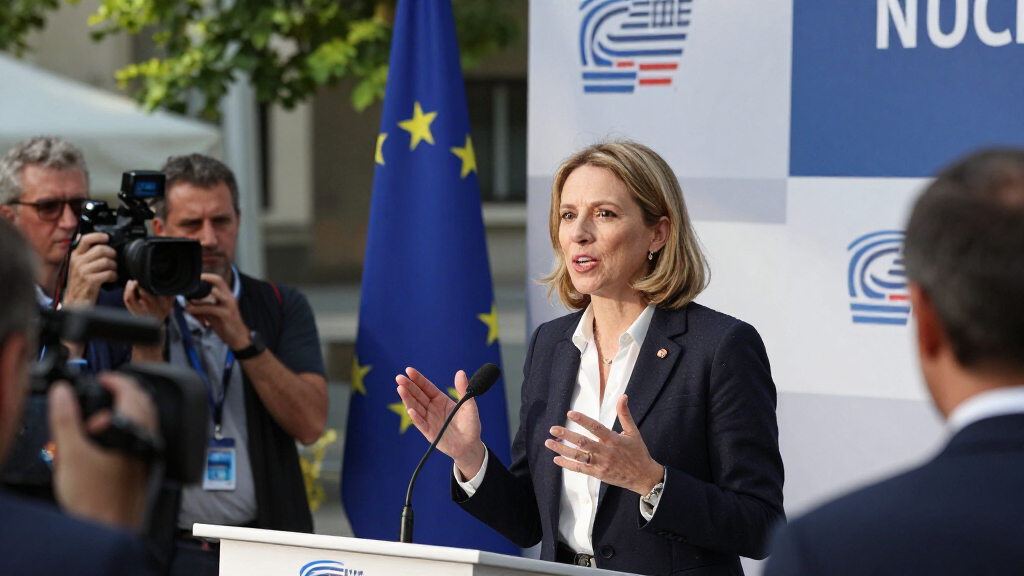
European Commissioner Šuica outlined key issues facing the EU and Croatia’s priorities during her opening speech at the Conference of Ambassadors. The address highlighted ongoing challenges and future priorities, with some details still emerging.
European Commissioner for Democracy and Demography, Dubravka Šuica, delivered the opening address at the Conference of Ambassadors, Consuls General, Consuls, and Military Attachés of Croatia on March 15, 2024, in Zagreb. Her speech focused on current issues facing the European Union and outlined Croatia’s priorities within the EU framework. For more insights, see the Commissioner’s statement. See the opening statement by Commissioner Dombrovskis for more details. The address emphasized ongoing challenges such as geopolitical tensions, economic recovery, and institutional reforms, highlighting Croatia’s role in addressing these issues as it prepares for its upcoming EU Presidency.
During her address, Commissioner Šuica underscored the importance of unity and resilience within the EU amid recent geopolitical tensions, including the Russia-Ukraine conflict and rising global instability. She pointed out that economic recovery remains a key priority, especially in light of the economic disruptions caused by the COVID-19 pandemic and recent energy crises. For more on EU economic strategies, visit the EU policy updates. The Commissioner also emphasized the significance of strengthening democratic institutions and upholding the rule of law across member states, aligning with ongoing EU reforms.
Šuica highlighted Croatia’s strategic role, noting that the country’s upcoming EU Presidency offers an opportunity to advance key initiatives on climate change, digital transformation, and regional stability. She reaffirmed Croatia’s commitment to fostering closer cooperation among member states and to addressing migration and security challenges, which remain pressing issues for the Union. The address also touched upon the EU’s efforts to promote social cohesion and ensure economic sustainability amid current global uncertainties.
While her speech provided a comprehensive overview, some specific policy proposals or initiatives were not detailed, and officials indicated that further discussions are expected in upcoming EU meetings.
Implications of Šuica’s Address for EU and Croatia
This speech signals Croatia’s active engagement in shaping the EU’s response to current crises and highlights the country’s strategic importance as it prepares for its upcoming presidency. The emphasis on unity, resilience, and reform underscores the EU’s broader priorities amid geopolitical and economic challenges. For Croatia, the address reinforces its role as a key player in regional stability and EU policymaking, potentially influencing future initiatives on climate, security, and economic recovery.
For EU citizens and policymakers, Šuica’s remarks reflect ongoing efforts to address complex issues such as energy security, democratic integrity, and social cohesion. The address also signals that the EU remains committed to strengthening its institutions and fostering cooperation among member states during a period of global uncertainty.
As an affiliate, we earn on qualifying purchases.
Background on EU Challenges and Croatia’s EU Role
The European Union has been navigating a series of interconnected challenges over recent years, including geopolitical tensions stemming from Russia’s invasion of Ukraine, energy supply disruptions, economic recovery efforts post-pandemic, and internal debates over democratic standards and rule of law. Croatia, which joined the EU in 2013, is preparing to assume the presidency of the Council of the European Union for the first time in the second half of 2024. This upcoming role places Croatia at the forefront of EU policy coordination during a critical period.
Prior to her address, Šuica has been involved in EU efforts to bolster democratic resilience and social cohesion, particularly through initiatives aimed at demographic renewal and digital transformation. Her speech at the conference reflects Croatia’s desire to position itself as a proactive leader during its presidency and to align national priorities with broader EU strategies.
Recent EU summits have focused on addressing inflation, energy security, and the ongoing repercussions of the Ukraine conflict, with member states emphasizing the need for solidarity and strategic autonomy. Croatia’s upcoming presidency is seen as an opportunity to advance these agendas, especially in regional cooperation and climate policies.
“Our unity and resilience are vital as we face geopolitical tensions and economic uncertainties. Croatia’s upcoming EU Presidency is a pivotal moment to advance key reforms and initiatives.”
— Commissioner Šuica
Croatia EU presidency official documents
As an affiliate, we earn on qualifying purchases.
As an affiliate, we earn on qualifying purchases.
Details of Future Policy Initiatives Still Unclear
While Šuica’s speech outlined broad priorities, specific policy proposals or legislative initiatives were not detailed. It remains unclear how Croatia’s presidency will prioritize these issues or what concrete measures will be proposed in upcoming EU meetings. Further announcements are expected as the presidency approaches and as EU leaders convene to set agendas.
European Union policy briefing books
As an affiliate, we earn on qualifying purchases.
As an affiliate, we earn on qualifying purchases.
Upcoming EU Meetings and Croatia’s Presidency Agenda
Following this address, the focus shifts to upcoming EU Council meetings where policy details will be discussed. Croatia’s presidency officially begins in July 2024, and the country is expected to present its detailed agenda during the first months of its term. Key priorities such as energy security, climate policy, and institutional reforms are likely to feature prominently.
Additionally, the European Commission and other EU institutions will continue consultations and negotiations to align member states on priorities. The next major milestone will be the EU Summit scheduled for June 2024, where strategic issues are expected to be on the agenda.
As an affiliate, we earn on qualifying purchases.
Key Questions
What are the main issues discussed by Commissioner Šuica?
She focused on current EU challenges including geopolitical tensions, economic recovery, democratic reforms, and Croatia’s upcoming EU presidency.
Why is Croatia’s upcoming EU Presidency significant?
It provides Croatia an opportunity to influence EU policy, promote regional stability, and advance key priorities such as climate change and digital transformation.
Are specific policy proposals from Šuica’s speech available?
No, she outlined broad priorities but did not specify detailed initiatives. Further developments are expected in upcoming EU meetings.
What are the main challenges facing the EU today?
Geopolitical tensions, energy security, economic recovery, and internal democratic standards are among the key issues currently facing the Union.
Source: primary
Halloween Picks
halloween
As an affiliate, we earn on qualifying purchases.