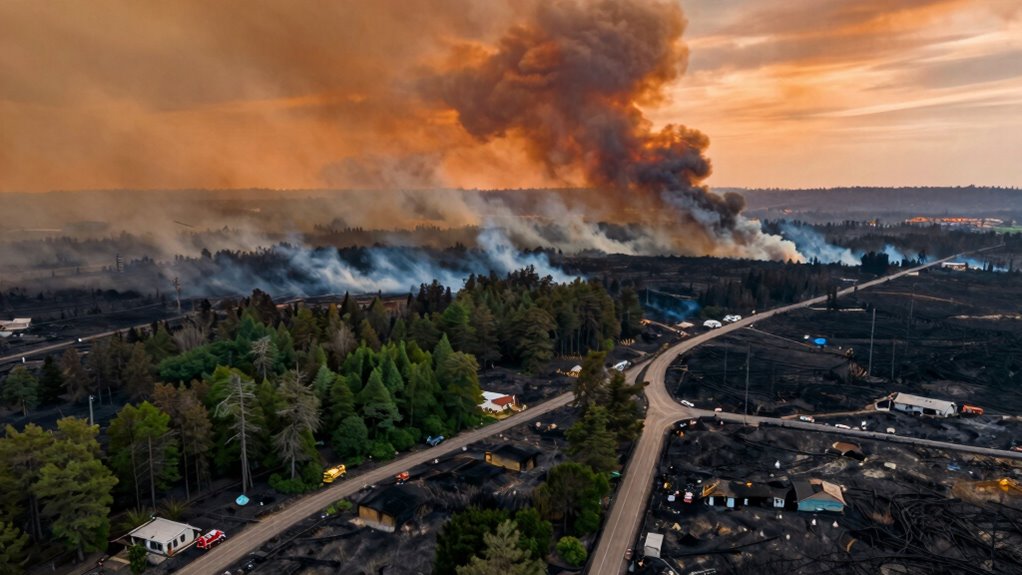

During wildfire season, you’ll notice your daily routine shifting as you stay alert to alerts and evacuation routes. You’ll prepare by maintaining defensible spaces, checking emergency kits, and practicing evacuation drills. Community cooperation becomes key as neighbors share updates and coordinate plans. You’ll also consider home upgrades with fire-resistant materials and stay informed through safety alerts. If you want to understand how these changes build resilience and keep you safer, there’s more to discover.
Key Takeaways
- Residents prioritize emergency preparedness, including monitoring alerts and maintaining evacuation kits regularly.
- Daily routines are disrupted by wildfire alerts, prompting quick safety checks and mental planning.
- Community cooperation becomes essential through shared evacuation routes and neighborhood safety efforts.
- Homes are upgraded with fire-resistant materials, defensible landscaping, and safety devices like smoke detectors.
- Mindsets shift toward vigilance, proactive risk reduction, and investments in resilience and environmental awareness.
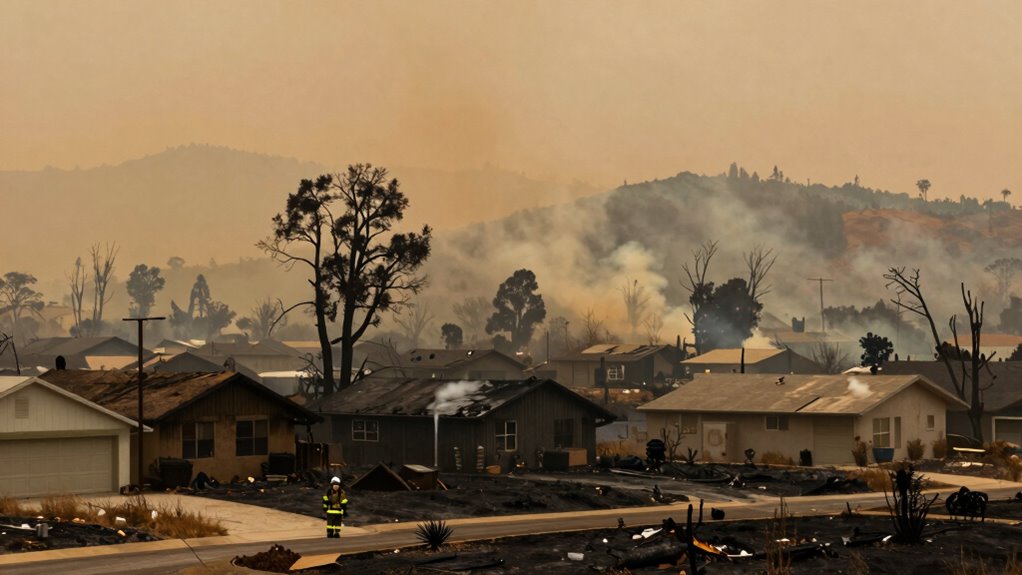
Each wildfire season in California brings a shift in daily routines and priorities, forcing residents to adapt quickly to new realities. As flames threaten neighborhoods and air quality drops, you find yourself thinking more about urban evacuation plans and emergency preparedness. You start to pay closer attention to local alerts and evacuation routes, knowing that every minute counts if a wildfire approaches. Your usual morning routine might get interrupted by a text alert or siren, prompting you to double-check your emergency kit or confirm your evacuation route. It’s a stark reminder that wildfires are unpredictable, and being prepared isn’t just a precaution — it’s a necessity.
You recognize that urban evacuation is a critical part of your safety plan. Instead of just having a vague idea of what to do, you actively map out multiple escape routes from your neighborhood, considering factors like traffic patterns and road closures. You keep your car’s gas tank full and pack a go-bag with essentials—water, snacks, important documents, and protective gear—so you’re ready to leave at a moment’s notice. This process becomes more than just planning; it’s a daily mental exercise during wildfire season. You also stay connected with neighbors, sharing updates and strategies, knowing that community cooperation can make a big difference when evacuation becomes necessary.
Emergency preparedness becomes ingrained in your lifestyle. You regularly check your home’s defensible space, trimming trees and clearing brush to reduce fire risk. You install or update smoke and carbon monoxide detectors and ensure your fire extinguisher is in working condition. You also familiarize yourself with local emergency services, understanding the alerts and instructions they send out. During the season, your routines include practicing evacuation drills, just like a fire drill at school, so that when the real thing happens, your response is swift and calm. These preparations give you a sense of control amid the chaos, helping you face wildfire threats with confidence rather than fear. Additionally, staying informed through public safety alerts helps you stay ahead of potential dangers and coordinate effectively with your community.
You become more aware of the importance of projector technology in creating a safe and comfortable environment at home, especially as wildfires can force indoor stays and remote work or entertainment. Wildfire season doesn’t just change your immediate actions; it shifts your mindset. You become more conscious of your environment, more vigilant about fire risks, and more proactive in safeguarding your home and loved ones. You may even explore fire-resistant building materials for future renovations or upgrades, understanding how they can improve your home’s resilience. Additionally, you might consider investing in precious metal IRAs as a hedge against economic instability caused by natural disasters, reinforcing the importance of diversified preparedness. Whether it’s updating your emergency plan, participating in community safety meetings, or simply staying informed, you know that every small step adds up. In a state where wildfires are an annual reality, your ability to adapt—through urban evacuation readiness and rigorous emergency preparedness—becomes your best defense. It’s about turning fear into action and making safety a priority, season after season.

GAF WeatherSide Purity Straight Fiber-Cement Siding Shingles (12×24) 18 Bundle| Fire Resistant & Safe with No Asbestos| Easy to Install with Pre-Primed Textured Surface|Durable with Distinct Design
Authentic Vintage Appearance: Restore the timeless charm of classic homes with our fiber cement siding shingles. Designed to…
As an affiliate, we earn on qualifying purchases.
As an affiliate, we earn on qualifying purchases.
Frequently Asked Questions
How Do Wildfires Impact California’s Economy Long-Term?
Wildfires impact California’s economy long-term by disrupting economic recovery efforts and causing a decline in tourism. When wildfires rage, you might see fewer visitors, hurting local businesses and revenue. Recovery costs can strain government resources, delaying investments in infrastructure and community projects. Over time, repeated wildfires weaken economic stability, making it harder for communities to bounce back and for the state to maintain steady growth.
What Mental Health Resources Are Available for Wildfire-Affected Residents?
Imagine a lifeline amid chaos: mental health support is available for wildfire-affected residents through local clinics, counseling services, and crisis hotlines. Community resilience programs also offer group therapy and emotional assistance, helping you heal and rebuild. These resources aim to nurture your mental well-being, reminding you that even in the darkest times, support is within reach. Don’t hesitate to seek help—you’re not alone in this fight.
How Do Wildfires Influence California’s Property Insurance Policies?
Wildfires substantially influence California’s property insurance policies by increasing premiums and altering risk assessments. You might notice higher insurance costs as insurers evaluate the heightened wildfire risk in your area. They conduct more detailed risk assessments, which can lead to stricter coverage terms or even policy exclusions for wildfire-prone zones. Staying informed about local wildfire activity and maintaining defensible spaces can help you manage insurance costs and protect your property.
Are There Specific Communities More Vulnerable to Wildfire Risks?
Certain communities, especially vulnerable neighborhoods near wildland-urban interfaces, are more at risk during wildfire season. You’ll notice these areas often lack community resilience, which makes them less prepared for fires. Factors like limited access to resources, dense vegetation, and inadequate fire prevention measures increase their vulnerability. As a resident, you should stay informed about these risks and support initiatives that boost community resilience in these high-risk neighborhoods.
How Do Wildfires Affect California’s Wildlife and Ecosystems?
Wildfires greatly impact California’s wildlife and ecosystems by destroying essential habitats and reducing biodiversity. You’ll notice that wildlife habitat becomes fragmented, making it harder for animals to find food and shelter. These fires challenge ecosystem resilience, but some areas recover quickly, while others take years. You can support recovery efforts by advocating for fire-smart land management and protecting remaining natural habitats, helping ecosystems rebuild and adapt after fire events.

Survival Kit, 262Pcs Survival Gear and Supplies with First Aid Kit Pouch and Crossbody Bag, Emergency Kit with Tent, Camping Axe Hammer, Survival Shovel w/Pick, Bug Out Bag Gifts for Men Women
[Preparedness for the Unknown]: While no one can predict when or how severe a disaster or accident will…
As an affiliate, we earn on qualifying purchases.
As an affiliate, we earn on qualifying purchases.
Conclusion
As wildfire season becomes more intense, you might notice your routines subtly shifting—longer drives to find clearer air, new safety measures, or even the way you plan outdoor activities. Coincidentally, just as these changes become routine, a surprise rainstorm hits, reminding you that nature’s unpredictability keeps you on your toes. In California, adapting isn’t just a choice; it’s a necessity, woven into the fabric of your everyday life, forever shaped by wildfire season’s unpredictable rhythm.

6 Packs, 2 in 1,Smoke Carbon Monoxide Detector,Carbon Monoxide Detectors/Smoke Alarm,85 dB Alarm,Large Screen Readout,Test Button,Battery Operated, Work State LED Flash,Easy Install
Comprehensive Protection: This smoke & carbon monoxide alarms combine the power of two important safety features in one…
As an affiliate, we earn on qualifying purchases.
As an affiliate, we earn on qualifying purchases.

ZIZEV Canvas Bucket Organizer, 30kg Fireproof Load Bearing, 40x30cm Canvas Tool Organizer, AntiScratch for Construction Site ()
ROBUST AND WEATHER-RESISTANT: Crafted from heavy-duty dry wax canvas, this Mini Tool Bucket offers superior against scratches, fire,…
As an affiliate, we earn on qualifying purchases.
As an affiliate, we earn on qualifying purchases.