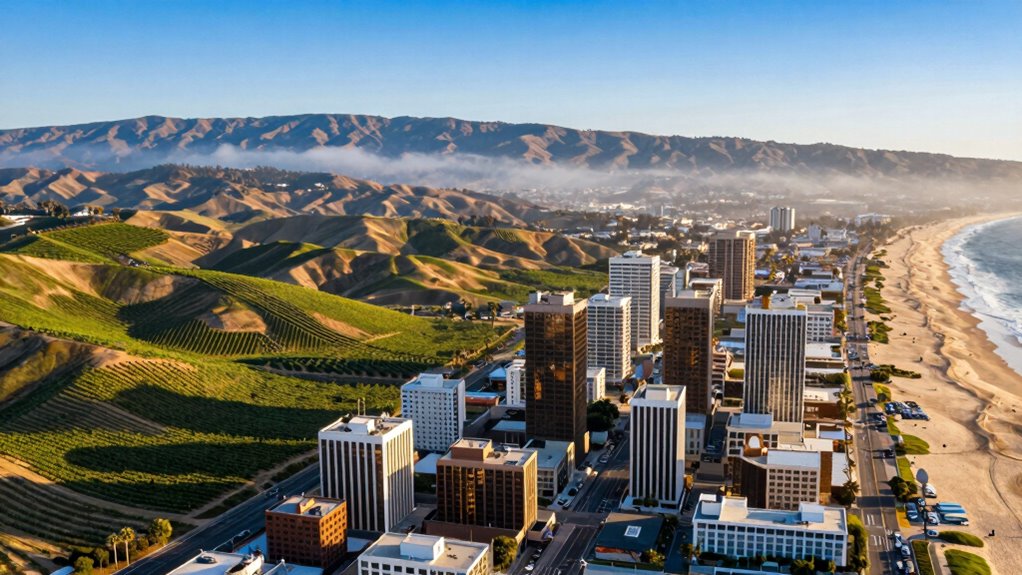

If you visit Northern California, you’ll notice a laid-back vibe focused on authenticity, sustainability, and outdoor experiences. In contrast, Southern California exudes glamour, entertainment, and trendiness, with a love for nightlife and celebrity culture. The regions also differ in community attitudes, with Northern Californians valuing independence and activism, while Southerners prioritize diversity and social expression. To uncover more about what makes each region unique, keep exploring how their values shape daily life and culture.
Key Takeaways
- Northern California emphasizes sustainability, authenticity, and outdoor lifestyles, while Southern California is known for glamour, entertainment, and nightlife.
- Northern California communities prioritize environmental activism and eco-friendly technology; Southern California focuses on fashion, diversity, and social engagement.
- Northern California features organic foods, farmers’ markets, and connection to nature; Southern California offers diverse cuisines and pop culture events.
- Northern California’s architecture promotes eco-conscious design and outdoor living; Southern California’s style leans toward trend-driven, celebrity-influenced aesthetics.
- Regional values shape lifestyles: eco-consciousness and community in the North versus social status and entertainment in the South.
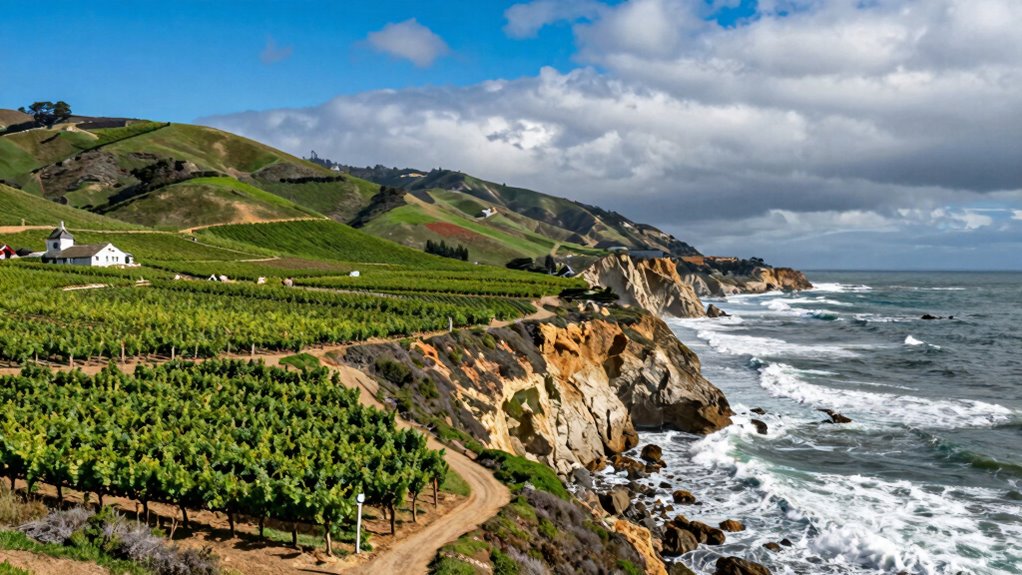
Many people assume that Northern and Southern California are just two halves of the same state, but in reality, they offer distinctly different experiences. When you explore these regions, you quickly notice that cultural nuances shape everyday life in unique ways. Northern California tends to embrace a laid-back, eco-conscious vibe. You’ll find communities that prioritize sustainability, local art, and a strong connection to nature. The culture here feels more independent and progressive, with a focus on innovation and activism. It’s common to see farmers’ markets, organic cafes, and outdoor activities woven into daily routines. People value authenticity and tend to be more reserved compared to Southern California’s more flamboyant style. Additionally, digital publishing trends influence how communities share and consume information across both regions, often reflecting their distinct values and lifestyles. Incorporating eco-friendly HVAC solutions in homes and businesses further aligns with Northern California’s sustainable mindset. This focus on environmental consciousness also influences the types of home theater projectors that are popular in the area, emphasizing energy efficiency and advanced technology. Moreover, the emphasis on outdoor living spaces and sustainable design principles highlights how environmental values shape lifestyle choices in Northern California. You’ll also notice how renewable energy integration plays a key role in shaping the region’s sustainable architecture and community planning.
Northern California’s laid-back, eco-conscious vibe emphasizes authenticity, community, and a deep connection to nature.
On the other hand, Southern California is all about glamour, entertainment, and a fast-paced lifestyle. You’ll notice a more vibrant, trend-driven atmosphere where fashion, nightlife, and celebrity culture dominate. The lifestyle variations are evident—you’re likely to see people spending weekends at beaches, dining out at trendy restaurants, or attending events that celebrate pop culture. The cultural nuances here reflect a global influence, with a melting pot of cuisines, languages, and traditions. This diversity fuels a sense of openness and a desire to stay on the cutting edge of trends. People tend to be more outgoing and expressive, often emphasizing appearance and social status as part of their daily routines.

HVAC Made Simple: The Step-by-Step Survival Guide to Heating, Cooling & Energy Efficiency—Understand Your System, Avoid Scams, Fix What Matters, and Cut Your Energy Bills with Pro Advice
As an affiliate, we earn on qualifying purchases.
As an affiliate, we earn on qualifying purchases.
Frequently Asked Questions
How Do Cost of Living Differences Affect Residents’ Lifestyles?
You’ll notice that cost of living differences, especially housing affordability, shape your lifestyle flexibility. In Southern California, higher housing costs often mean smaller living spaces or longer commutes, limiting leisure options. Conversely, Northern California’s more affordable housing allows you to enjoy more spacious homes and diverse activities. These financial realities influence how much you can spend on entertainment, travel, and even daily essentials, ultimately shaping your overall quality of life.
What Are the Main Cultural Influences Unique to Each Region?
Back in the day, you’d find Northern California’s tech influence blending with vibrant cultural festivals celebrating arts and innovation, while Southern California’s Hollywood glamour shapes its lively entertainment scene. You’ll notice Northern California’s focus on sustainability, arts, and tech, whereas Southern California thrives on food diversity and beachside lifestyles. Both regions boast unique cultural influences, from wine tastings in the North to eclectic street food in the South, enriching your California experience.
How Do Weather Patterns Impact Outdoor Activities Year-Round?
Weather patterns, shaped by microclimate variations, considerably influence your outdoor activities year-round. In Southern California, mild winters and hot, dry summers let you enjoy seasonal outdoor activities like surfing and hiking without much interruption. Northern California’s cooler, wetter climate may limit some activities in winter but offers excellent conditions for snow sports and lush outdoor adventures during the wetter months. Adapt your plans to these regional microclimate differences for the best experience.
Are There Significant Differences in Public Transportation Options?
Imagine the two regions as different puzzle pieces—Southern California’s public transit feels like a sprawling spider web, with buses and trains weaving through urban centers, while Northern California’s transportation infrastructure is more like a robust network of bridges and BART, connecting diverse communities. Southern options often focus on buses and commuter trains, whereas Northern California offers a more extensive rail system. Your experience depends on where you are and what you need to reach.
How Do Regional Politics Differ Between Northern and Southern California?
You’ll find regional politics differ quite a bit between Northern and Southern California. Northern California leans more Democratic, with liberal policies and progressive voting behavior, especially in cities like San Francisco and Oakland. Southern California, while also Democratic, has a mix of political party alignment, with some areas leaning more conservative. These differences shape policies, voting patterns, and political priorities across the regions, influencing everything from local governance to statewide initiatives.

DUMOS 3 Pieces Outdoor Bistro Set, All-Weather PE Rattan Patio Furniture Set with Cushions, Steel Frame Table and Chairs for Balcony, Apartment, Porch, Beige
Robust Construction: Each chair features a steel frame with all-weather PE wicker, supporting 330 lbs. The bistro table…
As an affiliate, we earn on qualifying purchases.
As an affiliate, we earn on qualifying purchases.
Conclusion
Ultimately, whether you prefer the bustling energy of the South or the laid-back charm of the North, California’s true beauty lies in its contrasts. Like two sides of the same coin, both regions offer unique experiences that shape your story. Embrace the differences, for they’re what make California a tapestry of endless adventures. No matter where you choose to land, your journey will be as vibrant as the state itself, waiting to unfold like a sunrise on the horizon.

Managing Data as a Product: Design and build data-product-centered socio-technical architectures
As an affiliate, we earn on qualifying purchases.
As an affiliate, we earn on qualifying purchases.

30 Pack Natural Pulp Fiber Berry Basket,Small Molded Produce Vented Basket Kitchen Supplies for Strawberry Blueberry Raspberry, Fruit Tray for Fruit Vegetable Farmer Market Grocery (Small)
Adequate Quantity – You will receive 30 farmers market baskets in total, These vented baskets are perfect for…
As an affiliate, we earn on qualifying purchases.
As an affiliate, we earn on qualifying purchases.