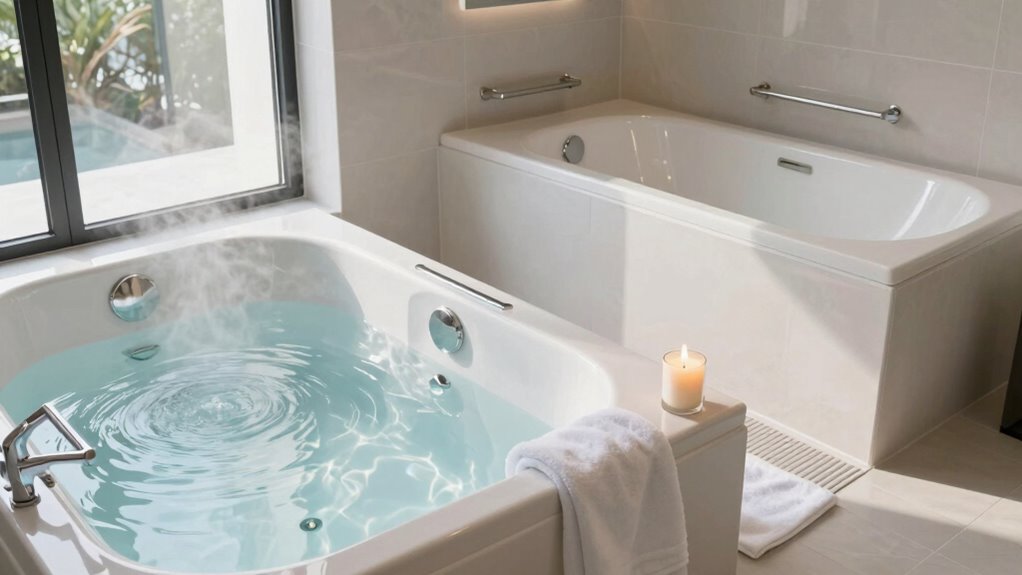

If you prioritize relaxation and classic style, a soaking tub is a great choice for deep, comfortable soaking. However, if safety and easy access are more important—especially if you have mobility issues—a walk-in tub offers safety features like low thresholds and grab bars. Your decision depends on whether you’re aiming for comfort or long-term accessibility. To discover which option suits your needs best, keep exploring the details that follow.

Get everyday essentials delivered free with Prime
- Fast, free delivery on millions of items
- Prime Video, Amazon Music and more included
- Member-only deals all year
Key Takeaways
- Soaking tubs prioritize relaxation and aesthetic appeal, ideal for those seeking a luxurious bath experience.
- Walk-in tubs focus on safety and accessibility, suitable for individuals with mobility challenges or injury recovery needs.
- Installation complexity and cost are generally higher for walk-in tubs due to plumbing and structural modifications.
- Design options vary, with soaking tubs offering more traditional and modern styles, while walk-in tubs emphasize safety features and sleek finishes.
- Choosing depends on whether relaxation or safety is the primary priority, along with budget and long-term accessibility considerations.
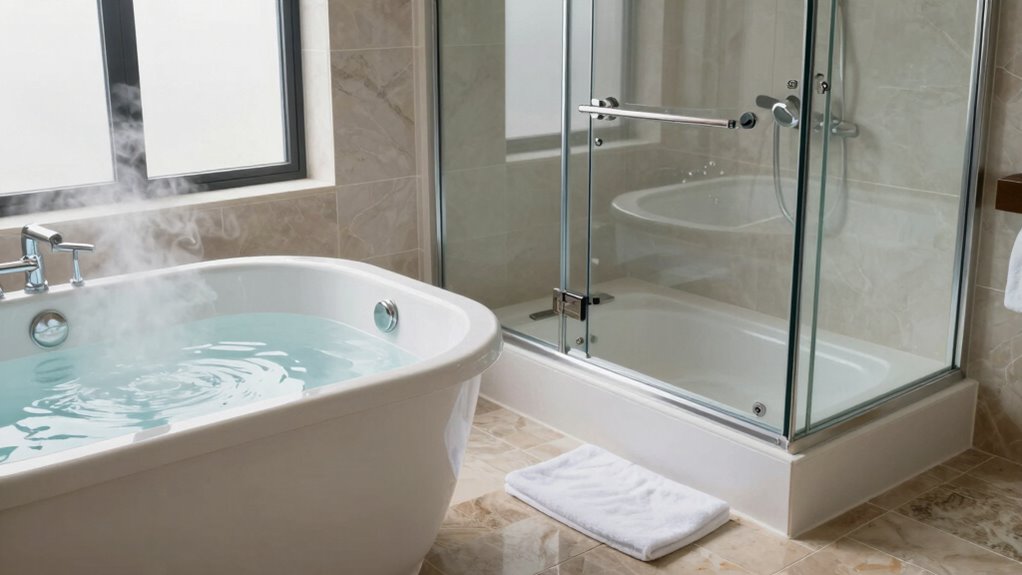
When choosing between a soaking bathtub and a walk-in tub, your specific needs and lifestyle should guide your decision. Both options have unique benefits, but understanding how they fit into your daily routine is key. If you prioritize relaxation and a classic look, a soaking bathtub might be your ideal choice. These tubs are designed to provide a deep, comfortable soak that helps you unwind after a long day. They often boast an aesthetic appeal that complements traditional bathroom decor, with sleek lines and timeless finishes. On the other hand, walk-in tubs are tailored for safety and accessibility, especially if mobility is a concern. They feature a low threshold for easy entry and often come equipped with safety bars and seats, making them a practical choice for seniors or those recovering from injury.
Choose a soaking tub for relaxation and style; opt for a walk-in tub for safety and accessibility.
The installation process for each type of tub varies considerably. A soaking bathtub typically requires a straightforward installation, similar to replacing a standard tub. You remove the old unit and fit the new one into the existing space, often with minimal modifications. This makes installation quicker and less disruptive, especially if your bathroom is already set up for traditional tubs. Conversely, walk-in tubs usually involve a more complex installation process. They often need additional plumbing adjustments, reinforced flooring, and sometimes modifications to your bathroom layout to accommodate the door mechanism and safety features. Because of this, installing a walk-in tub can take longer and might incur higher costs, but it ensures increased safety and independence.
Aesthetic appeal is also an important consideration. Soaking tubs are available in various styles, from vintage clawfoot designs to modern minimalist shapes, allowing you to choose one that enhances your bathroom’s decor. They tend to blend seamlessly with traditional or contemporary themes. Walk-in tubs, while primarily designed for function, are increasingly available in styles that blend into modern bathrooms. Many feature sleek, unobtrusive designs and come with options for customizable finishes, so they don’t necessarily detract from your bathroom’s overall aesthetic. Additionally, the importance of contrast ratio plays a role in selecting fixtures and finishes that improve both safety and visual harmony in your bathroom environment.
Ultimately, your decision hinges on what matters most to you. If you want a visually appealing, relaxing experience without major renovations, a soaking bathtub might be the way to go. However, if safety, ease of entry, and long-term accessibility are your priorities, then a walk-in tub offers practical benefits that can markedly improve your quality of life. Both options serve different needs, so carefully weigh your preferences, budget, and physical requirements before making your choice. Additionally, understanding the role of contrast ratio can help you appreciate how design choices impact overall quality and safety in your bathroom setup.
As an affiliate, we earn on qualifying purchases.
Frequently Asked Questions
Are Walk-In Tubs Suitable for Small Bathrooms?
Yes, walk-in tubs are suitable for small bathrooms. They’re designed with space efficiency in mind, making them a good fit where bathroom space is limited. Plus, they offer design flexibility, allowing you to incorporate safety features without sacrificing style. You can choose compact models that fit comfortably into tight spaces, ensuring you still enjoy the benefits of a walk-in tub while maintaining your bathroom’s functionality and aesthetic.
How Do Installation Costs Compare Between the Two?
They say “you get what you pay for,” and installation costs reflect that. Walk-in tubs typically cost more upfront due to complex installation processes, including plumbing and space adjustments. Soaking bathtubs usually have lower installation costs because they’re simpler to install. When comparing costs, consider not just the initial expense but also long-term benefits. A thorough cost comparison helps you choose the right option for your budget and needs.
Which Option Is Better for Elderly Safety?
A walk-in tub is better for elderly safety because it offers enhanced safety features like low thresholds, anti-slip surfaces, and grab bars that accommodate limited mobility. These features help prevent slips and falls, ensuring more independence and security. While soaking bathtubs are relaxing, they lack these safety enhancements, making walk-in tubs the smarter choice for seniors prioritizing safety and ease of access.
Can Both Tubs Be Used for Hydrotherapy?
Yes, both soaking bathtubs and walk-in tubs can be used for hydrotherapy, offering various benefits like improved circulation and muscle relaxation. You should consider tub material options like acrylic, fiberglass, or cast iron, which influence durability and heat retention. Hydrotherapy benefits depend on water temperature and jets, so choose a tub that suits your therapy needs and comfort preferences for effective relaxation and recovery.
Are There Eco-Friendly Options Available for Each?
Think of eco-friendly tubs as a garden thriving with sustainable choices. Both soaking bathtubs and walk-in tubs now come with eco-friendly materials, making them gentler on the planet. Water-saving features like low-flow faucets and efficient drainage systems help conserve water, reducing your environmental footprint. Whether you choose a soaking or walk-in tub, you can enjoy relaxation while supporting sustainability, turning your bathroom into a green sanctuary.
As an affiliate, we earn on qualifying purchases.
Conclusion
Choosing between a soaking bathtub and a walk-in tub depends on your unique needs, just like picking the right tool for a job. If relaxation is your goal, a soaking tub offers a tranquil escape. But if safety and accessibility matter most, a walk-in tub is like having a personal assistant at your side. Consider what matters most to you—comfort or convenience—and make a choice that feels like a perfect fit, like a puzzle piece finding its match.
As an affiliate, we earn on qualifying purchases.
As an affiliate, we earn on qualifying purchases.
Halloween Picks
halloween
As an affiliate, we earn on qualifying purchases.