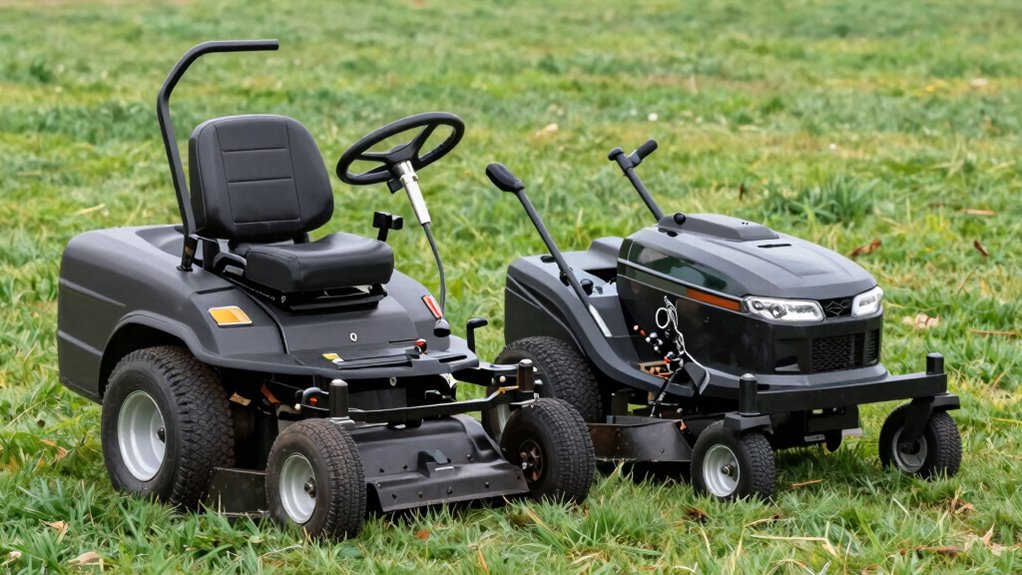

If you’re choosing between a riding lawn mower and a zero turn mower, consider your lawn’s size and complexity. Zero turn mowers are better if you need quick, precise cuts around obstacles, thanks to their sharp maneuverability. They’re usually faster but come with higher maintenance costs. Riding mowers are simpler, more affordable, and suit smaller or less intricate lawns. Want to discover which option fits your landscape and budget best? Keep going to find out more.

Get everyday essentials delivered free with Prime
- Fast, free delivery on millions of items
- Prime Video, Amazon Music and more included
- Member-only deals all year
Key Takeaways
- Zero turn mowers offer superior maneuverability and faster lawn coverage due to independent wheel control.
- Riding mowers are simpler, more affordable, and easier to maintain, suitable for smaller or less complex lawns.
- Zero turn models typically consume more fuel per hour but complete tasks quickly, balancing efficiency.
- Riding mowers provide a straightforward operation, ideal for users preferring traditional steering controls.
- Choice depends on lawn size, landscape complexity, and preferences for speed, maneuverability, and maintenance.
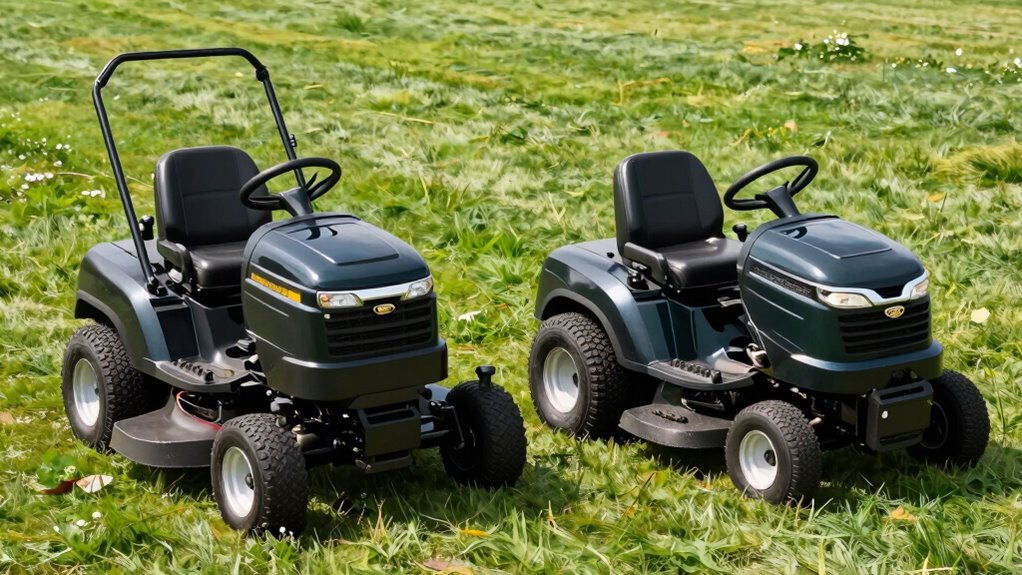
When choosing between a riding lawn mower and a zero turn mower, understanding their differences can help you make the best decision for your lawn care needs. Both machines serve the purpose of maintaining your garden, but they approach the task differently, impacting your efficiency and ease of use. If your lawn is large and requires frequent maintenance, a zero turn mower might be the more practical choice due to its superior maneuverability. On the other hand, a riding mower suits smaller or more straightforward lawns where precision isn’t as critical.
One of the key differences lies in their maneuverability. Zero turn mowers are designed with a tight turning radius, thanks to their independent wheel control. This allows you to navigate around obstacles, flower beds, and lawn furniture with ease, considerably reducing the time you spend on garden maintenance. Riding lawn mowers, while simpler to operate, typically rely on a steering wheel and have a broader turning radius, which can make the process slower and more cumbersome on intricate landscapes.
Zero turn mowers offer tight turns for navigating obstacles quickly and efficiently.
Fuel efficiency is another critical factor to weigh. Zero turn mowers tend to consume more fuel per hour than traditional riding mowers because of their powerful engines and high-performance design. However, they often complete tasks faster, which can balance out fuel consumption over the course of a full mowing session. If you’re concerned about ongoing costs and environmental impact, you’ll want to compare specific models’ fuel efficiency ratings. Some newer zero turn models incorporate features that optimize fuel use, making them more economical in the long run. Additionally, understanding the environmental impact of your equipment can help you make more eco-friendly choices. Being aware of these factors can also influence your maintenance costs over time.
Ease of maintenance also plays a role in your decision. Zero turn mowers usually have more complex mechanics, which might mean higher maintenance costs and more frequent service needs. Riding lawn mowers are generally simpler, making them easier to care for if you prefer doing your own repairs. However, regular upkeep can prolong the lifespan of your mower and improve its overall performance, regardless of the type you select. Proper maintenance routines can also prevent costly repairs and ensure your mower runs efficiently for years to come.
Comfort and operator experience matter too. Zero turn mowers often come with ergonomic designs, adjustable seats, and intuitive controls, allowing for a more comfortable ride during long sessions. Riding mowers may lack some of these features but are straightforward to operate, especially if you’re familiar with traditional lawn equipment. Additionally, maneuverability can significantly affect how efficiently you complete your lawn tasks, especially on complex landscapes. Considering the overall operator comfort can make a noticeable difference in how enjoyable and productive your mowing experience is. Keeping these factors in mind will help you choose the mower that best suits your lawn care routine.
As an affiliate, we earn on qualifying purchases.
Frequently Asked Questions
Which Mower Type Is Better for Hilly Terrain?
For hilly terrain, a zero-turn mower is your best choice. Its hydraulic systems provide better maneuverability and stability on slopes, helping you navigate uneven ground safely. Plus, zero-turn mowers offer superior cutting precision, ensuring an even cut across slopes. Riding lawn mowers can struggle with steep inclines, but zero-turn models are designed for agility and control, making your mowing tasks safer and more efficient on hilly landscapes.
How Do Maintenance Costs Compare Between the Two?
Zero turn mowers typically have higher maintenance costs compared to riding lawn mowers due to their complex steering systems and hydraulic components. You might spend more on repairs and parts over time. However, they often offer better fuel efficiency, saving you money in the long run. Additionally, warranty coverage for zero turns can be more thorough, helping offset some maintenance expenses. Regular upkeep ensures both types stay in good condition, but costs vary based on usage.
Are Zero-Turn Mowers Suitable for Small Lawns?
Zero-turn mowers are perfect for small lawns, especially if your garden size is tiny enough for a squirrel to run across. They’re nimble, easy to maneuver, and can zigzag through tight spots effortlessly. Plus, they don’t take up much mower storage space and make cutting grass feel like a breeze. So, if your yard isn’t a sprawling jungle, a zero-turn mower is a smart, efficient choice.
What Safety Features Are Included on Each Mower?
Both riding lawn mowers and zero-turn mowers prioritize user safety with features like emergency shut-off switches and safety interlock systems that prevent operation when seats are unoccupied. Zero-turn mowers often include rollover protection and enhanced visibility for user safety considerations, while riding mowers may feature blade control safety mechanisms. A safety features comparison helps you understand which mower offers better protection, ensuring safer operation tailored to your lawn care needs.
Can Both Mowers Handle Uneven or Rough Terrain?
Both mowers can handle uneven or rough terrain, but their garden versatility and terrain adaptability differ. Zero turn mowers excel on flat, open spaces with smooth surfaces due to their agility and sharp turning capabilities. Riding lawn mowers are better suited for more rugged, uneven terrain, offering greater stability and power. Your choice depends on your terrain’s complexity and the level of garden versatility you need for efficient mowing.
As an affiliate, we earn on qualifying purchases.
Conclusion
While zero turn mowers offer increased maneuverability and faster cutting, they may seem intimidating at first. However, with some practice, you’ll find them easy to handle and worth the investment for your lawn’s efficiency. Don’t worry about the initial learning curve—most users quickly become comfortable. Ultimately, choosing between a riding mower and a zero turn depends on your lawn size and your comfort level. Either way, you’ll enjoy a well-maintained yard with minimal effort.
best zero turn mower for large lawns
As an affiliate, we earn on qualifying purchases.
As an affiliate, we earn on qualifying purchases.
As an affiliate, we earn on qualifying purchases.
Halloween Picks
halloween
As an affiliate, we earn on qualifying purchases.