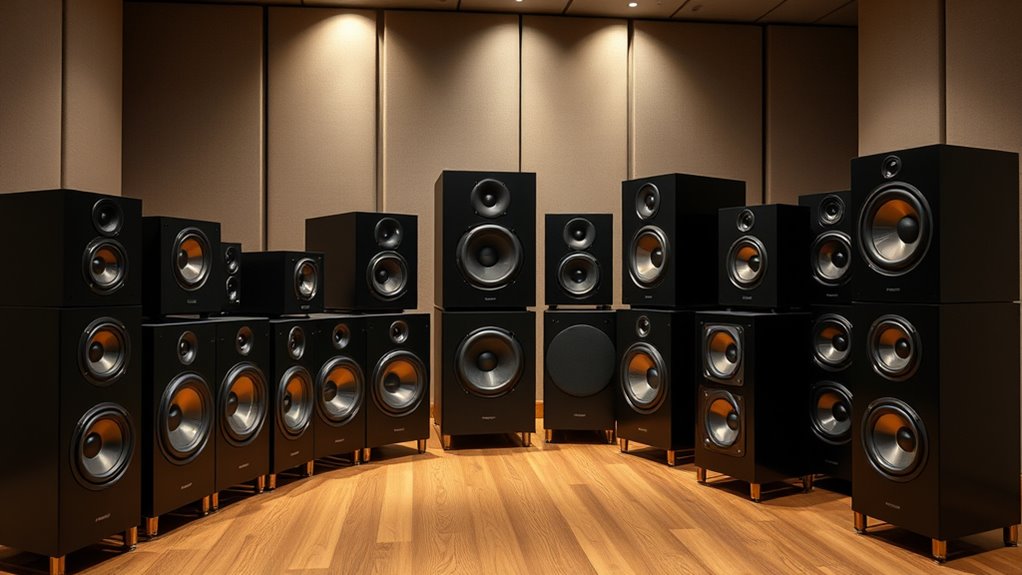

Choosing the right studio monitors is essential for accurate sound reproduction in any recording or mixing setup. The best overall pick, JBL 305P MkII, offers balanced sound and reliable performance for professional use. For those on a budget, the PreSonus Eris 3.5 provides solid clarity without breaking the bank, while the Yamaha HS5 strikes a good balance of detail and affordability. Buyers often face tradeoffs between price, size, and sound accuracy — larger monitors tend to be more precise but are less space-efficient. Continue reading for a detailed breakdown of the top options and what suits your needs best.

Get everyday essentials delivered free with Prime
- Fast, free delivery on millions of items
- Prime Video, Amazon Music and more included
- Member-only deals all year
Key Takeaways
- Larger monitors generally provide better low-end response but require more space and power.
- Bluetooth and wireless features are available but can introduce latency or compromise sound fidelity for professional work.
- Entry-level monitors often sacrifice some accuracy for affordability, making them suitable for beginners.
- Premium models deliver the most precise sound but come with a higher price tag and more complex setup.
- Build quality and design impact durability and usability, especially in multi-purpose or portable setups.
| PreSonus Eris 3.5 Powered Desktop Studio Monitors, Pair – 50W, White |  | Best for Compact Desktop Setups | Power: 50W | Woofer Size: 3.5 inches | Tweeter Size: 1 inch | VIEW ON AMAZON | See Our Full Breakdown |
| PreSonus Eris 4.5 Bluetooth Powered Desktop Studio Monitors Pair 50W Black |  | Best Versatile Wireless Monitor | Power: 50W | Driver Size: 4.5 inches | Connectivity: Bluetooth 5.0, TRS, RCA, AUX | VIEW ON AMAZON | See Our Full Breakdown |
| Edifier MR4 Power Studio Monitor Speakers, 4 inch Active Near-Field Speaker |  | Best for Balanced Near-Field Monitoring | Speaker Size: 4 inches | Tweeter: 1 inch silk dome | Inputs: TRS, RCA, AUX | VIEW ON AMAZON | See Our Full Breakdown |
| M-AUDIO BX3 3.5-inch Wired Studio Monitors Pair |  | Best for Professional-Grade Small Studio Monitoring | Driver Size: 3.5 inches | Woofer Material: Kevlar | Tweeter Type: Silk dome | VIEW ON AMAZON | See Our Full Breakdown |
| Mackie CR3.5 Studio Monitors (Pair), 3.5″ Woofers, Tone Knob, Black | 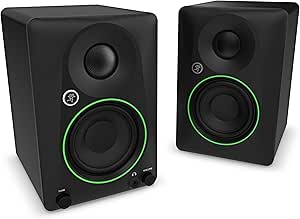 | Best Budget-Friendly Desk Monitor | Number of Monitors: 2 | Woofer Size: 3.5 inches | Color: Black | VIEW ON AMAZON | See Our Full Breakdown |
| PreSonus Eris 3.5 Powered Studio Monitors, Pair |  | Best Budget-Friendly Nearfield Monitors | Size: 3.5 inches | Power: 50 watts | Frequency Range: 80 Hz–20 kHz | VIEW ON AMAZON | See Our Full Breakdown |
| JBL 305P MkII 5″ 2-Way Active Powered Studio Reference Monitors (Pair) |  | Best for Accurate, Wide-Sweet Spot Monitoring | Number of Monitors: 2 | Driver Size: 5 inches | Amplifier Power: 41 Watts per speaker | VIEW ON AMAZON | See Our Full Breakdown |
| Yamaha HS5 Powered Studio Monitor, Pair |  | Best for Flat, Transparent Sound Reproduction | Speaker Type: Woofer | Power Output: 70 watts | Frequency Response: 54Hz – 30kHz | VIEW ON AMAZON | See Our Full Breakdown |
| PreSonus Eris E4.5 2-Way 4.5-Inch Near Field Studio Monitor (Pair) |  | Best Compact Studio Monitors for Versatile Environments | Woofer Size: 4.5 inches | Power: 50 Watts | Amplifier Type: Class AB | VIEW ON AMAZON | See Our Full Breakdown |
| PreSonus Eris E7 XT 2-Way Active Studio Monitor |  | Best for Accurate, Professional Mixing | Low-frequency transducer: 6.55-inch woven composite | High-frequency transducer: 1.25-inch silk-dome | Waveguide: EBM waveguide (100° x 60°) | VIEW ON AMAZON | See Our Full Breakdown |
| Yamaha HS4 Powered Studio Monitor, Black, Pair |  | Best Compact Studio Monitor for Precise Midrange Clarity | Type: 2-way bass-reflex powered speaker | Woofer Size: 4.5 inches | Tweeter Size: 1 inch | VIEW ON AMAZON | See Our Full Breakdown |
More Details on Our Top Picks
PreSonus Eris 3.5 Powered Desktop Studio Monitors, Pair – 50W, White
The PreSonus Eris 3.5 stands out for delivering professional-quality sound in a tiny footprint, making it ideal for tight desktop spaces. Its 3.5-inch woofers and 1-inch silk-dome tweeters provide a clear, balanced sound that suits music, streaming, or gaming. Unlike larger monitors like the JBL 305P MkII, it won’t deliver deep bass or high SPLs, but its adjustable tuning controls help optimize sound in small rooms. The main tradeoff here is the limited bass response, which makes it less suitable for bass-heavy music or mixing low-end frequencies. It offers multiple connections, including TRS, RCA, and aux, for versatile setups. However, setup can require some tweaking to get the best sound, and it’s not portable beyond desktop use.
Pros:- Compact size perfect for small desks
- Balanced, clear sound suitable for multiple uses
- Adjustable tuning controls improve room adaptation
- Multiple connectivity options
Cons:- Limited bass response due to small woofer size
- Requires setup effort to optimize sound quality
Best for: Small desktop users who need quality sound without space constraints.
Not ideal for: Audio professionals needing deep bass or larger monitoring environments.
- Power:50W
- Woofer Size:3.5 inches
- Tweeter Size:1 inch
- Frequency Range:80 Hz–20 kHz
- Color:White
Our verdict“This monitor is best for users with limited space who want decent studio sound for everyday tasks.”
PreSonus Eris 4.5 Bluetooth Powered Desktop Studio Monitors Pair 50W Black
The PreSonus Eris 4.5 Bluetooth excels for users who want a compact monitor with wireless connectivity and multiple input options. With a 4.5-inch driver, it offers a bit more bass than the Eris 3.5, but still falls short of larger models like the Yamaha HS5 for bass-heavy applications. Its Bluetooth 5.0 makes it ideal for multimedia and casual listening, while the analog inputs provide professional connectivity. The built-in headphone amplifier and acoustic tuning controls add flexibility, yet Bluetooth latency can be an issue for critical audio editing. Compared to the Edifier MR4, it offers a more streamlined setup but might lack the same level of flat response accuracy for detailed mixing. Its size makes it perfect for small, multi-purpose spaces, but you’ll likely need an external sub for deep bass.
Pros:- Wireless Bluetooth connectivity for convenience
- Multiple input options including professional-grade connectors
- Built-in headphone amp for private listening
- Acoustic tuning controls for sound customization
Cons:- Limited low-end response; lacks deep bass
- Bluetooth latency may hinder critical editing
Best for: Multimedia enthusiasts and streamers seeking versatile wireless and wired connectivity in a compact form.
Not ideal for: Critical audio engineers needing ultra-flat response and no latency issues.
- Power:50W
- Driver Size:4.5 inches
- Connectivity:Bluetooth 5.0, TRS, RCA, AUX
- High-frequency transducer:1 inch silk-dome
- Additional features:Headphone amp, Acoustic tuning, Energy Saver mode
Our verdict“This monitor works best for casual listening, multimedia use, and small studios that benefit from wireless features.”
Edifier MR4 Power Studio Monitor Speakers, 4 inch Active Near-Field Speaker
The Edifier MR4 is tailored for creators who need a reliable near-field monitor with flexible connections. Its 4-inch composite woofer combined with a silk dome tweeter produces a flat, detailed sound that is comparable to the M-AUDIO BX3 but with slightly more emphasis on clarity. While it doesn’t match the larger drivers’ bass extension, its dual-mode setup allows for monitoring and casual listening, making it versatile for small studios or desktops. Unlike the M-AUDIO BX3, which emphasizes punchy sound, the MR4 offers a more neutral response suited for mixing. The main limitation is its lack of wireless or Bluetooth options, restricting mobility. It’s perfect for those who prioritize accuracy over portability or wireless convenience.
Pros:- Accurate, flat response for mixing and mastering
- Multiple connection options including TRS, RCA, AUX
- Dual mode for monitoring and casual listening
- Easy-to-use sound controls
Cons:- Limited to near-field use; not for large spaces
- No wireless or Bluetooth connectivity
Best for: Music creators and artists needing precise near-field monitoring in a compact, wired setup.
Not ideal for: Large room environments or users seeking wireless or multi-room audio features.
- Speaker Size:4 inches
- Tweeter:1 inch silk dome
- Inputs:TRS, RCA, AUX
- Material:MDF wood
- Modes:Monitor and Music
- Controls:High/Low frequency, Volume
Our verdict“This speaker is best for small studios or desktop setups focused on detailed, accurate sound reproduction.”
M-AUDIO BX3 3.5-inch Wired Studio Monitors Pair
The M-AUDIO BX3 pair emphasizes high-quality, professional-grade sound with durable MDF cabinets and Kevlar woofers. Its 3.5-inch drivers deliver punchy bass and crisp highs, rivaling larger monitors like the Yamaha HS5 in a compact form. The multiple input options—1/4-inch, 1/8-inch, RCA—make it highly versatile, suitable for music production, gaming, and streaming alike. Compared to the PreSonus Eris 3.5, the BX3 offers a more robust build and slightly more refined sound, but it requires more space for two speakers and a proper setup. It lacks wireless or Bluetooth features, making it less convenient for casual or multi-device use. Overall, it’s a solid choice for those who want studio accuracy in a small package, willing to invest in a more involved setup.
Pros:- High-fidelity sound with clear highs and punchy bass
- Multiple input options for flexible setup
- Durable MDF cabinet minimizes vibrations
- Suitable for professional or serious hobbyist use
Cons:- Requires space for two speakers and proper positioning
- No wireless or Bluetooth connectivity
Best for: Music producers and serious hobbyists seeking studio-quality sound in a wired, space-conscious package.
Not ideal for: Casual listeners or those who want wireless convenience for portable use.
- Driver Size:3.5 inches
- Woofer Material:Kevlar
- Tweeter Type:Silk dome
- Cabinet Material:MDF
- Inputs:1/4-inch, 1/8-inch, RCA
- Included Accessories:Passive speaker, active speaker, foam feet, cables, software
Our verdict“This monitor is ideal for users who prioritize sound accuracy and durability over wireless features or portability.”
Mackie CR3.5 Studio Monitors (Pair), 3.5″ Woofers, Tone Knob, Black
The Mackie CR3.5 offers a practical solution for those setting up a small home studio or streaming station. Its 3.5-inch woofers produce accurate sound suitable for casual mixing or streaming, with a simple tone knob to adjust the voicing based on placement—comparable to the PreSonus Eris 3.5 but at a lower price. While it doesn’t match the flat response of higher-end monitors like the Edifier MR4, its affordability makes it appealing for beginners or hobbyists. The main tradeoffs involve limited frequency response and fewer advanced features, such as Bluetooth or multiple inputs. Its included cables and isolation pads make setup straightforward, but it’s best used in small, controlled environments.
Pros:- Affordable price for entry-level users
- Accurate enough for casual mixing and streaming
- Tone knob for easy voicing adjustments
- Includes cables and isolation pads
Cons:- Limited frequency range and bass response
- No wireless or advanced connectivity options
Best for: Beginners or budget-conscious users needing reliable sound for small studios or streaming setups.
Not ideal for: Professional mixing or larger room setups requiring more precise response or wireless features.
- Number of Monitors:2
- Woofer Size:3.5 inches
- Color:Black
- Includes:Isolation pads, cables
Our verdict“This monitor is suited for newcomers or those with tight budgets seeking decent sound for small-scale setups.”
PreSonus Eris 3.5 Powered Studio Monitors, Pair
The PreSonus Eris 3.5 pair stands out for offering studio-quality sound in a compact form, making them ideal for desktop setups and small rooms. Compared with larger monitors like the Yamaha HS5, they deliver less bass due to their size, but their 50W amplification and built-in tuning controls ensure clear, balanced audio for casual mixing, streaming, or gaming. Their versatility in connectivity—TRS, RCA, aux—adds to their appeal, though their small driver limits deep bass response and overall volume, making them less suitable for larger spaces or professional mastering. This pick makes the most sense for content creators working in tight spaces or on a budget.Pros:- High-quality, studio-grade sound for its size
- Powerful 50W amplification with distortion-free output
- Customizable sound with built-in tuning controls
- Versatile connectivity options
Cons:- Limited to nearfield listening, not suitable for large rooms
- Small size may not produce deep bass for some users
Best for: Entry-level producers, gamers, or streamers who need decent sound without space or budget constraints.
Not ideal for: Large-room mixing or audiophiles seeking deep bass and high volume capacity.
- Size:3.5 inches
- Power:50 watts
- Frequency Range:80 Hz–20 kHz
- Connectivity:TRS, RCA, aux input, headphone jack
Our verdict“This monitor is perfect for those who need compact, affordable, and versatile speakers for nearfield listening and casual production.”
JBL 305P MkII 5″ 2-Way Active Powered Studio Reference Monitors (Pair)
The JBL 305P MkII pair excels in delivering precise, immersive sound with a broad sweet spot, making them ideal for detailed music production, podcasting, and sound design. Unlike the smaller PreSonus Eris 3.5, these monitors provide deeper bass and more accurate tonal balance thanks to their 5-inch drivers and dual 41-watt amplifiers. The inclusion of features like the Image Control Waveguide and adjustable EQ settings allows for tailored sound in various environments, though they require a bit more space for proper placement and are priced higher, which may be a barrier for hobbyists. This model is best suited for semi-professional or professional studio setups where precision is paramount.Pros:- Delivers clear, accurate sound with a wide sweet spot
- Powerful dual amplifiers provide dynamic range and deep bass
- Adjustable EQ settings for room tuning
- Built with durable materials tested for reliability
Cons:- Requires space for optimal placement to maximize sound quality
- May be expensive for casual or beginner users
Best for: Intermediate to professional producers needing wide, accurate imaging and flexible room calibration.
Not ideal for: Casual users with limited space or budget constraints, as they demand proper placement and are more costly.
- Number of Monitors:2
- Driver Size:5 inches
- Amplifier Power:41 Watts per speaker
- Inputs:XLR/TRS
Our verdict“These monitors are designed for users who prioritize accuracy and imaging in a controlled studio environment.”
Yamaha HS5 Powered Studio Monitor, Pair
The Yamaha HS5 pair is renowned for its flat frequency response, making it a favorite among mixing engineers and professional producers. Compared with the PreSonus Eris E4.5, the HS5’s larger 5-inch driver and bi-amplified design deliver more accurate low-end reproduction, which is crucial for critical listening. While the HS5’s size and price make it suitable for dedicated studio spaces, they require ample room and proper positioning to unlock their full potential. Their no-frills, transparent sound promotes honest mixing, but they lack the adjustable tuning features seen in some competitors like the JBL 305P MkII. This monitor is best for serious studio environments where neutrality is essential.Pros:- Highly accurate sound reproduction ideal for mixing
- Bi-amplified design ensures clear, high-fidelity audio
- Flat frequency response prevents tonal coloration
- Includes balanced and unbalanced inputs
Cons:- Large size may require significant space
- No adjustable room tuning features
Best for: Professional or serious hobbyist mixers needing accurate, uncolored sound for detailed editing and mastering.
Not ideal for: Casual listeners or those with very limited space, as their size and price demand a dedicated setup.
- Speaker Type:Woofer
- Power Output:70 watts
- Frequency Response:54Hz – 30kHz
- Woofer Diameter:5 inches
Our verdict“This monitor is best suited for professionals or dedicated hobbyists prioritizing transparency in sound for mixing and mastering.”
PreSonus Eris E4.5 2-Way 4.5-Inch Near Field Studio Monitor (Pair)
The PreSonus Eris E4.5 pair offers accurate, studio-quality sound in a compact package, making them suitable for multimedia, music production, and hi-fi listening in smaller spaces. Compared with the smaller PreSonus Eris 3.5, these monitors feature a larger 4.5-inch woofer, delivering better bass response and a more balanced sound profile. Their versatile connectivity—including TRS, RCA, and aux—along with adjustable tuning controls, makes them adaptable to various setups, though their size and lack of Bluetooth limit mobility and wireless convenience. They are less ideal for large-room monitoring or scenarios demanding extended low-end performance, but excel in desktop environments or secondary listening areas.Pros:- Delivers accurate, studio-quality sound with clear high and low frequencies
- Versatile connectivity including TRS, RCA, and aux inputs
- Compact design suitable for various setups
- Adjustable tuning controls for personalized sound
Cons:- Lacks built-in Bluetooth connectivity
- Requires external subwoofer for deep bass enhancement
Best for: Home producers, multimedia creators, or audiophiles seeking accurate sound in small to medium spaces.
Not ideal for: Large-room mixing or users relying on wireless connectivity, as they lack Bluetooth and require external subwoofers for deep bass.
- Woofer Size:4.5 inches
- Power:50 Watts
- Amplifier Type:Class AB
- Inputs:¼-inch TRS, RCA, ⅛-inch TRS
Our verdict“Ideal for smaller setups where accurate, balanced sound is needed without wireless features or large space requirements.”
PreSonus Eris E7 XT 2-Way Active Studio Monitor
The PreSonus Eris E7 XT combines a 6.55-inch low-frequency driver with a precise silk-dome high-frequency transducer, making it well-suited for professional mixing and production. Its wide imaging and acoustic tuning controls allow for detailed soundstage calibration, surpassing the more compact PreSonus Eris 3.5 in low-end response and overall fidelity. The inclusion of software like Studio One Prime adds value for producers looking for integrated tools. However, its larger footprint demands more space and careful placement. The controls, while flexible, may feel complex for beginners. This monitor is best for those who need a high level of accuracy and imaging in a versatile workspace.Pros:- Wide sweet spot and accurate imaging
- Adjustable controls for tailored sound
- Includes professional music production software
- High power and detailed soundstage
Cons:- Requires ample space for optimal placement
- Complex controls may challenge beginners
Best for: Professional producers, engineers, or serious hobbyists requiring detailed sound with flexible tuning options.
Not ideal for: Small or portable setups where space is limited, or users seeking straightforward, plug-and-play monitors.
- Low-frequency transducer:6.55-inch woven composite
- High-frequency transducer:1.25-inch silk-dome
- Waveguide:EBM waveguide (100° x 60°)
- Included software:Studio One Prime and Studio Magic
Our verdict“This monitor is designed for those who need precise, customizable sound for professional or semi-professional workspaces.”
Yamaha HS4 Powered Studio Monitor, Black, Pair
The Yamaha HS4 stands out for its accurate midrange reproduction, making it a strong choice for mixing vocals and guitars. Compared to the larger Yamaha HS5, the HS4’s smaller 4.5-inch woofer limits bass response, but it excels in clarity and detail in the mid and high frequencies, which are crucial for professional editing. Its multiple input options and room controls add versatility for various studio setups, yet it may require careful placement due to its limited bass output and relatively modest 26W power. This monitor is ideal for small to medium rooms where accuracy in midrange is paramount, such as home studios or project spaces.
Pros:- Excellent clarity in high and mid frequencies for detailed mixing
- Versatile input options including XLR, TRS, and RCA
- Customizable sound with room and high trim controls
- Compact size fits well in limited space
Cons:- Limited bass response due to small woofer size
- Power output may be insufficient for large or untreated rooms
Best for: Producers and engineers working in compact or treated environments needing precise midrange detail.
Not ideal for: Requiring deep bass or high volume levels for large rooms, since its small woofer and limited power restrict low-end and loudness.
- Type:2-way bass-reflex powered speaker
- Woofer Size:4.5 inches
- Tweeter Size:1 inch
- Frequency Response:60 Hz – 22 kHz (-10 dB)
- Output Power:26 W
- Inputs:XLR/TRS Combo, RCA, Stereo Mini
- Included Accessories:Stereo mini-RCA cable, speaker cable, anti-slip pad
Our verdict“This pick makes the most sense for small studio environments where midrange accuracy is a priority over deep bass or high volume capacity.”

How We Picked
These studio monitors were selected based on a combination of sound accuracy, build quality, usability, and value for money. We prioritized models that offer flat frequency response for mixing, reliable power output, and good user reviews. Additional factors included connectivity options, size, and versatility for different studio environments. The ranking reflects a balance between performance and affordability, helping both beginners and experienced users find the best fit for their needs.Factors to Consider When Choosing Studio Monitors
Choosing the right studio monitor depends on several key factors. Beyond just wattage or size, understanding your space, intended use, and budget can significantly influence your decision. A monitor that sounds great in a large room may overwhelm a small desktop setup, so matching the monitor to your environment is crucial. Additionally, consider how you’ll connect your monitors, whether via analog, digital, or wireless options. Durability and ease of use can also impact long-term satisfaction, especially if your studio setup is portable or frequently adjusted.Size and Room Compatibility
The physical size of a monitor influences its low-frequency response and overall accuracy. Smaller monitors, like 3.5-inch models, are ideal for tight spaces and near-field use but may lack deep bass. Larger monitors, such as 5-inch or 7-inch options, provide more full-range sound but require more space and proper placement. It’s essential to match your monitor size to your room dimensions to avoid overpowering or underwhelming sound. Proper positioning—at ear level and with adequate distance from walls—enhances clarity and minimizes reflections.
Frequency Response and Accuracy
Accurate sound reproduction is the core purpose of studio monitors. Flat frequency response ensures you hear your mix as it truly is, without colorations. Cheaper models may boost bass or treble, leading to misjudged mixes. Investing in monitors with a neutral response helps achieve professional-quality results. Keep in mind that some models emphasize certain ranges, so understanding your primary use—mixing, mastering, or casual listening—can guide your choice.
Connectivity and Power
Most studio monitors connect via balanced TRS or XLR inputs, which reduce noise and interference. Some budget models also offer RCA or 3.5mm jacks for convenience with consumer devices. Wireless features, like Bluetooth, can add flexibility but may compromise audio fidelity and introduce latency, making them less suitable for critical listening. Power output and class (e.g., Class AB, Class D) influence volume and efficiency; higher wattage generally supports larger rooms or louder playback without distortion.
Build Quality and Durability
Studio monitors should be sturdy enough to withstand regular use in a variety of environments. Well-built cabinets reduce vibrations that can color the sound, and quality drivers ensure longevity. Easy-to-access volume and tone controls add to usability, especially during long sessions. While premium models often feature better materials, even budget options benefit from solid construction to prevent damage and maintain sound integrity over time.
Budget and Value
Balancing cost with performance is key. Entry-level monitors are suitable for beginners or casual use, offering decent sound at lower prices. For professional work, investing in higher-end models yields better accuracy and durability, but the higher price reflects those benefits. Consider your long-term needs—spending more now can save money later on upgrades or replacements. Also, look for models that include necessary accessories or warranty support to maximize value.
Frequently Asked Questions
Should I choose active or passive studio monitors?
Active studio monitors have built-in amplifiers, which simplifies setup and minimizes external gear, making them ideal for most users, especially beginners and small studios. Passive monitors require an external amplifier or receiver, offering more flexibility for custom setups or larger studios but adding complexity and cost. For those new to audio production, active monitors tend to be more straightforward and reliable, while experienced users might prefer passive options for greater system customization.
How important is size when choosing studio monitors?
Size impacts both the physical footprint and the sound characteristics of the monitors. Smaller monitors, like 3.5-inch models, are better suited for tight spaces and near-field listening, but may lack deep bass response. Larger monitors, such as 5-inch or 7-inch, provide a fuller sound profile, especially at lower frequencies. The key is matching the monitor size to your room size and listening position; larger monitors require more space and proper placement to avoid muddiness or reflections.
Can I use consumer speakers as studio monitors?
While consumer speakers might seem like a convenient alternative, they often lack the flat frequency response needed for accurate mixing and mastering. Studio monitors are designed to reproduce sound without coloration, giving you a true representation of your audio. Using regular speakers can lead to mixes that sound different on other systems. If budget is tight, look for entry-level monitors designed specifically for studio use, rather than relying on typical consumer speakers.
Is Bluetooth or wireless connectivity recommended for studio monitors?
Wireless options like Bluetooth can offer convenience, especially for casual listening or multi-purpose use. However, they often introduce latency and can compromise sound fidelity, making them less suitable for critical production tasks. For professional or detailed editing, wired connections such as XLR or TRS are preferred for their stability and clarity. If you need flexibility, choose monitors with wired options first, and consider wireless only if your workflow allows for some tradeoffs.
How much should I spend on studio monitors?
The budget depends entirely on your needs and environment. Beginners can start with models in the $100-$300 range, which provide decent accuracy for learning and casual work. For professional-grade mixing, investing $500 or more per monitor often yields better sound accuracy, build quality, and durability. Remember, spending more generally results in improved sound clarity and longevity, but always consider your space and specific use case to avoid overspending on features you won’t use.
Conclusion
For casual home producers or beginners, the PreSonus Eris 3.5 offers a budget-friendly entry point with decent sound clarity. Serious professionals aiming for precise mixing should consider the JBL 305P MkII, which balances accuracy and affordability. Those with larger studios or demanding needs might prefer the Yamaha HS5 or PreSonus Eris E7 XT for their superior fidelity. Budget-conscious buyers should prioritize models with flat response and reliable build, while premium users will want to invest in monitors that deliver the most detailed and transparent sound. Your choice ultimately depends on your space, experience level, and production goals.
As an affiliate, we earn on qualifying purchases.Fall Picks
fall essentials