
Finding the right graphics card for 4K gaming in 2026 means balancing raw performance, power consumption, and price. The ASUS TUF Gaming GeForce RTX 5080 stands out as the top overall choice, offering excellent performance for high frame rates at 4K. For more budget-conscious gamers, the ASUS Dual GeForce RTX 3050 provides decent 4K capability at a lower cost, though with some compromises on settings. The main tradeoffs in this category revolve around cost versus performance and future-proofing against upcoming game demands. Continue reading for a detailed breakdown of each option and what makes them unique.

Get everyday essentials delivered free — and shop member deals
- Fast, free delivery on millions of items
- Access to Prime Big Deal Days deals on October 6–7
- Prime Video, Amazon Music and more included
Key Takeaways
- High-end models like the RTX 5080 deliver smooth 4K gaming but come at a premium price.
- The latest AMD RDNA 3 architecture offers solid performance with competitive pricing, exemplified by ASRock and ASUS Radeon cards.
- VRAM capacity is critical; 12GB or more ensures better handling of demanding 4K games and future titles.
- Cooling solutions vary, with premium cards featuring advanced cooling that impacts noise and longevity.
- Budget options like the RTX 3050 can handle 4K gaming at lower settings, but may struggle with the most demanding titles.
| ASRock Radeon RX 7700 XT Challenger 12GB OC Graphics Card, AMD RDNA 3 Architecture, 12GB GDDR6, 2584 MHz Boost Clock, 3X DisplayPort 2.1, 1x HDMI 2.1, Dual Fan Cooling |  | Best Overall for 4K Gaming | Architecture: AMD RDNA 3 | Memory: 12GB GDDR6 | Boost Clock: 2584 MHz | VIEW ON AMAZON | See Our Full Breakdown |
| ASUS Dual GeForce RTX 5060 Ti 16GB GDDR7 OC Edition Gaming Graphics Card |  | Best for Mid-Range 4K Gaming | Memory: 16GB GDDR7 | Clock Speed: 2632 MHz OC / 2602 MHz default | Architecture: NVIDIA Blackwell | VIEW ON AMAZON | See Our Full Breakdown |
| ASUS TUF Gaming GeForce RTX™ 5080 16GB GDDR7 OC Edition Graphics Card |  | Best for Power Users and Heavy Load 4K Gaming | Memory: 16GB GDDR7 | Boost Clock: 2730 MHz | Architecture: NVIDIA Blackwell | VIEW ON AMAZON | See Our Full Breakdown |
| GIGABYTE GeForce RTX 5080 Gaming OC 16G Graphics Card, WINDFORCE Cooling System, 16GB 256-bit GDDR7, GV-N5080GAMING OC-16GD |  | Best Premium for 4K Gaming & Creative Work | Memory: 16GB GDDR7 | Memory Interface: 256-bit | Boost Clock: Unknown (comparable high-end) | VIEW ON AMAZON | See Our Full Breakdown |
| ASUS Prime Radeon RX 9070 XT 16GB GDDR6 OC Edition Gaming Graphics Card |  | Best for Quiet, Cool 4K Gaming | Memory: 16GB GDDR6 | Thermal Design: Phase-change pads, axial-tech fans | Clock Speed: Up to 3030 MHz OC, 2480 MHz default | VIEW ON AMAZON | See Our Full Breakdown |
| ASUS TUF Gaming GeForce RTX 5070 12GB GDDR7 OC Edition |  | Best Overall for Durability and High Performance | Boost Clock: 2640MHz | Memory: 12GB GDDR7 | Architecture: NVIDIA Blackwell | VIEW ON AMAZON | See Our Full Breakdown |
| ASUS Dual GeForce RTX 3050 6GB GDDR6 OC Edition Gaming Graphics Card | 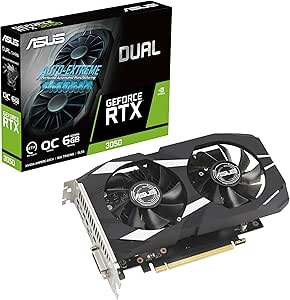 | Best Value for Entry-Level 4K Gaming | Boost Clock: 1500 MHz | Memory: 6GB GDDR6 | Architecture: NVIDIA Ampere | VIEW ON AMAZON | See Our Full Breakdown |
| Gigabyte GeForce RTX 2070 Super Gaming OC 8G |  | Best for Budget-Friendly 4K with Reliable Cooling | Core Clock: 1815 MHz | Memory: 8GB GDDR6 | Architecture: Turing | VIEW ON AMAZON | See Our Full Breakdown |
| GIGABYTE Radeon™ RX 9070 XT Gaming OC ICE 16G |  | Best for AMD Fans Seeking Future-Ready 4K Performance | Boost Clock: unknown | Memory: 16GB GDDR6 | Architecture: RDNA 4 | VIEW ON AMAZON | See Our Full Breakdown |
| ASRock Radeon RX 9070 Challenger 16GB OC |  | Best for High-End AMD Builds with Silent Cooling | Factory Overclock: 2520 MHz | Memory: 16GB GDDR6 | Architecture: RDNA 4 | VIEW ON AMAZON | See Our Full Breakdown |
| graphics card for 4k gaming | Memory | Architecture | Cooling | Boost Clock |
|---|---|---|---|---|
| ASRock Radeon RX 7700 XT Chall | 12GB GDDR6 | AMD RDNA 3 | Dual Fan with Heatpipe | 2584 MHz |
| ASUS Dual GeForce RTX 5060 Ti | 16GB GDDR7 | NVIDIA Blackwell | Axial-tech Fans | — |
| ASUS TUF Gaming GeForce RTX™ 5 | 16GB GDDR7 | NVIDIA Blackwell | — | 2730 MHz |
| GIGABYTE GeForce RTX 5080 Gami | 16GB GDDR7 | — | WINDFORCE with 3 fans | Unknown (comparable high-end) |
| ASUS Prime Radeon RX 9070 XT 1 | 16GB GDDR6 | — | — | — |
| ASUS TUF Gaming GeForce RTX 50 | 12GB GDDR7 | NVIDIA Blackwell | 3.125-slot, axial-tech fans | 2640MHz |
| ASUS Dual GeForce RTX 3050 6GB | 6GB GDDR6 | NVIDIA Ampere | Axial-tech fans | 1500 MHz |
| Gigabyte GeForce RTX 2070 Supe | 8GB GDDR6 | Turing | Windforce 3X | — |
| GIGABYTE Radeon™ RX 9070 XT Ga | 16GB GDDR6 | RDNA 4 | Hawk fans, server-grade gel | unknown |
| ASRock Radeon RX 9070 Challeng | 16GB GDDR6 | RDNA 4 | Triple fans, 0dB silent | — |
More Details on Our Top Picks
ASRock Radeon RX 7700 XT Challenger 12GB OC Graphics Card, AMD RDNA 3 Architecture, 12GB GDDR6, 2584 MHz Boost Clock, 3X DisplayPort 2.1, 1x HDMI 2.1, Dual Fan Cooling
This ASRock RX 7700 XT stands out for its combination of raw performance and thermal efficiency, making it a strong contender against the NVIDIA-based options like the RTX 5080. Its AMD RDNA 3 architecture, combined with a 2584 MHz boost clock, ensures smooth gameplay at 4K in most demanding titles. The 12GB GDDR6 memory paired with 48MB Infinity Cache minimizes latency, giving it an edge over less-equipped models. The dual fan cooling with advanced heat pipes provides sustained performance, though it can be bulkier in smaller cases. Compared to the ASUS RX 9070 XT, it offers a more balanced mix of cooling and performance, but the latter may have slightly better thermal management. Its modern outputs support high-refresh-rate monitors, ideal for immersive experiences. However, the power connectors and compatibility notes mean it’s not for every pre-built system.
Pros:- Exceptional gaming performance with 2584 MHz boost clock
- Efficient dual fan cooling ensures sustained high performance
- Supports high-refresh-rate 4K monitors via DisplayPort 2.1 and HDMI 2.1
Cons:- Bulkier design may not suit compact cases
- Requires compatible power supply and adequate space
Best for: Gamers who want a high-performance, reliable 4K experience without sacrificing cooling efficiency or price.
Not ideal for: Small form factor builds or users with limited chassis space, due to its dual fan setup and size.
- Architecture:AMD RDNA 3
- Memory:12GB GDDR6
- Boost Clock:2584 MHz
- Outputs:3x DisplayPort 2.1, 1x HDMI 2.1
- Cooling:Dual Fan with Heatpipe
- Compatibility:PCIe 4.0
Our verdict“This card is perfect for gamers seeking a balanced, high-performance 4K GPU with effective cooling.”
ASUS Dual GeForce RTX 5060 Ti 16GB GDDR7 OC Edition Gaming Graphics Card
This ASUS RTX 5060 Ti offers a compelling mix of high VRAM and DLSS 4 support, making it a smart choice for gamers who want good 4K performance without the premium price of the RTX 5080. Its 16GB GDDR7 memory surpasses many competitors like the GIGABYTE 5080 OC, providing extra headroom for high-resolution textures and future titles. The axial-tech fan design and 0dB technology mean quieter operation during light gaming, a plus over more aggressive cooling solutions. However, the OC mode clock speed of 2632 MHz is slightly lower than the RTX 5080’s 2730 MHz, which may impact performance in very demanding titles. The dual-slot design enhances compatibility, but may limit airflow compared to larger models. Compared to the RTX 5080, it offers excellent value but at a slight cost in raw power.
Pros:- Generous 16GB GDDR7 memory supports high-res textures
- Quiet operation with 0dB technology
- Good compatibility with small chassis due to 2.5-slot design
Cons:- Slightly lower clock speed than higher-end models
- Limited overclocking headroom compared to premium cards
Best for: Mid-range gamers who prioritize VRAM and quiet operation for 4K gaming on a budget.
Not ideal for: Enthusiasts seeking maximum frame rates or future-proofing for the most demanding titles, as it falls behind in raw performance compared to higher-tier options.
- Memory:16GB GDDR7
- Clock Speed:2632 MHz OC / 2602 MHz default
- Architecture:NVIDIA Blackwell
- Outputs:DisplayPort, HDMI
- Cooling:Axial-tech Fans
- Size:2.5-slot
Our verdict“This model suits gamers wanting high VRAM and quiet operation at 4K, with reasonable performance tradeoffs.”
ASUS TUF Gaming GeForce RTX™ 5080 16GB GDDR7 OC Edition Graphics Card
The ASUS TUF 5080 excels in delivering top-tier 4K performance, with a boost clock up to 2730 MHz, making it suitable for the most demanding titles. Its 16GB GDDR7 memory and 3.6-slot design ensure excellent thermal management and high sustained frame rates. Compared to the GIGABYTE 5080 OC, it offers a more robust cooling system and military-grade components for longer lifespan and stability. The 348mm length and 4.3 lbs weight mean it’s best for larger cases with ample clearance, and users should verify compatibility beforehand. The use of Phase-change thermal pads and the Auto-Extreme manufacturing process enhances durability, but the high power requirement of 850W PSU and 16-pin connector could be limiting for some builds. It is ideal for enthusiasts who prioritize stability and peak performance.
Pros:- Highest boost clock among listed options at 2730 MHz
- Robust cooling with fin array and phase-change thermal pads
- Long lifespan with military-grade components
Cons:- Requires a minimum 850W PSU and specific power connectors
- Large size may not fit smaller cases
Best for: Power users building high-end gaming rigs with ample power supply and large cases for maximum 4K performance.
Not ideal for: Small or budget-conscious builds, due to its size, power needs, and premium features.
- Memory:16GB GDDR7
- Boost Clock:2730 MHz
- Architecture:NVIDIA Blackwell
- Outputs:DisplayPort, HDMI
- Size:3.6 slots, 348mm length
- Build Quality:Military-grade components
Our verdict“This GPU is best for enthusiasts demanding maximum stability and performance at 4K, with size and power requirements to match.”
GIGABYTE GeForce RTX 5080 Gaming OC 16G Graphics Card, WINDFORCE Cooling System, 16GB 256-bit GDDR7, GV-N5080GAMING OC-16GD
The GIGABYTE RTX 5080 Gaming OC offers a premium experience with a 16GB GDDR7 memory interface and WINDFORCE cooling system, making it ideal for extended 4K gaming sessions and creative workloads. Its 256-bit bus and high clock speeds ensure smooth rendering and high frame rates, comparable to ASUS’s top-tier models but with GIGABYTE’s renowned cooling efficiency. The 3-fan design and reinforced structure help keep thermals in check, even during demanding tasks. While it’s a larger card, its performance and build quality justify the size for users seeking durability and top efficiency. The limited detailed specs here suggest it matches the high-end performance of other premium cards, but its competitive price point and GIGABYTE’s reputation make it a compelling choice for enthusiasts who want reliability and raw power.
Pros:- High 16GB GDDR7 memory supports intensive workloads
- Excellent cooling with WINDFORCE system and three fans
- Robust build quality and reinforced structure
Cons:- Size may limit compatibility with smaller cases
- Premium price may be a barrier for some buyers
Best for: Content creators and gamers demanding high stability and performance at 4K with large, capable systems.
Not ideal for: Small form factor or budget builds, due to its size and premium features.
- Memory:16GB GDDR7
- Memory Interface:256-bit
- Boost Clock:Unknown (comparable high-end)
- Outputs:DisplayPort, HDMI
- Cooling:WINDFORCE with 3 fans
- Size:Large, 3-fan design
Our verdict“This is a top-tier GPU for those who need maximum performance, stability, and durability at 4K.”
ASUS Prime Radeon RX 9070 XT 16GB GDDR6 OC Edition Gaming Graphics Card
The ASUS Prime RX 9070 XT offers a quieter, cooler operation with its axial-tech fans and phase-change thermal pads, making it suitable for long gaming sessions at 4K. Its 16GB GDDR6 memory supports high-resolution textures, comparable to the AMD RX 7700 XT but with a focus on thermal management. The 2.5-slot design provides decent compatibility, though it might still be tight in smaller cases. The auto-extreme manufacturing process and dual BIOS switch add to its reliability and flexibility. While it lacks the ultra-high boost clocks of the ASUS TUF or the GIGABYTE 5080, it compensates with lower noise levels and stable performance. This makes it a solid choice for users prioritizing a quiet setup over raw peak performance in demanding titles.
Pros:- Quiet operation with axial-tech fans
- Good thermal performance with phase-change pads
- Reliable dual BIOS for flexibility
Cons:- Lower boost clock compared to other high-end cards
- Size may still be restrictive in small cases
Best for: Gamers who prioritize quieter operation and thermal stability at 4K, especially in quieter environments or home setups.
Not ideal for: Enthusiasts seeking the absolute highest frame rates or overclocking margins, as its clocks are slightly lower than premium models.
- Memory:16GB GDDR6
- Thermal Design:Phase-change pads, axial-tech fans
- Clock Speed:Up to 3030 MHz OC, 2480 MHz default
- Outputs:HDMI, DisplayPort
- Build:2.5-slot
- Features:Dual BIOS, auto-extreme manufacturing
Our verdict“This GPU is well-suited for users who want a peaceful, cool 4K gaming experience with reliable performance.”
ASUS TUF Gaming GeForce RTX 5070 12GB GDDR7 OC Edition
This card stands out for its combination of robust build quality and advanced cooling features. Built on NVIDIA’s Blackwell architecture, it offers a significant boost in 4K gaming performance, comparable to the RTX 5080 but at a lower cost. The military-grade components and protective PCB coating contribute to long-term durability, making it suitable for heavy gaming sessions without worrying about wear. Its three Axial-tech fans and phase-change thermal pads deliver excellent thermal management, outperforming traditional thermal paste solutions. However, the large 3.125-slot design means it requires a spacious case, and the high-end components come at a premium price. Compared to the ASUS RTX 5080, it offers similar performance with better longevity but less raw power, which may matter for future-proofing.
Pros:- Exceptional durability with military-grade components
- Advanced cooling system ensures thermal stability under load
- High boost clock with OC mode for extra performance
- Protective PCB coating enhances lifespan
Cons:- Large 3.125-slot size limits compatibility with smaller cases
- Premium price may be prohibitive for some users
Best for: Gamers who want a high-performance, durable card that lasts under heavy loads and isn’t constrained by size.
Not ideal for: Small form-factor systems or budget-conscious buyers seeking the lowest initial cost.
- Boost Clock:2640MHz
- Memory:12GB GDDR7
- Architecture:NVIDIA Blackwell
- Cooling:3.125-slot, axial-tech fans
- Thermal Management:Phase-change GPU thermal pad
- Manufacturing:Auto-Extreme automated process
Our verdict“This card is ideal for enthusiasts seeking a combination of durability and high performance for 4K gaming.”
ASUS Dual GeForce RTX 3050 6GB GDDR6 OC Edition Gaming Graphics Card
Compared with higher-end options like the RTX 5070, the ASUS Dual RTX 3050 offers solid 4K gaming performance at a more accessible price point. Its Ampere architecture provides improved ray-tracing and AI capabilities, making it capable of handling many modern titles at 4K with settings dialed down. The dual-slot design balances cooling efficiency with compatibility, suitable for smaller builds or budget setups. Though it lacks the raw power of cards like the RTX 5070 or RTX 5080, its 1500 MHz OC boost clock and 6GB GDDR6 memory make it a reasonable choice for casual or entry-level 4K gamers. The main tradeoff is that it struggles with the most demanding titles at high settings, and its 6GB VRAM can bottleneck future titles.
Pros:- Affordable price point for 4K capable gaming
- Efficient dual-slot design for compact builds
- Enhanced ray-tracing and AI with Ampere cores
- Good cooling performance for its class
Cons:- Limited VRAM may bottleneck future games
- Lower raw power compared to higher-tier cards
Best for: Casual gamers or those new to 4K gaming who want decent performance without breaking the bank.
Not ideal for: Enthusiasts seeking maximum frame rates or ultra settings at 4K; this card may not sustain high-end demands long-term.
- Boost Clock:1500 MHz
- Memory:6GB GDDR6
- Architecture:NVIDIA Ampere
- Design:Dual-slot
- Cooling:Axial-tech fans
- Size:2-slot
Our verdict“This GPU offers a balanced entry into 4K gaming, perfect for budget-conscious players or newcomers.”
Gigabyte GeForce RTX 2070 Super Gaming OC 8G
The RTX 2070 Super remains a compelling option for 4K gaming, especially when compared to newer but more expensive models like the RTX 5070. Its Turing architecture provides excellent ray-tracing performance, capable of handling many AAA titles at high settings, though it lags slightly behind the latest models in efficiency. The Windforce triple-fan cooling system offers reliable thermal performance, keeping the card stable during extended gaming sessions. While it’s a few generations old, its 8GB GDDR6 memory and core clock of 1815 MHz still deliver respectable performance at 4K, especially for those on a tighter budget. The main tradeoff is that it may not support the very latest features or provide the longevity of newer cards, and its age might limit future-proofing.
Pros:- Reliable thermal performance with Windforce cooling
- Good performance for its age and price
- 8GB VRAM helps with high-resolution textures
- Decent ray-tracing capabilities
Cons:- Older architecture means less efficiency and features
- Limited VRAM compared to newer cards like RTX 5070 or 5080
Best for: Budget-conscious gamers who want dependable 4K performance without the latest hardware price tag.
Not ideal for: Future-proofing enthusiasts or those seeking the absolute best ray-tracing performance at 4K.
- Core Clock:1815 MHz
- Memory:8GB GDDR6
- Architecture:Turing
- Cooling:Windforce 3X
- Outputs:HDMI, DisplayPort
- Form Factor:Standard Gaming OC
Our verdict“A solid choice for gamers wanting 4K playability on a budget, with room to upgrade later.”
GIGABYTE Radeon™ RX 9070 XT Gaming OC ICE 16G
This AMD-based option excels in delivering high-end 4K gaming performance, especially when paired with the latest Ryzen processors and PCIe 5.0. Its 16GB GDDR6 memory and RDNA 4 architecture provide ample headroom for future titles and ultra settings. The WINDFORCE cooling system, with server-grade thermal gel and Hawk fans, ensures it stays cool even under extended workloads. The reinforced structure and dual BIOS add stability and versatility. While it’s a large 2.7-slot card and requires a substantial power supply, it offers a compelling combination of large VRAM and advanced features, outperforming many NVIDIA counterparts in raw gaming power. However, it may be overkill for casual gamers and demands a compatible AMD platform for full benefit.
Pros:- Massive 16GB VRAM for high-res textures and future titles
- Advanced cooling with server-grade thermal gel
- Supports PCIe 5.0 for maximum bandwidth
- Reinforced structure and dual BIOS
Cons:- Large and requires substantial case space
- Higher power demands with 2x 8-pin connectors
Best for: AMD ecosystem enthusiasts seeking a powerful, future-proof 4K gaming solution with large VRAM and advanced cooling.
Not ideal for: Users with compact cases or those who prefer NVIDIA-based systems, as they may not fully exploit AMD-specific features.
- Boost Clock:unknown
- Memory:16GB GDDR6
- Architecture:RDNA 4
- Cooling:Hawk fans, server-grade gel
- Interface:PCIe 5.0
- Size:2.7-slot
Our verdict“This card is a prime pick for AMD fans aiming for top-tier 4K gaming and future-proofing with massive VRAM.”
ASRock Radeon RX 9070 Challenger 16GB OC
The ASRock RX 9070 Challenger offers impressive 4K gaming capabilities, especially with its factory overclock to 2520 MHz and 16GB of GDDR6. Its RDNA 4 architecture supports the latest ray-tracing and AI features, making it competitive with NVIDIA’s latest offerings. The triple-fan 2.5-slot design incorporates a 0dB silent cooling mode, appealing for quiet setups or media centers. Its reinforced metal backplate adds durability, and the dual BIOS switch offers versatility for performance or silence modes. While it requires a substantial 700W PSU and space for its size, it provides excellent performance for AMD loyalists or those seeking a high-capacity VRAM card for demanding 4K titles. The main drawback is its large footprint, which may not fit in smaller cases.
Pros:- Factory overclocked to 2520 MHz for strong performance
- Quiet 0dB mode with triple-fan cooling
- Large 16GB VRAM supports high-resolution textures
- Reinforced metal backplate for durability
Cons:- Requires significant case space and a 700W PSU
- Large 2.5-slot design may limit compatibility
Best for: High-end AMD system builders who want a powerful, quiet 4K gaming card with large VRAM capacity.
Not ideal for: Small cases or users on tighter power budgets, due to size and high wattage requirements.
- Factory Overclock:2520 MHz
- Memory:16GB GDDR6
- Architecture:RDNA 4
- Cooling:Triple fans, 0dB silent
- Power:2x 8-pin connectors
- Form Factor:2.5-slot
Our verdict“This GPU fits high-end AMD builds needing large VRAM and silent operation at 4K.”
How We Picked
These graphics cards were evaluated based on performance benchmarks relevant to 4K gaming, including frame rates and stability across modern titles. Build quality, cooling efficiency, and power consumption were key factors, as long gaming sessions demand reliable hardware. Value was also considered—balancing cost against performance to identify options suitable for different budgets. We prioritized cards with recent architecture and features like HDMI 2.1 and DisplayPort 2.1 for future compatibility. The ranking reflects a combination of raw power, longevity, and overall value for 4K gamers, ensuring each pick addresses specific user needs and price points.| graphics card for 4k gaming | Architecture |
|---|---|
| ASRock Radeon RX 7700 XT Chall | AMD RDNA 3 |
| ASUS Dual GeForce RTX 5060 Ti | NVIDIA Blackwell |
| ASUS TUF Gaming GeForce RTX™ 5 | NVIDIA Blackwell |
| GIGABYTE GeForce RTX 5080 Gami | — |
| ASUS Prime Radeon RX 9070 XT 1 | — |
| ASUS TUF Gaming GeForce RTX 50 | NVIDIA Blackwell |
| ASUS Dual GeForce RTX 3050 6GB | NVIDIA Ampere |
| Gigabyte GeForce RTX 2070 Supe | Turing |
| GIGABYTE Radeon™ RX 9070 XT Ga | RDNA 4 |
| ASRock Radeon RX 9070 Challeng | RDNA 4 |
Factors to Consider When Choosing Graphics Card For 4k Gaming
Choosing the best graphics card for 4K gaming involves more than just looking at specs. It’s essential to consider how the card handles high resolutions, its cooling system, and future-proofing features. Budget constraints also play a role; spending more generally yields better performance and longevity. Understanding these factors helps avoid common pitfalls, like underestimating cooling needs or overpaying for marginal gains. Here are key considerations to keep in mind:Performance and Frame Rates
In 4K gaming, achieving high frame rates is crucial for smooth gameplay. Look for cards with high compute units, higher core counts, and substantial VRAM—at least 12GB—to handle the demanding textures and resolutions. Benchmark results can reveal real-world performance, but remember that actual gaming experience depends on your CPU and RAM as well. Budget models may struggle with newer titles at 4K, so prioritize performance for longevity. Overpaying for marginal gains might not be necessary if you mainly play less demanding games or are willing to lower settings.
VRAM Capacity
VRAM is a key factor in 4K gaming, where high-resolution textures consume significant memory. Cards with 12GB or more are better equipped to maintain high quality settings without stuttering. However, more VRAM often means higher cost and larger physical size. If you plan to play future titles with even more demanding textures, investing in a 16GB card can offer additional longevity. Beware of models that advertise large VRAM but underperform in real-world gaming due to weaker GPU cores or inefficient architecture.
Cooling and Noise Levels
Extended gaming sessions at 4K generate substantial heat, making efficient cooling essential. Premium cards feature advanced cooling solutions like multiple fans, larger heatsinks, and reinforced thermal designs. These reduce noise and improve component lifespan, but they also increase physical size and cost. Cheaper cards might run hotter and louder, which can impact comfort and hardware durability. Consider your case airflow and whether a quiet operation is a priority when choosing a cooling setup.
Power Consumption and Compatibility
High-performance GPUs draw significant power, requiring robust power supplies and compatible connectors. Check the recommended wattage and ensure your PSU has the necessary PCIe power connectors. Power efficiency varies; some premium cards incorporate features like dynamic fan control and power gating to reduce energy use during lighter loads. Ignoring these considerations can lead to system instability or the need for costly upgrades. Compatibility with your existing setup is crucial for a smooth upgrade process.
Future-Proofing and Connectivity
Future-proofing means selecting a card with the latest connectivity options like HDMI 2.1 and DisplayPort 2.1, which support higher refresh rates and resolutions. Also, consider the GPU’s support for upcoming technologies such as ray tracing and DLSS or FSR for improved performance at 4K. Spending more on a future-proof card can extend its relevance, but it’s wise to balance this against your current needs and budget. Over-investing may lead to underutilized features if your gaming habits don’t require them.
Frequently Asked Questions
Can I play all modern games at 4K with a mid-range GPU?
While mid-range GPUs can handle many modern titles at 4K, they often require lowering graphics settings to achieve playable frame rates. Demanding games like AAA titles with high-quality textures may stutter or deliver lower frame rates on these cards. For a consistently smooth experience at 4K, especially with upcoming titles, investing in a higher-tier GPU will provide more headroom and better longevity. If your budget limits you, focus on optimizing in-game settings to balance visual quality and performance.
Is VRAM more important than raw GPU power for 4K gaming?
VRAM is critical because it handles large textures and high-resolution assets, but it isn’t the only factor determining 4K gaming performance. A powerful GPU with ample VRAM ensures that high-resolution textures load smoothly without bottlenecking the rendering process. Conversely, a GPU with insufficient processing cores or outdated architecture may struggle even with plenty of VRAM. Ideally, choose a card with both high VRAM and strong processing capabilities tailored to 4K gaming needs.
Should I prioritize ray tracing support when choosing a 4K gaming card?
Ray tracing enhances visual realism but significantly impacts performance. For 4K gaming, supporting ray tracing is beneficial if you want the most immersive experience, but it’s essential to pair it with a high-performance card that can handle the additional load. Features like DLSS or FSR help mitigate performance drops, making ray tracing more feasible at 4K. If budget is a concern, focus on raw performance first, then consider cards with ray tracing support as an added feature for future-proofing.
Will a smaller form factor card be sufficient for 4K gaming?
Small form factor cards often sacrifice some cooling capacity and raw power to fit in compact cases. While some mini cards can handle 4K gaming at lower settings, they typically lack the headroom of full-sized models, especially for demanding titles or extended sessions. If your system space is limited, look for models specifically designed for high performance in small sizes, but be prepared for potential compromises in cooling efficiency and future-proofing.
How much should I expect to spend on a good 4K gaming graphics card in 2026?
The price range for capable 4K gaming cards varies widely, with premium models like the RTX 5080 or AMD RX 9070 XT costing $1,000 or more. Mid-range options such as the RTX 5070 or AMD RX 7700 XT typically fall between $500 and $700 and can handle many games at 4K with some adjustments. Budget models around $300-$400 may deliver acceptable performance for less demanding titles, but sacrificing some visual quality or frame rate. Consider your gaming needs and future plans when setting your budget, aiming for the best balance of performance and value.
Conclusion
The ideal choice depends on your gaming priorities and budget. For gamers seeking the best overall performance and longevity, the ASUS TUF Gaming GeForce RTX 5080 offers top-tier power and features. Those on a tighter budget should consider the ASUS Dual GeForce RTX 3050, which provides decent 4K gaming at a lower cost, albeit with some compromises. For premium users who want the latest technology and maximum future-proofing, the GIGABYTE Radeon RX 9070 XT or ASUS Prime Radeon RX 9070 XT are excellent picks. Beginners or casual gamers can start with more affordable options, but should be aware of potential performance limits. Overall, matching the card to your specific gaming style and upgrade plans will ensure the best experience at 4K.
As an affiliate, we earn on qualifying purchases.Fall Picks
fall essentials