In 2025, I recommend the SVBONY SV550, Explore Scientific ED80, and FCD100 series as top 130mm triplet APO refractors for astrophotography. These models deliver high-quality ED glass, minimal chromatic aberration, and precise optics, ideal for capturing detailed images of planets and deep-sky objects. Their portability and advanced features make setup easy for both beginners and pros. Keep exploring to discover more about what makes these refractors stand out.
Key Takeaways
- High-quality ED or FPL-51 glass triplets with multi-layer coatings ensure minimal chromatic aberration and sharp, diffraction-limited images.
- Apertures around 102mm to 130mm with focal ratios from f/5 to f/8 optimize deep-sky and planetary astrophotography.
- Compact, lightweight designs with features like dual-speed focusers and retractable dew shields enhance portability and precision.
- Compatibility with advanced mounts and accessories allows for stable tracking, precise focusing, and expanded imaging capabilities.
- Premium models with FCD100 or FCD1 glass and superior build quality offer the best optical performance and long-term value.

SVBONY SV550 Triplet APO Telescope, 122mm F7 ED Glass Telescope for Adults High Powered, 2.5" Dual-Speed Focuser, 87mm Focus Travel Distance Refractor OTA, for Deep Space Astrophotography and Visual
The SV550 APO refractor is a compact refractor with 122mm aperture; f/7 focal ratio and 854mm focal length;...
As an affiliate, we earn on qualifying purchases.
SVBONY SV550 Triplet APO Telescope (122mm F7 ED)
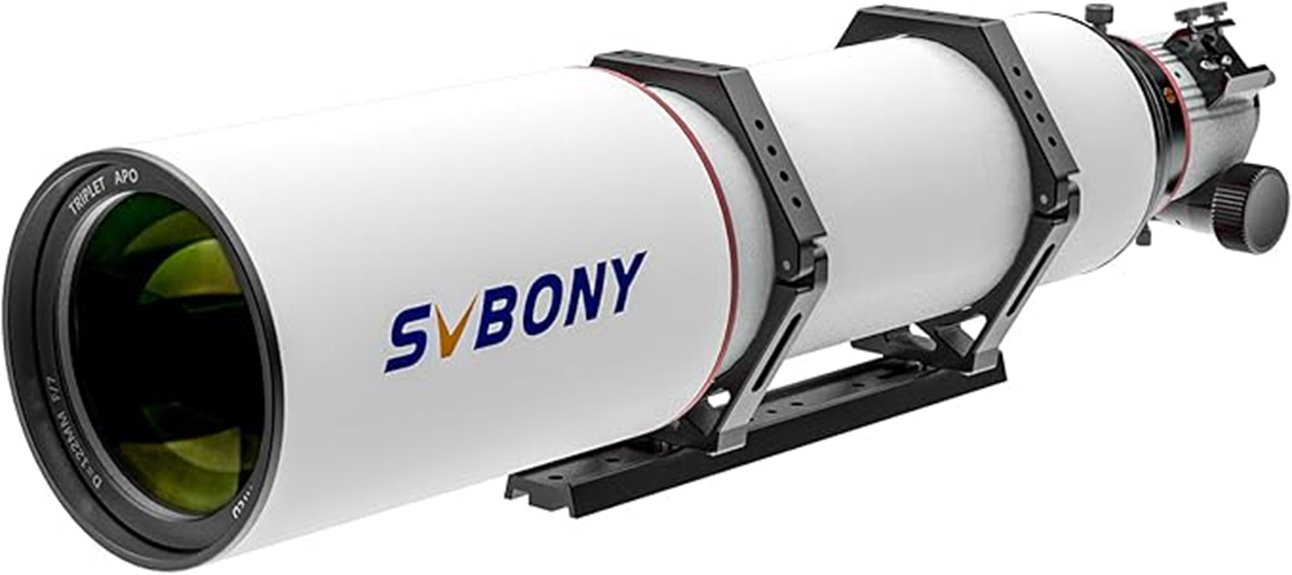
If you’re looking for a portable yet high-performance refractor for astrophotography, the SVBONY SV550 Triplet APO Telescope stands out. Its 122mm aperture and F7 focal ratio deliver bright, detailed images of deep-sky objects. Weighing just 6.44kg, it’s easy to transport and quick to set up, perfect for fieldwork. The 2.5-inch dual-speed focuser with 1:10 gear ratio allows precise focusing, essential for astrophotography. The triplet lens with FPL-51 ED glass reduces chromatic aberration, ensuring sharp, color-corrected images. Overall, this telescope offers an excellent balance of portability, optical quality, and imaging capability.
Best For: amateur and advanced astronomers seeking a portable, high-quality refractor suitable for deep-sky astrophotography and detailed visual observation.
Pros:
- Excellent optical quality with triplet FPL-51 ED glass reducing chromatic aberration
- Compact and lightweight design ideal for travel and field use
- Precise dual-speed focuser ensures accurate focusing for astrophotography
Cons:
- Slightly limited aperture for extremely faint objects compared to larger telescopes
- Dovetail length of 300mm may require additional mounting accessories for some setups
- May be more expensive than simpler refractors of similar size
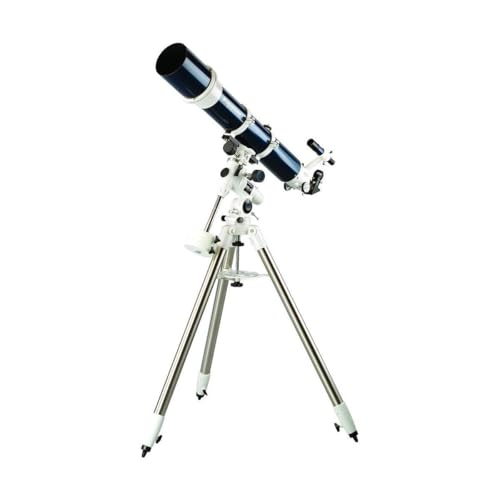
Celestron – Omni XLT 120 Refractor Telescope – Hand-Figured Refractor with XLT Optical Coatings – Manual German Equatorial EQ Mount with Setting Circles and Slow Motion Control – Includes Accessories
CELESTRON’S LEGENDARY OMNI XLT REFRACTOR OPTICAL TUBE: Celestron technicians hand select the glass for each lens in your...
As an affiliate, we earn on qualifying purchases.
Celestron Omni XLT 120 Refractor Telescope
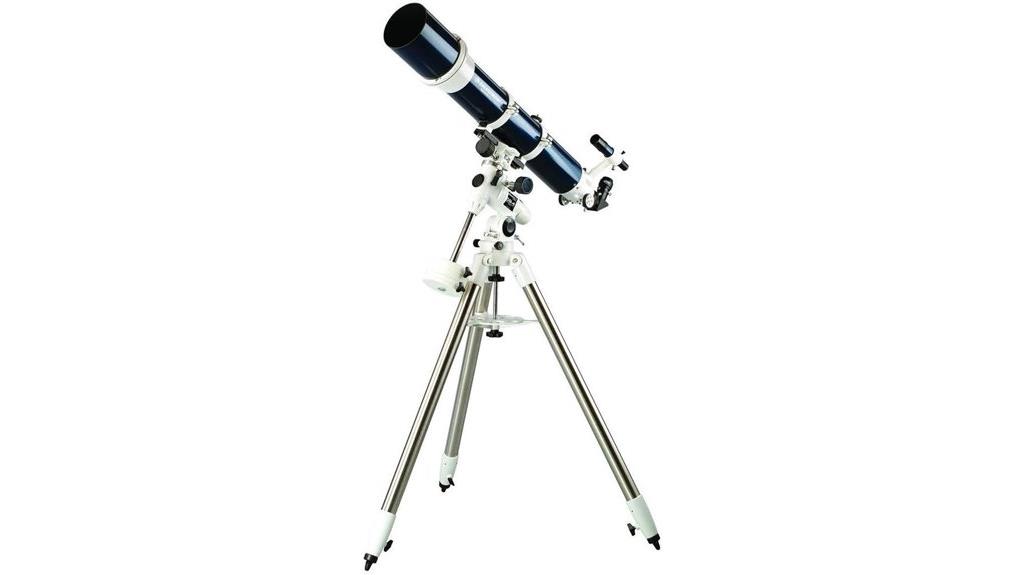
The Celestron Omni XLT 120 Refractor Telescope stands out as an excellent choice for amateur astronomers seeking high-quality optics combined with reliable tracking. Its hand-selected optical glass lenses are fully multi-coated with StarBright XLT coatings, ensuring maximum light transmission for bright, sharp images. The sturdy optical tube is mounted on a precise German EQ mount with worm gear slow-motion controls, offering smooth tracking and easy adjustments. It includes essential accessories like a finderscope, steel tripod, star diagonal, and eyepiece. Plus, with free Starry Night software, you gain powerful tools for sky exploration, making it a versatile and user-friendly option for beginners and enthusiasts alike.
Best For: amateur astronomers and stargazers seeking high-quality optical performance with reliable tracking and comprehensive accessories for beginner to intermediate sky observation.
Pros:
- High-grade, fully multi-coated optical glass lenses for bright, sharp images
- Precise German equatorial mount with worm gear slow-motion controls for smooth tracking
- Comes with essential accessories and free astronomy software for an enhanced learning experience
Cons:
- Manual operation may require manual adjustments for tracking celestial objects
- Slightly heavier and bulkier due to sturdy construction, which may affect portability
- Designed primarily for beginners and intermediate users; advanced astronomers may seek more sophisticated features
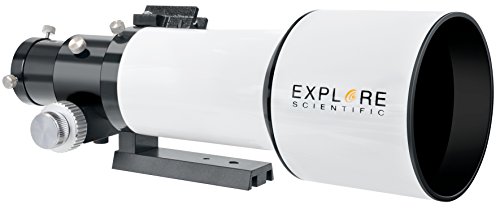
Explore Scientific ED80 Essential Series Air-Spaced Apochromatic 80mm Triplet Refractor Telescope for Astrophotography Astronomy
BRILLIANT, HIGH-CONTRAST VIEWS: This refractor telescope’s combination of genuine FCD1 HOYA extra-low dispersion (ED) optical glass and proprietary...
As an affiliate, we earn on qualifying purchases.
Explore Scientific ED80 Triplet Refractor Telescope for Astrophotography
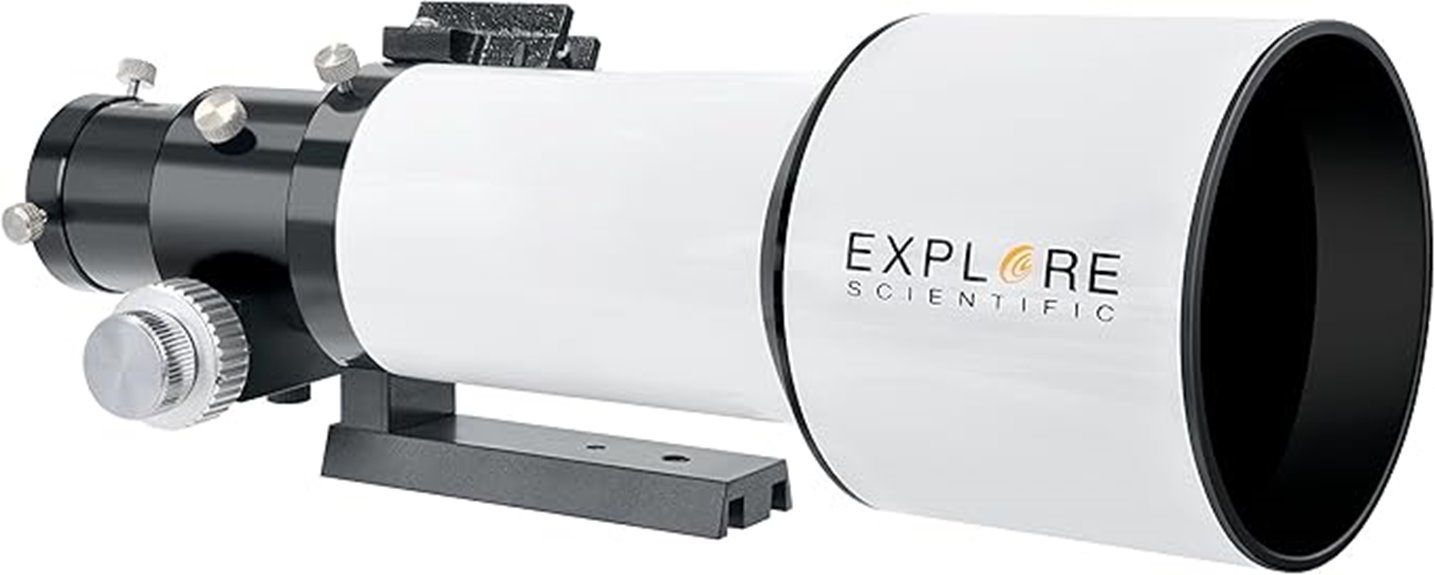
Designed specifically for astrophotographers seeking high-quality, portable optics, the Explore Scientific ED80 Triplet Refractor offers exceptional image clarity with minimal chromatic aberration. Its genuine FCD1 HOYA ED glass and multi-layer coatings produce high-contrast, detailed views of the Moon, planets, and deep-sky objects. The 80mm aperture, combined with an f/6 focal ratio and air-spaced triplet design, ensures sharp, color-free images. Compact and lightweight, it features a retractable dew shield and easy collimation adjustments. Perfect for both beginners and advanced users, this scope delivers reliable performance and excellent portability, making it a versatile choice for astrophotography enthusiasts.
Best For: astrophotographers of all levels seeking a portable, high-quality refractor telescope capable of capturing detailed images of the Moon, planets, and deep-sky objects.
Pros:
- High-contrast, detailed views thanks to genuine FCD1 HOYA ED glass and multi-layer coatings
- Virtually eliminates chromatic aberrations with an 80mm aperture and air-spaced triplet design
- Compact, lightweight, and portable with a retractable dew shield for easy transport and setup
Cons:
- Limited aperture size may restrict imaging of very faint deep-sky objects compared to larger telescopes
- Requires additional accessories like mounts and cameras for astrophotography, which can add to overall cost
- Slightly higher price point for a 80mm refractor, reflecting its high-quality optical components

Explore Scientific FCD100 Series 80mm Air-Spaced Apochromatic Triplet Refractor Telescope for Astrophotography Astronomy
BRILLIANT, HIGH-CONTRAST VIEWS: This refractor telescope’s combination of genuine, high-performance Hoya FCD100 extra-low dispersion (ED) optical glass and...
As an affiliate, we earn on qualifying purchases.
Explore Scientific FCD100 Series 80mm Air-Spaced Apochromatic Triplet Refractor Telescope
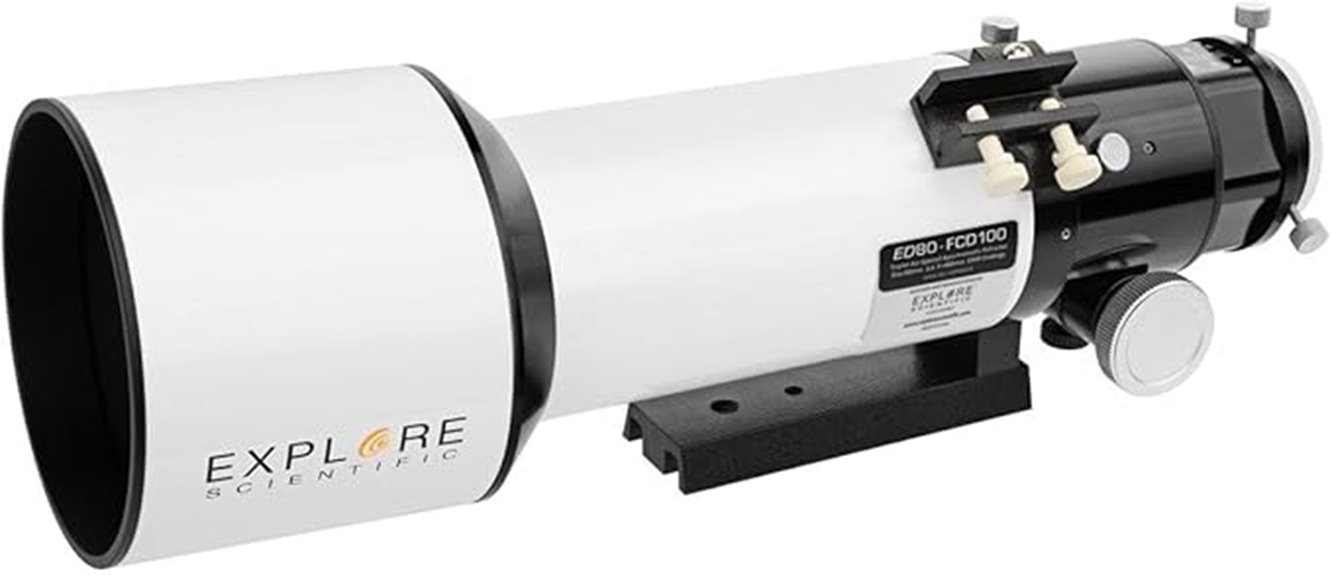
For astronomers seeking a portable yet powerful refractor, the Explore Scientific FCD100 Series 80mm Air-Spaced Apochromatic Triplet Refractor delivers exceptional optical performance with minimal chromatic aberration. Its high-quality Hoya FCD100 ED glass and multi-layer coatings produce bright, high-contrast views of the Moon, planets, and deep-sky objects. The 80mm aperture and 480mm focal length offer sharp, detailed images, ideal for astrophotography. Its compact design, lightweight construction, and features like a dual-speed focuser and dew shield make it perfect for on-the-go observing. Overall, this telescope combines versatility, ease of use, and excellent image quality for both beginners and seasoned astronomers.
Best For: amateur and experienced astronomers seeking a portable, high-performance refractor for astrophotography and celestial observation.
Pros:
- Exceptional optical quality with genuine Hoya FCD100 ED glass and multi-layer coatings for bright, high-contrast images
- Compact, lightweight design with features like a dual-speed focuser and dew shield for easy transport and precise adjustments
- Increased light-gathering ability (1.3x more than 70mm) ideal for deep-sky observing and astrophotography
Cons:
- Slightly higher cost compared to smaller or less advanced telescopes
- Limited aperture size may be less suitable for very faint deep-sky objects compared to larger telescopes
- Requires compatible mounting equipment for optimal use and stability
Explore Scientific FCD100 ED102 102mm Refractor Telescope
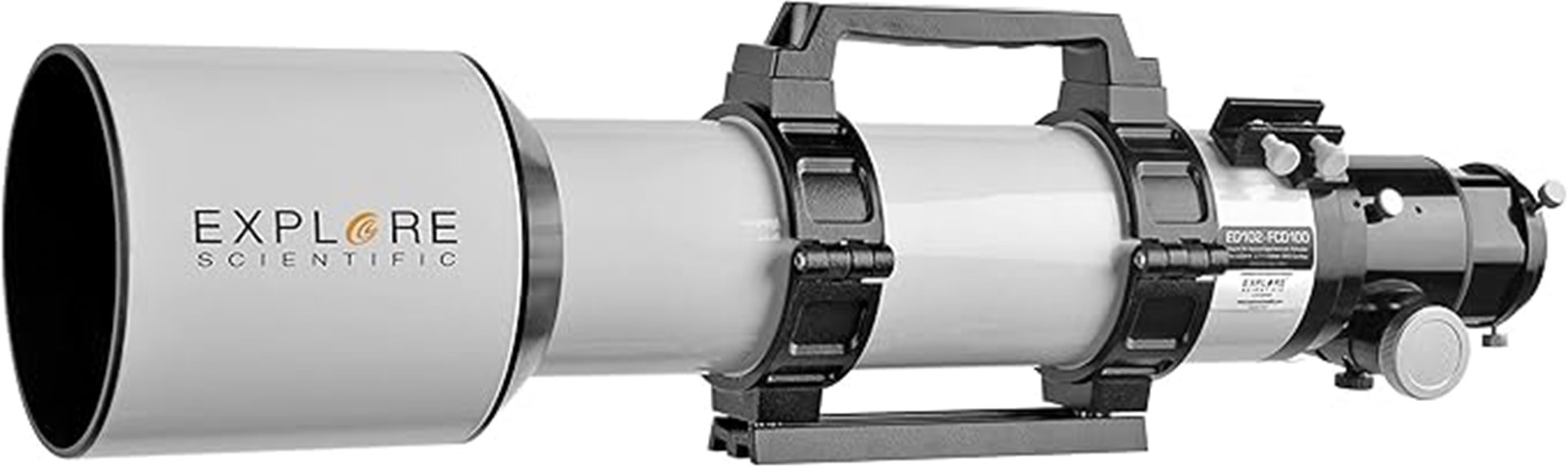
If you’re serious about astrophotography and want exceptional image quality, the Explore Scientific FCD100 ED102 102mm Refractor Telescope stands out as an excellent choice. Its 102mm aperture coupled with a fast f/7 focal ratio delivers sharp, detailed images with minimal chromatic aberration. The use of genuine HOYA FCD100 ED glass and proprietary coatings guarantees vibrant, true-to-color star images. Weighing just under 11 pounds, its air-spaced triplet design offers superb optical performance while remaining portable. This telescope’s combination of high-quality optics and thoughtful construction makes it ideal for capturing stunning astrophotos with clarity and precision.
Best For: astrophotographers and amateur astronomers seeking high-quality, portable refractor telescopes with exceptional color correction and sharp imaging.
Pros:
- Superior chromatic aberration correction thanks to ED glass and coatings
- Compact and lightweight design ideal for portability and ease of use
- High-resolution optics (1.14 arcsec) for detailed, sharp images
Cons:
- Limited aperture size may not suit deep-sky object enthusiasts seeking larger telescopes
- Triplet design can be more fragile and requires careful handling
- Price point may be higher compared to entry-level refractors
Factors to Consider When Choosing 130MM Triplet APO Refractors for Astrophotography
When choosing a 130mm triplet APO refractor for astrophotography, I consider several key factors to guarantee I get the best results. These include optical quality, aperture, mount compatibility, portability, and available accessories. Focusing on these points helps me select a telescope that matches my needs and setup.
Optical Quality and Glass
Ever wonder what makes a 130mm triplet APO refractor stand out in astrophotography? It all comes down to the optical quality and the glass used. High-end models typically use ED or FPL-51 glass to minimize chromatic aberration, ensuring sharp, color-accurate images. The air-spaced triplet design further enhances performance by reducing internal reflections and boosting contrast. Multi-layer coatings on all optical surfaces maximize light transmission, resulting in brighter, clearer views of celestial objects. Superior glass quality and meticulous polishing lead to higher resolution and more detailed astrophotos. The choice of glass type and coating technology directly impacts the refractor’s ability to produce high-contrast, diffraction-limited images. These factors are essential for capturing the true beauty of the cosmos with precision.
Aperture and Focal Ratio
Choosing the right aperture and focal ratio is essential for getting the most out of your 130mm triplet APO refractor in astrophotography. A 130mm aperture offers excellent light-gathering, producing brighter, more detailed images of faint objects. An ideal focal ratio for astrophotography usually falls between f/5 and f/8, balancing exposure times and image quality. A faster focal ratio, like f/5, enables shorter exposures but demands precise focusing and correction of optical aberrations. Conversely, a slower ratio, such as f/8, provides wider fields of view and easier image correction, making it ideal for deep-sky targets. The combination of aperture and focal ratio directly impacts your telescope’s versatility, influencing which astrophotography techniques and objects it’s best suited to capture.
Mount Compatibility and Stability
A stable mount is vital for successful astrophotography with a 130mm triplet APO refractor, as even slight vibrations or tracking errors can ruin long exposures. I recommend choosing a mount with a payload capacity at least 20-30% higher than your telescope’s weight to guarantee stability. Look for mounts featuring precise, low-vibration tracking systems like worm gear drives and high-quality bearings, which help minimize movement during imaging. Compatibility is essential—match the mount’s dovetail interface, such as Vixen or Losmandy, with your telescope’s dovetail plate for secure attachment. A well-balanced setup with adjustable counterweights reduces stress and improves tracking accuracy. Additionally, robust tripod legs and vibration suppression features, like dampers or isolators, further stabilize your rig for sharp, clear astrophotos.
Portability and Size
When selecting a 130mm triplet APO refractor for astrophotography, portability and size are essential factors that can influence your overall experience. These telescopes typically weigh between 15 to 20 pounds, striking a balance between light-gathering ability and ease of transport. Compact designs with shorter tubes and integrated handles make setup and breakdown quicker, especially in remote locations. Using lightweight materials like aluminum or carbon fiber can considerably reduce weight without compromising optical quality. Foldable or collapsible tubes further decrease size, simplifying storage and travel. A manageable size allows for swift setup and breakdown, making field imaging more convenient and enjoyable. Prioritizing portability ensures you spend more time capturing images and less time managing equipment.
Accessories and Features
High-quality accessories and thoughtful features considerably enhance the performance and convenience of a 130mm triplet APO refractor for astrophotography. Look for models with dual-speed focusers and Vixen or Losmandy-style dovetails, ensuring precise adjustments and versatile mounting options. Integrated dew shields and multi-coated optical elements help improve image clarity and protect against dew during long sessions. A robust, adjustable focuser—preferably 2.5 inches or larger—ensures smooth, accurate focusing critical for sharp images. Compatibility with guide scopes, camera adapters, and specialized filters expands your imaging capabilities. Additionally, extensive user support, detailed collimation tools, and upgrade options in the accessory ecosystem help maintain ideal optical performance over time, making your astrophotography experience more efficient and enjoyable.
Price and Value
Choosing the right 130mm triplet APO refractor depends heavily on evaluating whether its price matches the features and optical quality it offers. A higher price usually indicates better glass, advanced coatings, and superior optical performance, which are vital for astrophotography. It’s important to assess if features like ED glass and multi-coatings justify the cost by providing clearer images and fewer aberrations. Budget models might save money upfront but often compromise on materials or coatings, impacting sharpness and chromatic correction. Investing in a more expensive model typically means better build quality, durability, and consistent performance. Comparing features and specifications against the price helps determine if a telescope offers good value, ensuring you get the best optical quality for your investment and specific astrophotography needs.
Frequently Asked Questions
What Are the Main Differences Between Triplet and Doublet Apochromatic Refractors?
Triplet and doublet apochromatic refractors mainly differ in lens design; triplets have three lens elements, while doublets have two. I find triplets better at correcting chromatic aberration, giving sharper, more color-accurate images—ideal for astrophotography. Doublets are usually lighter and more affordable but might show slight color fringing. If you want premier image quality, I recommend a triplet, especially for detailed astrophotography work.
How Does Chromatic Aberration Impact Astrophotography Quality?
Chromatic aberration can really mess with astrophotography quality by creating colorful fringes around stars, making images look less sharp and more distorted. I’ve found that even slight aberration reduces detail and affects color accuracy. To get clear, crisp photos of distant celestial objects, I always choose instruments with minimal aberration, like triplet apochromatic refractors. They help me capture the true beauty of the night sky without unwanted color distortions.
What Mount Types Are Best Compatible With 130MM Triplet APOS?
I find that equatorial mounts, especially German equatorial or high-quality GoTo models, work best with 130mm triplet APO refractors. They offer precise tracking essential for long exposures and astrophotography. Equatorial mounts help counteract Earth’s rotation, ensuring sharp images. I recommend choosing a sturdy, motorized mount with good payload capacity to support the refractor’s weight and accessories, making your astrophotography sessions more enjoyable and successful.
Are These Telescopes Suitable for Beginner Astrophotographers?
Yes, I think these telescopes are great for beginners, especially if you’re serious about astrophotography. They offer excellent image quality and are relatively straightforward to set up and use. While they might seem a bit pricey at first, their durability and precision make them a worthwhile investment. Plus, with some patience and practice, I’ve seen beginners quickly improve and get stunning astrophotographs.
How Do Weather Conditions Affect Astrophotography With These Telescopes?
Weather conditions play a vital role in astrophotography with these telescopes. Clear, stable skies give me sharp images, while wind or humidity can cause vibrations or fog the lens. Clouds block my view entirely, and temperature fluctuations can lead to focus shifts. I always check the forecast, set up during stable weather, and use dew shields to protect against moisture, ensuring I capture the best possible images.
Conclusion
Choosing the right 130mm triplet APO refractor is like finding a trusted compass for your astrophotography journey. Each of these top picks offers unique strengths—whether it’s crisp images, solid build, or versatile features—that can guide you through the starry night. Remember, the best telescope isn’t just about specs; it’s about how it inspires your passion and elevates your images. So, pick your starry companion and let your astrophotography dreams take flight!