
If you’re looking for the best Mac Studio setups in 2025 for ultimate power and performance, I recommend considering high-end configurations like the Mac Studio with M4 Pro, which offers a 12-core CPU and 16-core GPU. Pair it with 24GB of RAM and 512GB+ SSDs for demanding tasks like video editing or 3D rendering. Additionally, models with extensive connectivity and future-proof features guarantee you stay ahead. Keep exploring, and you’ll discover which options best suit your needs.
Key Takeaways
- The top configurations feature the M4 Pro chip with 12-core CPU and 16-core GPU for demanding professional tasks.
- Opt for models with 24GB RAM and 512GB or higher SSD to optimize multitasking and large data workflows.
- Prioritize models with multiple Thunderbolt 5 ports and HDMI for versatile connectivity and future expansion.
- Consider upgradeable RAM and external storage options to extend system lifespan and adapt to evolving project needs.
- The best setups balance high performance with cost efficiency, focusing on future-proofing for professional and creative workflows.

Apple 2024 Mac mini Desktop Computer with M4 Pro chip with 12‑core CPU and 16‑core GPU: Built for Apple Intelligence, 24GB Unified Memory, 512GB SSD Storage, Gigabit Ethernet. Works with iPhone/iPad
- Compact Size: Five by five inches of power
- Powerful M4 Pro Chip: 12-core CPU and 16-core GPU
- Ample Memory: 24GB Unified Memory
As an affiliate, we earn on qualifying purchases.
Apple 2024 Mac mini Desktop Computer with M4 Pro Chip
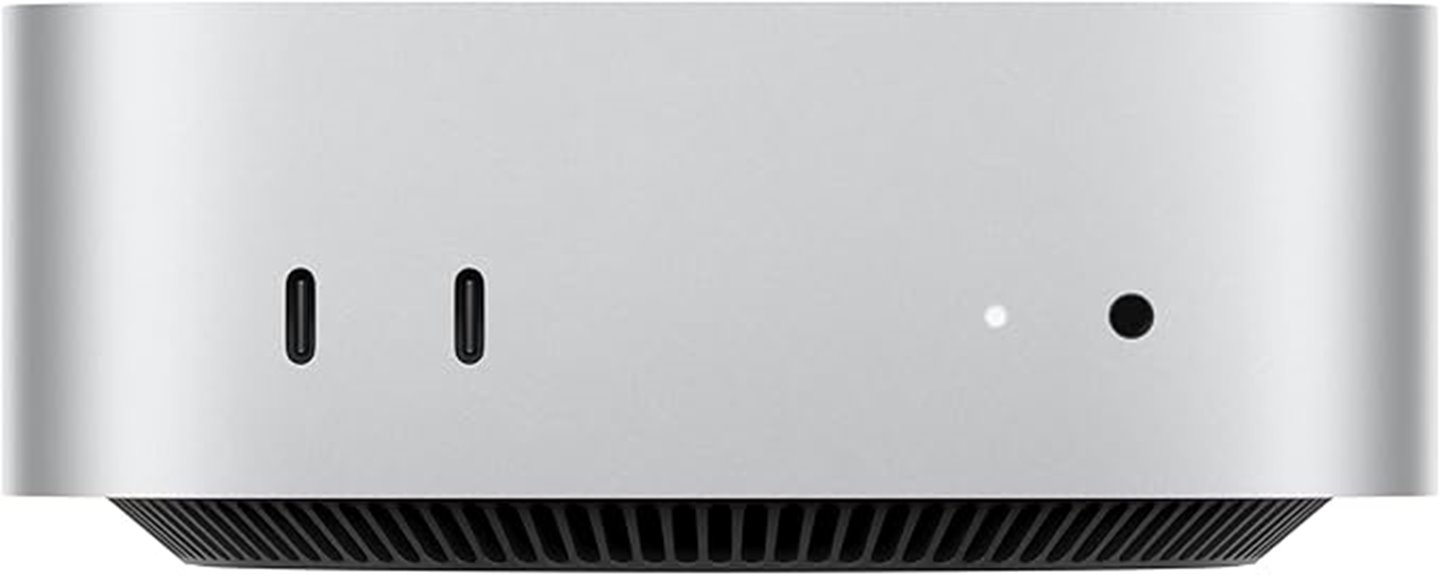
If you’re looking for a compact yet powerful desktop that fits seamlessly into any workspace, the Apple 2024 Mac mini with M4 Pro chip is an excellent choice. Measuring just 5×5 inches and weighing only 1.6 pounds, it packs impressive performance with its 12-core CPU, 16-core GPU, and Neural Engine. It supports up to three displays, including 8K resolution, and offers multiple ports—Thunderbolt, HDMI, USB-C, Ethernet, and a headphone jack. Built for macOS and optimized for Apple Silicon, it combines sleek design, environmental sustainability, and robust connectivity, making it ideal for demanding professional tasks in a small form factor.
Best For: professionals and creative users seeking a compact yet high-performance desktop that seamlessly integrates with their Apple ecosystem.
Pros:
- Powerful M4 Pro chip with 12-core CPU and 16-core GPU delivers exceptional performance for demanding tasks.
- Supports up to three 6K or 8K displays, ideal for multi-monitor setups and high-resolution workflows.
- Compact, lightweight design with multiple ports including Thunderbolt 5, HDMI, Ethernet, and USB-C, offering versatile connectivity.
Cons:
- Limited upgrade options for memory and storage after purchase.
- Higher price point may be a consideration for budget-conscious users.
- No dedicated graphics card; reliant on integrated GPU for graphics performance.
Apple 2024 Mac mini Desktop Computer with M4 chip with 10‑core CPU and 10‑core GPU: Built for Apple Intelligence, 16GB Unified Memory, 256GB SSD Storage, Gigabit Ethernet. Works with iPhone/iPad
- Compact Size: Five by five inches of power
- Powerful M4 Chip: 10-core CPU and GPU for high performance
- Ample Memory: 16GB Unified Memory
As an affiliate, we earn on qualifying purchases.
Apple 2024 Mac mini Desktop Computer with M4 Chip
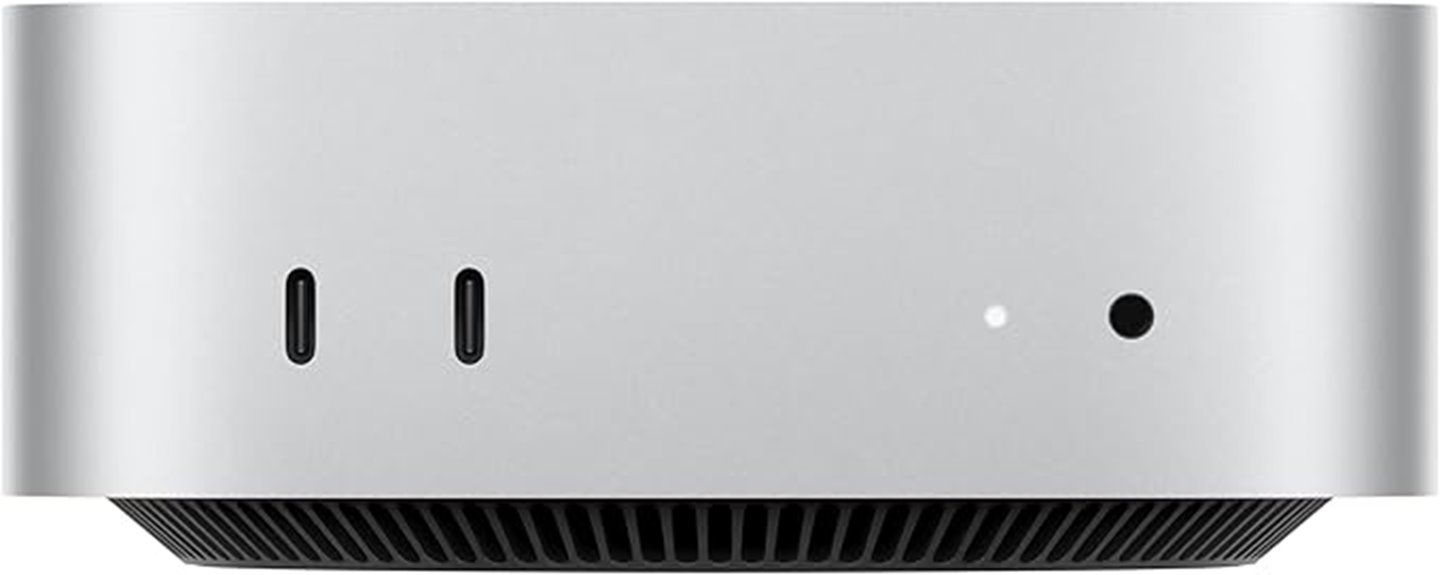
The Apple 2024 Mac mini Desktop Computer with M4 Chip is an ideal choice for professionals and power users who need a compact yet high-performance desktop. Its small five-by-five-inch design fits effortlessly beside monitors or in tight spaces. Powered by the M4 chip with a 10-core CPU and GPU, it delivers fast, fluid performance for demanding tasks. With 16GB of unified memory and a 256GB SSD, multitasking and data access are seamless. It offers versatile connectivity, including Thunderbolt, HDMI, USB-C, Ethernet, and a headphone jack. Seamlessly integrated into the Apple ecosystem, it enhances productivity while maintaining a sleek, environmentally friendly profile.
Best For: professionals and power users seeking a compact, high-performance desktop with seamless integration into the Apple ecosystem.
Pros:
- Small, space-saving design that fits easily next to monitors or in tight spaces
- Powerful M4 chip with 10-core CPU and GPU for demanding tasks
- Versatile connectivity options including Thunderbolt, HDMI, USB-C, Ethernet, and headphone jack
Cons:
- Limited storage options starting at 256GB, which may require external drives for larger files
- No dedicated GPU, potentially limiting performance for high-end graphics-intensive applications
- Price may be higher compared to other compact desktops with similar specifications
Apple 2024 Mac mini Desktop Computer with M4 chip with 10‑core CPU and 10‑core GPU: Built for Apple Intelligence, 24GB Unified Memory, 512GB SSD Storage, Gigabit Ethernet. Works with iPhone/iPad
- Compact Size: 5x5 inches for versatile placement
- Powerful M4 Chip: 10-core CPU and GPU for high performance
- Ample Memory: 24GB Unified Memory for multitasking
As an affiliate, we earn on qualifying purchases.
Apple 2024 Mac mini Desktop Computer with M4 Chip
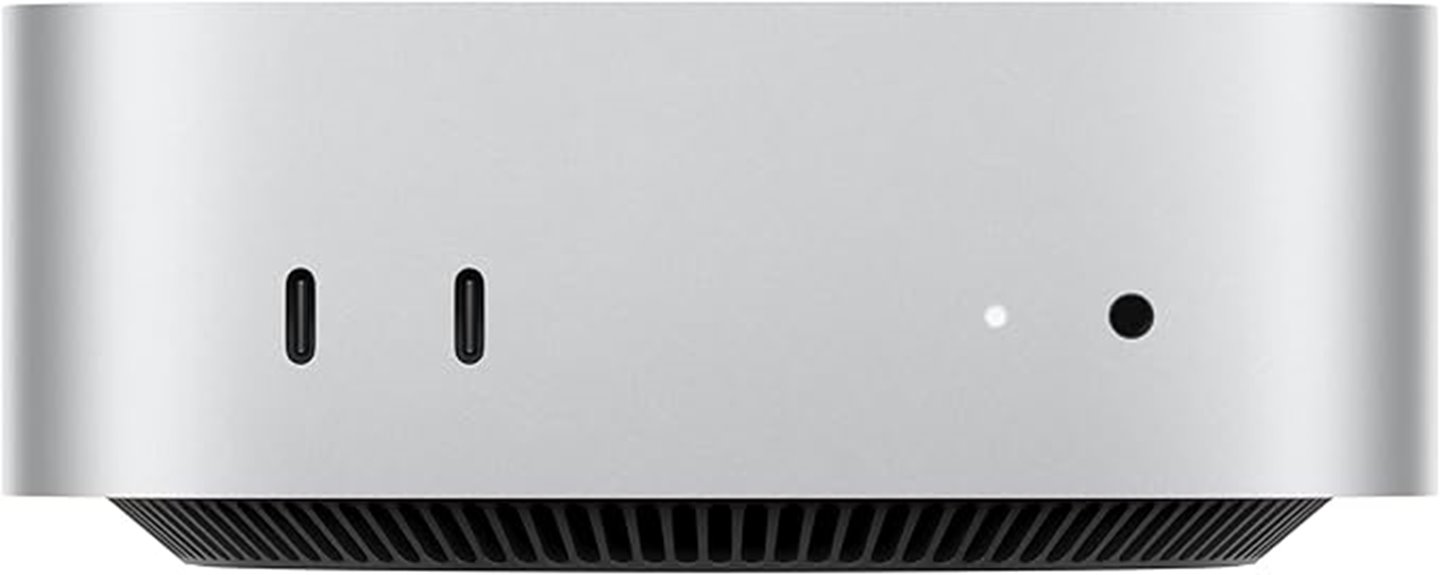
For anyone seeking a powerful yet space-efficient desktop, the Apple 2024 Mac mini with M4 chip is an excellent choice. Its compact 5×5-inch design fits easily next to your monitor or on any desk. Powered by the M4 chip with a 10-core CPU and GPU, plus 24GB of unified memory and 512GB SSD storage, it delivers fast, smooth performance. Multiple ports—including Thunderbolt, HDMI, and USB-C—offer versatile connectivity, while seamless integration with Apple devices and macOS enhances productivity. Environmentally friendly and privacy-focused, this Mac mini packs impressive power into a tiny, efficient package, making it ideal for both work and creative tasks.
Best For: users seeking a compact, powerful desktop solution for work, creative tasks, and seamless Apple ecosystem integration.
Pros:
- Small, space-efficient design fits easily next to monitors or on desks
- Powerful M4 chip with 10-core CPU and GPU delivers fast, fluid performance
- Multiple connectivity options including Thunderbolt, HDMI, and USB-C for versatile device connection
Cons:
- Limited upgradeability due to compact form factor and integrated components
- Higher price point compared to some traditional mini PCs with similar specs
- Fixed hardware configuration with no options for adding more storage or memory later
Apple 2024 Mac mini Desktop Computer with M4 chip with 10‑core CPU and 10‑core GPU: Built for Apple Intelligence, 16GB Unified Memory, 512GB SSD Storage, Gigabit Ethernet. Works with iPhone/iPad
- Compact Size: Five by five inches of powerful performance
- Powerful M4 Chip: 10-core CPU and GPU for high speed
- Ample Memory: 16GB Unified Memory for multitasking
As an affiliate, we earn on qualifying purchases.
Apple Mac mini Desktop Computer with M4 Chip (512GB SSD, 16GB RAM)

Designed for those who need powerful performance in a compact form, the Apple Mac mini with M4 chip, 512GB SSD, and 16GB of RAM offers an ideal solution for small-space setups that don’t compromise on speed or multitasking capabilities. Its five-by-five-inch size easily fits next to your monitor, making it perfect for limited desk space. Powered by the M4 chip with a 10-core CPU and GPU, it delivers fast, fluid performance. With ample memory and storage, plus versatile ports like Thunderbolt, HDMI, and USB-C, it ensures seamless connectivity and efficient multitasking within the Apple ecosystem.
Best For: professionals and small workspace users seeking powerful performance in a compact, space-saving desktop that seamlessly integrates with the Apple ecosystem.
Pros:
- Compact size fits easily next to monitors and in small spaces
- Powered by the efficient M4 chip with high-performance CPU and GPU
- Versatile connectivity options including Thunderbolt, HDMI, and USB-C
Cons:
- Limited upgradeability due to integrated hardware design
- Higher price point relative to some other small desktops
- May require additional accessories for complete setup (e.g., monitor, peripherals)
Factors to Consider When Choosing Mac Studio Configurations
When selecting a Mac Studio, I consider my performance needs, budget, and how much storage and memory I require. I also evaluate my connectivity demands and whether I want options for future upgrades. This helps me choose a configuration that perfectly balances power, cost, and longevity.
Performance Needs Assessment
Considering your workflow is vital when choosing a Mac Studio configuration, as it determines whether you need the highest-performing CPU and GPU cores or if a more modest setup will suffice. If you handle demanding tasks like 3D rendering, video editing, or software development, opting for higher core counts and the latest chip architectures, such as M4 Pro, will boost speed and efficiency. For applications that benefit from more RAM—like multitasking, large files, or virtual machines—selecting sufficient memory is fundamental. Additionally, assess your storage needs based on your media files, projects, and software; larger SSDs are advantageous for extensive data. Finally, consider future-proofing; higher core counts and increased memory help accommodate evolving software demands and scalability over time.
Budget and Cost Limits
Setting a clear budget is essential to narrowing down your Mac Studio options and preventing overspending. First, determine a realistic price range based on your needs and financial situation. Consider the cost differences between hardware options like memory, storage, and processors, and evaluate whether higher-end configurations truly offer performance gains that justify the extra expense. Think about your future needs—investing in a more powerful setup now could save money later if your workload increases. Remember, accessories and extended warranties can add to overall costs, so include those in your budget planning. By establishing a firm budget upfront, you can focus on configurations that deliver the best balance of performance and value without falling into the trap of overspending.
Storage and Memory Options
Are you choosing the right balance between storage and memory for your Mac Studio? Higher memory options, like 48GB or 64GB, boost multitasking and handle complex workflows more smoothly. Storage options range from 512GB to 8TB SSD, which directly impacts how much data and large files you can store locally. Increasing both RAM and storage usually means a higher price, so it’s essential to match your needs without overspending. If you do intensive tasks like video editing or 3D rendering, larger SSDs and more RAM will considerably improve efficiency. However, for lighter workloads, a more modest setup might suffice. Striking the right balance ensures you get top performance without unnecessary costs, making your Mac Studio future-proof and tailored to your specific workflow.
Connectivity Requirements
When choosing a Mac Studio, it’s essential to evaluate its connectivity options to guarantee it can handle your peripherals and workflow seamlessly. Make sure it has enough Thunderbolt 5 (USB-C) ports to connect multiple high-speed devices simultaneously, such as external drives and displays. Check if it supports HDMI and Ethernet ports that meet your display and network needs, especially if you require high-resolution output or fast wired internet. Verify whether the front USB-C ports support USB 3.0 or higher for quick data transfers with external drives. Also, ensure the port configuration aligns with your existing cables and dongles to reduce the need for adapters. Ultimately, consider if the Mac Studio offers configurable Ethernet options, like 10Gb Ethernet, for faster wired network connectivity.
Future Expansion Potential
To future-proof your Mac Studio, it’s vital to assess its expansion potential, including maximum RAM capacity, port options, and storage upgradeability. Higher RAM options improve multitasking and handle demanding applications better as your needs grow. Check how many ports are available and their types to ensure compatibility with future peripherals and expansion devices. It’s also important to see if the storage can be upgraded or expanded later, accommodating increasing data needs. Consider whether the system supports hardware upgrades like adding more RAM or replacing storage, which extends its lifespan. Additionally, review the availability of external device connections through Thunderbolt or USB-C ports, ensuring you can keep up with evolving connectivity standards. Planning for these factors helps you choose a Mac Studio that remains powerful and flexible for years to come.
Frequently Asked Questions
How Do Mac Studio Configurations Compare to Traditional Desktop PCS?
Mac Studio configurations generally offer impressive power and efficiency, but traditional desktop PCs often provide more customization options and potentially higher performance levels at a lower cost. I find Mac Studios are sleek, user-friendly, and ideal for creative work, while PCs excel in upgradeability and raw power. If you prioritize seamless integration and design, Mac Studios are great, but for flexibility and bang for your buck, PCs might be better.
What New Features Are Expected in the 2025 Mac Studio Models?
I believe the 2025 Mac Studio models will feature advanced Apple Silicon chips with increased core counts, boosting power and efficiency. Expect improved GPU capabilities for better graphics performance and expanded memory options for demanding tasks. Rumors suggest enhanced cooling systems for sustained performance, along with new connectivity options like faster Thunderbolt ports. These updates will make the Mac Studio even more compelling for professionals seeking top-tier performance.
How Does Upgradability Impact Long-Term Performance?
Think of upgradability as planting a tree that grows stronger over time. When you can upgrade your Mac Studio, it’s like nurturing that tree, ensuring it stays vibrant and powerful even as technology evolves. This flexibility extends its performance lifespan, keeps it relevant longer, and saves you money. Without it, your device may become obsolete faster, forcing costly replacement. Upgradability truly shapes how well your workspace adapts and endures.
Which Configurations Offer the Best Value for Creative Professionals?
For creative professionals, I recommend the middle-tier Mac Studio with the M2 Max chip, 32GB of RAM, and a 1TB SSD. It offers the best balance of power and affordability, handling demanding tasks like video editing and 3D rendering smoothly. Upgrading storage or RAM later is possible, but starting with this setup guarantees you get top performance without overspending. It’s a smart investment for long-term value.
Are There Specific Configurations Optimized for Gaming or VR?
Absolutely, I’ve found that the Mac Studio configurations with powerful GPUs and fast processors are surprisingly capable for gaming and VR. Imagine stepping into a vivid virtual world, where visuals are crisp and immersive, thanks to the high-end graphics options. I recommend customizing with the latest M2 Ultra chip and a top-tier GPU—these give you the performance needed to handle demanding VR titles and smooth gameplay seamlessly.
Conclusion
So, after exploring these top Mac Studio setups for 2025, you’d think the most powerful one is the obvious choice, right? Well, don’t be too quick to decide. Sometimes, the best configuration isn’t the flashiest but the one that fits your needs perfectly. Ironically, in the world of high-end tech, more power isn’t always the answer—unless, of course, you’re planning to clone yourself to keep up!