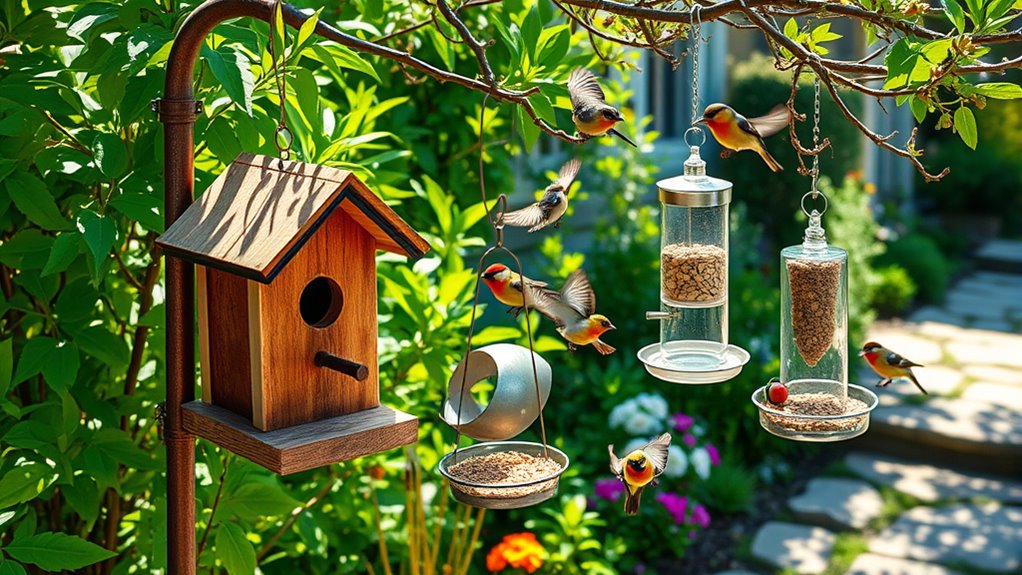

To attract birds to your yard, create inviting habitats with DIY birdhouses and feeders. Use natural, soft materials like moss, feathers, and grass inside the houses, and place them at safe heights with predator guards. Hang sturdy feeders 5-6 feet high with squirrel-proof features, keeping them clean and filled with high-quality seeds. Proper placement, predator protection, and maintenance will encourage more birds to visit, and uncovering more tips can help you make your yard even more appealing.

Get everyday essentials delivered free — and shop member deals
- Fast, free delivery on millions of items
- Access to Prime Big Deal Days deals on October 6–7
- Prime Video, Amazon Music and more included
Key Takeaways
- Use natural, soft nesting materials like moss, feathers, and grass to make birdhouses inviting.
- Mount birdhouses on sturdy poles at 5-10 feet high, away from dense shrubbery for predator protection.
- Hang feeders at 5-6 feet with squirrel-proof features and sturdy hooks for safe, easy access.
- Regularly clean and refill feeders with high-quality seeds such as sunflower, nyjer, and millet.
- Incorporate predator guards and maintain proper placement to ensure safe, comfortable nesting and feeding environments.
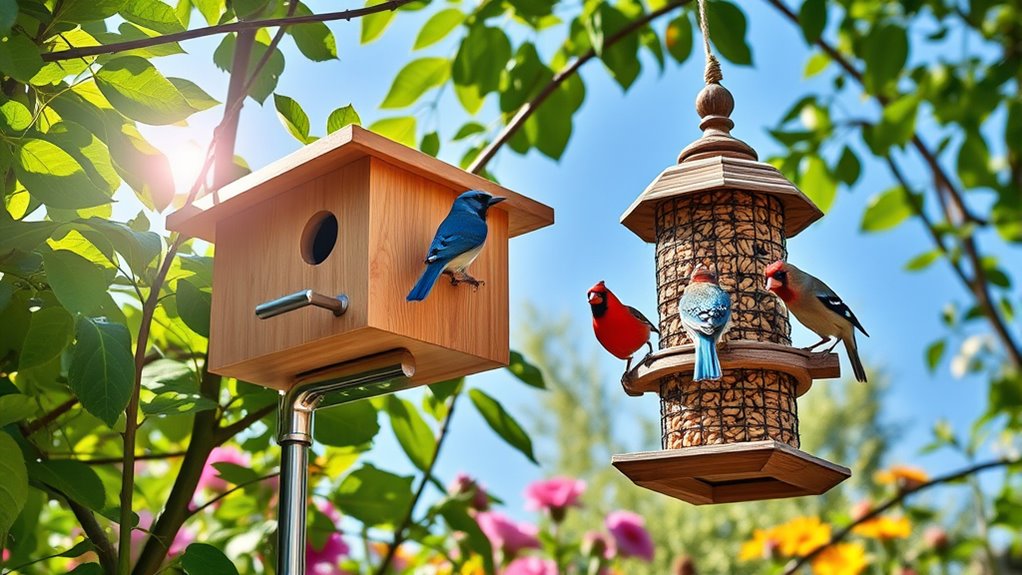
Creating your own birdhouse and feeder is a rewarding way to attract and support local wildlife. When building a birdhouse, one of your main priorities should be providing the right nesting materials inside. Birds seek natural, soft materials like moss, feathers, grass, or small twigs to make their nests comfortable and secure. You can also leave some loose nesting materials nearby, such as shredded paper or pet hair, to encourage birds to settle in. Keep in mind that a well-designed birdhouse with clean, dry interiors offers a cozy spot for birds to breed and raise their young.
Equally important is ensuring predator protection. Design your birdhouse with predator guards, such as metal baffles or raised entrances, to prevent cats or raccoons from reaching inside. Mount the house on a pole or a sturdy post, at least 5-10 feet above the ground, to make it harder for predators to access. Placing the house away from dense shrubbery or branches that predators can use to leap onto the nest also helps keep the birds safe. Regularly inspecting the birdhouse for signs of predator intrusion or wear allows you to address vulnerabilities promptly.
When setting up bird feeders, choose the right location to maximize safety and visibility. Hang feeders at a height that’s accessible to birds but out of reach of predators, typically around 5-6 feet high. Use sturdy hooks or hanging wires, and secure them well to prevent tipping or swaying that could scare off birds. Keep the feeding area clean by regularly removing old seed shells and spilled food, which can attract pests or predators. This maintenance also helps prevent the spread of diseases among visiting birds.
Choosing the right feeder type and seed mix also matters. Tube feeders with small perches reduce larger birds or squirrels from dominating the food source, giving smaller songbirds a chance to feed. Fill the feeders with high-quality seeds suited to your local bird population; sunflower seeds, nyjer, and millet are popular options. To further protect your feathered visitors, consider adding squirrel-proof mechanisms or baffles to your feeders. These prevent squirrels from stealing food and discourage predators from climbing up to the feeders.
Ultimately, your efforts in designing a safe, inviting environment with appropriate nesting materials and predator protection will considerably boost the number of birds visiting your yard. By paying attention to these details, you create a welcoming habitat that supports local wildlife while providing you with the joy of observing beautiful birds up close. Incorporating natural materials into your birdhouse design not only attracts more birds but also creates a more authentic and sustainable environment.
As an affiliate, we earn on qualifying purchases.
Frequently Asked Questions
What Is the Best Time of Year to Start Birdhouse Projects?
You should start birdhouse projects in early spring, aligning with seasonal planning and nesting timing. This way, you give birds ample time to explore and settle before nesting begins. Installing your birdhouses a few weeks before nesting season ensures they’re ready when the birds arrive. By doing this, you support their natural nesting cycle and attract more birds to your yard, creating a lively and welcoming environment.
How Do I Protect Birdhouses From Predators?
Did you know that predators like cats and raccoons account for 30% of bird deaths? To protect your birdhouses, use predator-proof designs with baffles and guarantee secure mounting on sturdy poles or trees. Keep the entrance small to deter larger predators, and place the birdhouse away from dense shrubbery or perches that predators can use to access nests. Regularly inspect and maintain your setup for ongoing protection.
Can I Use Recycled Materials for Birdhouses and Feeders?
Yes, you can definitely use recycled materials for birdhouses and feeders. Using eco-friendly options like reclaimed wood, old teacups, or plastic bottles not only benefits the environment but also creates unique, attractive homes for birds. Make sure the materials are safe, non-toxic, and sturdy enough to withstand weather. Recycling reduces waste and provides a cozy space for your feathered friends, making your yard more inviting and sustainable.
What Are Common Mistakes to Avoid When Installing Bird Feeders?
Avoid placement errors and improper mounting when installing bird feeders. Make sure you place feeders at the right height, avoiding areas prone to predators or harsh weather. Use secure mounting methods to prevent wobbling or falling, which can scare away birds. Keep feeders away from windows to prevent collisions, and verify they’re accessible for cleaning and refilling. Proper placement and mounting attract more birds and keep them safe.
How Often Should I Clean and Maintain Birdhouses and Feeders?
Think of your birdhouses and feeders as your feathered friends’ cozy homes, deserving care. You should clean them every two weeks to prevent mold and disease, especially during breeding season. Follow a regular cleaning schedule and maintenance tips to keep them inviting and safe. This routine acts as a nurturing touch, ensuring birds stay healthy and continue to visit, turning your yard into a lively, welcoming sanctuary.
As an affiliate, we earn on qualifying purchases.
Conclusion
By following these simple tips, you’ll transform your yard into a lively, fluttering haven. With a bit of effort, you’ll invite cheerful chirping and vibrant feathers to brighten your days. Think of your birdhouse and feeder as a gateway to nature’s symphony—each visit a note in the melody of your outdoor sanctuary. So, get building, hang it up, and let the magic of attracting birds turn your yard into a lively masterpiece of life.
As an affiliate, we earn on qualifying purchases.
As an affiliate, we earn on qualifying purchases.
Fall Picks
fall essentials
As an affiliate, we earn on qualifying purchases.