
To stain your patio or driveway, start by thoroughly cleaning the surface to remove dirt and grease. Repair any cracks or chips and let it dry completely. Apply an acid stain evenly using a sprayer, roller, or brush, and test a small area first to see how the color develops. Control the shade with multiple coats or a damp sponge. Finish by rinsing the surface, then sealing it with a high-quality concrete sealer to lock in color and boost durability. If you want to learn more, keep going.
Key Takeaways
- Thoroughly clean and repair the concrete surface to ensure proper stain adhesion and even color distribution.
- Apply a compatible acid stain evenly using a sprayer, roller, or brush, and test a small area first.
- Control stain intensity with multiple coats or dilution, and rinse thoroughly after staining to neutralize the chemical reaction.
- Seal the stained surface with a high-quality concrete sealer to lock in color and protect against wear.
- Follow proper safety precautions and manufacturer instructions throughout the staining process for best results.
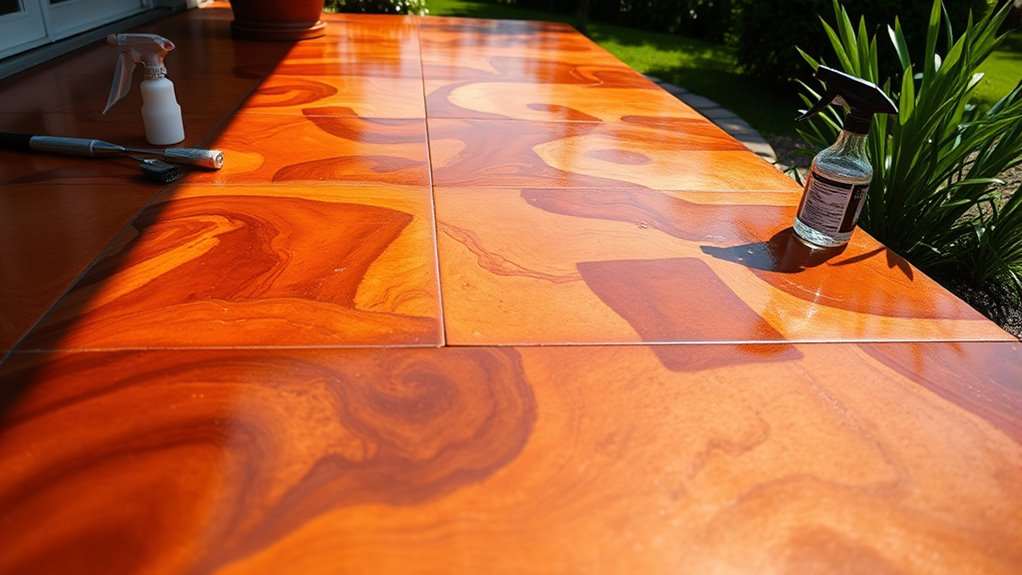
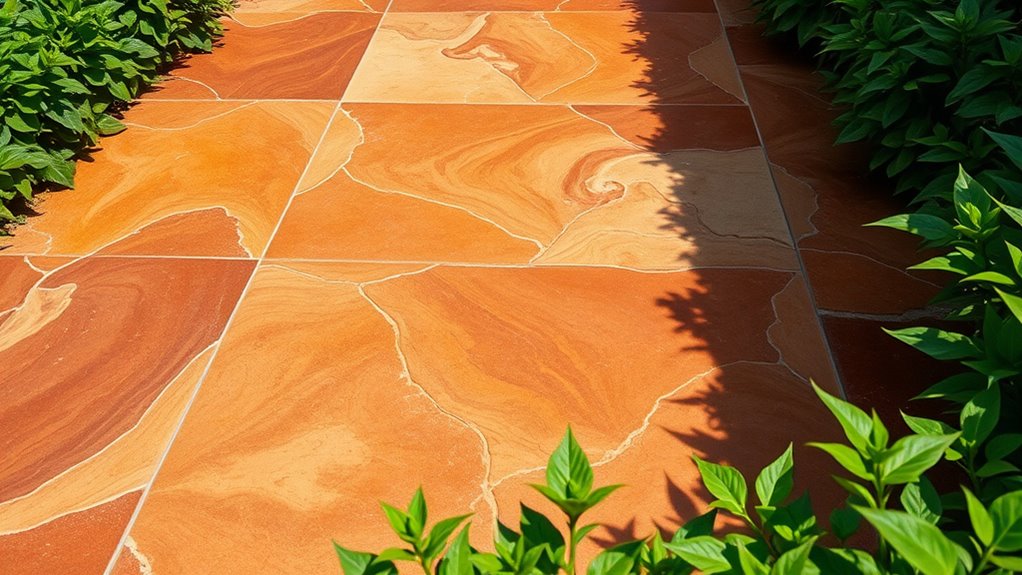
Staining concrete is an effective way to transform plain, dull surfaces into vibrant, eye-catching features. Whether you want to enhance your patio or driveway, staining offers a cost-effective method to add personality and style. When it comes to achieving unique results, acid stains are a popular choice because they penetrate deeply into the concrete, creating rich, variegated colors that resemble natural stone or marble. These stains react chemically with the lime in the concrete, producing unpredictable, one-of-a-kind patterns that add depth and character. By choosing acid stains, you can achieve a decorative finish that stands out and elevates the overall aesthetic of your outdoor space.
Transform dull concrete into vibrant, natural-looking decorative surfaces with acid stains that create unique, variegated colors and patterns.
Before you start, you need to prepare your concrete surface properly. Clean it thoroughly to remove dirt, grease, and debris. Use a power washer or a stiff-bristled brush with a concrete cleaner to guarantee the surface is free of any contaminants that could interfere with stain absorption. If there are any cracks or chips, repair them with a suitable concrete patch. Once the surface is clean and smooth, let it dry completely before applying the stain. Proper preparation is essential because it guarantees even color distribution and helps the stain adhere better.
When applying acid stain, always wear protective gear—gloves, goggles, and a mask—to prevent any harm from the corrosive chemicals. Mix the stain according to the manufacturer’s instructions, and then use a sprayer, roller, or brush to apply it evenly across the surface. Since acid stains react with the concrete in unpredictable ways, it’s wise to test a small area first to see how the color develops. You can control the intensity of the stain by applying multiple coats or using a damp sponge to dilute the stain in certain areas. After the desired color is achieved, rinse the surface thoroughly with water to neutralize the chemical reaction and remove any excess stain.
Sealing your stained concrete is the final step that locks in the color and protects the surface from wear and weather. Use a high-quality concrete sealer compatible with acid stains to enhance the decorative finish and guarantee durability. Once sealed, your patio or driveway will not only look stunning but will also be easier to maintain. Additionally, understanding concrete chemistry can help you better predict how the stain will react, ensuring more consistent and desirable results. The vibrant, variegated colors created by acid stains and the artistic appeal of decorative finishes give your outdoor space a unique charm that’s sure to impress. With proper application and care, your stained concrete can become a striking feature that elevates your home’s curb appeal for years to come.

Chapin 20004 Pump Sprayer, 1-Gallon SureSpray Translucent Tank with an Easy Fill Funnel-Top Opening, Adjustable Cone Nozzle & 34" Long Reach Hose, Used for Fertilizer, Pesticides, Weeds & Pests
Chapin Garden Sprayer: Complete lawn care and basic cleaning tasks faster with the 1‑gallon translucent funnel‑top tank that…
As an affiliate, we earn on qualifying purchases.
As an affiliate, we earn on qualifying purchases.
Frequently Asked Questions
How Long Does Stained Concrete Last Before Needing Reapplication?
Stained concrete typically lasts 5 to 10 years before you need to reapply, depending on climate and traffic. To maximize color longevity, you should regularly clean the surface and apply a clear sealer every 2-3 years. Maintenance tips like avoiding harsh chemicals and promptly addressing cracks will help preserve your stain’s vibrancy. With proper care, your stained concrete can look great for many years before needing reapplication.
Can Stained Concrete Be Applied Over Existing Paint or Coatings?
Yes, you can apply stained concrete over existing paint or coatings if you first remove the existing coating and properly prepare the surface. You’ll need to strip away the old paint or coating using a chemical stripper or pressure washing, then sand or etch the surface to guarantee proper adhesion. Good surface preparation is key to a successful stain job, preventing peeling or uneven color.
Is Stained Concrete Suitable for High-Traffic Areas?
Did you know concrete can withstand up to 3,000 psi of pressure? Stained concrete is indeed suitable for high-traffic areas because its durability holds up well with proper sealing. You’ll want to take into account concrete durability and stain maintenance; regular sealing protects against wear, keeping your surface looking fresh. With proper care, stained concrete can endure heavy foot and vehicle traffic, making it a smart, long-lasting choice for busy spaces.
What Safety Precautions Are Necessary During Staining?
During staining, you need to prioritize safety by wearing protective gear like gloves, goggles, and a mask to avoid chemical exposure. Make certain proper ventilation setup in the area to prevent inhaling fumes. Keep the workspace well-ventilated, open windows, or use fans. Always follow the manufacturer’s safety instructions, and work in a well-ventilated space to protect your health while achieving professional results.
Can Stained Concrete Be Repaired if Damaged?
Yes, stained concrete can be repaired if damaged. You should assess the damage to determine whether it’s surface-level or deeper, affecting concrete durability. For minor scratches or chips, you can reapply stain using matching stain color options to blend seamlessly. For more significant damage, sanding and resealing might be necessary. Proper repairs help maintain the stain’s appearance and protect your concrete surface, ensuring lasting beauty and durability.

Armor AR350 Low Gloss Wet Look Concrete Sealer 5 Gallon – Professional Grade Color Enhancing Solvent Based Acrylic Sealer for Exterior Concrete and Pavers – 700 VOC
PROFESSIONAL GRADE CONCRETE SEALER & PAVER SEALER: Enhance and protect your exterior concrete and pavers with the professional-grade…
As an affiliate, we earn on qualifying purchases.
As an affiliate, we earn on qualifying purchases.
Conclusion
Staining your concrete is a simple way to transform your outdoor space, and did you know that stained concrete can last up to 15 years with proper care? By choosing the right color and technique, you’ll create a beautiful, durable surface that enhances your patio or driveway’s appeal. Just remember to clean thoroughly and follow the instructions carefully. With a little effort, you’ll enjoy a stunning, personalized look that adds value and charm to your home for years to come.

Concrete Acid StainSemi-Transparent Professional Grade Cement Stain (Black Walnut, 1 Gallon)
Professional Grade Acid Stain Easy to Use with Tech Help Available
As an affiliate, we earn on qualifying purchases.
As an affiliate, we earn on qualifying purchases.

Sika – Sikacryl – Gray – Ready-Mix Concrete Patch – for Repairing spalls and Cracks in Concrete and Masonry – Textured – 1 qt (Pack of 1)
FOR EASY REPAIRS — It's the ideal concrete patch repair mix, neatly fixing cracks and spalls so your…
As an affiliate, we earn on qualifying purchases.
As an affiliate, we earn on qualifying purchases.