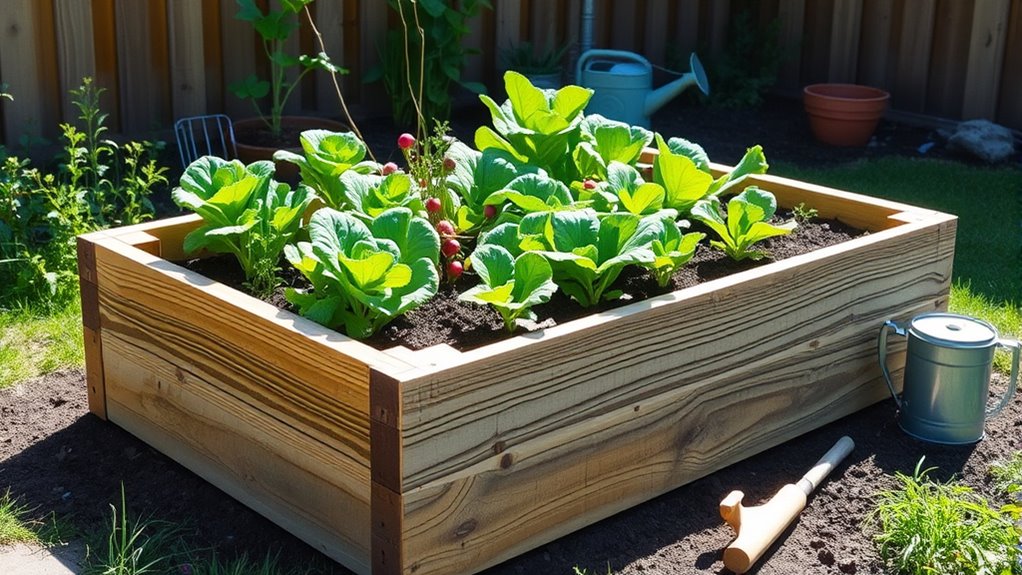

To build a cheap and easy raised garden bed for vegetables, start by using untreated, pest-resistant wood like cedar or recycled materials to save costs. Prepare the soil by mixing compost, peat moss, and organic matter for good drainage and fertility. Add mulch or barriers to deter pests, and keep your garden organized for easy maintenance. Proper soil and pest control techniques promote healthy plants. Keep exploring for more tips to guarantee your vegetable garden thrives effortlessly.

Get everyday essentials delivered free with Prime
- Fast, free delivery on millions of items
- Prime Video, Amazon Music and more included
- Member-only deals all year
Key Takeaways
- Use untreated, pest-resistant wood or recycled materials to construct an affordable, durable frame for the raised bed.
- Prepare the site by removing grass and weeds, then mix compost, peat moss, and organic matter into the soil for fertility.
- Build the bed on level, well-draining ground to promote healthy root growth and prevent water pooling.
- Add a mulch or straw layer and install physical barriers to minimize pest issues naturally.
- Maintain garden hygiene by removing debris and ensuring good airflow to keep plants healthy and pest-free.
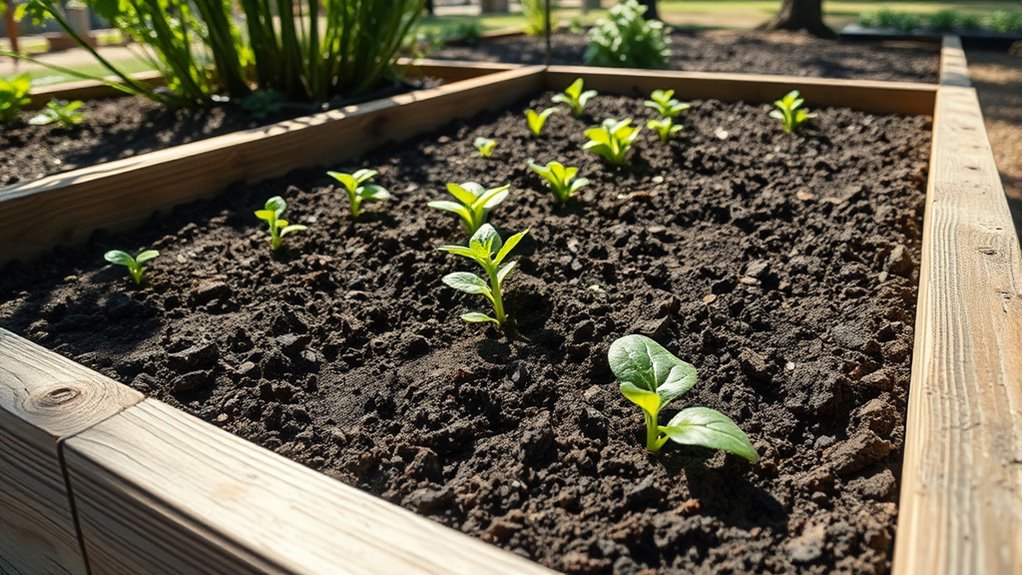
Building a raised garden bed is an excellent way to grow vegetables more efficiently and with less hassle. When you start, the key to a successful garden is proper soil preparation. You want to fill your bed with nutrient-rich, well-draining soil that promotes healthy root growth. To do this, begin by removing any grass, weeds, or debris from the area where you plan to build. Then, mix compost, peat moss, and organic matter into your soil to improve fertility and texture. This creates a perfect environment for your vegetables to thrive, as it provides essential nutrients and prevents water from pooling around roots. Proper soil preparation also helps reduce the risk of soil-borne diseases, giving your plants a healthier start.
Pest control is another vital aspect when building a raised garden bed. You have to think ahead about potential pests and how to keep them at bay. One simple way is to add a layer of mulch or straw on top of the soil, which discourages pests like weeds, slugs, and certain insects. You can also install a physical barrier, such as garden mesh or row covers, over your plants to prevent insects from reaching your vegetables. When planting, choose pest-resistant varieties whenever possible, and consider companion planting to naturally repel harmful insects. For example, planting marigolds near your vegetables can deter nematodes and aphids. Regularly inspect your plants for signs of pests, and if you spot trouble early, remove affected leaves or use organic pest control methods like neem oil or insecticidal soap.
Additionally, keeping your garden clean and organized reduces hiding spots for pests. Remove any fallen leaves or plant debris promptly, as these can harbor insects or diseases. Ensuring good airflow around your plants also makes your garden less inviting to pests and fungi. When constructing your raised bed, use untreated, pest-resistant wood or materials that won’t leach harmful chemicals into your soil. This not only keeps pests away but also guarantees your vegetables stay safe to eat.
Products Worth Considering

Blueair Blue Pure 211i Max Air Purifier

Levoit Core 600S-P Smart Air Purifier for Large Rooms

LG C2 Series 65-Inch OLED evo 4K Smart TV (OLED65C2PUA, 2022)
As an affiliate, we earn on qualifying purchases.
Frequently Asked Questions
What Is the Ideal Size for a Raised Garden Bed?
The ideal size for a raised garden bed is about 4 feet by 8 feet, allowing easy access to all sides without stepping on the soil. You should use well-draining soil with organic matter to support healthy plant growth. Keep the bed at a manageable height for pest control and maintenance. This size balances space efficiency with accessibility, making planting, watering, and harvesting straightforward.
How Deep Should the Soil Be in a Raised Bed?
Think of your garden bed as a cozy nest for roots—about 12 to 18 inches deep works best. This depth ensures good soil drainage and provides enough room for healthy root growth. Follow bed depth guidelines to keep plants thriving, especially in raised beds, where soil drains faster. If you’re planting deep-rooted vegetables, lean toward the higher end of this range for maximum growth.
Can I Use Recycled Materials for the Frame?
Yes, you can use recycled materials for your garden bed frame, but safety considerations are key. Make sure the materials are untreated, free of chemicals, and won’t leach toxins into your soil. Avoid using painted or stained wood, old pallets with chemical treatments, or scrap metal that might rust. By choosing safe, recycled options, you’ll build a sturdy, eco-friendly garden bed that’s safe for growing vegetables.
What Is the Best Location for Maximum Sunlight?
You should place your raised garden bed in a spot that gets plenty of direct sunlight, ideally 6-8 hours daily. Avoid areas with significant shade considerations, like near large trees or buildings that cast shadows. Also, choose a location with good wind protection, such as close to a fence or wall, to prevent wind damage and help retain soil warmth. This setup maximizes sunlight exposure and creates a healthy environment for your vegetables.
How Often Should I Water My Raised Garden Bed?
Think of your garden bed as a thirsty plant craving a sip. You should water your raised garden bed every 1-2 days, adjusting for weather and soil moisture. Keep an eye on the soil; if it feels dry a couple of inches down, it’s time to water. Consistent watering frequency helps maintain soil moisture, ensuring your vegetables stay happy and healthy without drowning or drying out.
Conclusion
Now that you’ve built your raised garden bed, you’re all set to grow fresh vegetables with ease. Just remember, a little effort now will pay off in a bountiful harvest later. Think of your garden as a blank canvas, waiting for your green thumb to work its magic. With patience and care, you’ll turn this simple project into a thriving oasis. So, get ready to watch your vegetables flourish and make your garden the envy of the neighborhood.