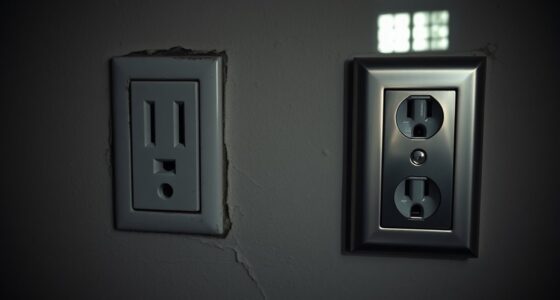
To install under-cabinet lighting yourself, start by choosing energy-efficient LED fixtures and measuring your cabinets carefully. Turn off the power and plan your wiring path, connecting new wires securely with wire nuts, and ensuring proper grounding. Mount the fixtures firmly according to instructions, then turn the power back on to test the lights for even illumination. Following these steps will get you started, and if you keep going, you’ll discover more tips for a safe and professional setup.
Listen free for 30 days with Audible
Thousands of audiobooks and originals — cancel anytime.
As an affiliate, we earn on qualifying purchases.
Key Takeaways
- Measure cabinet length accurately to select the right lighting fixtures and ensure proper coverage.
- Turn off power and examine existing wiring or outlets before beginning installation.
- Secure fixtures using manufacturer instructions, connecting wires correctly (live, neutral, ground).
- Use wire nuts and proper tools to ensure safe, secure electrical connections.
- Test the lighting after restoring power to confirm even illumination and proper function.
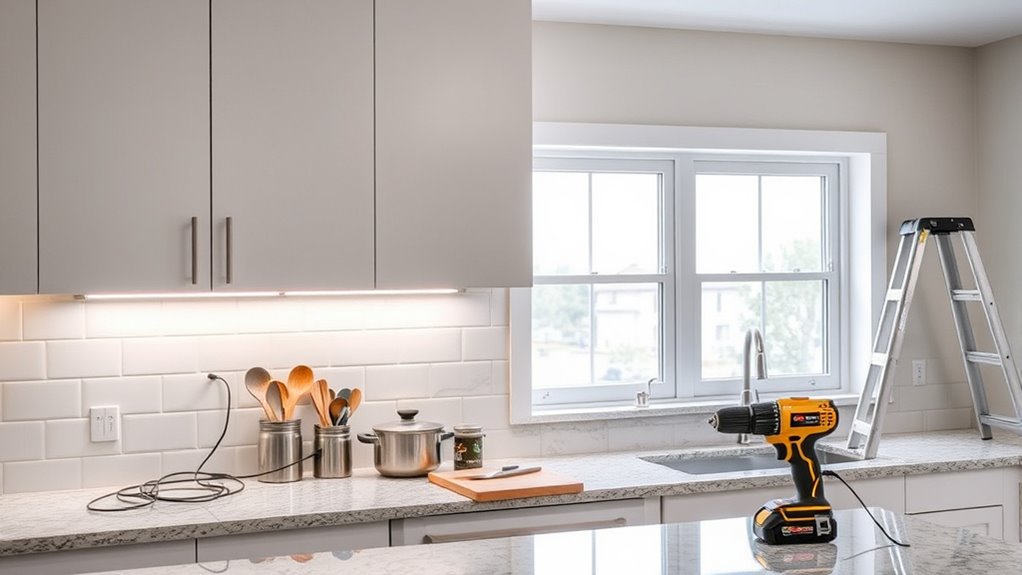
Have you ever wished your kitchen workspace was brighter and more functional? Under-cabinet lighting is an excellent way to achieve that, providing focused illumination where you need it most. Installing these lighting fixtures yourself can be straightforward if you approach it methodically. Start by choosing the right lighting fixtures for your space. LED strip lights or puck lights are popular options because they’re energy-efficient and easy to install. Once you’ve selected your fixtures, measure the length of your cabinets to determine how much lighting you’ll need. This step helps you avoid running short or wasting excess wiring.
Choosing the right fixtures and measuring carefully ensures effective, energy-efficient under-cabinet lighting.
Before you begin, turn off the power at the circuit breaker to ensure wiring safety. You don’t want to risk electric shock or short circuits during installation. Carefully examine your existing wiring setup; many kitchens already have outlets under cabinets, which can simplify your project. If your cabinets don’t have existing wiring, you’ll need to run new wiring from a nearby power source. Use high-quality electrical wire rated for your home’s standards, and keep it concealed behind the cabinetry for a clean look.
When installing lighting fixtures, make sure to secure mounting brackets according to the manufacturer’s instructions. Use the appropriate tools—drill, screwdriver, wire strippers—and double-check your measurements before making holes. If you’re wiring directly to the power source, you’ll need to connect the wires properly: typically, black or red wires are live, white wires are neutral, and green or bare wires are ground. Make sure to connect these correctly and use wire nuts to secure the connections. Proper wiring and electrical safety are essential for a safe installation. If you’re not comfortable with electrical work, it’s wise to consult or hire a licensed electrician to verify your wiring safety.
Once the fixtures are mounted and wired, turn the power back on and test your new lighting. You should see a bright, even glow illuminating your workspace. If not, check your connections and ensure all wiring is secure. Remember, safety is paramount throughout this process; avoid rushing, and don’t hesitate to get professional assistance if needed. Proper installation not only improves your kitchen’s functionality but also guarantees your safety and the longevity of your lighting fixtures. With a little patience and careful planning, you can achieve a beautifully lit workspace that makes cooking and prep work more enjoyable.
LED under-cabinet lighting fixtures
As an affiliate, we earn on qualifying purchases.
As an affiliate, we earn on qualifying purchases.
Frequently Asked Questions
What Types of Bulbs Are Best for Under-Cabinet Lighting?
You should choose LED options for under-cabinet lighting because they offer excellent bulb longevity and energy efficiency. LED bulbs emit bright, consistent light and last much longer than traditional incandescent or halogen bulbs, which means less frequent replacements. Look for dimmable LED options if you want adjustable lighting. Overall, LED bulbs are the best choice for under-cabinet lighting, providing durability, savings, and ideal illumination for your kitchen workspace.
How Do I Choose the Right Lighting Color Temperature?
You should choose a color temperature that matches your desired lighting ambiance. For a warm, cozy feel, go for 2700K to 3000K, which emits a soft, yellowish glow. If you prefer a bright, energetic atmosphere, opt for 4000K to 5000K, offering a cooler, bluish light. Consider how the lighting complements your kitchen decor and tasks—warmer tones create comfort, while cooler tones enhance visibility.
Can I Install Under-Cabinet Lighting Without Professional Help?
Think of installing under-cabinet lighting as assembling a puzzle—you can do it yourself if you follow the right DIY tips. Yes, you can install it without professional help, but pay close attention to your lighting design and power sources. Make sure to turn off the power, use proper tools, and follow safety guidelines. With patience and careful planning, you’ll brighten up your kitchen without needing a pro.
What Are the Safety Precautions During Installation?
During installation, prioritize electrical safety by turning off the power at the circuit breaker to prevent shocks. Use insulated tools to protect against accidental electrical contact, and double-check wiring connections before powering on. Also, follow tool safety guidelines by wearing gloves and safety glasses to avoid injuries. Ensuring these precautions helps you stay safe while confidently installing your under-cabinet lighting.
How Do I Maintain and Troubleshoot Under-Cabinet Lighting?
To maintain and troubleshoot your under-cabinet lighting, regularly check the bulbs for burnout since they have a limited lifespan. If lights flicker or don’t turn on, inspect the wiring safety first—look for loose connections or damaged wires. Clean any dust or debris from fixtures to ensure maximum brightness. Replacing bulbs and tightening connections usually resolve common issues, helping you enjoy consistent, safe lighting without unnecessary repairs.
As an affiliate, we earn on qualifying purchases.
Conclusion
Now that you’ve learned how to install under-cabinet lighting yourself, you’ve turned a simple task into a shining example of DIY success. Imagine your kitchen glowing brighter, transforming everyday cooking into a warm, inviting space—like a lighthouse guiding your culinary adventures. With a little effort and confidence, you’ve lit the way to a more functional and beautiful kitchen. So go ahead, enjoy your newfound skills—your shining kitchen awaits!
As an affiliate, we earn on qualifying purchases.
under-cabinet lighting installation kit
As an affiliate, we earn on qualifying purchases.
As an affiliate, we earn on qualifying purchases.
Flea & tick season Picks
flea and tick prevention
As an affiliate, we earn on qualifying purchases.