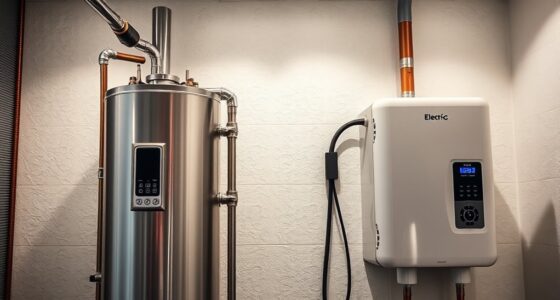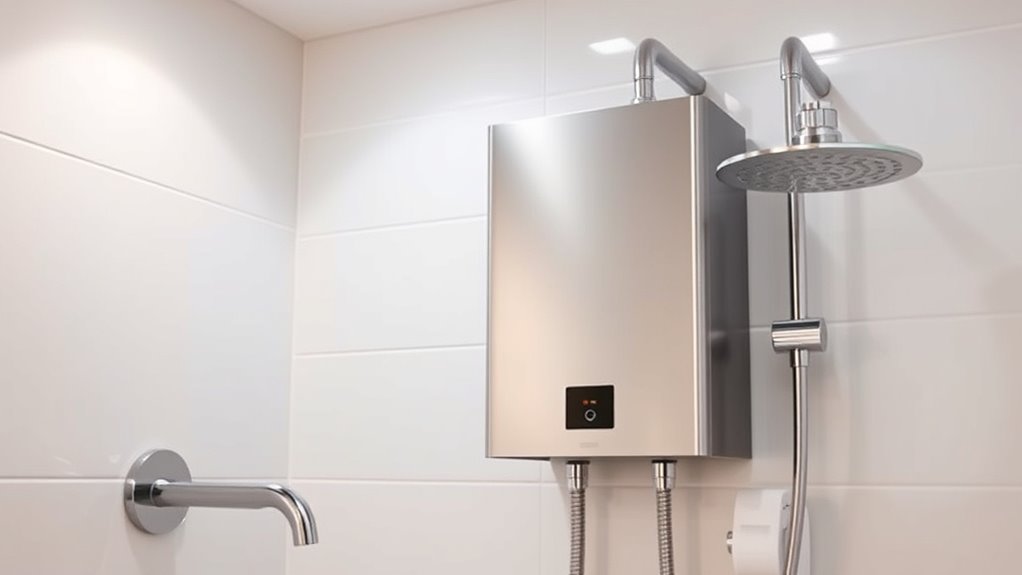

Switching to a tankless water heater can boost your home’s energy efficiency by providing endless hot water and reducing standby heat loss. While upfront costs and installation may be higher, you’ll save on utility bills over time and enjoy a longer-lasting system, often exceeding 20 years. Before upgrading, consider your household’s hot water needs and home infrastructure. Keep exploring to see if a tankless system suits your lifestyle and budget.
Prime for Young Adults — start your free trial
Fast free delivery, streaming and member deals for eligible 18–24 year olds.
As an affiliate, we earn on qualifying purchases.
Key Takeaways
- Tankless water heaters provide continuous hot water and eliminate standby heat loss, increasing energy efficiency.
- They typically last over 20 years, offering a durable, long-term investment compared to traditional units.
- Higher upfront costs and potential home upgrades may be necessary, but savings on utility bills offset initial expenses.
- Ideal for eco-conscious households seeking energy savings and reduced carbon footprint.
- Proper installation and home compatibility are essential for optimal performance and to ensure endless hot water.
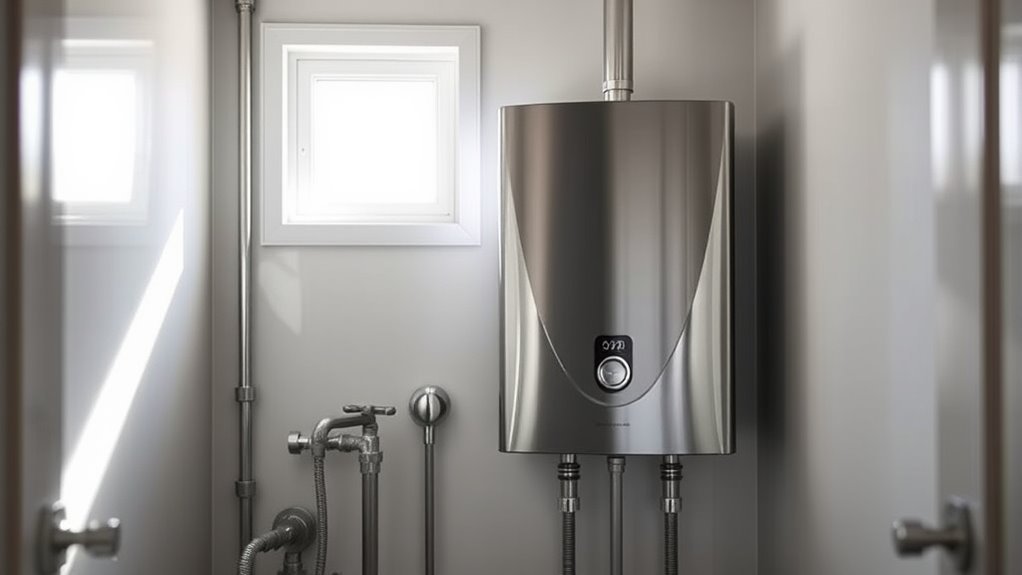
Are you tired of running out of hot water or paying high energy bills? If so, upgrading to a tankless water heater might be just what you need. Unlike traditional units that store a limited amount of hot water, tankless models heat water on demand, providing a continuous supply whenever you need it. This feature alone can make a noticeable difference in your daily routine, especially if you often find yourself waiting for the water to warm up or running out during busy mornings. But before you make the switch, it’s important to ponder the benefits and potential costs involved.
One of the biggest advantages of tankless water heaters is their energy efficiency. Because they only heat water when you turn on the tap, they eliminate standby heat loss—those energy losses that happen when hot water sits unused in a tank. This means you use less energy overall, which can translate into lower utility bills over time. Additionally, many models include advanced controller systems that optimize performance and monitor energy use. However, it’s worth noting that the initial installation costs for a tankless system can be higher than traditional models. The units themselves tend to be more expensive, and installing them often requires upgrades to your home’s plumbing and electrical systems, especially if you’re switching from a large tank to a compact, on-demand unit. These upfront costs can be a concern, but many homeowners find that the energy savings and long-term benefits outweigh the initial investment.
Tankless water heaters save energy by heating water only on demand, reducing utility bills despite higher initial costs.
Installation costs are a key factor to weigh when considering a tankless water heater. While the units are more expensive upfront, the savings in energy bills can offset this over several years. Plus, tankless systems typically last longer—often 20 years or more—compared to traditional tanks, which usually need replacement after 10-15 years. This longevity, combined with reduced energy consumption, makes tankless water heaters a compelling choice for eco-conscious homeowners looking to cut costs and reduce their carbon footprint. Keep in mind, though, that installation might be more complex depending on your current setup. For example, if your home’s plumbing or electrical systems aren’t compatible, you might need to invest in upgrades, which could increase your initial costs.
In the end, choosing a tankless water heater depends on your household’s hot water needs, budget, and willingness to contemplate upfront for long-term savings. If you’re seeking greater energy efficiency and a more sustainable option that minimizes ongoing costs, a tankless system could be an excellent upgrade. Just be prepared for the higher installation costs and possibly some modifications to your home’s infrastructure. With proper planning, you’ll enjoy endless hot water, lower bills, and a more eco-friendly lifestyle.
As an affiliate, we earn on qualifying purchases.
Frequently Asked Questions
How Long Do Tankless Water Heaters Typically Last?
A tankless water heater typically lasts around 20 years, giving you a solid lifetime expectancy. You can expect a longer replacement timeline compared to traditional units, often needing replacement around the 20-year mark. To maximize their lifespan, regular maintenance is essential. If you notice reduced efficiency or inconsistent hot water, it might be time to think about upgrading or servicing your unit to guarantee peak performance over its lifetime.
Are Tankless Water Heaters More Energy-Efficient Than Traditional Ones?
You’ll notice energy savings that feel like hitting a jackpot because tankless water heaters are more energy-efficient than traditional models. They heat water on demand, reducing standby heat loss and lowering your energy bills. Plus, their reduced energy consumption means a smaller environmental impact. By upgrading, you’re not just saving money—you’re helping protect the planet. It’s a win-win for your wallet and the environment!
Can I Install a Tankless Heater in My Existing Home?
Yes, you can install a tankless water heater in your existing home. You’ll need to explore installation options, which may involve retrofitting your current plumbing and electrical systems. Be aware of retrofit challenges, like upgrading your gas line or venting system, depending on your home’s setup. Consulting a professional guarantees a smooth installation process, helping you enjoy the energy savings and endless hot water that tankless systems provide.
What Is the Initial Cost Comparison Between Tankless and Traditional Heaters?
You’ll find that the initial cost of a tankless water heater is higher than a traditional one. A detailed cost analysis shows price differences can range from $1,500 to $3,500, including installation. While upfront costs are steeper, many homeowners save money over time through energy efficiency. Consider your budget and long-term savings when comparing the initial investment of tankless versus traditional water heaters.
Do Tankless Water Heaters Require Special Maintenance or Servicing?
Yes, tankless water heaters do require special maintenance. You should regularly flush out sediment buildup to keep them functioning efficiently, especially if you have hard water. Additionally, make certain proper venting requirements are met, as these units need correct ventilation for safe operation. Routine servicing prevents issues like clogs or corrosion, extending your heater’s lifespan and maintaining ideal performance.
energy-efficient tankless water heater
As an affiliate, we earn on qualifying purchases.
As an affiliate, we earn on qualifying purchases.
Conclusion
Upgrading to a tankless water heater means enjoying endless hot water, saving space, and reducing energy bills. It’s about embracing efficiency, convenience, and long-term savings. It’s about investing in comfort, simplicity, and sustainability. So, ask yourself: are you ready to upgrade, to improve, and to enjoy a more reliable and eco-friendly water heating experience? If yes, then making the switch could be your best move yet. The choice is yours—hot water or not, the decision is clear.
As an affiliate, we earn on qualifying purchases.
As an affiliate, we earn on qualifying purchases.
NFL season / tailgating Picks
team gear
As an affiliate, we earn on qualifying purchases.