
This checklist is for field reporters who need to capture usable audio and video while working away from a studio. It covers recording, a wireless lavalier, a phone-based prompting setup, weather protection, portable lighting, and battery charging. Field-ready essentials matter because each item supports a different part of gathering and preparing a report.

Get everyday essentials delivered free with Prime
- Fast, free delivery on millions of items
- Prime Video, Amazon Music and more included
- Member-only deals all year
The sections follow the work from capturing sound and speaking on camera to protecting, lighting, and powering equipment. Each pick is paired with practical checks to make before packing it. Compatibility and fit deserve attention: a product name alone does not confirm that it works with your particular phone, camera, microphone, or batteries.
Use the look-for points as a pre-purchase and pre-assignment checklist. Confirm the exact model and connections against your equipment, then consider how the item will fit into your kit and workflow. Check the details before relying on any item in the field, especially where a mismatch could interrupt recording or leave essential gear uncovered.
Portable Audio Recorder
A portable recorder is a core part of a field kit when a report depends on capturing spoken material and ambient sound. The TASCAM Portacapture X6 is the pick for this slot. Its product name specifies 32-bit float recording, but that alone does not establish how its inputs, controls, or recording workflow fit your assignment. Recording workflow is the first thing to evaluate: consider who will operate it, how quickly they need to start, and whether its connections suit the microphones you plan to use.
A common buying mistake is choosing a recorder based on its format label without checking the rest of the chain. Confirm the connectors and microphone requirements for your intended sources, and think through how you will monitor and transfer recordings. Check the physical dimensions and controls against your bag and the conditions in which you expect to operate it. Input compatibility and easy access to essential controls can matter more on a fast-moving assignment than a feature you may rarely use.
Before packing, verify the exact model, cables, storage requirements, and power arrangement against the manufacturer’s documentation and your existing kit. Practice a short recording and playback routine so you know where settings and files are handled. A tested setup helps you identify missing connections before an assignment begins.
What to look for:
- Confirm the recorder’s inputs match your microphones and cables.
- Check how recordings are monitored and transferred to your editing device.
- Review storage and power requirements in the product documentation.
- Make sure the controls are practical for your typical recording workflow.
- Confirm the recorder and its accessories fit your field bag.
TASCAM Portacapture X6 32-Bit Float Portable Audio Recorder

The TASCAM Portacapture X6 records up to six tracks simultaneously at up to 96 kHz and 32-bit float. It has a 2.4-inch touchscreen, two XLR inputs, dual built-in microphones with switchable AB/true-XY patterns, and presets for music, podcasts, interviews, and field recording.
Pros:
- Records up to six tracks simultaneously
- 32-bit float recording up to 96 kHz
- Dual built-in microphones with switchable patterns
- Touchscreen controls and recording presets
Cons:
- Bluetooth adapter compatibility is limited to the AK-BT1
- Battery life is listed as 6 hours
Best for: reporters building a portable audio recording kit
Not ideal for: people who have not confirmed their microphone and cable compatibility
Bottom line: Check the inputs, workflow, and accessories against your kit before relying on this recorder in the field.
Wireless Lavalier Microphone
A wireless lavalier can help capture a reporter’s voice while keeping a microphone close to the speaker. The Shure BLX14/CVL Wireless Lavalier System is the pick, and its product name identifies the H9 band as 512–542 MHz. That band information makes local and assignment-specific compatibility checks essential. Frequency compatibility is not something to assume: verify the system’s permitted use and suitability for the locations where you plan to work.
A frequent mistake is focusing on the microphone while overlooking the rest of the wireless system. Check what is included, how the receiver connects to your camera or recorder, and whether you need additional adapters or cables. Think about how the lavalier will attach to the speaker’s clothing and how the transmitter and receiver will be carried. Connection and placement affect whether this system fits your recording setup; confirm both before the day of a shoot.
Fit also depends on the person wearing the microphone and the clothing available. Practice attaching it securely and routing its cable without pulling or rubbing against fabric. Check the manufacturer’s guidance for operation, power, and setup, and test the entire signal path with your own recording device. End-to-end testing can reveal a missing adapter or connection mismatch before an interview starts.
What to look for:
- Confirm the H9 band is appropriate for your location and intended use.
- Check receiver output connections against your camera or recorder.
- Verify included components and identify any adapters or cables you need.
- Practice lavalier placement with the clothing typically used on assignments.
- Review setup and power requirements in the manufacturer’s documentation.
Shure BLX14/CVL Wireless Lavalier System, H9 Band (512–542 MHz)

This wireless lavalier system includes a BLX4 single-channel receiver, BLX1 bodypack transmitter, and CVL cardioid microphone with clip and windscreen. It offers up to 14 hours of operation on two AA batteries and a line-of-sight range of up to 300 ft (100 m).
Pros:
- Hands-free, discreet microphone for speech
- Up to 14 hours of battery operation
- Includes receiver, transmitter, microphone, and accessories
- Supports up to 12 compatible systems per band
Cons:
- H9 frequency band availability depends on local regulations
- Stated range is line-of-sight and may vary in typical use
Best for: reporters who need a lavalier and wireless receiver system
Not ideal for: buyers whose local frequency requirements or device connections are unconfirmed
Bottom line: Verify the band, receiver connection, and microphone placement with your equipment before an assignment.
Smartphone Teleprompter
A phone-mounted setup can help a reporter keep notes or a script near the camera while recording. The listed pick is the Smartphone Video Rig PICTRON U200 Handheld LED Ring Light Selfie Light. The product name describes a handheld rig and light, but it does not establish that the item includes a teleprompter or supports prompting software. Prompting capability is the first detail to verify if reading lines near the lens is the main goal.
A common mistake is treating a phone rig, ring light, and teleprompter as interchangeable. Confirm exactly what the U200 includes and whether it accommodates your phone model, case, and preferred camera orientation. Check whether the phone remains accessible for recording controls and whether the light interferes with the view or microphone placement. Phone fit matters: a clamp that is too loose, too tight, or poorly positioned can undermine the setup.
Consider how you will hold or support the rig during a recording, and whether the controls and light can be operated as needed. If a script must be visible while maintaining eye contact with the camera, confirm the complete prompting arrangement rather than inferring that capability from the product title. Workflow testing with your own phone and recording app can show whether this pick meets the assignment’s needs.
What to look for:
- Confirm whether prompting hardware or software is included or supported.
- Check phone dimensions, case fit, and portrait or landscape orientation.
- Verify access to recording controls while the phone is mounted.
- Consider how the rig will be supported during longer recordings.
- Test the light and phone arrangement with your camera app and microphone.
Smartphone Video Rig PICTRON U200 Handheld LED Ring Light Selfie Light

The PICTRON U200 is a versatile smartphone video rig with a stepless adjustable ring light, offering color temperature from 2500K to 8500K and brightness from 10% to 100%. It features a high CRI 96+ LED setup, an 8000mAh battery that supports continuous use and acts as a power bank, and is compatible with various devices for professional-quality videos and selfies.
Pros:
- Adjustable color temperature and brightness for customized lighting
- Built-in high-capacity battery doubles as a power bank
- Compatible with multiple devices including smartphones and cameras
- Supports both horizontal and vertical shooting
Cons:
- Battery life may be limited for extended filming sessions
- Designed primarily for mobile devices, less suitable for larger cameras
Best for: reporters seeking a handheld phone rig with a light
Not ideal for: buyers who need confirmed teleprompter functionality without verifying the setup
Bottom line: Confirm prompting capability and phone fit before treating this rig as a teleprompter.
Camera Rain Cover
A rain cover helps address a practical field concern: keeping a camera covered when weather changes during an assignment. The Think Tank Photo Emergency Rain Cover for DSLR and Mirrorless Cameras is the pick. Its name identifies DSLR and mirrorless cameras, but does not specify which bodies, lenses, or configurations it fits. Camera and lens fit should guide the choice; check the exact setup rather than relying on a general camera category.
A common mistake is checking only the camera body and forgetting that the lens, viewfinder, or attached accessories affect how a cover sits. Compare your camera and lens configuration with the manufacturer’s fit information. Consider whether you can reach the controls and view the screen or viewfinder while the cover is on. Control access is important when you need to adjust or monitor the camera without removing its protection.
Also consider how the cover will be carried and how quickly it can be put on during a change in conditions. Practice fitting it over your camera before an assignment, including with the lens you expect to use. Follow the manufacturer’s guidance for care and use. A fit check at home helps reveal snags or blocked controls before you are working outdoors.
What to look for:
- Check the manufacturer’s fit information for your camera body and lens.
- Consider how attached accessories affect coverage and access.
- Confirm you can reach essential controls while the cover is fitted.
- Practice putting the cover on your actual camera configuration.
- Review storage and care instructions before packing it.
Think Tank Photo Emergency Rain Cover for DSLR and Mirrorless Cameras, Medium (R

This rain cover provides extreme protection for DSLR and mirrorless cameras with 70-200mm lenses in heavy rain or dusty conditions. It features a seam-sealed design, a large viewing window, and compresses into a compact pouch for easy transport.
Pros:
- Provides excellent protection in harsh weather conditions
- Compact and portable design
- Large window for easy LCD viewing and controls
Cons:
- May be bulky for small cameras
- Limited to medium-sized lenses
- Requires careful fitting to ensure waterproof seal
Best for: reporters carrying a DSLR or mirrorless camera outdoors
Not ideal for: buyers who have not checked fit with their lens and accessories
Bottom line: Match the cover to your full camera setup and practice fitting it before heading out.
Portable LED Video Light
Portable lighting can help reporters prepare a video setup when available light does not suit the shot. The GVM 2-Pack LED Video Lighting Kit with App Control is the pick in this slot. Its name specifies two lights and app control, but does not establish the kit’s dimensions, power options, or compatibility with your devices. Power and control are useful starting points for checking whether it fits your reporting workflow.
A common mistake is choosing a lighting kit without considering where it will be used or how it will be set up. Check the kit’s power requirements and how the app connects to the devices you intend to use. Consider how you will support and position the lights, and whether the full kit is practical to carry alongside cameras and audio gear. Setup and transport both matter for field work, especially when an assignment involves moving between locations.
Before relying on app control, confirm that your phone or other intended device is supported and that the control method works for your workflow. Review the manufacturer’s instructions for mounting, operation, and power, then assemble the kit with your own camera setup. A complete kit check can help identify missing support or connection needs before a shoot.
What to look for:
- Confirm power requirements and available power arrangements.
- Check app compatibility with the phone or device you plan to use.
- Review how the lights are supported and positioned.
- Consider the kit’s packed size alongside the rest of your field gear.
- Test the lights and app controls with your camera setup.
GVM 2-Pack LED Video Lighting Kit with App Control
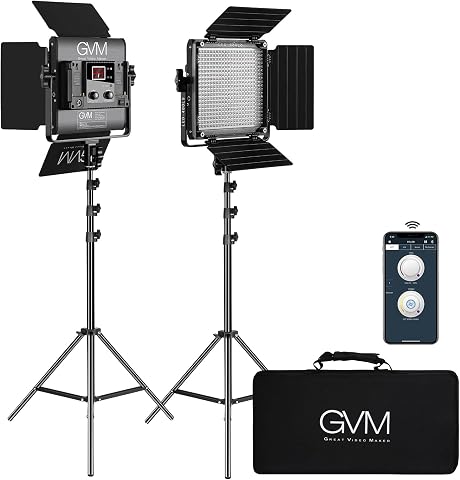
This two-panel LED lighting kit offers app and onboard control of brightness and color temperature, with a digital display and soft diffusers for portrait and video lighting. It includes light stands, power adapters, barn doors, and a carrying bag; panels can run on AC power or compatible Sony F-series batteries, which are not included.
Pros:
- App and onboard controls with a wide adjustable color temperature range
- High CRI and TLCI ratings for color rendering
- Includes stands, diffusers, barn doors, adapters, and a carrying bag
- Can run on AC power or compatible batteries
Cons:
- Compatible batteries are not included
- The raw listing gives conflicting warranty details: 180 days and one year
Best for: reporters who want a two-light kit with app control
Not ideal for: people who have not confirmed power, support, and app compatibility
Bottom line: Check the power, app support, and transport needs before packing this lighting kit.
Camera Battery Charger
A compatible charger supports a camera workflow by helping keep batteries ready between recording sessions. The Sony BC-TRW W Series Battery Charger is the pick. Its name identifies the W Series, so confirm that your camera batteries belong to that series before purchasing or packing it. Battery compatibility is the essential first check; the camera brand alone does not establish that a particular battery will fit.
A common mistake is assuming that chargers are interchangeable across camera lines or battery shapes. Compare the exact battery model used by your camera with the charger’s compatibility information. Check the charging method and any power requirements in the manufacturer’s documentation, and consider whether you need a cable or other accessory for your travel setup. Exact model matching helps avoid arriving with a charger that cannot serve the batteries in your kit.
Think about where charging will happen during an assignment and how you will keep the charger and charged batteries organized. Verify the charger with a battery you actually use, and make sure the full arrangement works with your planned power source. Pre-trip confirmation is a simple way to catch a mismatch before it affects your camera workflow.
What to look for:
- Match the charger’s compatibility list to your exact battery model.
- Confirm your camera uses a W Series battery supported by this charger.
- Review the required power arrangement and any needed accessories.
- Plan how the charger and batteries will be organized in your kit.
- Test charging with a battery from your camera before travel.
Sony BC-TRW W Series Battery Charger

This compact, universal voltage battery charger is designed for traveling, featuring a retractable plug and quick charging for NP-FW50 batteries.
Pros:
- Compact and portable design ideal for travel
- Universal voltage for worldwide use
- Quick charging capability
Cons:
- Limited to NP-FW50 batteries
- No detailed charging time information
Best for: reporters using a compatible Sony W Series battery
Not ideal for: buyers whose camera battery series is unconfirmed
Bottom line: Match the charger to your exact battery model and test the charging setup before travel.
Build your kit around the needs of the assignment: first confirm the recorder and microphone connections for capturing speech, then make sure camera power and weather coverage match the equipment you carry. Add lighting and a phone rig after checking their fit, power, and workflow requirements. Compatibility checks help direct attention to the items that can interrupt a shoot if they do not match your gear.
No single checklist can replace trying the complete setup with your own camera, phone, microphones, and batteries. Check each item’s documentation, pack the accessories it needs, and practice the steps you will use in the field. A prepared kit makes it easier to focus on reporting when the assignment begins.