
TL;DR
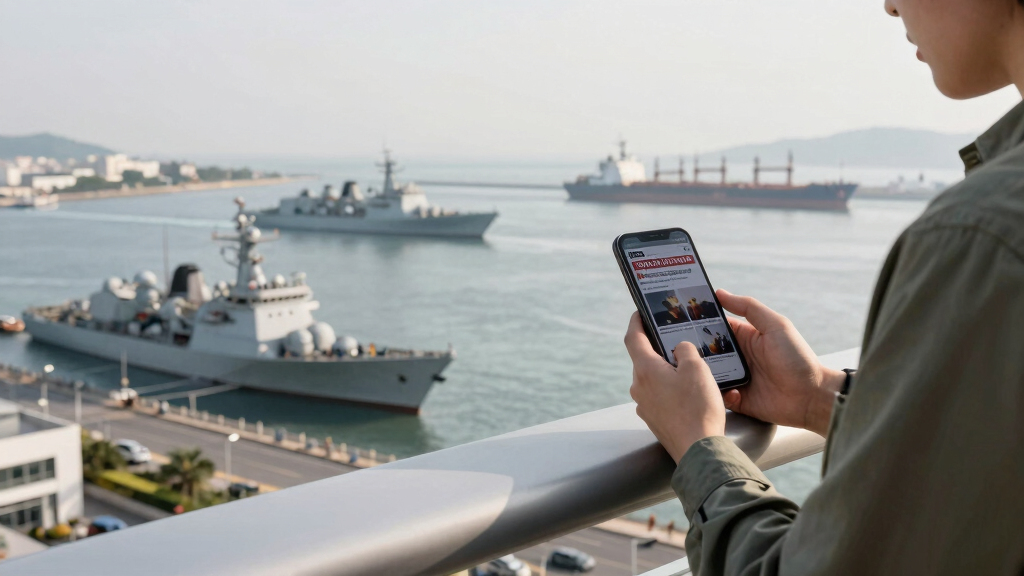
The United States has launched airstrikes targeting Iranian military facilities in response to an attack on a commercial vessel in the Strait of Hormuz. The incident marks a significant escalation in regional tensions, with ongoing uncertainty about Iran’s response and future developments.
The United States launched airstrikes against Iranian military sites today, in retaliation for an attack on a commercial vessel in the Strait of Hormuz. The attack has heightened tensions between the two countries and raises concerns about regional stability.
According to U.S. officials, the strikes targeted military infrastructure in Iran believed to be responsible for or associated with the attack on the vessel. The incident involved an unidentified assault on a commercial ship, which was hit in the strategic Strait of Hormuz, a vital route for global oil shipments. Iran has not yet officially claimed responsibility, and Tehran has condemned the U.S. response as provocative. The strikes mark a significant escalation in U.S.-Iran tensions, following a series of recent confrontations in the region. The Pentagon stated the operation was a targeted response, but did not specify the extent of damage or casualties. Iran has warned of potential retaliation, but details remain unclear at this stage.
Implications for Regional Stability and Oil Markets
This escalation could impact regional stability, potentially leading to broader military confrontations. The Strait of Hormuz is a critical chokepoint through which about 20% of the world’s oil passes, making any disruption highly significant for global energy markets. The incident underscores the fragile security situation in the Persian Gulf, where U.S. and Iranian interests frequently collide. For more context, see latest updates on U.S. strikes. The response also signals a hardening of U.S. posture toward Iran, which could influence future diplomatic and military actions.
As an affiliate, we earn on qualifying purchases.
Recent Tensions and Previous Incidents in the Persian Gulf
Over the past year, tensions between the U.S. and Iran have escalated due to Iran’s nuclear program, regional influence, and maritime incidents. Several ships have been targeted or seized in the Strait of Hormuz, with Iran often denying direct involvement. The U.S. has increased military presence in the region, citing threats from Iran-backed groups. The attack on the commercial vessel today is part of a pattern of maritime confrontations, which have previously prompted limited military responses but now appear to be escalating toward broader conflict. The incident follows recent diplomatic efforts to de-escalate tensions, which have so far yielded limited results.
“The strikes were conducted to neutralize threats against U.S. interests and to respond decisively to the attack on the vessel.”
— U.S. Defense Department spokesperson

Solar Radio Emergency Hand Crank 12000mAh with Clear Signal
- Reliable NOAAM/FM Reception: Clear sound with high-sensitivity chip and extended antenna
- Large Solar Panel: 8500mm² high-efficiency monocrystalline panel for fast charging
- Efficient Hand Crank Power: Upgraded generator with larger coil for quick charging
As an affiliate, we earn on qualifying purchases.
As an affiliate, we earn on qualifying purchases.
Unclear Details on Damage and Future Iranian Response
It is not yet clear what specific damage was inflicted on Iranian military sites or whether Iran has carried out any retaliatory actions. The extent of casualties, if any, remains undisclosed. Iran’s next move and the potential for further escalation are still unknown, as both sides have issued warnings but have not yet engaged in direct conflict.
As an affiliate, we earn on qualifying purchases.
Monitoring for Further Military Movements and Diplomatic Developments
Expect ongoing military activity in the region, with possible Iranian retaliation or increased U.S. military presence. Diplomatic efforts may be attempted to de-escalate tensions, but the situation remains volatile. Analysts are watching for signs of broader conflict or shifts in regional alliances.

Mini First Aid Kit – 150 Piece Small Waterproof Hard Shell Medical Kit for Home, Car, Travel, Camping, Truck, Hiking, Sports, Office, Vehicle & Outdoor Emergencies- Small First Aid Medical Kit (Red)
- Complete Emergency Supplies: Over 150 professional-grade medical items
- Lightweight & Compact: Measures 6.4 x 4.9 x 2.7 inches, 0.73 lbs
- Travel-Friendly Design: Includes zippers and carabiners for easy carrying
As an affiliate, we earn on qualifying purchases.
As an affiliate, we earn on qualifying purchases.
Key Questions
Why did the U.S. strike Iranian sites now?
The U.S. claims the strikes are a direct response to the attack on a commercial vessel in the Strait of Hormuz, aiming to neutralize threats and deter further attacks.
Has Iran officially claimed responsibility for the attack?
No, Iran has not officially claimed responsibility. Tehran has condemned the U.S. strikes and warned of potential retaliation.
Could this lead to a wider conflict?
The situation is currently tense, and escalation is possible. Both sides have issued warnings, but no full-scale conflict has been confirmed.
What is the significance of the Strait of Hormuz?
The Strait of Hormuz is a vital global oil transit route, with about 20% of the world’s oil passing through it. Disruptions here can impact global energy markets.
What are the next steps in the diplomatic efforts?
Diplomatic channels may be pursued to de-escalate tensions, but the current focus is on military movements and assessing potential retaliation.
Source: google-trends