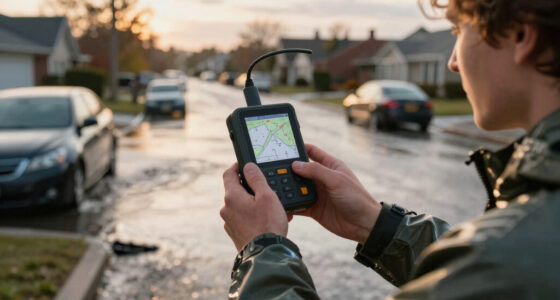
Fish finders use sonar technology to send sound waves beneath the water surface, helping you spot fish, structures, and the bottom. They display real-time images of underwater features, making it easier to identify promising spots. Adjusting settings like sensitivity and color schemes can improve your chances of success. Learning to interpret these images turns guessing into smarter decisions. Keep exploring to discover how mastering your fish finder can boost your fishing game.
Key Takeaways
- Fish finders use sonar to create real-time images of underwater structures and fish locations, aiding in targeted fishing.
- They offer adjustable settings like sensitivity and color to improve detection based on water conditions.
- Different scanning modes help cover broad areas or focus on specific spots, optimizing your fishing strategy.
- Interpreting sonar patterns, such as arches or clusters, helps identify active fish and promising fishing areas.
- Mastering fish finder usage increases efficiency, success rates, and enjoyment during boat or kayak fishing trips.
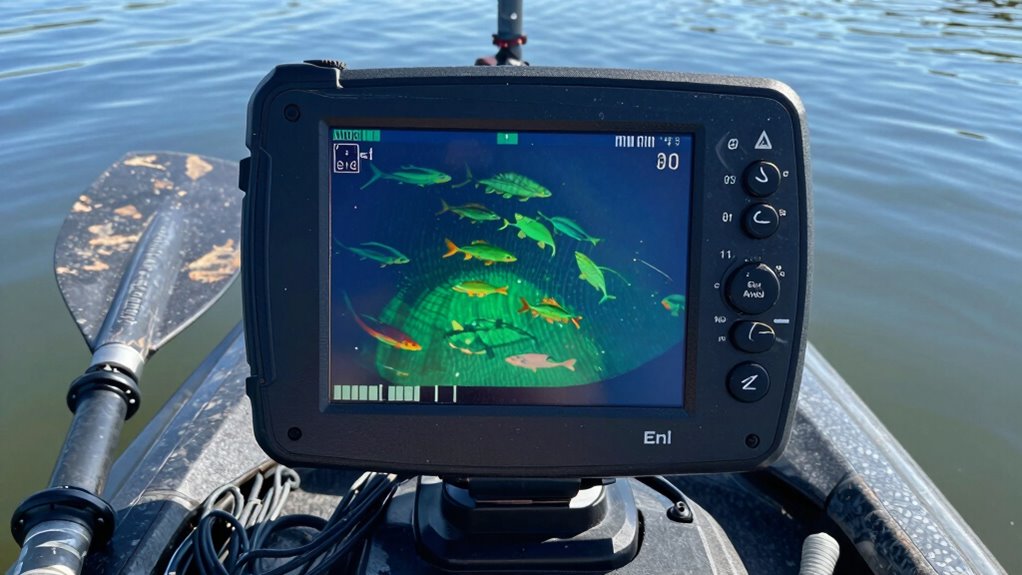
If you’re new to boat and kayak fishing, understanding how fish finders work can seem overwhelming at first. These devices are part of marine electronics that have revolutionized how anglers locate fish and navigate waters. A fish finder uses sonar technology to send sound waves beneath the water’s surface. When these waves hit objects like fish, underwater structures, or the bottom, they bounce back to the device, which then creates a visual display. Learning how to interpret these signals takes some practice, but once you get the hang of it, your fishing efficiency improves markedly.
Understanding how fish finders work can enhance your fishing skills and make every trip more successful.
Marine electronics, including fish finders, are essential tools that help you understand what’s happening beneath your boat or kayak. They provide real-time information about water depth, bottom contour, and fish activity, giving you a competitive edge. Many models offer different scanning modes—wide, narrow, or target-specific—to suit various fishing techniques. For example, if you’re casting from a kayak and want to pinpoint schools of fish near structures or drop-offs, a high-frequency transducer can provide detailed images of the water column. Conversely, when you’re cruising for a broad area, a lower frequency covers greater depths and wider zones. Additionally, understanding the sonar technology behind these devices can help you troubleshoot issues and optimize performance for different conditions.
As you become familiar with your fish finder, you’ll also learn how to adjust settings for ideal results. Brightness, sensitivity, and color schemes can all be customized, allowing you to better distinguish between fish, debris, and the bottom. This knowledge is essential for adapting to different water conditions and times of day. When it comes to fishing techniques, understanding how to read your fish finder’s display enables you to identify promising spots quickly. For example, if you see arches or clusters of fish on your screen near structures, you can focus your efforts there, increasing your chances of a successful catch.
Practicing your skills in interpreting sonar images will also help you recognize patterns that signal active fish. Over time, you’ll learn to differentiate between fish targets and clutter, which is fundamental for efficient fishing. Whether you’re trolling, casting, or drifting, integrating your fish finder into your overall fishing tactics allows you to cover more ground and make smarter decisions. In essence, mastering marine electronics like fish finders transforms your approach from guesswork to data-driven fishing, making every trip more productive and enjoyable.
fish finder with sonar technology
As an affiliate, we earn on qualifying purchases.
As an affiliate, we earn on qualifying purchases.
Frequently Asked Questions
How Do Fish Finders Differentiate Between Fish and Underwater Structures?
Fish finders differentiate between fish and underwater structures by analyzing sonar returns. They identify fish by recognizing fish behavior patterns, such as distinct arches or dots, while underwater vegetation and structures like rocks or wrecks produce solid, continuous echoes. You can interpret these signals by understanding the differences in their sound reflections, helping you target fish more accurately and avoid confusing them with underwater features.
What Is the Ideal Fish Finder Frequency for Shallow Water Fishing?
Ever wondered how to see clearly in shallow waters? The ideal fish finder frequency for shallow water fishing is around 200 kHz. Sonar technology at this frequency provides high-resolution images of nearby fish and structures. Proper transducer placement is key—mount it where it gets the best signal without interference. This way, you’ll get detailed, accurate readings, making your shallow water fishing more successful and enjoyable.
How Does Water Temperature Affect Fish Finder Readings?
Water temperature influences fish behavior, which in turn affects fish finder readings. Warmer water often makes fish more active and closer to the surface, improving detection with your fish finder. Cooler water can cause fish to stay deeper, making them harder to locate. You might notice weaker signals or different readings as water temperature changes, so adjusting your settings or understanding fish behavior helps you better interpret your fish finder data.
Can Fish Finders Be Used Effectively During Night Fishing?
Yes, you can use fish finders effectively during night fishing. Their light sensitivity allows them to operate well in low-light conditions, providing clear readings even when night visibility is poor. Many models have adjustable backlighting, so you can see the screen easily without disturbing your night vision. This makes fish finders a valuable tool for night anglers, helping you locate fish and navigate safely under the cover of darkness.
What Are the Maintenance Tips for Prolonging a Fish Finder’s Lifespan?
Ever wondered how to keep your fish finder running smoothly? Start with battery maintenance—regularly check and charge your batteries to prevent unexpected failures. Don’t forget screen cleaning—use a soft cloth to remove dirt and smudges, ensuring clear visibility. Protect your device from harsh elements, and store it properly when not in use. These simple tips will prolong your fish finder’s lifespan, so you’re always ready for your next adventure.
As an affiliate, we earn on qualifying purchases.
Conclusion
Now that you understand how fish finders work, you’re ready to improve your fishing game. Did you know that anglers using fish finders catch 30% more fish than those who don’t? This powerful tool helps you locate and target fish more efficiently, saving you time and increasing your success. So, invest in a good fish finder, explore its features, and enjoy the thrill of catching more fish on your next trip. Happy fishing!
As an affiliate, we earn on qualifying purchases.
high frequency fish finder for freshwater
As an affiliate, we earn on qualifying purchases.
As an affiliate, we earn on qualifying purchases.