
Before installing a hot tub, you should choose a location with easy access to power and water, good drainage, and plenty of sunlight for natural warmth. Think about safety, ensuring the spot is secure and private, while considering aesthetics. Focus on energy-efficient models to save on costs long-term and plan for regular maintenance to keep water balanced and safe. By considering all these factors, you’ll set yourself up for a relaxing experience—and there’s more to learn to get it just right.
Key Takeaways
- Choose a location with privacy, good drainage, sunlight, and proximity to power and water sources.
- Assess long-term costs by selecting energy-efficient models and considering ongoing maintenance expenses.
- Ensure proper water chemistry management and regular maintenance to extend hot tub lifespan and safety.
- Prioritize safety by planning for secure placement, hazard prevention, and soundproofing for a tranquil environment.
- Determine the appropriate size, installation requirements, and budget, consulting professionals for electrical and setup needs.
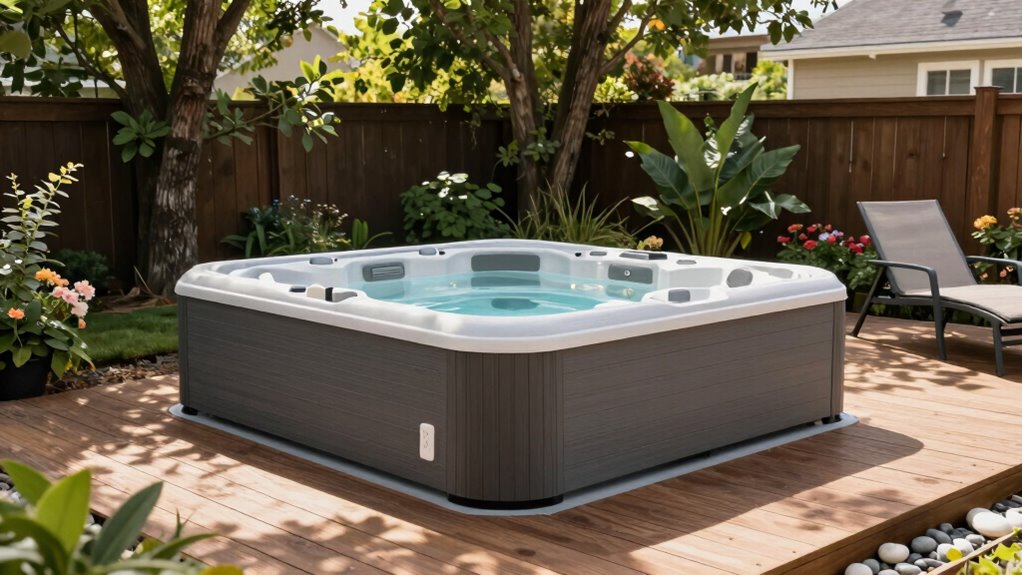
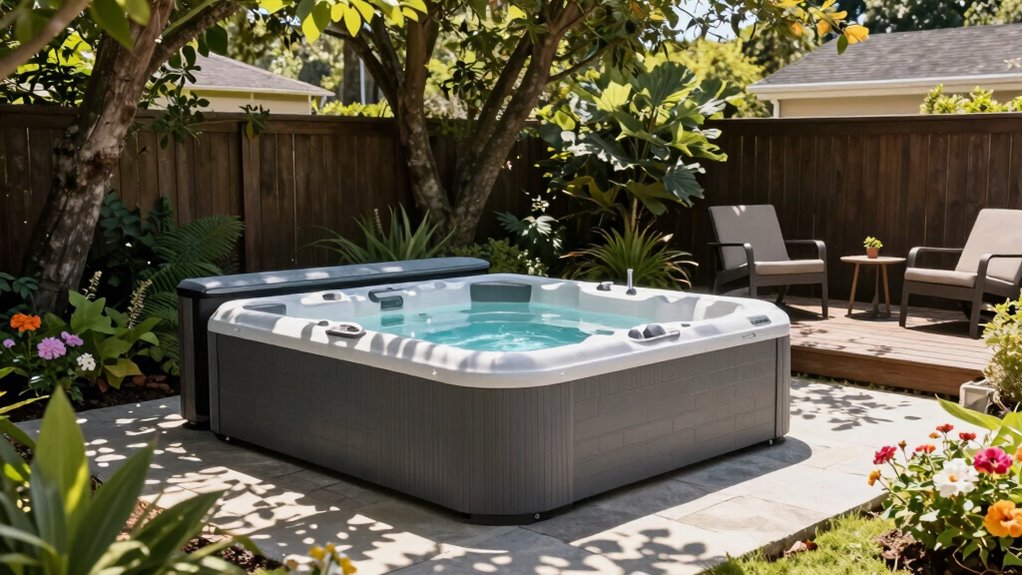
Installing a hot tub is an exciting upgrade to your home’s relaxation space, but it’s essential to plan carefully before diving in. One of the first considerations is choosing the right location. You want a spot that offers privacy, easy access to power and water sources, and good drainage. Think about how the sun hits your yard—positioning it where it can enjoy sunlight during the day can help keep the water warm naturally, reducing energy costs. Speaking of energy, energy efficiency should be a top priority. Modern hot tubs come with energy-efficient insulation and covers that help retain heat, but you’ll still want to consider the long-term costs of operation. Opting for models with energy-efficient pumps and heaters can save you money over time and reduce your environmental impact.
Choose a private, sunny location with easy access to power and good drainage for your hot tub.
Water chemistry is another essential aspect that shouldn’t be overlooked. Proper water chemistry maintenance ensures your hot tub stays clean, safe, and comfortable. You’ll need to learn how to balance pH levels, alkalinity, and sanitizer levels, which are critical for preventing bacteria growth and protecting your skin and equipment. Investing in a reliable test kit makes this process easier and helps you keep water quality in check. Regularly checking and adjusting water chemistry can extend the lifespan of your hot tub and reduce the need for costly repairs or replacements. Additionally, understanding home soundproofing techniques can help minimize noise from your hot tub, ensuring a peaceful environment. Incorporating soundproofing materials into your setup can further improve the overall tranquility of your outdoor space. It’s also advisable to review hot tub safety guidelines to ensure your setup is secure and hazard-free. Being aware of the home design details, such as the placement relative to other outdoor elements, can enhance both safety and aesthetics.
Furthermore, consider the size and capacity of the hot tub based on your needs. Whether you’re planning for solo relaxation or hosting friends, selecting the right size will influence your overall satisfaction. You’ll also want to think about the installation process itself. Some hot tubs require a dedicated electrical outlet and proper grounding, so consulting with a qualified electrician is wise to ensure safety and compliance with local codes.
Maintenance is another factor to keep in mind. Besides water chemistry, you’ll need to keep the filter clean, monitor the cover for damage, and periodically drain and refill the water. Choosing a model with easy access panels and user-friendly controls can make maintenance less of a chore. Finally, don’t forget to consider the costs involved—not just for purchase and installation, but ongoing expenses like electricity, chemicals, and maintenance. Planning your budget carefully will help you enjoy your hot tub without surprises down the line.

Tlswshsy 71'' x 27'' Insulated Inflatable Hot Tub Thermal Cover, Energy Efficient Hot Tub Cover with Zipper Door, Inflatable Hot Tubs Full Coverage for Keeping Warm Extra Insulation and Dustproof
Energy Saving: Hot tub cover is made of high-quality thick fabric, and the insulation layer is filled with…
As an affiliate, we earn on qualifying purchases.
As an affiliate, we earn on qualifying purchases.
Frequently Asked Questions
How Much Does a Hot Tub Typically Cost to Install?
Installing a hot tub typically costs between $3,000 and $8,000, but this varies based on size, features, and site prep. You’ll want to budget for hot tub accessories like covers and steps, and consider hot tub safety upgrades such as fencing or alarms. Keep in mind that installation costs can include electrical work and landscaping. Proper planning guarantees your hot tub remains a safe, relaxing retreat for years to come.
Are There Any Zoning Restrictions for Hot Tubs?
Zoning laws and permit requirements vary depending on where you live. You should check with your local building department or zoning office to see if there are restrictions on installing a hot tub in your yard. Some areas have setback rules, height limits, or require permits for safety reasons. Failing to follow these regulations could lead to fines or needing to move your hot tub later, so it’s best to verify before installation.
What Maintenance Is Required for Hot Tubs?
You should expect to spend about 30 minutes weekly maintaining your hot tub. Regular maintenance involves checking and adjusting chemical balance to prevent bacteria growth and guarantee comfort. You’ll also need to monitor water filtration, cleaning or replacing filters as needed to keep the water clear and fresh. Proper upkeep not only extends your hot tub’s lifespan but also guarantees a safe, enjoyable experience each time you soak.
How Energy-Efficient Are Modern Hot Tubs?
Modern hot tubs are quite energy-efficient, thanks to improved insulation techniques and energy-saving features. You’ll notice energy savings through better heat retention, which reduces the need for constant heating. Many models include insulated covers and energy-efficient pumps, helping you save on electricity bills. To maximize efficiency, regularly maintain the insulation and consider programmable settings. Overall, investing in a contemporary hot tub means enjoying relaxation without substantially increasing your energy costs.
Can Hot Tubs Be Installed Indoors?
Yes, you can install hot tubs indoors, but you’ll need to guarantee proper indoor ventilation to manage humidity and prevent mold. Structural reinforcement is also essential, as the weight of a filled hot tub can be significant. You should consult a professional to evaluate your space’s capacity and make necessary modifications. Proper ventilation and reinforcement ensure safety, comfort, and longevity of your indoor hot tub setup.
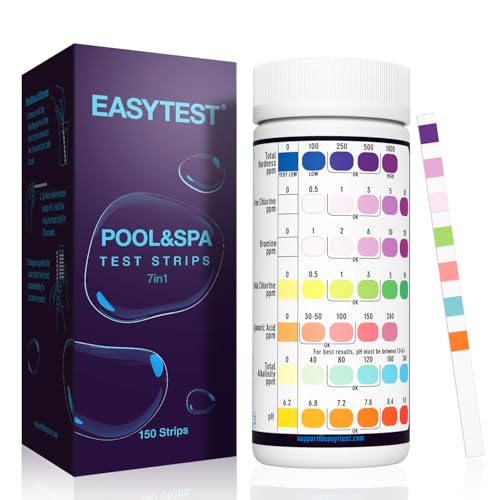
EASYTEST 7-Way Pool Test Strips, 150 Strips Water Chemical Testing for Hot tub and Spa, Accurate Test Bromine, Total Alkalinity, pH, Free Chlorine, Total Hardness, Cyanuric Acid, and Total Chlorine
AFFORDABLE 150 STRIPS: This water chemical testing kit contains 150 test strips. Enough balanced for your swimming pool,…
As an affiliate, we earn on qualifying purchases.
As an affiliate, we earn on qualifying purchases.
Conclusion
Before you install your hot tub, remember it’s more than just a purchase—it’s an investment in your relaxation and well-being. Think carefully about the location, maintenance, and long-term costs. A hot tub is like a garden; with proper care and attention, it can bloom into a sanctuary of peace for years to come. So plan wisely and enjoy the bubbling serenity that awaits, turning your backyard into a personal retreat you’ll cherish every day.

Upgraded 100 * 100 inch Square Hot Tub Mat, Extra Large Inflatable Hot Tub Pad Outdoor Indoor, Waterproof Slip-Proof Backing, Absorbent Spa Pool Ground Base Flooring Protector Mat
100 * 100 INCHES SQUARE EXTRA LARGE THICK MAT — Hot tub mat is 100 inches in diameter,…
As an affiliate, we earn on qualifying purchases.
As an affiliate, we earn on qualifying purchases.

Ketofa Inflatable Hot Tub Cover for Square Hot Tub Spa Cushion Support, Universal 57x57in Inflatable Cover Square Top Lid, Dustproof Rainproof Insulated Energy Saving Lid,Spa Covers for Hot Tub
✅ [Multiple protection]– Reliable rain protection, preventing water, leaves, dirt, and debris from entering your hot tub, keeping…
As an affiliate, we earn on qualifying purchases.
As an affiliate, we earn on qualifying purchases.