To prevent overloading your home circuits, avoid plugging multiple high-wattage appliances into a single outlet or extension cord. Distribute devices across different circuits and stay below the circuit’s wattage limit, typically 1800-2400W. Regularly check for signs like tripped breakers or overheating cords. Keeping your system balanced helps prevent hazards and keeps your home safe. Learn more tips to protect your electrical system and maintain safety every day.
Key Takeaways
- Distribute high-wattage appliances across multiple circuits to prevent overloads.
- Avoid plugging several devices into a single outlet or extension cord.
- Keep total device wattage below your circuit’s capacity (usually 1800-2400W).
- Regularly inspect outlets and cords for damage to ensure safe operation.
- Consult a licensed electrician for system assessments and necessary upgrades.

Have you ever noticed your circuit breaker tripping unexpectedly? If so, you’re not alone. Many homeowners face this issue, often caused by circuit breaker issues stemming from overloaded circuits. An overloaded circuit occurs when too many devices or appliances draw power from a single circuit, exceeding its capacity. This can lead to frequent trips, which are a safety measure to prevent overheating and potential fires. Recognizing the signs of overload and understanding how to prevent it is essential for maintaining electrical safety at home.
Circuit overloads cause breaker trips; distribute devices to ensure safety and prevent fire hazards.
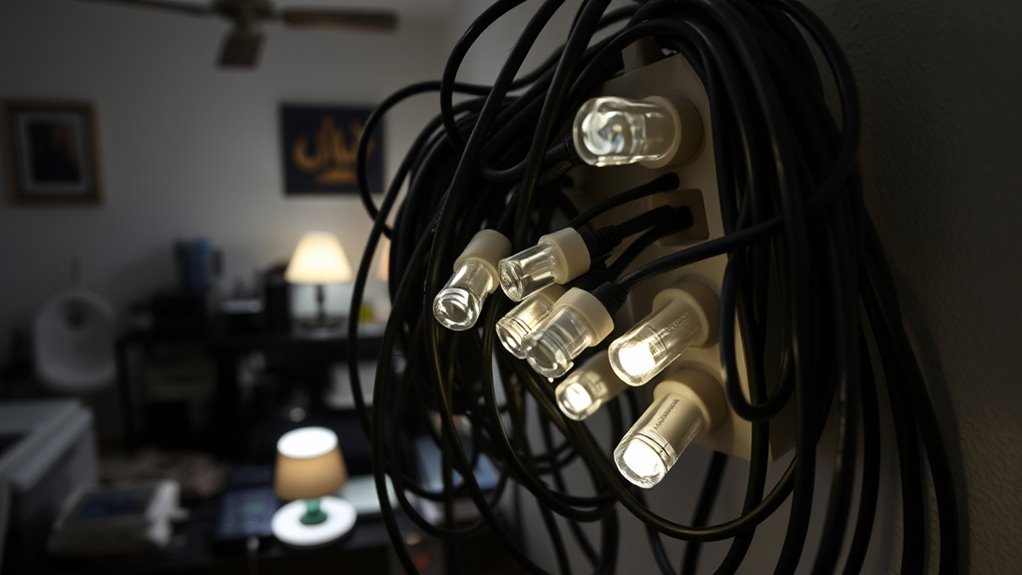
First, take a close look at how many devices you’re plugging into the same outlet or circuit. If multiple high-wattage appliances—like space heaters, hairdryers, or kitchen gadgets—are running simultaneously on one circuit, you’re pushing it beyond its limits. This not only causes tripped breakers but also increases the risk of overheating wires, which can lead to electrical fires. To prevent this, distribute your electrical load more evenly across different circuits. Avoid plugging all your devices into one outlet or extension cord, especially if they draw a lot of power. Instead, use multiple outlets linked to separate circuits, which can handle higher loads safely.
Understanding your home’s electrical capacity can help you avoid overloading circuits. Most circuits are rated at 15 or 20 amps, which equates to about 1800 or 2400 watts. Keeping your total device wattage below these limits prevents strain on the circuit. Use a wattmeter or check the appliance labels to calculate the total power consumption. If you’re unsure about your circuit’s capacity or if you frequently experience breaker trips, it’s wise to consult a licensed electrician. They can assess your wiring, upgrade your electrical system if necessary, and help you create a safer setup. Additionally, familiarizing yourself with the electrical system’s capacity can help you better plan your power needs and avoid overloads.
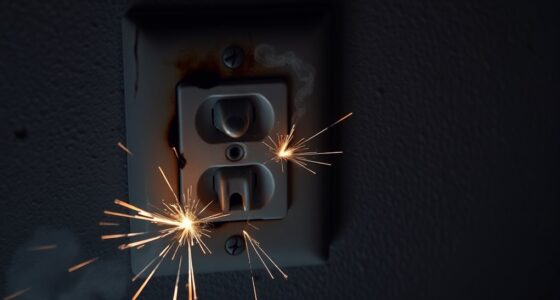
Electrical safety tips go beyond just avoiding overloads. Regularly inspecting your outlets and cords for damage, ensuring your wiring is up to code, and avoiding the use of damaged or frayed extension cords are all essential steps. Also, never force a plug into an outlet if it doesn’t fit properly, as this can cause sparks or short circuits. Keep flammable materials away from outlets and electrical devices, and never attempt to fix electrical issues yourself unless you’re qualified. Proper load management is crucial in maintaining a safe and functional electrical system in your home. Additionally, understanding the importance of circuit breaker maintenance can help prevent unexpected trips and prolong the life of your electrical system. Being aware of signs of overload can help you identify potential hazards early and act accordingly.
wattmeter for home electrical load
As an affiliate, we earn on qualifying purchases.
As an affiliate, we earn on qualifying purchases.
Frequently Asked Questions
How Can I Tell if My Circuit Is Overloaded?
You can tell if your circuit is overloaded by watching for circuit indicators like frequent tripping or blown fuses. Overload symptoms include flickering lights, buzzing outlets, or warm switches. If these signs appear, it’s a clear sign you’re exceeding your circuit’s capacity. To prevent damage, avoid plugging too many devices into one outlet and consider spreading out your appliances to reduce strain on the circuit.
What Are the Risks of Repeatedly Overloading Circuits?
Imagine your home as a bustling jazz club, where overloading circuits is like adding too many instruments—things can fall apart fast. Repeatedly overloading circuits risks circuit breaker safety, causing tripped breakers or electrical fires. It also stresses your electrical load management, potentially damaging appliances and wiring. To stay safe, avoid plugging in too many devices at once, and regularly check your circuit capacity to prevent costly, dangerous issues.
Does Using Extension Cords Increase Overload Risk?
Using extension cords can increase overload risk if you’re not careful. Poorly rated power strip hazards and improper cord length considerations can lead to overheating or electrical fires. Always make certain your extension cords are rated for the devices you’re plugging in, and avoid daisy-chaining multiple cords. Keep cords manageable in length to prevent strain on outlets and minimize the chance of overloading. Regularly check cords for damage to stay safe.
Can Overloading Circuits Cause Electrical Fires?
Overloading your circuits can spark a dangerous electrical fire, like dry leaves igniting suddenly. When circuits are overloaded, wires heat up and can cause sparks or fires if not managed properly. Prioritize circuit safety by avoiding excessive loads and performing regular electrical maintenance. Keep an eye out for flickering lights or warm outlets, and never ignore these signs—your home’s safety depends on it.
How Often Should I Have My Home’s Wiring Inspected?
You should have your home’s wiring inspected every 3 to 5 years. During these inspections, a professional checks your electrical panel and circuit breaker to spot any signs of wear or damage. Regular inspections help prevent potential issues like overloaded circuits or electrical fires. If you notice frequent tripping of your circuit breaker or flickering lights, schedule an inspection sooner to guarantee your electrical system remains safe and reliable.

Klein Tools ET310KIT AC Circuit Breaker Finder Kit, Electric Tester, GFCI Tester, Leads, Adapters and Case
- Accurate Breaker Identification: Quickly locate the correct breaker
- Visual and Audible Cues: Clear signals when breaker is found
- Built-in GFCI Tester: Test GFCI outlets and wiring
As an affiliate, we earn on qualifying purchases.
As an affiliate, we earn on qualifying purchases.
Conclusion
To avoid overloading your circuits, always be mindful of the devices you plug in simultaneously. For example, imagine running your microwave, vacuum, and space heater all on one outlet – it could trip your breaker. By spreading out your appliances and not overloading a single outlet, you keep your home safe and prevent costly electrical issues. Stay alert, prioritize safety, and enjoy a worry-free, well-functioning home.
outlet surge protector with overload protection
As an affiliate, we earn on qualifying purchases.
As an affiliate, we earn on qualifying purchases.
extension cords for high wattage appliances
As an affiliate, we earn on qualifying purchases.
As an affiliate, we earn on qualifying purchases.